Choosing the right pool pump size isn’t about guessing or luck; it’s about matching the pump’s horsepower to your pool’s actual needs. An undersized pump won’t circulate water properly, causing clarity and maintenance issues, while an oversized one wastes energy and wears out faster. Proper sizing guarantees efficient filtration, saves money, and prolongs your equipment’s life. Keep going, and you’ll discover exactly how to select the perfect pump for your pool.
Key Takeaways
- Proper pool pump sizing ensures effective water circulation, improves water quality, and extends equipment life.
- Measure your pool’s volume accurately to select a pump with the right horsepower and flow rate.
- Maintain a turnover time of 8-12 hours to keep water clean and prevent strain on the pump.
- Avoid guessing; consider pool size, plumbing, and system needs to choose the correct pump size.
- Correctly sized pumps save energy, reduce costs, and prolong equipment lifespan by preventing over- or under-pumping.
Why Picking the Right Pool Pump Size Matters
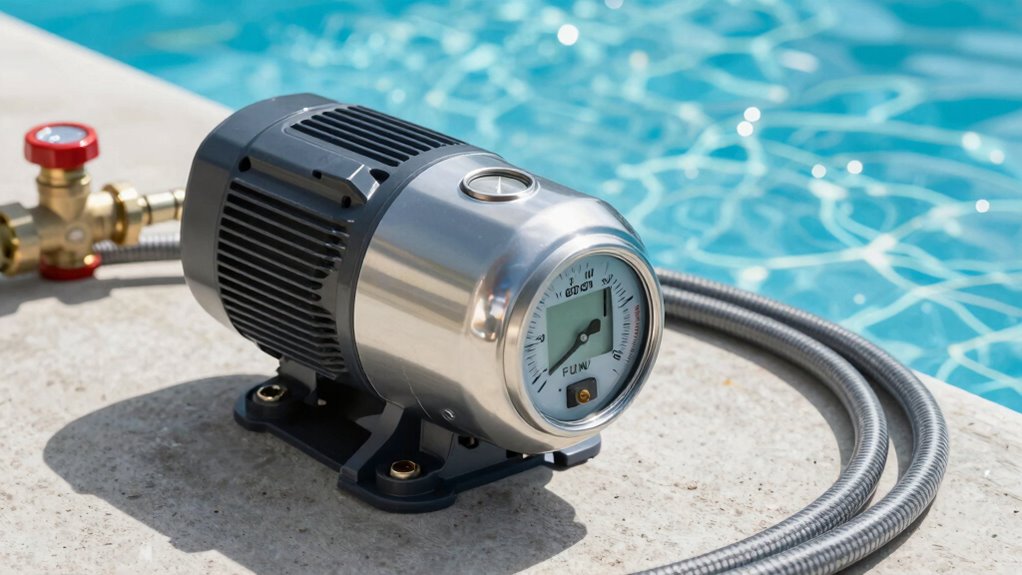
Choosing the right pool pump size is essential because an undersized pump won’t circulate water effectively, leading to poor filtration and potential algae growth. When your pump isn’t properly matched, maintaining healthy pool chemistry becomes harder, as inadequate flow prevents proper chemical distribution and sanitation. This can cause imbalanced pH levels and increased algae buildup. Additionally, selecting the correct pump size simplifies pump maintenance, reducing strain on equipment and minimizing repairs. A properly sized pump ensures efficient operation, keeping water clear and safe. Oversized pumps waste energy and can cause unnecessary wear, but undersized ones compromise water quality. Paying attention to pump size helps you sustain balanced pool chemistry, prolong equipment life, and keep your pool sparkling clean with less effort. Proper pump sizing also considers hydraulic efficiency, which optimizes flow and reduces operational costs. Moreover, understanding the correct horsepower ensures you choose a pump that meets your pool’s specific needs without overworking or underperforming. Selecting an appropriately sized pump is also a matter of long-term cost savings, since it prevents unnecessary energy expenses and equipment stress. Properly sizing your pump can also minimize noise during operation, improving overall poolside comfort. Regularly assessing your pool’s size and usage helps in making sure the pump remains appropriately matched over time, preventing performance issues and extending equipment lifespan.
What Are Pool Flow Rate and Turnover Time: and Why They Matter
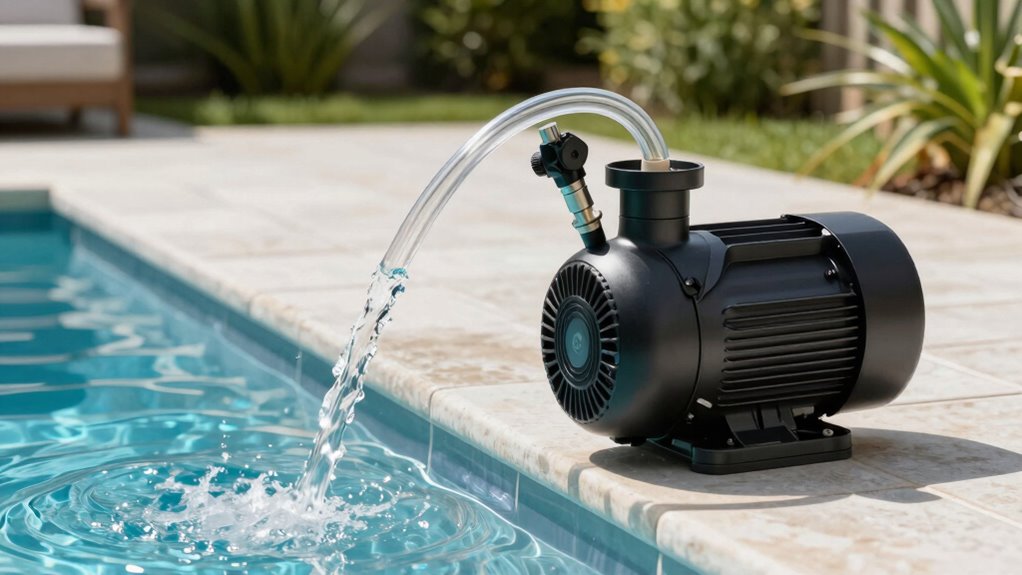
Understanding your pool’s flow rate and turnover time is key to keeping your water clean and safe. These measurements help you determine how effectively your pump circulates water through the filtration system. When you grasp their importance, you can better choose the right pump size for ideal performance. Additionally, knowing how to detect manipulation tactics can empower you to protect your interests and maintain control over your environment. Proper pump sizing also involves understanding the appropriate flow rate, which ensures your pool’s filtration system operates efficiently without unnecessary energy use. Furthermore, regular monitoring of water flow patterns can help identify potential issues early, maintaining optimal water quality and system longevity. Being aware of system efficiency metrics allows you to optimize your pool’s circulation and save on energy costs. Incorporating accurate flow measurement tools can further enhance your ability to manage your pool’s circulation effectively.
Understanding Pool Flow Rate
Knowing your pool’s flow rate is essential because it determines how effectively your filtration system cleans the water. A proper flow rate ensures your pool filtration runs efficiently, maintaining clear water and balanced chlorine levels. If the flow is too slow, debris and algae can build up, compromising water quality. If it’s too fast, chlorine may not distribute evenly, and filter media might not work properly.
Understanding your flow rate helps you optimize pump size and avoid under- or over-pumping. Keep these points in mind:
- Proper flow rate supports effective pool filtration and water clarity
- It influences how well chlorine levels are maintained and distributed
- It prevents issues like algae growth or poor water circulation
Importance of Turnover Time
Turnover time is a critical measure that indicates how long it takes for your pool’s entire volume of water to be filtered and refreshed. Maintaining an appropriate turnover time ensures good filtration efficiency, helping keep your water clean and safe. If the turnover time is too long, contaminants can build up, reducing water quality. Conversely, too short a turnover time can strain your pump and increase energy costs. Proper pump maintenance is essential to achieve ideal flow rates and consistent turnover times. Regularly checking and servicing your pump prevents issues like clogs or worn parts that could slow filtration. Ultimately, understanding and managing turnover time helps you keep your pool crystal clear, saves money, and extends the lifespan of your equipment.
How to Determine the Correct Horsepower for Your Pool Pump
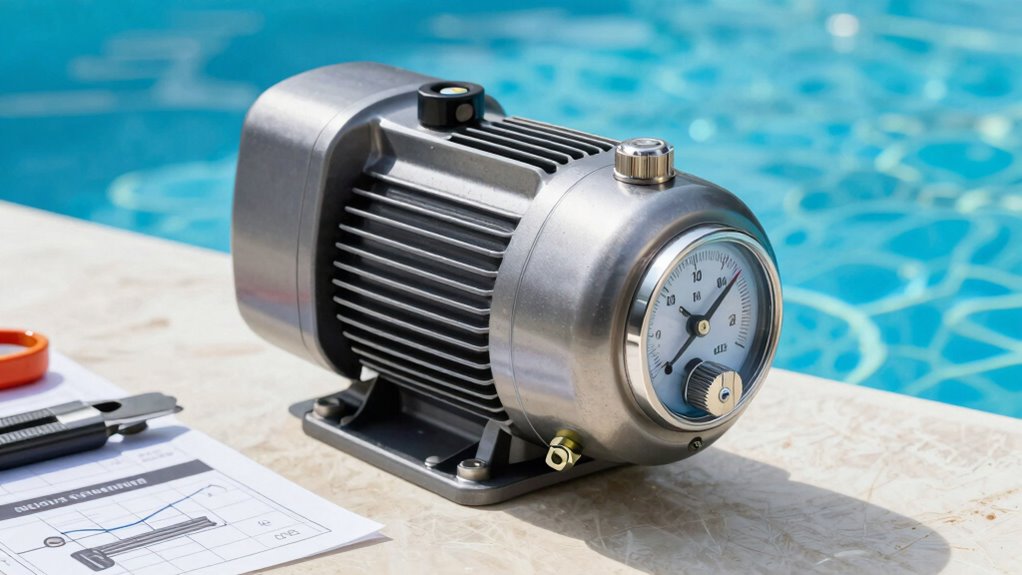
To select the correct horsepower, start by calculating your pool’s volume to comprehend its size. Then, match your pool’s specific needs, like flow rate and turnover time, to find the appropriate pump power. This approach guarantees efficient circulation without overpaying for unnecessary capacity. Additionally, consider the data storage options available for backup systems to ensure reliable operation. Properly sizing your pump based on pool capacity helps prevent unnecessary wear and energy waste, leading to long-term savings and optimal performance. Understanding energy efficiency standards can further optimize your pump choice for cost savings and environmental benefits. Incorporating pump performance metrics can also assist in selecting the most suitable model for your pool’s demands. Regularly assessing your system requirements ensures continued efficiency and longevity of your pool equipment.
Calculate Pool Volume
Ever wondered how to accurately determine your pool’s volume? Knowing this helps you choose the right pump horsepower and maintain proper water chemistry for effective pool cleaning. To calculate your pool volume, consider these key steps:
- Measure the length, width, and average depth of your pool
- Use the appropriate formula based on your pool shape (rectangular, circular, or irregular)
- Convert measurements into gallons or liters for precise calculations
- Understanding pool volume is essential for efficient operation and energy savings. You can also consult pool volume calculators available online to simplify this process. Additionally, grasping the importance of accurate measurements can significantly improve your pool maintenance routine. Recognizing correct pump sizing ensures optimal performance and longevity of your equipment. When selecting a pump, consider the flow rate requirements to match your pool’s specific needs, which can help prevent issues like insufficient circulation or overworking your system. Proper sizing guarantees your pump runs efficiently, keeps water clean, and maintains healthy water chemistry. Proper sizing prevents overworking the pump, saving energy and reducing maintenance costs.
Match Pool Needs
Once you’ve accurately calculated your pool’s volume, the next step is selecting a pump with the right horsepower to meet your specific needs. The correct pump size guarantees your pool filter functions efficiently, preventing debris buildup and maintaining clear water. An undersized pump won’t circulate water adequately, affecting pool chemistry by making it harder to maintain proper chemical balance. Conversely, an oversized pump wastes energy and can cause too much flow, damaging equipment and stirring up debris. To match your pool needs, consider the turnover rate—ideally, your pump should filter all the water at least once every 8 to 12 hours. This balance ensures effective filtration, keeps your pool chemistry stable, and prolongs the lifespan of your equipment. Proper pump sizing is also essential for supporting flow rate features like natural pools and eco-friendly filtration systems, ensuring they operate smoothly without excessive energy use.
Main Factors That Affect Your Pool Pump Size
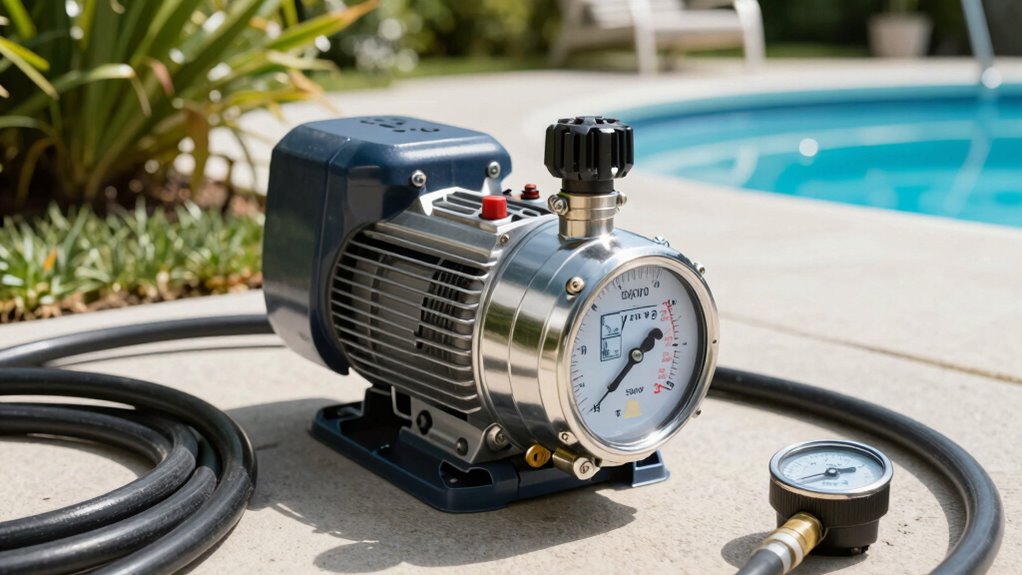
Choosing the right pool pump size depends on several key factors that directly impact its effectiveness. These include the pool’s size, plumbing setup, and your pool’s specific needs. Proper pump maintenance guarantees ideal performance and longevity, preventing issues caused by over or under-sizing. Additionally, maintaining balanced pool chemistry helps avoid equipment strain and corrosion, which can affect pump efficiency.
Key factors to contemplate:
- Pool volume and flow rate requirements
- Plumbing size and configuration
- Your pool’s chemical balance and the importance of pump maintenance
Common Mistakes When Choosing a Pool Pump: And How to Avoid Them

Selecting the wrong pool pump size can lead to inefficient operation, higher energy costs, and equipment wear. A common mistake is ignoring your pool’s material and color, which affect circulation needs. For example, a dark-colored pool absorbs more heat and may require a different flow rate than a light-colored one. Pool material also matters; fiberglass pools might need a different pump capacity than vinyl liners to prevent damage or poor filtration. Many people choose a pump based on guesswork or outdated rules, risking undersizing or oversizing. This can cause poor water quality, increased energy bills, and premature equipment failure. To avoid these mistakes, consider how your pool’s material and color influence flow requirements, and always select a pump that matches your specific pool characteristics.
How to Match Your Pump Size to Your Pool’s Needs
To guarantee your pool operates efficiently and maintains clear water, you need to match your pump size to your pool’s specific needs. Picking the right size ensures ideal circulation without excessive noise or strain. A pump that’s too large can cause unnecessary pump noise and increase maintenance needs, while a small pump won’t circulate enough water. Consider these key points:
- Ensure the pump matches your pool’s volume and turnover rate.
- Choose a pump with the right horsepower to prevent loud operation.
- Regularly perform maintenance tips like cleaning filters and checking for leaks to keep noise minimal.
Matching your pump size helps reduce unnecessary wear, keeps operation quiet, and makes maintenance easier. Avoid guesswork—accurate sizing is your best bet for a smooth-running, clear pool.
How Pump Size Affects Energy Use and Savings
Ever wonder how your pool pump’s size impacts your energy bills? Choosing the right size directly influences energy efficiency. An oversized pump runs at higher capacity than needed, wasting electricity and increasing costs. Conversely, a pump that’s too small struggles to circulate water effectively, leading to longer run times and higher energy use overall. Properly sized pumps operate more efficiently, saving you money each month. Additionally, a correctly matched pump helps extend its lifespan because it doesn’t work harder than necessary, reducing wear and tear. When you select the right pump size, you balance energy savings with ideal performance. This ensures your pool stays clean without unnecessary energy expenses or premature pump failure. Proper sizing is key to maximizing both energy efficiency and pump longevity.
When Is It Time to Upgrade Your Pool Pump?
Knowing when to upgrade your pool pump is essential for maintaining efficiency and preventing costly repairs. If your pump is over a decade old, showing signs of wear, or struggling to circulate water effectively, it’s time to contemplate an upgrade. Poor pool maintenance, like clogged filters or leaks, can also signal that your equipment’s lifespan is nearing its end. An inefficient pump increases energy bills and puts extra strain on your system.
Upgrade your pool pump if it’s over ten years old, noisy, leaking, or inefficient to save energy and prevent costly repairs.
You should upgrade if:
- Your pool takes longer to circulate, reducing water quality
- You notice unusual noise or leaks from the pump
- Your energy costs suddenly spike without other explanations
Upgrading ensures your pool stays clean, saves money, and extends the lifespan of your entire pool system.
Quick Tips for Choosing the Perfect Pool Pump Without Guesswork
Choosing the right pool pump doesn’t have to be confusing if you focus on a few key factors. First, prioritize pump efficiency to guarantee you’re getting the most performance for your energy dollar. An efficient pump saves you money and reduces wear on your system. Next, consider noise levels—some pumps operate quietly, creating less disturbance around your yard. Look for models with good reviews on noise reduction if you value peace and quiet. Also, match the pump’s horsepower to your pool’s size and plumbing setup; bigger isn’t always better. Finally, check for energy-efficient features and warranties. By focusing on pump efficiency and noise levels, you’ll select a pump that’s both effective and comfortable to run, eliminating guesswork and making pool maintenance easier.
Frequently Asked Questions
Can I Use a Larger Pump to Improve Circulation Without Issues?
Using a larger pump can improve circulation, but it might cause pump noise and increase maintenance needs. A bigger pump may run louder and wear out faster if it’s not properly matched to your pool size. Always check the pump’s flow rate and horsepower to guarantee it’s suitable. Proper sizing helps you avoid unnecessary noise and reduces the risk of pump maintenance issues, keeping your pool running smoothly.
How Does Pool Size Influence Pump Horsepower Requirements?
Think of your pool as a river—you need the right-sized pump to keep everything flowing smoothly. Larger pools demand more horsepower to maintain proper circulation, ensuring effective pool cleaning and chemical balance. If your pool is bigger, don’t just guess—choose a pump that matches its size. Otherwise, you risk poor filtration, algae growth, and chemical imbalance, making your pool less inviting and harder to maintain.
What Signs Indicate My Current Pump Is Undersized or Oversized?
You’ll notice your pump struggles to circulate water effectively, leading to longer run times and possible overheating, signaling it’s undersized. Conversely, if it’s noisy, runs constantly, or causes high energy bills, it’s likely oversized. Regular pump maintenance guarantees peak performance and energy savings. An appropriately sized pump keeps your pool clean and saves money, preventing unnecessary wear and tear from an oversized unit or poor circulation from an undersized one.
Are Variable Speed Pumps Better for Energy Efficiency?
Imagine you’re in the age of dial-up internet—slow and frustrating. Variable speed pumps are like upgrading to fiber optic; they’re better for energy savings because they adjust their speed to match your pool’s needs, unlike traditional pumps. Modern pump technology guarantees you use less electricity, save money, and extend your pump’s lifespan. So, yes, variable speed pumps are a smarter, more efficient choice for keeping your pool running smoothly.
How Often Should I Reassess My Pool Pump’s Size and Performance?
You should reevaluate your pool pump’s size and performance at least once a year during routine pump maintenance. Regular checks ensure your pump runs efficiently and helps identify when efficiency upgrades or adjustments are needed. If you notice reduced flow, increasing energy bills, or unusual noise, it’s time to assess whether your current pump still fits your pool’s needs. Staying proactive keeps your system running smoothly and saves you money in the long run.
Conclusion
Choosing the right pool pump size isn’t a task for a knight to joust blindly; it’s about knowing your pool’s needs. When you pick the correct horsepower, you’ll enjoy efficient cleaning, lower energy bills, and a hassle-free swim season. Don’t let guesswork turn your pool into a dragon’s lair—trust the facts, measure carefully, and upgrade when needed. With a bit of wisdom, you’ll keep your pool running smoothly for many seasons to come.