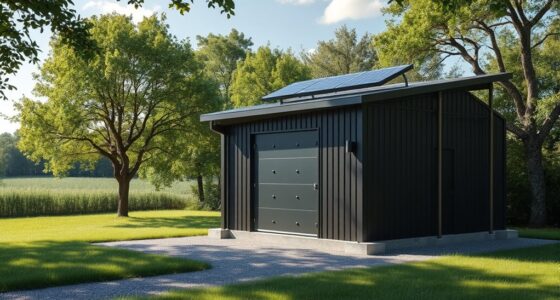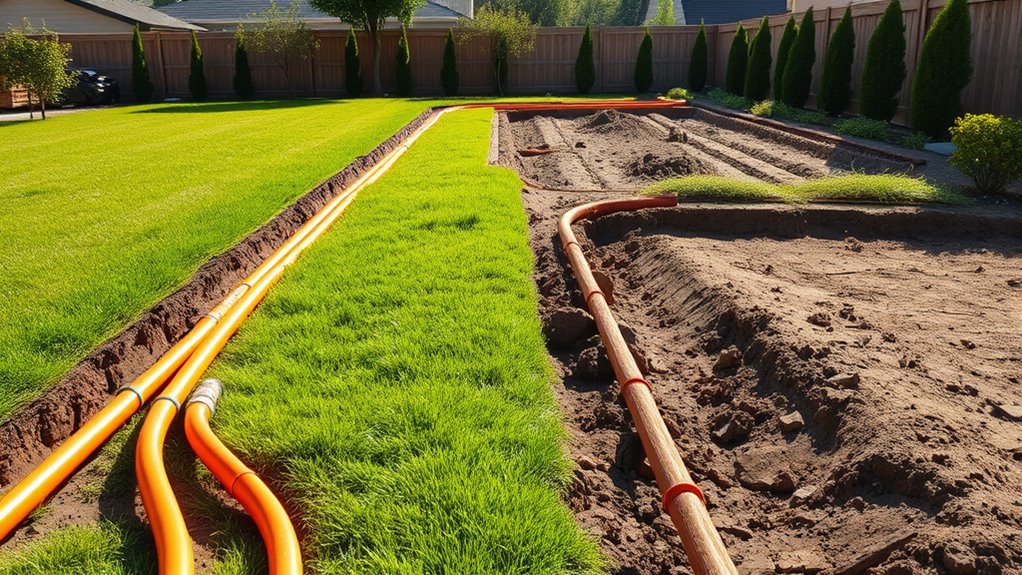

To prepare your yard for construction, start by installing perimeter fencing to define boundaries and improve safety. Next, plan and coordinate utility connections, checking for underground lines with professional help to avoid hazards. Clear debris, level the ground, and implement drainage solutions to prevent water issues. Proper landscaping and site cleanup set a solid foundation, ensuring a smooth build and lasting results. Keep exploring to discover detailed steps for a successful yard transformation.
Key Takeaways
- Identify and mark underground utility lines to prevent accidents during excavation.
- Install proper drainage solutions to avoid water issues affecting construction and landscaping.
- Erect perimeter fencing to define property boundaries and restrict access during construction.
- Clear debris and level the site to prepare a stable foundation for building and landscaping.
- Coordinate with utility providers for timely connections and ensure safe, efficient utility installation.
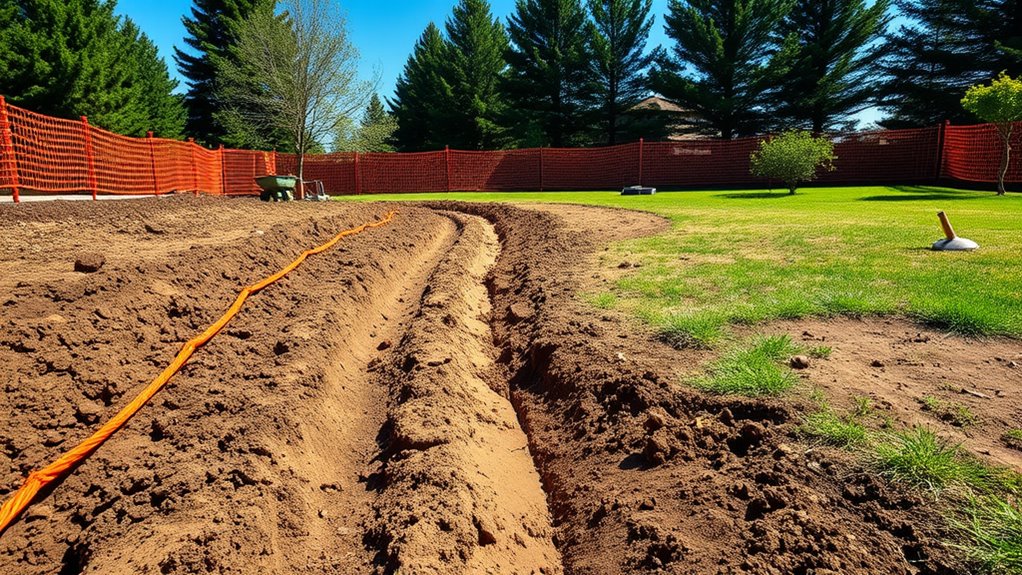
Are you ready to begin construction on your yard? Before you dive in to the building process, it’s essential to prepare your outdoor space thoroughly. This means evaluating and installing the right utilities and landscaping elements to ensure your project runs smoothly and stands the test of time. One of the first steps involves establishing a secure perimeter fencing. Not only does this define your property boundaries, but it also provides a barrier that keeps unwanted visitors out and pets safely contained. A sturdy perimeter fencing sets a clear boundary for construction activities, helping to organize the site and prevent accidental damage to neighboring properties. Additionally, a well-constructed fence can help you control access, which is vital when heavy machinery and construction crews are involved.
Beyond fencing, addressing drainage solutions is crucial. Poor drainage can lead to water pooling around your foundation, causing long-term structural issues and landscaping problems. You need to evaluate your yard’s natural slope and identify areas where water tends to collect. Installing effective drainage solutions like French drains, catch basins, or swales can redirect water away from your home and construction zone. Doing this early on prevents future complications, such as soil erosion or flooding, which can delay your project and increase costs. Proper drainage also protects your landscaping investments by preventing waterlogging and root rot. Remember, the success of your construction depends considerably on how well you manage water flow and runoff. Understanding nail styles and their trends can be a fun way to consider aesthetic details for your outdoor spaces, such as decorative accents or color schemes.
Effective drainage prevents water pooling, soil erosion, and landscaping issues, ensuring a durable and successful construction project.
Once you’ve set up your perimeter fencing and drainage solutions, consider the placement of utilities. Check for underground lines—electric, gas, water, or communication cables—before digging. Contact local utility companies for accurate maps and professional assistance. This precaution avoids dangerous accidents and costly repairs. When planning utility connections, coordinate with service providers to ensure your future systems align with your construction timeline. Installing necessary utilities early on simplifies later stages, reducing the risk of disruptions.
In addition to utilities, think about landscaping elements that will complement your new structure. Clear the area of debris, level uneven ground, and prepare the soil for planting or paving. Proper site preparation ensures your landscaping will flourish and your outdoor space will look polished once construction wraps up. Consider how your yard’s design integrates with existing features and future outdoor features, like patios, walkways, or garden beds.
Preparing your yard isn’t just about clearing space; it’s about creating a solid foundation for your upcoming construction. By focusing on perimeter fencing, drainage solutions, utilities, and landscaping, you set yourself up for a smooth process and a durable, attractive finished result. Taking these steps now saves you headaches later and helps turn your outdoor vision into reality.
Frequently Asked Questions
How Can I Identify Hidden Underground Utility Lines?
You can identify hidden underground utility lines by looking for utility markers on your property, which indicate the presence of underground detection. These markers are typically color-coded and show the location of water, gas, electric, or sewer lines. To be safe, always call a professional utility detection service before digging. They use specialized equipment to accurately locate underground utility lines, preventing accidents and costly damage during your construction project.
What Permits Are Needed for Yard Excavation?
You’ll need to obtain utility permits before starting yard excavation to comply with local regulations. Check with your city or county building department for specific excavation regulations and permit requirements. These permits guarantee safety and prevent damage to underground utility lines. Submit your application with detailed plans, and wait for approval before digging. Failing to get the proper utility permits can lead to fines or costly repairs down the line.
How Do I Choose Eco-Friendly Landscaping Options?
Sure, go ahead and plant plastic “native” species if you’re feeling rebellious. Or, smarter yet, choose eco-friendly landscaping options by selecting sustainable plants and native species that thrive naturally in your area. This reduces water use, supports local ecosystems, and minimizes maintenance. Your yard will look fabulous, and Mother Earth will thank you for making environmentally conscious choices—because nothing says “green” like actually being green.
What Is the Typical Timeline for Utility Installation?
Utility scheduling for installation usually takes 2 to 4 weeks, depending on your location and the utility company’s workload. The installation process involves planning, permits, and coordinating crews. You should contact utility providers early to make certain of smooth scheduling. Keep in mind, delays can happen, so staying in touch with the utility companies helps keep the project on track. Planning ahead minimizes disruptions and ensures timely utility connection for your construction.
How Can I Protect Existing Trees During Construction?
To safeguard existing trees during construction, focus on tree preservation and root protection. You should install barriers around the drip line to prevent damage to roots, and avoid heavy machinery near the trees. It’s also wise to schedule construction activities during dormant seasons and consult an arborist for expert advice. By taking these steps, you help ensure your trees stay healthy and intact throughout the project.
Conclusion
As you wrap up your yard preparations, remember that sometimes the smallest details—like a hidden utility line or a forgotten sprinkler—can cause unexpected delays. It’s almost as if nature and infrastructure are quietly working together, reminding you to stay vigilant. By double-checking everything now, you’ll avoid surprises later. Coincidentally, a well-prepared yard not only saves time but also transforms your space into a safe, beautiful haven for years to come.