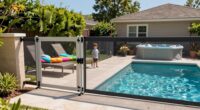
To prevent falls, guarantee your pool handrails are properly placed and securely installed where users naturally enter and exit the water. Position them at a comfortable height, considering pool depth and user needs, and anchor them using durable materials suited for wet environments. Regularly check for stability and wear to maintain safety and longevity. Continuing this guide will help you learn the best practices to maximize both safety and style around your pool.
Key Takeaways
- Position handrails at entry and exit points to provide optimal support and reduce fall risks.
- Ensure handrails are mounted at a height that allows a firm, comfortable grip for all users.
- Evaluate site conditions and surface types to securely anchor handrails and prevent loosening or detachment.
- Follow safety standards and manufacturer guidelines for placement, considering pool depth and user accessibility needs.
- Regularly inspect and maintain handrails to identify and address corrosion, loose fittings, or damage.
As an affiliate, we earn on qualifying purchases.
Why Proper Pool Handrail Placement Is Key to Safety
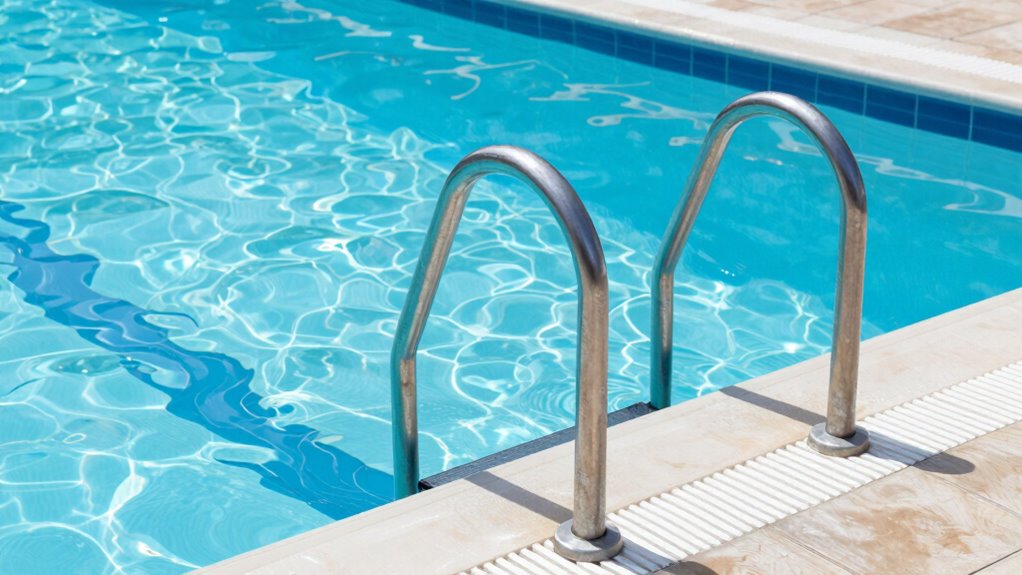
Proper pool handrail placement is essential because it directly impacts your safety when entering or exiting the water. When positioned correctly, handrails provide stable support, reducing the risk of slips and falls. Beyond safety, the design aesthetics of the handrail play a role in blending functionality with visual appeal, enhancing your pool area’s look. Material durability is equally important; choosing sturdy, weather-resistant materials guarantees the handrail withstands frequent use and exposure to water, sun, and chemicals. Proper installation techniques ensure the handrail is securely anchored, preventing accidents caused by looseness or instability. Additionally, maintenance checks can help identify issues early, ensuring ongoing safety and stability. Regularly inspecting the mounting hardware can prevent deterioration that might compromise the handrail’s security. Poorly placed handrails can create hazards rather than prevent them, so thoughtful placement considers both safety and style. When you prioritize proper positioning, you not only protect yourself and others but also maintain the overall beauty and longevity of your pool environment. Using the right DIY tools can help ensure precise installation and safe placement. Incorporating quality materials from the start can significantly extend the lifespan of your handrail and reduce the need for frequent repairs.
What Factors Influence Handrail Positioning
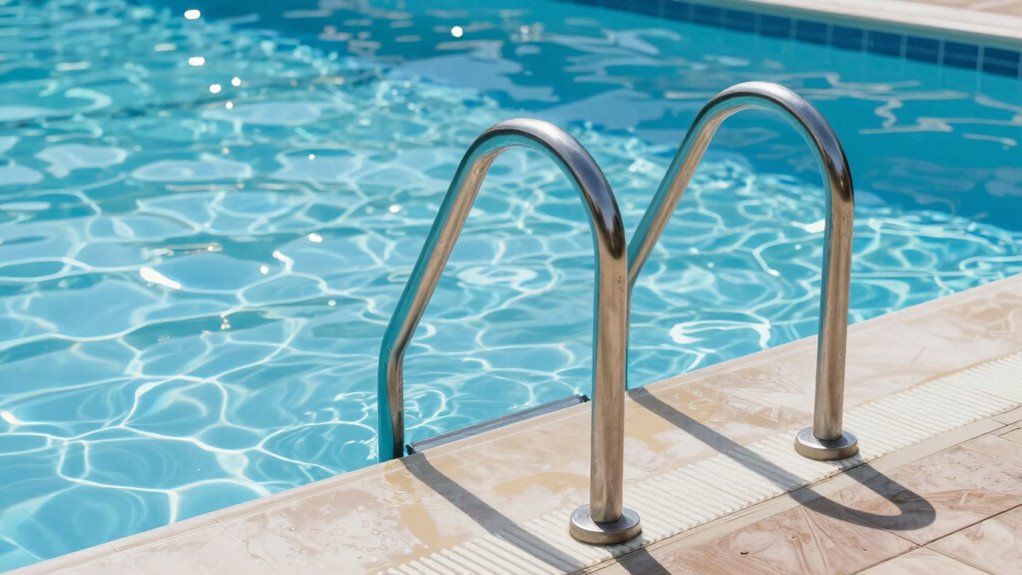
Your pool’s varying depths and the needs of different users directly impact where you should place handrails. You need to take into account how deep the water is to ensure the handrail provides support without causing hazards. Additionally, accessibility needs of all swimmers play a role in determining the most effective handrail position. Considering body jewelry measurements and materials in pool design can also help create a safer environment for all users. Moreover, understanding standard safety guidelines for pool features can further inform optimal handrail placement to prevent accidents. Implementing risk management strategies such as proper placement can significantly reduce the likelihood of falls and injuries around the pool area.
Pool Depth Variations
Pool depth variations considerably influence where handrails should be installed to guarantee safety and stability. Shallow areas require different placement than deeper sections to ensure users can grip securely and prevent falls. Consider these factors:
- Water temperature: Warmer water may cause users to move more freely, affecting where they need support.
- Pool cleaning: Debris buildup at varying depths can impact handrail attachment points for safety.
- Depth transition zones: Install handrails where the depth changes sharply to help swimmers adjust safely.
- User activity: Deeper zones often need sturdier, strategically placed handrails for diving or jumping support.
User Accessibility Needs
When determining where to place handrails, it’s essential to take into account the diverse accessibility needs of all swimmers. Proper placement ensures everyone can safely enter and exit the pool, regardless of mobility level. Consider the height and reach of users, positioning handrails where they’re most effective for stability. You can also incorporate aesthetic enhancements and decorative features to blend functionality with visual appeal, making the pool area inviting. For users with limited mobility, installing multiple handrails at different heights can improve accessibility. Remember, a well-designed handrail isn’t just about safety—it should also complement the pool’s overall look. Additionally, incorporating environmentally friendly craft patterns and sustainable materials can enhance the durability and eco-friendliness of the installation. Incorporating market trends can also help ensure your handrail choices align with current safety standards and design preferences. By prioritizing user needs, you create an inclusive environment that promotes safety, confidence, and enjoyment for all swimmers. Considering ergonomic design in handrail placement can further enhance user comfort and safety. Incorporating user-centered design principles ensures that the handrails meet the specific needs of all users, promoting greater independence and safety. For example, conducting user feedback can provide valuable insights into how different users interact with the handrails and help tailor the design accordingly.
How to Install Pool Handrails Safely in Different Areas
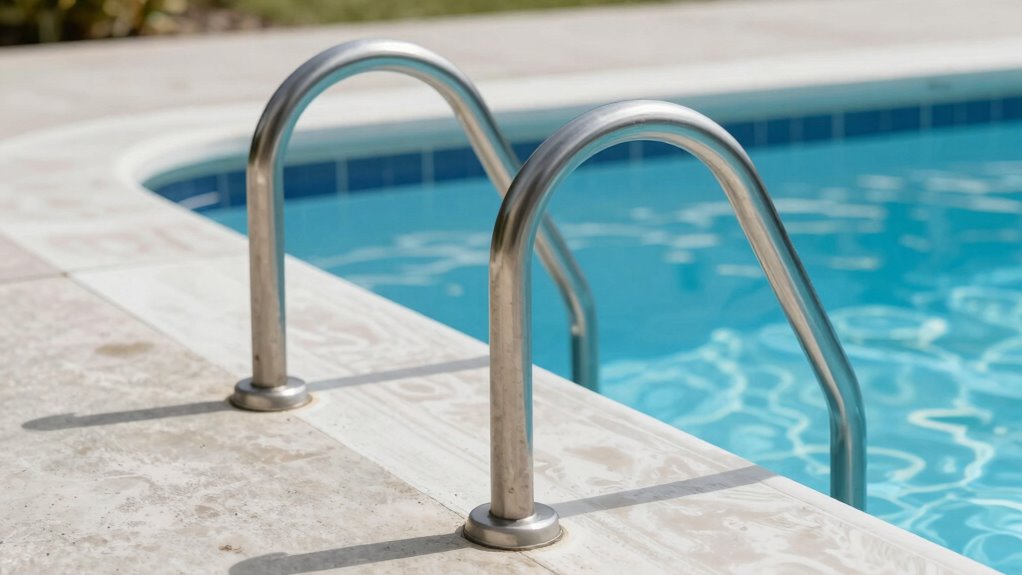
To install pool handrails safely, you need to assess the area conditions carefully. Make sure you select the right mounting type based on the surface and environment. Properly choosing and installing the right hardware guarantees the handrails will provide support without compromising safety. Additionally, consulting with professionals can ensure compliance with safety standards and proper installation techniques for optimal safety. Using effective floor scrubber techniques, such as pre-soaking pads and appropriate pressure, can also help maintain the cleanliness and slip-resistance of the pool area, further enhancing safety. Incorporating proper surface assessments can help identify potential hazards and ensure the handrails are installed securely.
Assess Area Conditions
Before installing handrails, it’s crucial to evaluate the specific conditions of your pool area. Consider how the landscape integration influences safety, guaranteeing the environment supports stable footing. Check local regulations to confirm compliance with safety standards and height requirements. Examine the pool surroundings for potential hazards like uneven surfaces or sharp edges that could affect installation. Also, assess traffic flow around the pool to position handrails where they’re most accessible without causing congestion. By understanding these conditions, you can select the best placement that enhances safety and blends seamlessly with your landscape design. Additionally, understanding the contrast ratio of your surrounding environment can help determine the optimal lighting conditions for visibility around the pool area. Being aware of portable safety tips for equipment like handrails can further ensure secure installation and ongoing safety. This careful assessment ensures your pool area remains secure, compliant, and integrated into the overall outdoor aesthetic, especially when considering landscape integration to improve safety and visual harmony. Recognizing the importance of installation standards helps ensure your handrails are both effective and compliant with safety guidelines.
Choose Appropriate Mounting
Selecting the right mounting method for your pool handrails depends on the specific area and surface conditions. For concrete or tile surfaces, secure mounting with heavy-duty anchors ensures stability and safety. If you’re installing in a softer or uneven surface, consider adjustable or supplemental supports to prevent loosening over time. When aesthetics matter, choose mounting hardware that blends with decorative features, maintaining visual appeal without sacrificing safety. For areas where appearance is a priority, sleek, concealed mounts can provide a clean look while ensuring durability. Always follow manufacturer guidelines and local codes to guarantee secure installation. Proper mounting not only enhances safety but also complements your pool’s design, combining functionality with aesthetic considerations seamlessly.
Common Mistakes to Avoid When Installing Pool Handrails
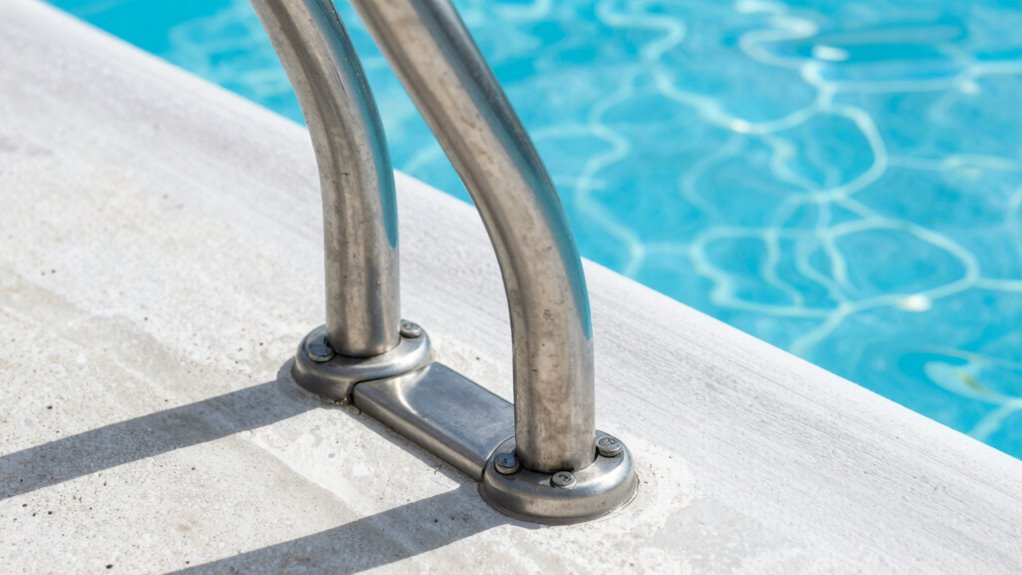
Installing pool handrails might seem straightforward, but many overlook common mistakes that can compromise safety. One mistake is prioritizing decorative features over function, which can weaken stability. Second, ignoring aesthetic considerations may lead to awkward placement that hampers access. Third, installing handrails too high or low reduces grip effectiveness and increases fall risk. Fourth, neglecting proper anchoring can cause the rails to loosen or detach. Avoid these pitfalls to ensure your handrails are both safe and visually appealing. Focus on secure installation, functional positioning, and blending with your pool’s design, rather than just aesthetic considerations alone. Proper placement and attention to detail are key to preventing falls and maintaining a safe swimming environment.
How to Maintain and Check Your Pool Handrails for Safety
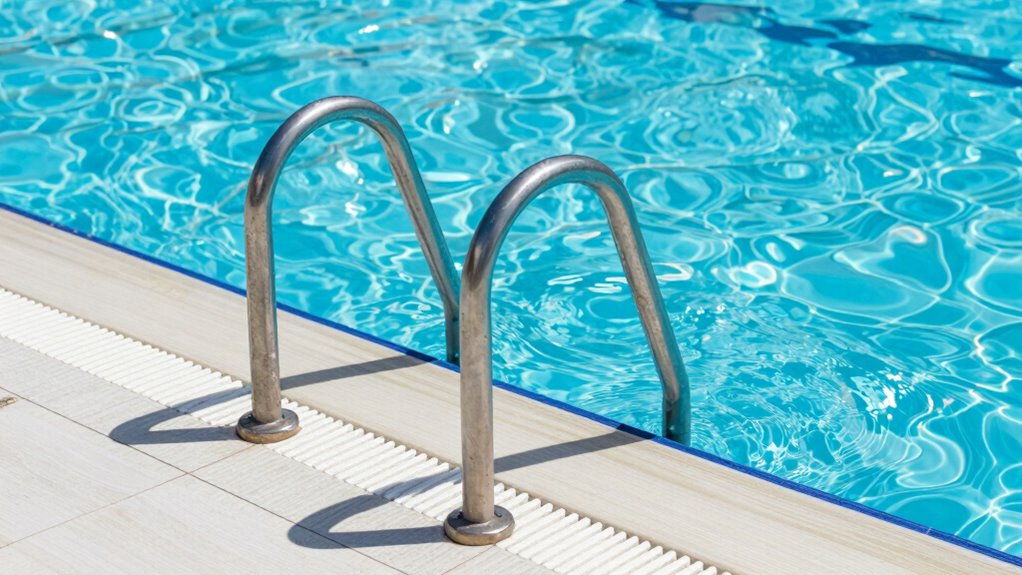
Regularly inspecting and maintaining your pool handrails is essential to guarantee they remain safe and secure. Follow a consistent maintenance routine that includes checking for corrosion, loose fittings, or rust, and tightening any bolts or screws as needed. Seasonal inspections are especially important before and after prolonged use or harsh weather, which can weaken the hardware. Look for signs of deterioration, such as chipped paint or bent rails, and address issues promptly to prevent accidents. Keep the area around the handrails clean and free of debris that could cause slipping. Regular upkeep ensures the handrails stay sturdy, reducing the risk of falls. Staying vigilant with maintenance routines and seasonal inspections helps protect everyone using the pool.
Expert Tips for Choosing the Best Handrail Placement
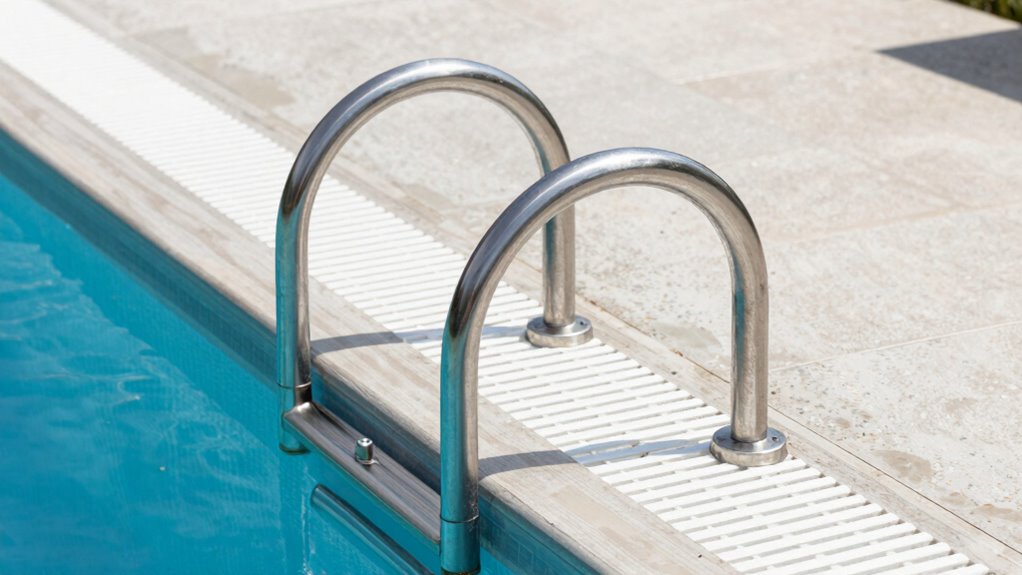
Choosing the right placement for your pool handrails can substantially reduce the risk of falls and injuries. To guarantee safety and style, consider these expert tips:
Properly positioned pool handrails enhance safety and style, reducing fall risks and ensuring long-lasting support.
- Position handrails where you naturally enter and exit the pool for easy support.
- Select a design that complements your aesthetic, blending functionality with visual appeal.
- Use durable materials like stainless steel or aluminum to withstand water exposure and weather conditions.
- Mount the rails at a height that offers firm grip without compromising comfort or accessibility.
Proper placement enhances both safety and aesthetic design, making your pool area inviting and secure. Prioritize material durability to prevent corrosion and ensure long-lasting support. With the right positioning, you create a safer environment for everyone.
Frequently Asked Questions
How Often Should Pool Handrails Be Inspected for Safety?
You should inspect your pool handrails at least once a month to make sure safety standards are met. Regular inspection helps identify loose fittings, corrosion, or damage that could cause falls. After storms or heavy use, give them a quick check too. Staying consistent with inspection frequency guarantees your handrails remain secure, reducing the risk of accidents and ensuring your pool area stays safe for everyone.
Are There Specific Materials Recommended for Durable Pool Handrails?
Surprisingly, the best materials for pool handrails aren’t the cheapest or most flashy. Opt for stainless steel or aluminum with high corrosion resistance, because they offer unmatched durability and withstand harsh pool chemicals. These materials resist rust and degradation over time, ensuring safety and longevity. Don’t settle for flimsy options; choosing the right material guarantees your handrails stay sturdy, safe, and functional for years to come.
Can Homeowners Install Pool Handrails Without Professional Help?
You can definitely handle DIY installation of pool handrails if you’re comfortable with basic tools and follow proper safety procedures. Choose durable materials like stainless steel or aluminum for long-lasting results. Carefully measure and mark the placement to guarantee safety and prevent falls. Reading manufacturer instructions thoroughly and using the right tools will help you install the handrails securely, giving you confidence and peace of mind around your pool.
What Is the Typical Lifespan of a Pool Handrail?
A pool handrail typically lasts 10 to 15 years, depending on maintenance and material longevity. To maximize its lifespan, you should regularly inspect for rust or corrosion, clean it with mild soap and water, and apply protective coatings if needed. Proper maintenance tips, like avoiding harsh chemicals and ensuring secure installation, help prevent damage. Choosing durable materials like stainless steel also extends the life of your pool handrail.
How Do Local Building Codes Affect Handrail Placement Requirements?
Local building codes greatly influence your handrail placement to guarantee safety and compliance. You need to follow local regulations, which specify height, distance, and secure attachment points for handrails. Ignoring these codes can lead to safety hazards and legal issues. Always check with your local authorities or building department before installing or modifying pool handrails, so your setup meets all safety standards and adheres to building code compliance.
Conclusion
Think of your pool handrails as the steady anchors of a boat, guiding you safely through every splash and swim. When you place them thoughtfully, you’re constructing a secure pathway that keeps accidents at bay. Regular checks and proper installation are your compass, steering you clear of hazards. With the right placement, you’ll enjoy peace of mind and endless fun, knowing your pool is a safe harbor for everyone.