
BTU, or British Thermal Units, measure how much heat a solar pool heater panel can produce to warm your backyard pool. The higher the BTU, the faster and more effectively it heats your water, especially in cooler weather or larger pools. Choosing the right BTU guarantees you get efficient heating without wasting energy or money. If you want to discover how to select and optimize your solar heater’s performance, there’s more to explore on this topic.
Key Takeaways
- BTU measures the heat energy solar panels can transfer to warm your pool water.
- Higher BTU ratings mean faster and more effective pool heating in your backyard.
- Solar panel BTU depends on sunlight, panel size, and weather conditions, affecting heating performance.
- Matching BTU to your pool size prevents energy waste and ensures efficient heating.
- Properly sized BTU in solar panels helps keep your backyard pool comfortably warm with less energy.
What Is BTU and How Does It Measure Your Pool’s Heating Power?
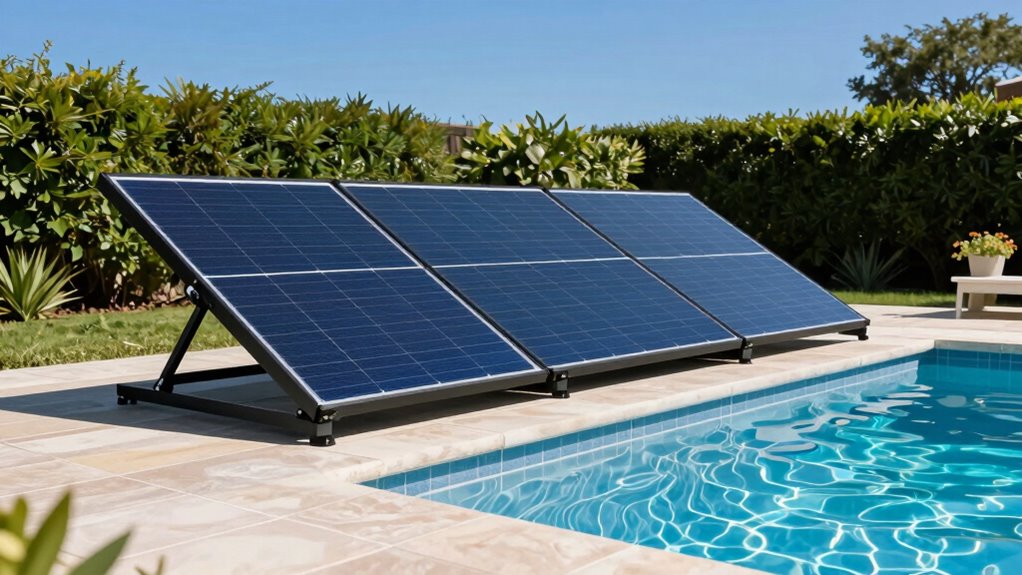
If you’re looking to understand how your pool heats up, it’s important to know what BTU is. BTU, or British Thermal Unit, measures the amount of heat needed to raise one pound of water by one degree Fahrenheit. When selecting a solar pool heater, BTU helps determine its heating power, making sure your pool warms efficiently. Weather considerations, like sunlight and wind, impact how much heat is retained. Good pool insulation minimizes heat loss, allowing your heater to work more effectively, while poor insulation means more energy is needed to maintain your desired temperature. Knowing the BTU rating helps you match your heater to your pool size and local climate, ensuring you get *best* warmth without wasting energy. Understanding heat capacity is key to choosing the right size and type of solar heater for your backyard. Additionally, proper installation can significantly influence the heater’s overall performance and energy efficiency. Being aware of solar panel efficiency can also help you select units that maximize heat absorption and transfer in your specific environment. Recognizing how climate factors influence heat retention can further optimize your pool heating strategy. Properly assessing heat transfer characteristics ensures your solar heater performs at its best regardless of weather variations.
How Do Solar Pool Heaters Use BTU to Warm Your Water?
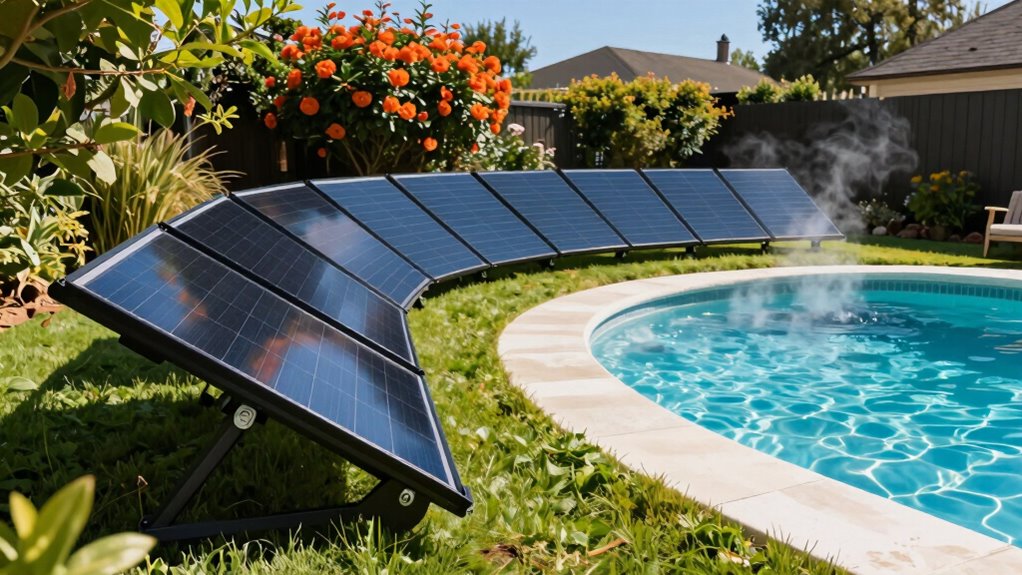
Solar pool heaters use BTU ratings to determine how much heat they can transfer to your water, ensuring efficient warming. When sunlight hits the solar panels, the heater absorbs the solar energy and converts it into heat, which is then transferred to your pool water based on its BTU capacity. This process is influenced by factors like pool size and weather conditions. Using a pool cover offers advantages here—it reduces heat loss overnight and minimizes evaporation, helping your heater work more effectively. Regular seasonal maintenance, like cleaning panels and checking connections, keeps your system operating at peak efficiency. Additionally, understanding the Horsepower of Electric Dirt Bikes can provide insight into how much energy a solar heater can generate or transfer in certain setups. By understanding how BTU relates to heat transfer, you can better optimize your solar heater’s performance and enjoy warmer water all season long. Proper sizing of solar panels also plays a crucial role in maximizing heat transfer efficiency, ensuring your pool warms quickly and stays warm. Employing solar panel placement strategies can further improve the system’s effectiveness by optimizing sun exposure throughout the day. Knowing the capacity of your solar heater can help you select the right size for your pool and climate, ensuring efficient operation and cost savings. Additionally, considering seasonal weather variations can help you plan for optimal energy usage and maintain consistent water temperatures.
How to Choose the Right BTU for Your Pool Size and Solar Heater?
Choosing the right BTU rating for your solar pool heater depends on your pool’s size and your heating needs. To find the perfect match, consider these factors:
Selecting the right BTU rating ensures efficient heating tailored to your pool size and climate.
- Pool size – Larger pools need higher BTU ratings to heat efficiently.
- Climate considerations – Cooler climates require more BTU to maintain warmth.
- Usage frequency – If you swim often, prioritize higher BTU for quicker heating.
- Sun exposure – More sunlight reduces the needed BTU, saving energy.
How Does BTU Impact Your Solar Pool Heater’s Efficiency and Cost?

The BTU rating of your solar pool heater directly influences its efficiency and the overall cost of operation. Higher BTU ratings mean your heater can generate more heat, reducing the time needed to warm your pool and lowering energy consumption. This improved efficiency can lead to significant energy savings over time, making your pool maintenance easier and more affordable. Additionally, understanding proper gear care tips helps maintain your heater’s performance and longevity. Maintaining the correct size and measurement of your heater ensures optimal operation and prevents energy waste. Proper sizing based on your pool’s capacity and volume ensures the heater’s BTU output matches your heating needs without excess. However, a heater with an excessively high BTU might be unnecessary for your pool size, leading to wasted energy and higher upfront costs. Conversely, a lower BTU rating may struggle to maintain your desired temperature, increasing operational costs. Finding the right BTU balance ensures ideal performance, helping you enjoy a warmer pool without overspending on energy or equipment.
Tips to Maximize Your Solar Pool Heater’s BTU Performance
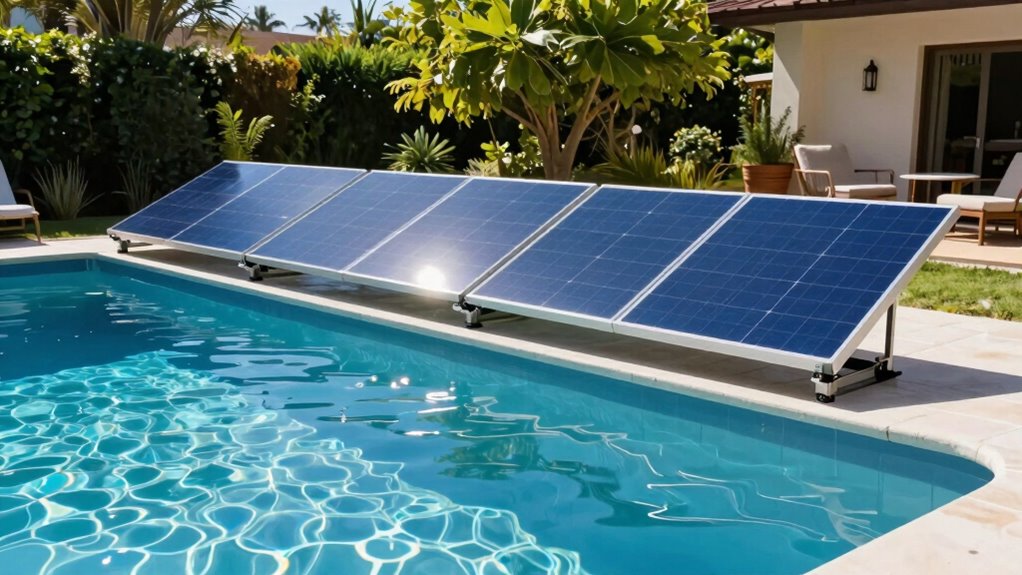
Maximizing your solar pool heater’s BTU performance involves several practical steps. First, ensure your solar panel alignment is optimal—aim panels directly at the sun for maximum energy absorption. Second, reduce shading by trimming nearby trees or structures that block sunlight, especially during peak hours. Third, regularly clean your panels to prevent dirt and debris from diminishing heat transfer. Fourth, consider installing a tilt mechanism to adjust the angle seasonally, capturing more sunlight throughout the year. These actions substantially boost BTU output, translating into more efficient heat transfer and faster pool warming. Additionally, understanding filter sizing/flow can help optimize overall system efficiency, ensuring your setup operates smoothly. When considering other factors like solar panel efficiency, you can further enhance heat collection and energy savings. Proper solar panel alignment and shading minimization are key to maximizing heat transfer, saving energy, and extending your swimming season.
Frequently Asked Questions
How Does Weather Affect a Solar Heater’s BTU Output?
Weather considerably impacts your solar heater’s BTU output. Temperature fluctuations and seasonal variations cause the panels to work harder on colder days, boosting BTU performance, while warmer weather reduces efficiency. Sunny, clear days maximize heat absorption, increasing BTU output. Conversely, cloudy or rainy days lower it. So, your solar heater’s effectiveness varies with the weather, and understanding these patterns helps you anticipate how much heat your pool will gain.
Can Multiple Solar Panels Increase Total BTU Capacity?
Yes, adding multiple solar panels boosts your total BTU capacity because more panels mean more heat collection. Keep in mind that solar panel durability guarantees they withstand weather, maintaining efficiency over time. To accurately determine your system’s BTU output, use reliable btu calculation methods that account for sunlight, panel size, and efficiency. This way, you maximize your pool’s warmth and enjoy reliable performance season after season.
What Is the Typical Lifespan of a Solar Pool Heater’s BTU Efficiency?
Ever wonder how long your solar pool heater’s BTU efficiency lasts? Usually, it stays effective for 10 to 20 years. You can extend this by choosing durable panels and keeping up with regular maintenance. Don’t forget, panel durability impacts lifespan, and skipping maintenance can shorten it. With proper care, your heater will keep warming your pool efficiently, making every swim worth the investment.
How Do Shading and Obstructions Impact BTU Performance?
Shading effects and obstructions impact your solar pool heater’s BTU performance by reducing sunlight exposure. When trees, buildings, or other objects block sunlight, your panels generate less heat, lowering their efficiency. This decrease in heat output means your pool may take longer to warm or stay warm less effectively. To maximize BTU performance, guarantee your solar panels are placed in a sunny, unobstructed location, and trim nearby foliage as needed.
Are Higher BTU Ratings Always Better for Small or Large Pools?
Higher BTU ratings aren’t always better; it depends on your pool size and heating efficiency needs. For small pools, a lower BTU heater can be efficient without wasting energy. Larger pools require higher BTU ratings to heat effectively, but oversizing can lead to unnecessary energy use. You should match the BTU rating to your pool size and desired heating speed, ensuring ideal performance without excess energy consumption.
Conclusion
Understanding BTU helps you pick the right solar pool heater for your backyard. For example, if you have a 15,000-gallon pool, choosing a heater with a higher BTU rating guarantees faster, more efficient heating. By matching BTU to your pool size, you maximize energy use and save money. Remember, investing in the proper BTU rating means your pool stays comfortably warm all season long, making your backyard oasis more enjoyable and efficient.