To care for your pool ladders, rails, and diving boards, regularly inspect for rust, corrosion, loose hardware, or cracks. Clean them with mild soap and water, and keep the area around them free of debris. Tighten any loose bolts and replace damaged parts promptly. Apply protective coatings to prevent rust and guarantee safety. Proper maintenance keeps your equipment safe and extends its lifespan, and by following these steps, you’ll discover more ways to keep your pool fixtures in top shape.
Key Takeaways
- Regularly inspect for rust, corrosion, cracks, and loose hardware to ensure structural safety.
- Tighten or replace damaged bolts, screws, and mounting hardware promptly.
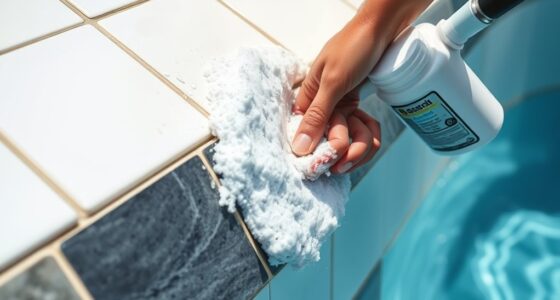
- Clean surfaces with mild soap and water, removing algae and debris to prevent slipping.
- Apply rust-inhibiting primers and protective coatings to extend fixture lifespan.
- Keep the area clear of debris and standing water to maintain a safe swimming environment.
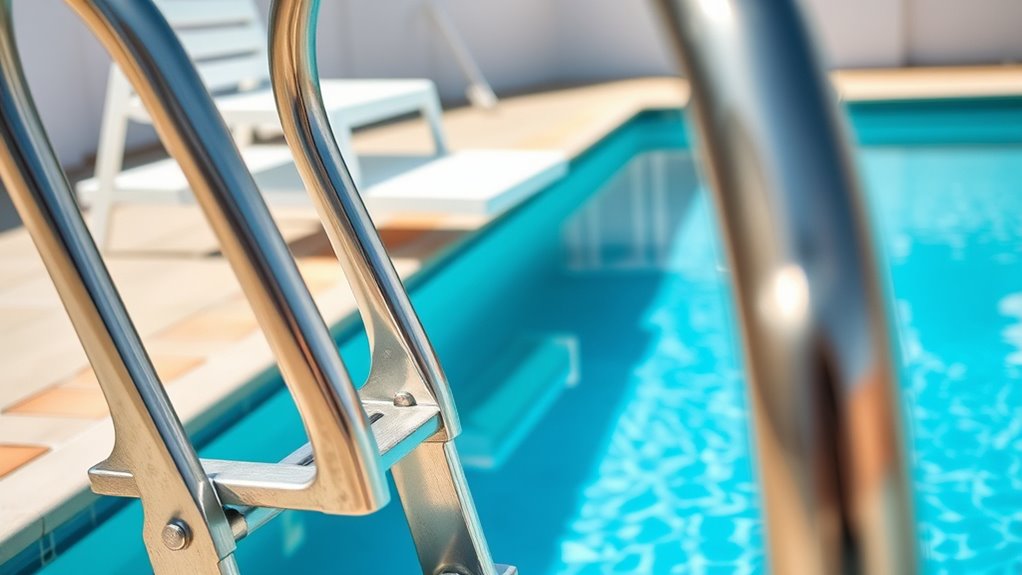
Maintaining your pool’s ladders, rails, and diving boards is crucial for safety and longevity. These fixtures are essential for easy access and safe diving, but they can become worn or damaged without proper care. Keeping them in top condition not only prevents accidents but also extends their lifespan. When it comes to pool safety, ensuring that every component is secure and well-maintained is a top priority. Regular maintenance tips include inspecting for rust, loose bolts, or cracks, and addressing issues promptly. By doing so, you reduce the risk of injuries and ensure your pool remains a safe environment for everyone.
Start by examining your ladders, rails, and diving boards frequently. Look for signs of corrosion or rust, especially if your pool is outdoors or exposed to salty water. Rust can weaken metal parts, making them more prone to breaking or collapsing under weight. If you notice any rust, use a wire brush or sandpaper to remove it, then apply a rust-inhibiting primer and paint designed for metal surfaces. Tighten loose bolts and screws to keep the fixtures sturdy, and replace any missing or damaged parts immediately. Loose hardware can cause instability, risking accidents for swimmers entering or exiting the pool.
Regularly inspect and tighten hardware to ensure safe, stable pool ladders, rails, and diving boards.
For diving boards, check the mounting hardware and the entire board for cracks or warping. A cracked board is a serious safety hazard, so replace it if you find any damage. Ensure the board is securely anchored and that the springs, if applicable, are functioning properly. Regularly clean the surface of the diving board with a mild soap and water solution to prevent the buildup of dirt, algae, or slippery substances that could cause falls. Keep the area underneath and around the diving board clear of debris and standing water, which can contribute to deterioration.
Rails and handrails require similar attention. Make sure they are firmly anchored and free of corrosion. If you notice any wobbling or loose fittings, tighten or replace the hardware as needed. Applying a protective coating or sealant periodically can help prevent rust and corrosion, especially in humid or salty environments. Keep the surfaces smooth and free of sharp edges or peeling paint to avoid cuts or abrasions.
Frequently Asked Questions
How Often Should I Replace Rusted or Damaged Pool Hardware?
You should replace rusted or damaged pool hardware as soon as you notice issues during routine pool hardware inspection. There’s no fixed replacement schedule; however, it’s best to act promptly to ensure safety. Regularly inspect your pool hardware and replace any compromised parts immediately. Doing so prevents accidents and prolongs the life of your equipment, keeping your pool safe and enjoyable for everyone.
Are There Eco-Friendly Cleaning Products Safe for Pool Accessories?
Yes, you can use eco-friendly cleaning products like biodegradable cleaners and natural disinfectants for your pool accessories. These products are safe for you and the environment, effectively removing grime without harsh chemicals. Just make certain you follow the manufacturer’s instructions for proper use. Regularly cleaning with these eco-friendly options helps maintain your pool accessories’ longevity while minimizing environmental impact, keeping your pool area safe and sustainable.
Can I Install Pool Ladders and Rails Myself?
Yes, you can do a DIY installation of pool ladders and rails if you follow safety guidelines carefully. Start by reading the manufacturer’s instructions thoroughly, gather the right tools, and verify your measurements are precise. It’s important to secure all bolts tightly and check stability once installed. Always wear safety gear during installation, and if you’re unsure, consult a professional to avoid accidents or damage.
What’s the Best Way to Prevent Corrosion on Metal Parts?
To prevent corrosion on metal parts, you should regularly inspect, clean, and dry them thoroughly. Apply a rust prevention coating or sealant to shield against moisture, and use protective covers when the pool isn’t in use. Consistent metal maintenance keeps rust prevention in check, preserves your equipment’s integrity, and extends its lifespan. Think of it as giving your pool’s metal a shield—clean, dry, protected, and always ready for the next swim.
How Do I Ensure Diving Boards Are Securely Anchored?
You make certain your diving board is securely anchored by checking that the anchor bolts are tight and properly installed into a solid concrete surface. Make sure the weight distribution is even across the anchoring points to prevent stress and movement. Regularly inspect the bolts for corrosion or wear, tightening or replacing them as needed. Proper anchoring guarantees safety and stability during use, giving you peace of mind while swimming.
Conclusion
By caring for your pool ladders, rails, and diving boards, you’re nurturing the gateway to summer fun and safe swimming adventures. Think of each maintained piece as a sturdy bridge, inviting you to cross confidently into relaxation and joy. When you tend to them, you preserve their strength and sparkle, turning your pool area into a sanctuary of shimmering waters and bright memories. Your attention keeps the spirit of summer alive, shining brightly for seasons to come.