Even if your pool looks clean and clear, it can still be poorly managed because visual clarity doesn’t reveal underlying chemical imbalances or equipment issues. Small pH shifts, unbalanced alkalinity, or hidden bacterial growth won’t show up, but they can harm water quality and safety. Equipment problems like clogged filters or malfunctioning pumps may also go unnoticed, letting debris or bacteria build up. Keep paying attention, as understanding these hidden risks will help you stay ahead of potential problems.

Get pool and patio gear delivered free with Prime
- Fast, free delivery on millions of items
- Prime Video, Amazon Music and more included
- Member-only deals all year
Key Takeaways
- Clear water can hide chemical imbalances and bacteria growth that compromise pool safety.
- Visual clarity doesn’t reflect proper chemical levels or equipment functionality.
- Filtration may appear effective, but circulation issues can still cause water quality problems.
- Regular maintenance is essential to prevent unseen chemical shifts and equipment failures.
- Proper water management involves monitoring chemistry and equipment, not just visual inspection.
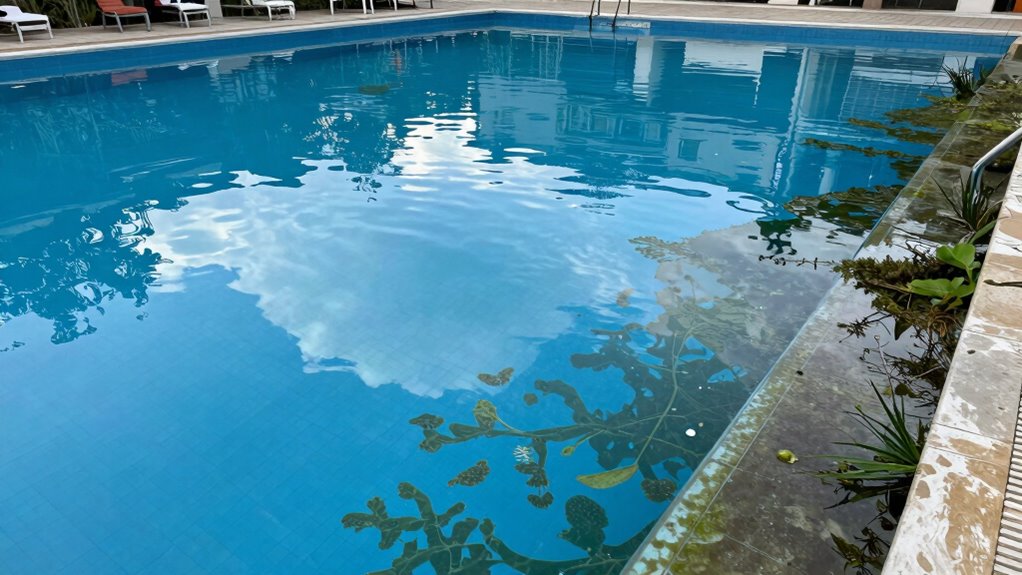
Managing a pool might seem straightforward, but it comes with a range of challenges that can catch even experienced operators off guard. You might keep the water clear and appear clean to the naked eye, but that doesn’t always mean your pool is well-managed. Even with crystal-clear water, underlying issues like chemical imbalances and equipment malfunctions can lurk beneath the surface, causing long-term problems if left unchecked. It’s tempting to focus solely on the water’s appearance, but true pool management requires attention to the chemical composition and the functionality of your equipment.
Chemical imbalances are among the most sneaky issues you’ll face. You could test the water and find it’s within acceptable ranges, yet subtle shifts can occur rapidly, especially with frequent use or weather changes. If your pH is slightly off, it impacts chlorine effectiveness, leading to bacteria and algae growth, despite the water’s clarity. Similarly, improper levels of alkalinity or stabilizers can cause corrosion or scaling, damaging your pool’s surface and equipment over time. These imbalances may not be immediately visible, but they degrade water quality and pool integrity if ignored. Monitoring and adjusting chemical levels regularly is essential to prevent long-term damage. Understanding testing procedures can further help you maintain optimal chemical balance. Additionally, keeping track of water chemistry trends over time can help identify patterns and prevent issues before they escalate.
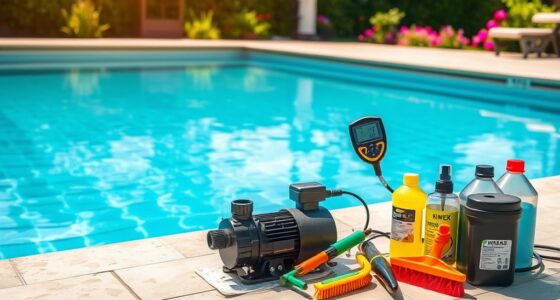
Equipment malfunctions pose another significant challenge. You might see the water circulating, but that doesn’t mean your filtration system is functioning at its best. A clogged filter, a malfunctioning pump, or faulty sensors can all lead to poor water circulation, even if the water appears clean. When your equipment isn’t working correctly, debris and contaminants can build up, creating hidden areas of stagnation and bacteria growth. These problems may not be obvious until they cause more serious issues, like equipment failure or water quality deterioration. Regular maintenance and prompt repairs are crucial, but sometimes equipment issues can be complex and require professional intervention. Proper equipment maintenance helps mitigate these risks and ensures your pool remains in optimal condition. Additionally, understanding the tools and technology available for pool management can help you diagnose issues early and maintain a healthy swimming environment.
Even when the water looks perfect, these underlying problems can silently compromise the pool’s safety and longevity. You need to regularly check and adjust chemical levels, not just rely on visual cues. Equally important is maintaining your equipment, ensuring filters, pumps, and sensors are in top condition. Ignoring these details might give you a false sense of security, but the reality is that a well-managed pool is about more than just aesthetic appeal. It’s about proactive maintenance, vigilant monitoring, and understanding that good water quality depends on proper chemistry and equipment functioning. Only then can you truly guarantee a safe, healthy, and enjoyable swimming environment.
As an affiliate, we earn on qualifying purchases.
Frequently Asked Questions
How Often Should Pool Water Be Tested for Contaminants?
You should test your pool water at least twice a week to guarantee proper chemical balancing and safety. Regular testing helps catch contaminants early, preventing issues from poor equipment maintenance. Use a reliable test kit to check pH, chlorine, and other chemicals, adjusting as needed. Consistent testing keeps your water clean, clear, and safe, reducing strain on your pool’s equipment and ensuring a pleasant swimming experience.
What Are the Common Signs of Poor Pool Water Management?
Think of your pool as a delicate symphony, where harmony is key. If you notice cloudy water, strong chemical odors, or skin irritation, these are signs of poor management. Chemical imbalance can cause murkiness, while filtration issues might lead to debris buildup. Additionally, algae growth and fluctuating pH levels indicate your pool’s health is compromised. Addressing these signs promptly guarantees your pool remains inviting and safe for swimmers.
Can Algae Grow Even if Water Appears Clear?
Yes, algae can grow even if your water looks clear. Poor filtration effectiveness allows nutrients and algae spores to accumulate, making it easier for algae to develop unnoticed. To prevent algae growth, you need proper filtration and regular chemical treatment. Consistently maintaining filtration efficiency and using algae prevention methods ensures your pool stays clear and healthy, avoiding the hidden growth that can occur despite seemingly clean water.
How Does Water Temperature Affect Pool Water Quality?
You might think warm water always improves pool quality, but higher temperatures can actually worsen chemical imbalances and promote bacteria growth if you don’t maintain your equipment properly. Warmer water accelerates chemical reactions, requiring more frequent testing and adjustments. Neglecting equipment maintenance like filters and pumps can let contaminants thrive, even if the water looks clear. So, managing temperature alongside chemical balance and equipment care keeps your pool clean and safe.
What Role Does pH Balance Play in Pool Safety?
Maintaining proper pH balance is essential for your pool’s safety because it controls chemical imbalances and pH fluctuations that can cause skin and eye irritation. When pH levels are off, disinfectants become less effective, increasing the risk of bacteria growth. Regular testing and adjusting pH levels help you prevent these issues, ensuring your pool remains safe, clean, and enjoyable for everyone.
Conclusion
Even if your pool looks crystal clear, poor management can turn it into a hidden threat beneath the surface. Think of your pool as a delicate dance—without proper steps, even the most beautiful rhythm can fall apart. Regular maintenance, vigilant testing, and consistent care keep the water safe and inviting. Remember, a well-managed pool isn’t just about looks; it’s about creating a safe haven where every splash feels like a revitalizing victory, not a gamble.
Halloween Picks
halloween
As an affiliate, we earn on qualifying purchases.