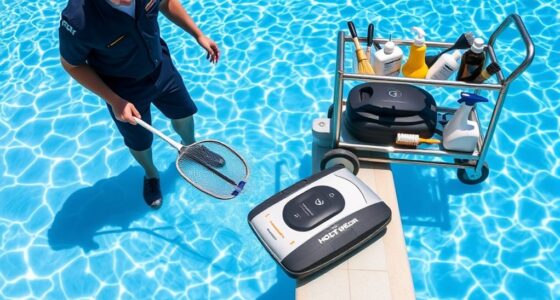
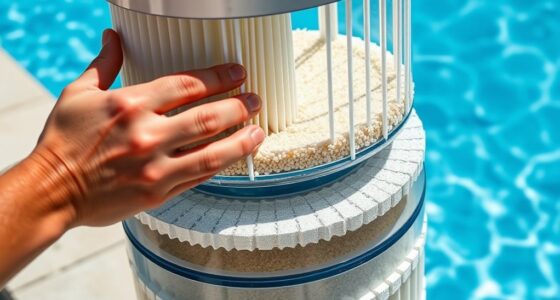
To keep your pool equipment room organized and safe, store chemicals in clearly labeled, upright containers and separate incompatible substances. guarantee good ventilation by regularly maintaining exhaust fans to control fumes and humidity. Keep pathways clear, use proper signage, and regularly inspect for leaks or clutter to prevent accidents. Proper organization and safety practices also prolong equipment life and reduce hazards. Stay tuned to learn more tips for a safe and efficient pool equipment space.
Key Takeaways
- Organize tools, chemicals, and spare parts with clear labels and designated storage areas for quick access and safety.
- Ensure proper chemical storage in well-ventilated, separate containers to prevent reactions and degradation.
- Install and maintain ventilation systems to control fumes, humidity, and remove vapors effectively.
- Keep pathways clear, use hazard signage, and regularly inspect for leaks or spills to maintain a safe environment.
- Conduct routine cleaning and equipment checks to prevent accidents, extend equipment lifespan, and ensure operational safety.

A well-organized pool equipment room is essential for ensuring safety and efficient maintenance. When you keep your pool supplies and machinery properly arranged, you minimize hazards and streamline daily tasks. One of the most critical aspects of organization is proper chemical storage. Pool chemicals, such as chlorine and pH adjusters, need to be stored separately and in well-ventilated areas to prevent dangerous reactions. You should use designated, clearly labeled containers and shelving to keep chemicals upright and accessible. Avoid storing chemicals directly on the floor to prevent spills and make inspections easier. Additionally, guarantee that incompatible chemicals are kept apart—never store acids near chlorines or other reactive substances. Proper chemical storage not only safeguards your staff and users but also maintains the integrity of the chemicals, preventing degradation or unintended reactions.
Equally important is the implementation of effective ventilation systems within your pool equipment room. Ventilation helps control fumes, humidity, and temperature, all of which are essential for safety and equipment longevity. You should install exhaust fans or mechanical ventilation that can remove chemical vapors and moisture efficiently. Regularly inspecting and maintaining these systems is critical to ensure they operate correctly. Good ventilation reduces the risk of inhaling hazardous fumes and diminishes the buildup of potentially explosive gases. When designing or organizing your room, consider placing ventilation intakes and exhaust vents strategically to promote airflow throughout the space. This not only protects your health but also prevents corrosion and mold growth that can damage equipment over time.
In addition to chemical storage and ventilation, you need to keep pathways clear and equipment labeled for quick identification. Proper signage indicates hazards and safety procedures, which becomes especially important during emergencies. Maintaining an organized space means regularly checking for leaks, expired chemicals, and clutter that could obstruct access or cause accidents. Use sturdy shelving units to keep tools, filters, and spare parts in designated spots, so you can find what you need swiftly. Implementing a routine cleaning schedule guarantees the room stays safe and functional, reducing the risk of slips, trips, and falls.
Frequently Asked Questions
How Often Should Pool Equipment Rooms Be Inspected for Safety?
You should inspect your pool equipment room at least once a month for safety. Incorporate a regular maintenance schedule that includes checking for hazards, ensuring equipment is properly stored, and verifying safety devices are functional. Conduct a safety audit during each inspection to identify potential risks. Consistent inspections help prevent accidents, maintain compliance, and keep the environment safe for everyone using the pool.
What Are the Best Practices for Preventing Equipment Corrosion?
To prevent equipment corrosion, you should regularly apply protective coatings like paint or sealants to vulnerable surfaces. Keep the room dry and well-ventilated to reduce moisture, which accelerates corrosion. You also want to perform routine inspections to spot early signs of rust or damage. Using corrosion-resistant materials for new equipment and ensuring proper drainage can further protect your pool equipment from corrosion, extending its lifespan and ensuring safety.
How Do I Train Staff on Emergency Procedures in the Equipment Room?
You should conduct regular emergency drills to guarantee staff knows procedures and responds swiftly. Use clear safety signage to highlight hazards and emergency exits. Train your team on proper protocols, including shut-off procedures and evacuation routes. Reinforce training through hands-on practice and refresher sessions. By practicing drills and displaying safety signage prominently, your staff stays prepared and confident to handle emergencies effectively in the equipment room.
What Are the Legal Requirements for Pool Equipment Room Safety?
Think of safety compliance as a lighthouse guiding your actions. You must follow pool equipment regulations, ensuring all safety measures are in place. Legal requirements demand proper storage, clear signage, and accessible safety equipment. Regular inspections and staff training uphold these standards, preventing accidents and legal issues. By prioritizing these rules, you create a safe environment where rules shine bright, guiding your team toward consistent safety and legal adherence.
How Can I Improve Ventilation in a Small Equipment Room?
To improve ventilation in your small equipment room, focus on airflow enhancement by installing or upgrading ventilation systems like exhaust fans or air vents. guarantee these systems are properly positioned to promote cross-ventilation, removing heat and fumes effectively. Regularly clean and maintain the ventilation components, and consider adding a window or air intake vent if possible. These steps help maintain a safe environment and prevent equipment overheating.
Conclusion
Keeping your pool equipment room organized and safe isn’t just about compliance; it’s about efficiency, security, and peace of mind. By maintaining order, you prevent accidents, reduce downtime, and extend equipment lifespan. By prioritizing safety, you protect yourself, your team, and your guests. Organization and safety go hand in hand—they create a space where everything is accessible, secure, and ready. Stay vigilant, stay organized, and stay safe—your pool, your team, and your peace of mind depend on it.