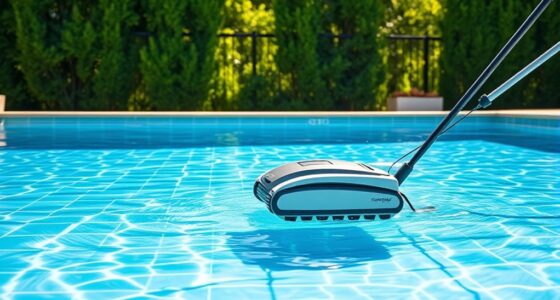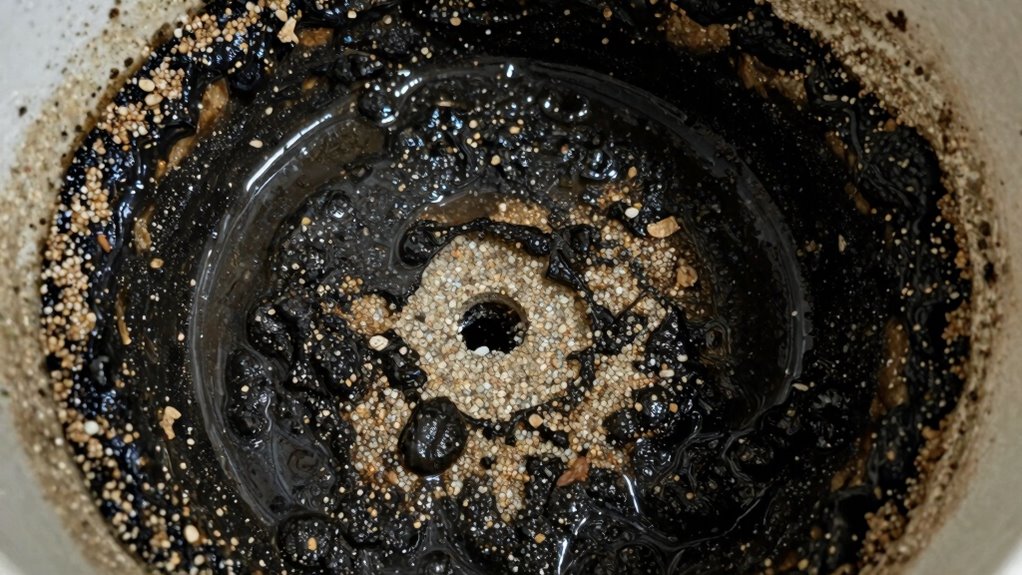

Over time, a slimy, hidden ‘gunk layer’ builds up inside your sand filter, composed of debris, oils, and organic matter that regular backwashing can’t fully remove. This layer hampers water clarity and filter efficiency, causing cloudiness and putting extra strain on your pump. To truly keep your pool clean, it’s essential to perform deep cleanings and remove this unseen buildup. Stay with us, and you’ll learn exactly how to eliminate this forgotten but crucial layer.
Key Takeaways
- The ‘gunk layer’ is a slimy buildup of debris and organic matter trapped inside the sand, often hidden without proper cleaning.
- Regular deep cleaning removes this layer, restoring filter efficiency and preventing cloudiness and bacterial growth.
- Surface rinsing isn’t enough; thorough removal of the gunk layer requires draining, disassembling, and rinsing or replacing the sand.
- Neglecting to eliminate the gunk layer can lead to increased pump strain, poor water quality, and costly repairs.
- Scheduled deep cleaning every 3-5 years is essential to prevent hidden contamination and maintain optimal filter performance.
What Causes Gunk Buildup in Your Pool’s Sand Filter?
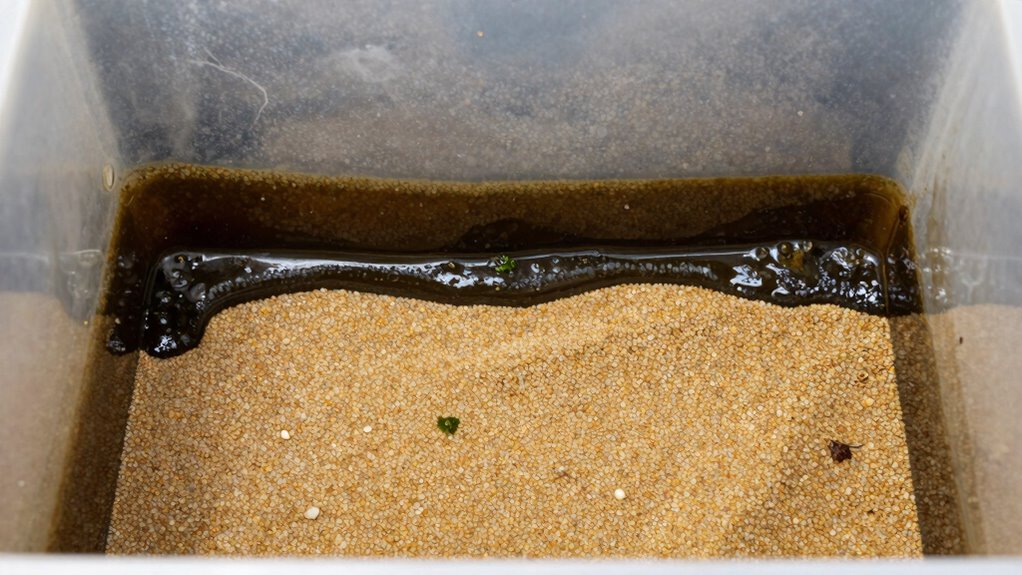
Gunk buildup in your pool’s sand filter occurs primarily because debris, dirt, and oils continuously enter the system and get trapped in the sand. Over time, these particles accumulate, forming a layer that reduces filtration efficiency. Maintaining proper chemical balance is essential because imbalanced water can encourage algae and bacterial growth, which further contributes to gunk formation. When the chemical levels are off, oils and organic matter don’t break down properly and cling to the filter media. Additionally, if you don’t regularly backwash or clean the filter, these contaminants build up faster. The combination of debris, oils, and poor chemical balance creates a layer of gunk that hampers water clarity and puts extra strain on your pool’s filtration system. Proper maintenance is key to preventing this buildup and ensuring your filter functions effectively.
How Does Gunk Develop in Your Sand Filter Over Time?
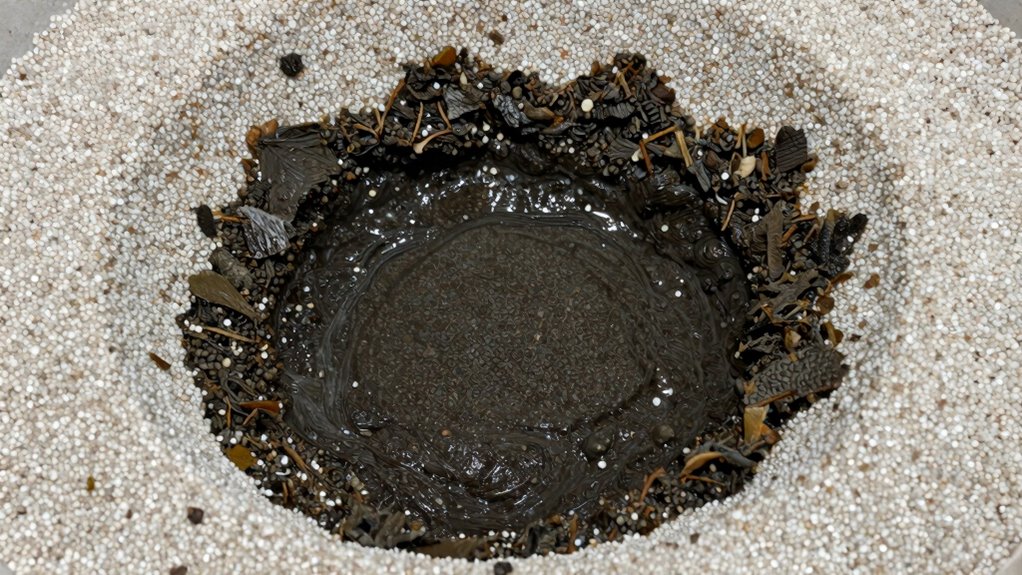
As debris, oils, and dirt continually enter your pool’s filtration system, they start stacking up on the sand particles. Over time, this buildup forms a layer of gunk that clings to the sand, reducing its effectiveness. The sand’s composition, mainly small, rounded grains, makes it easy for contaminants to settle and stick. Without regular filter maintenance, these particles trap oils, dirt, and organic matter, creating a slimy layer that hampers water flow and filtration. As this layer thickens, it becomes harder for the filter to catch new debris, leading to decreased clarity and increased pressure. Gunk develops gradually, especially if you neglect routine cleaning. Understanding how this gunk forms emphasizes the importance of proper filter maintenance to keep your sand filter functioning ideally over time. Additionally, using professional cleaning services can help ensure your filter stays free of build-up and operates efficiently, preventing the formation of stubborn gunk layers that impair performance. Regular backwashing and media replacement are also essential to combat these issues effectively. Incorporating preventative maintenance techniques can further extend the lifespan of your sand filter and maintain optimal water quality.
Signs Your Sand Filter Is Clogged With Gunk
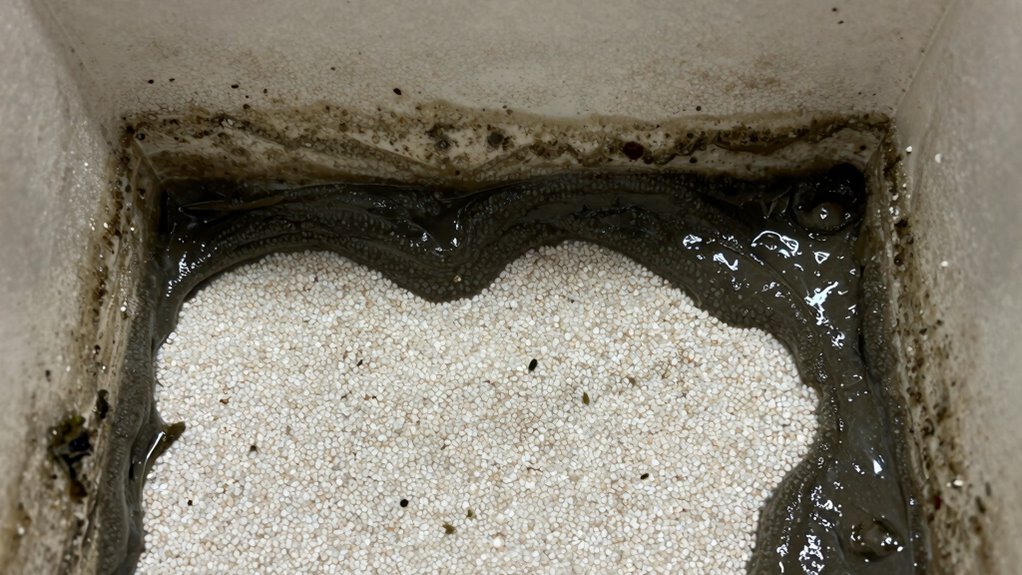
If your pool water looks cloudy or murky, your sand filter might be clogged with gunk. You’ll also notice your pump working harder and making more noise than usual. These signs mean it’s time to clean or replace the filter to restore clear water and proper circulation. Regular maintenance can help prevent buildup of debris accumulation, ensuring your system stays efficient. Additionally, understanding the testing accuracy of your filtration equipment can help you better diagnose and address underlying issues. Being aware of filter lifespan can also guide you on when it might be time for a replacement to maintain optimal performance. Monitoring backwash frequency can further help you maintain a clean and efficient filtration system. Proper filter media cleaning techniques can extend the life of your sand filter and improve its effectiveness.
Poor Water Clarity
Have you noticed that your pool water looks cloudy or murky even after filtering? Poor water clarity is a clear sign your sand filter might be clogged with gunk. Over time, debris and algae create a thick layer that hampers proper filtration. This buildup disrupts filter maintenance routines and affects water chemistry, making it harder to keep your pool clear. When the filter isn’t functioning efficiently, smaller particles stay suspended, giving the water a hazy appearance. You may also observe a musty smell or increased chemical usage. Addressing this issue promptly by deep cleaning your sand filter helps restore proper water flow and clarity. Regular filter maintenance is essential to prevent gunk from accumulating and to keep your pool water sparkling clean. Incorporating proper filter upgrades can enhance filtration efficiency and extend the lifespan of your equipment. Additionally, understanding the filter media can help you choose the best options for your specific needs. Being aware of the filter media types and their maintenance requirements can make a significant difference in preventing gunk buildup. Moreover, understanding the Northeast region climate can help tailor your pool maintenance routines to seasonal challenges and environmental factors. Proper hydraulics and flow rate adjustments also play a crucial role in preventing debris accumulation on the filter media and maintaining optimal water clarity.
Increased Pump Strain
A common sign your sand filter is clogged with gunk is increased strain on your pool pump. When gunk builds up, it hampers water flow, forcing your pump to work harder. This added effort can lead to premature wear and higher energy costs. Regular filter maintenance is essential to prevent this, as it ensures debris doesn’t accumulate excessively. If you notice your pump running louder or longer than usual, it’s a clear indicator that your filter may be clogged with gunk. Addressing this early helps maintain peak flow rates and prevents pump damage. Gunk prevention through proper filter cleaning and backwashing keeps your system running smoothly, reducing strain and extending the lifespan of your equipment. Always stay attentive to pump performance for signs of clogging. Additionally, neglecting proper cleaning can also lead to water damage issues in your pool area. Regular inspections and timely cleaning help maintain optimal water quality and prevent costly repairs. Incorporating preventive maintenance into your routine can significantly reduce the risk of gunk buildup and associated problems. Moreover, understanding how debris accumulates can help you implement more effective filter cleaning strategies.
Why Regular Backwashing Isn’t Enough: You Need a Deep Clean
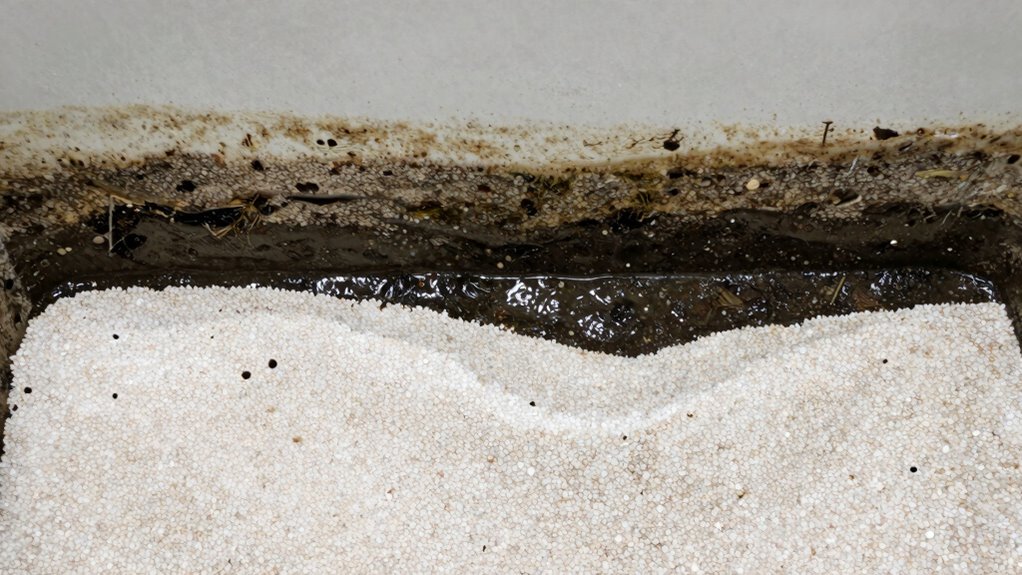
Regular backwashing helps remove loose debris and surface dirt from your sand filter, but it doesn’t eliminate all the buildup that can hinder your pool’s clarity. Over time, a slimy, stubborn layer forms inside the filter, restricting water flow and reducing filtration efficiency. Relying solely on backwashing isn’t enough for proper filter maintenance. You need a thorough clean to remove this gunk layer and restore peak performance. This process also helps maintain the proper chemical balance in your pool, preventing issues like cloudy water or algae growth. Without deep cleaning, the filter’s ability to trap dirt diminishes, forcing your pump to work harder. Proper cleaning techniques are essential to ensure your filter remains effective and efficient. Regular deep cleans ensure your filter stays effective, prolongs its lifespan, and keeps your pool water crystal clear. Incorporating proper maintenance techniques can further enhance your filter’s longevity and performance, especially when combined with monitoring water chemistry for optimal results.
Tools and Chemicals You Need for a Deep Sand Filter Clean
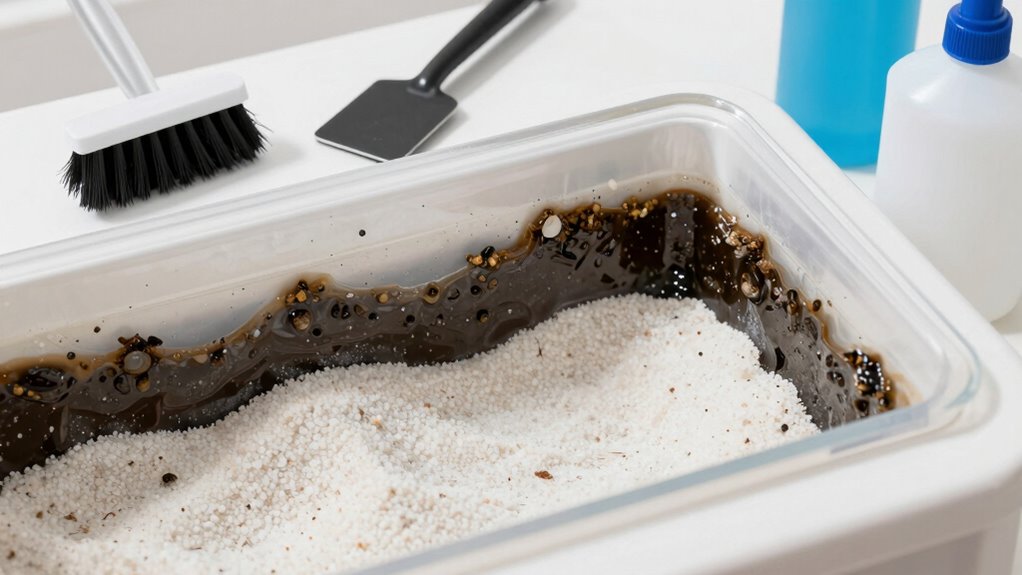
To effectively deep clean your sand filter, you’ll need specific tools and chemicals designed for thorough maintenance. First, gather a filter cleaning wand or hose attachment to flush out debris. You’ll also need a gentle, eco-friendly filter cleaner to break down oils and gunk. Proper pool chemistry is essential, so have test kits ready to adjust pH and alkalinity.
| Tool | Purpose |
|---|---|
| Filter wand | Rinse and remove loose debris |
| Pool test kit | Ensure excellent pool chemistry |
| Filter cleaner | Dissolve stubborn gunk and buildup |
| Water hose | Flushing and rinsing the filter media |
These tools and chemicals help you maintain proper filter maintenance, ensuring your pool stays clean and clear.
Step-by-Step: How to Deep Clean Your Sand Filter
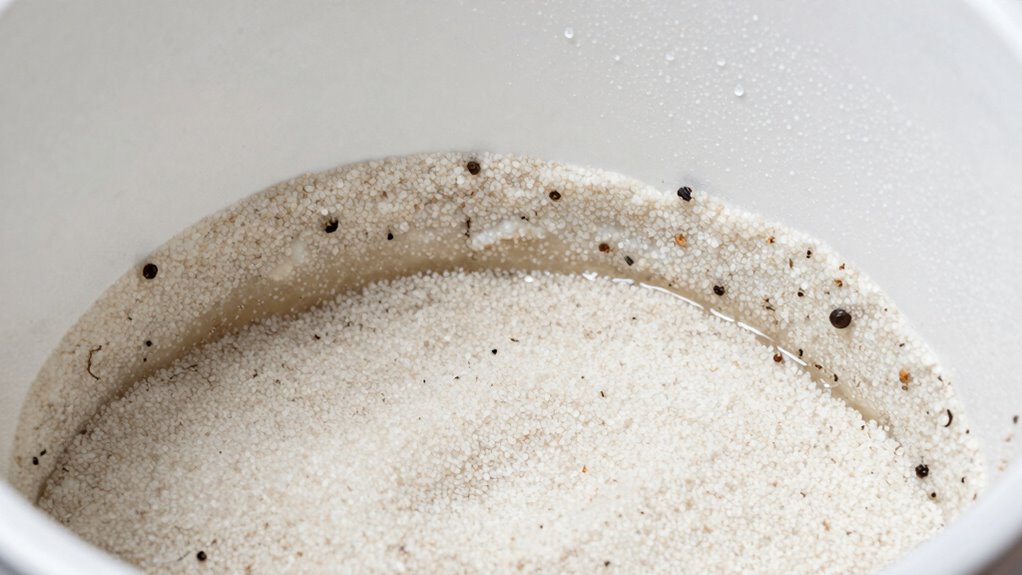
To deep clean your sand filter, start by gathering all the necessary supplies. Next, drain the filter and carefully remove the sand for cleaning or replacement. Finally, reassemble the filter, fill it with fresh sand, and run a test to make certain everything works properly.
Gather Necessary Supplies
Gathering the right supplies is the first essential step before deep cleaning your sand filter. Ensuring you have everything on hand makes the process smoother and more efficient. You’ll need safety gear like gloves and goggles to protect against debris and chemicals. Have a garden hose with a spray nozzle ready for rinsing the sand and filter components. You’ll also want a multi-purpose cleaner designed for pool equipment to aid in filter maintenance. A brush or scrub pad can help dislodge stubborn gunk layers, while a bucket is useful for mixing cleaning solutions. Don’t forget to check your pool’s water chemistry beforehand, as proper chemical balance can influence cleaning effectiveness. Having all supplies prepared keeps the process safe, effective, and minimizes downtime.
Drain and Remove Sand
Start by turning off your pool pump and disconnecting the power supply to guarantee safety during the process. Next, locate the drain plug at the bottom of your sand filter. Follow these steps:
- Loosen the drain plug to let the water and old sand drain out into a suitable container or drain area.
- Remove the drain plug completely once the water has drained, allowing access to the filter tank.
- Carefully lift out the old sand for replacement, ensuring you clean out any debris or gunk that’s accumulated.
Proper drain maintenance ensures no residual debris remains, preventing clogs and improving filtration. Replacing the sand during this step keeps your filter functioning efficiently, and draining thoroughly avoids unnecessary mess during reassembly.
Reassemble and Test
Once you’ve replaced the old sand and cleaned out the tank, it’s time to reassemble the filter and make sure everything functions correctly. Carefully put the filter parts back together, ensuring the sand quality is consistent and evenly distributed for ideal filter performance. Check that the multiport valve is securely attached and that all seals are tight to prevent leaks. Once assembled, reconnect the pump and turn on the system. Run the filter for a few minutes to circulate water and observe its operation. During this process, listen for unusual sounds and monitor pressure gauges for proper readings. Regular filter maintenance is key to keeping your system running smoothly, and a thorough reassembly ensures your sand filter continues to effectively trap debris and maintain clean, healthy water.
How to Safely Remove and Rinse the Sand to Eliminate Grime
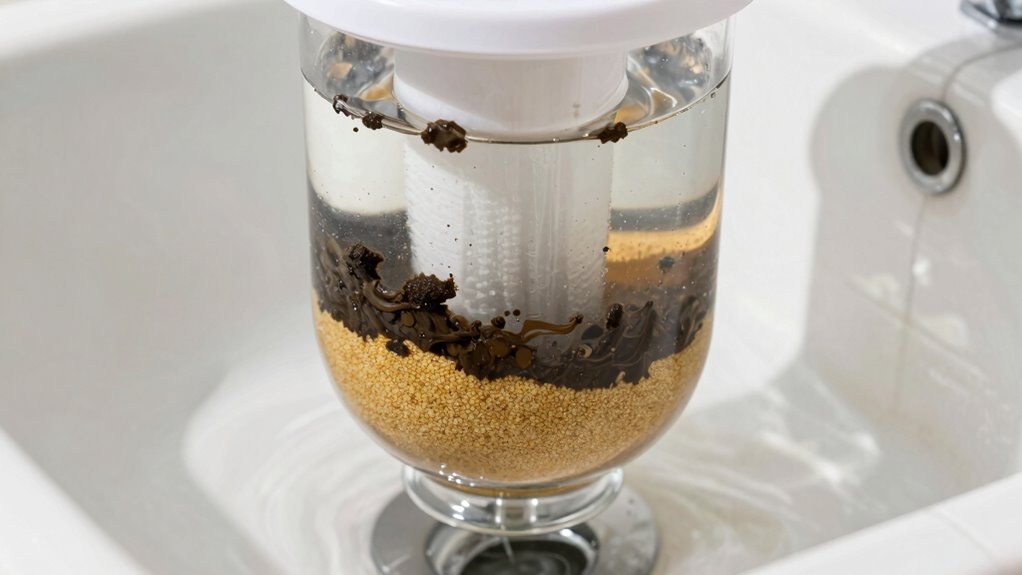
To safely remove and rinse the sand, begin by turning off the pool pump and disconnecting the filter. Next, carefully open the filter tank and remove the top lid. Then, follow these steps:
- Scoop out the old, grime-coated sand using a bucket or scoop, avoiding spills.
- Rinse the remaining sand thoroughly with a garden hose to wash away dirt and debris.
- Inspect the filter for any damage or buildup, and replace the sand if it’s heavily contaminated or if filter maintenance is due.
This process helps eliminate grime and guarantees your filter performs at its best. Proper sand removal and rinsing are essential for effective sand replacement, prolonging your filter’s lifespan and maintaining clean pool water.
Tips to Prevent Gunk Buildup and Keep Your Filter Clean
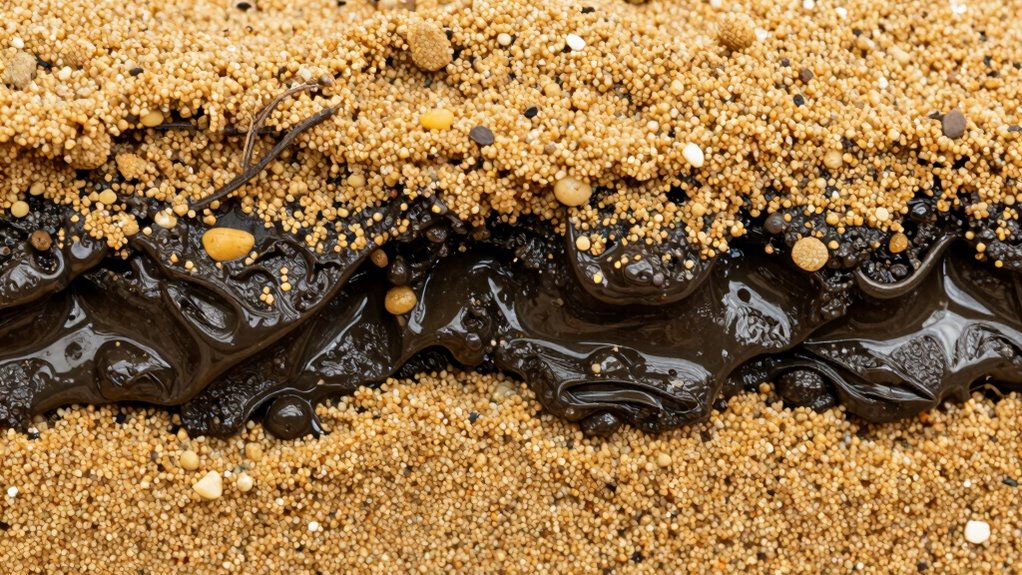
Keeping your filter clean requires regular maintenance and smart habits to prevent gunk buildup. Start by routinely inspecting and rinsing the filter to remove debris before it accumulates. Implement consistent filter maintenance to avoid overloading with dirt and grime, which can cause gunk layers to form. Ensure your pool’s chemical balancing is correct, as improper levels can lead to algae growth and other contaminants that clog the filter faster. Regularly test and adjust pH, chlorine, and alkalinity to maintain excellent water quality. Additionally, run your pump for the recommended hours daily to keep water flowing and prevent stagnation. By sticking to these practices, you minimize gunk formation, extend your filter’s lifespan, and keep your pool water clear and inviting.
How Often Should You Deep Clean Your Pool’s Sand Filter?
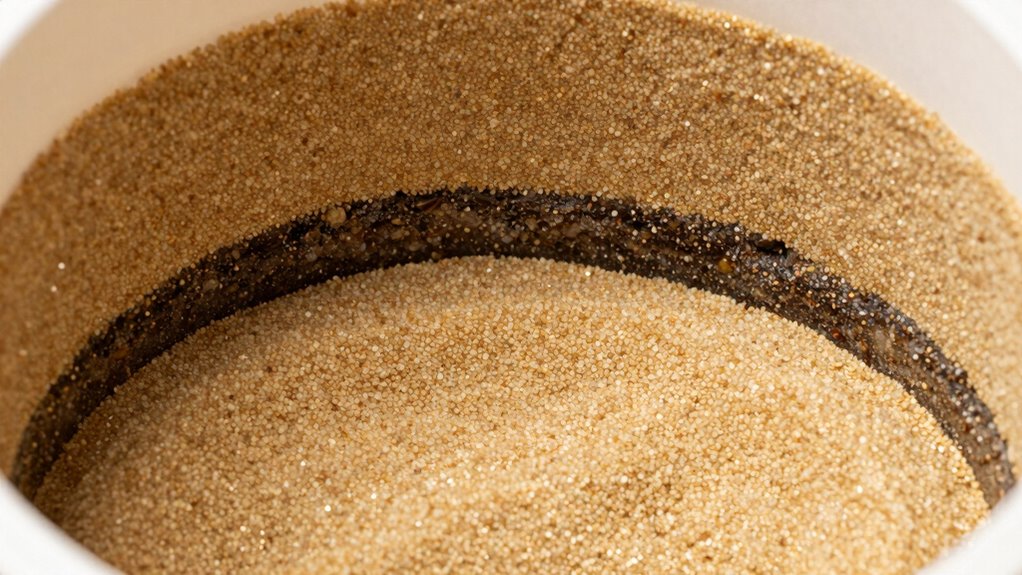
You should clean your sand filter regularly to keep your pool water clear and healthy. Typically, a deep clean is needed every 3 to 5 years, but you’ll want to clean it sooner if you notice cloudy water or reduced flow. Pay attention to these signs to determine the right cleaning schedule for your filter.
Typical Cleaning Frequency
Regular deep cleaning of your pool’s sand filter is essential to maintain ideal filtration and water clarity. Typically, you should deep clean your filter every 3 to 5 years, but this can vary based on usage and environmental factors. For example:
- Heavy swimmers or frequent use may require cleaning closer to every 2-3 years.
- If you notice frequent chemical imbalance or algae growth, clean annually or more often.
- After major storms or debris influx, a deep clean can help prevent clogs and ensure proper filtration.
Neglecting regular cleaning can lead to a buildup of dirt and gunk, making it harder to control chemical imbalance and algae growth. Staying on schedule keeps your pool water clear and healthy.
Signs You Need Cleaning
How can you tell when your sand filter needs a deep clean? If you notice a decline in filtration efficiency, your pool water may become cloudy or murky despite regular maintenance. Additionally, if your pump runs longer or sounds strained, it’s a sign that debris buildup is hindering flow. Poor chemical balancing can also indicate clogged filter media, as debris prevents proper water circulation and chemical distribution. Regular testing of water parameters can help spot these issues early. When these signs persist even after backwashing, it’s time for a deep clean. A thorough cleaning removes the gunk layer that accumulates over time, restoring filtration efficiency and ensuring your chemical balancing remains effective. Don’t wait until water quality suffers—stay proactive with your pool maintenance.
How a Clean Sand Filter Keeps Your Water Clear and Your Pool Lasting Longer
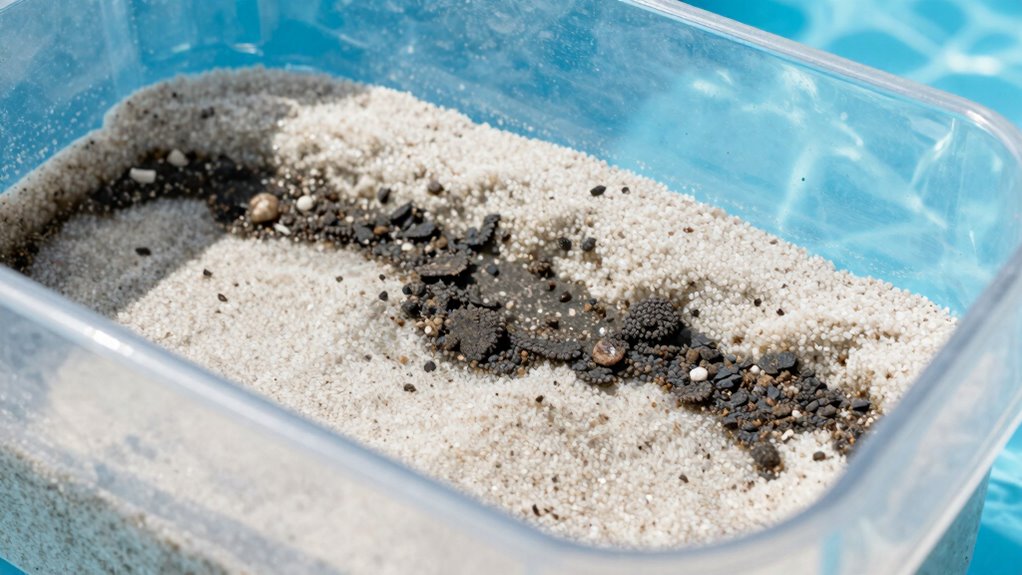
A clean sand filter is essential for maintaining clear water and extending your pool’s lifespan. When your filter is properly maintained, it improves water chemistry and reduces the need for chemical adjustments, saving you time and money. A well-maintained filter guarantees that:
A well-maintained sand filter keeps water clear, healthy, and saves time and money on chemical adjustments.
- Debris and dirt are effectively removed, preventing cloudiness.
- Water flows smoothly, reducing strain on the pump and prolonging equipment life.
- Bacteria and algae growth are minimized, keeping water safe and healthy.
Frequently Asked Questions
Can I Use Household Cleaners to Deep Clean My Sand Filter?
You shouldn’t use household cleaners to deep clean your sand filter because they can damage the filter media and compromise chemical safety. Instead, stick to specialized filter cleaning products designed for pool filters, as they effectively remove the gunk layer without risking harm or chemical hazards. Using the wrong cleaners can cause clogs, reduce filtration efficiency, and pose safety risks, so always choose proper cleaning agents for your sand filter.
How Do I Dispose of the Dirty Sand After Cleaning?
Wondering what to do with your dirty sand after cleaning? You need to handle sand disposal carefully. First, scoop out the dirty sand and place it in a heavy-duty trash bag. Check local regulations—some areas prohibit dumping it in regular trash or soil. Never pour it down drains or onto the lawn. Proper disposal keeps your environment safe and prevents contamination, so always follow your community’s guidelines.
Is It Necessary to Replace Sand Periodically Besides Cleaning?
Yes, you should consider sand replacement during periodic maintenance. While cleaning removes gunk and debris, over time, the sand can become compacted or worn out, reducing filtration efficiency. Replacing the sand every 3 to 5 years ensures maximum water quality and flow. Regular inspections help determine when it’s time for a full replacement, keeping your filter functioning effectively and preventing costly issues down the line.
What Are the Risks of Not Thoroughly Cleaning the Gunk Layer?
Neglecting thorough filter maintenance risks compromising your water quality, leading to cloudy water, increased chemical use, and potential equipment damage. When you ignore the gunk layer, you allow debris, oils, and organic matter to build up, reducing filtration efficiency. This buildup can cause algae growth, foul odors, and costly repairs. Regular, deep cleaning prevents these issues, ensuring your pool stays clean, safe, and crystal clear.
Can a Deep Clean Improve the Overall Lifespan of My Pool Equipment?
A deep clean can substantially improve your pool equipment’s longevity by removing hidden gunk and buildup that can cause strain. Proper pool maintenance ensures your equipment runs efficiently, reducing wear and tear over time. Regularly deep cleaning your sand filter prevents clogs and damage, ultimately extending the lifespan of your pump and filter system. Investing in thorough maintenance now saves you money on repairs and replacements later.
Conclusion
By giving your sand filter a deep clean, you prevent that stubborn gunk layer from turning your pool into a murky swamp. Regular maintenance keeps your water crystal clear and your filter running like a well-oiled machine—preventing grime buildup that’s more persistent than a stubborn stain. Don’t let neglect turn your pristine paradise into a swamp; stay proactive, deep clean often, and enjoy sparkling, inviting water all season long.