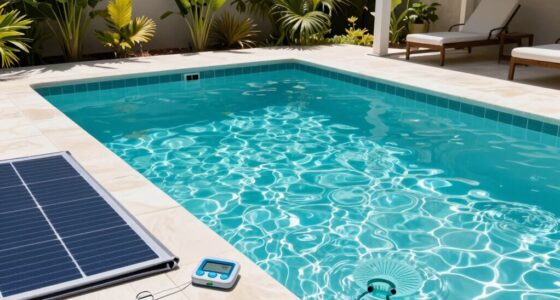
To prevent bigger problems, establish a weekly pool care routine that includes testing your water’s pH, alkalinity, and chlorine levels, then adjusting chemicals as needed. Regularly inspect and clean filters, skimmer baskets, and pumps to guarantee proper circulation. Run your system daily, especially during peak use or colder months, and address minor issues early. Staying proactive with seasonal maintenance helps avoid costly repairs and keeps your water clear. Keep going to discover more tips for flawless pool health.

Get pool and patio gear delivered free — and shop member deals
- Fast, free delivery on millions of items
- Access to Prime Big Deal Days deals on October 6–7
- Prime Video, Amazon Music and more included
Key Takeaways
- Regularly test and adjust water chemistry to prevent imbalances and maintain clarity.
- Inspect and clean filters, skimmer baskets, and pump components weekly for optimal performance.
- Run circulation systems daily to ensure even chemical distribution and prevent stagnation.
- Monitor water levels and debris to avoid equipment strain and algae growth.
- Perform seasonal maintenance, including winterization, to address issues proactively.
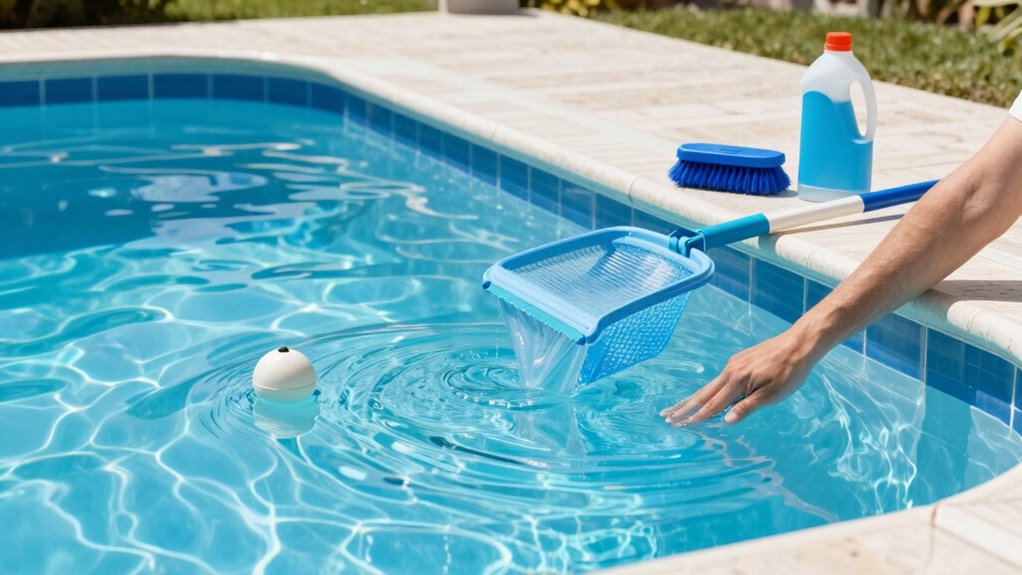
Have you ever wondered if there’s a simple way to keep your pool sparkling all season long? The key lies in establishing a consistent weekly pool care rhythm that prevents bigger problems down the line. Staying on top of your pool’s chemical balance is crucial; it’s the foundation for clear, safe water. Every week, test your water’s pH, alkalinity, and chlorine levels. Adjust these as needed to keep the water balanced. If your pH is too high, it can cause cloudiness and scale buildup, while low pH can lead to corrosion of your equipment. Maintaining proper chemical balance not only makes your pool more inviting but also protects your investment in equipment and surfaces.
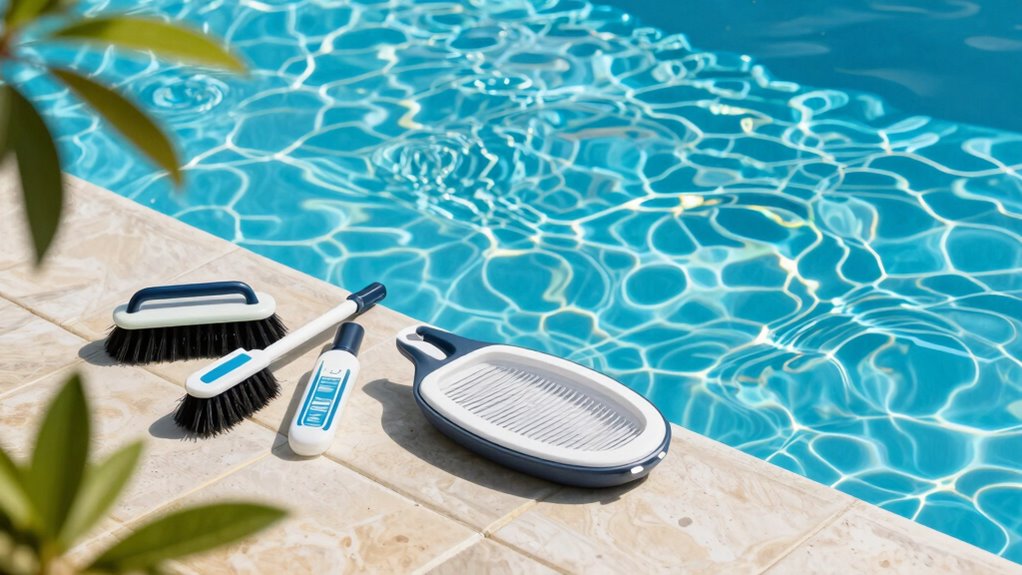
Alongside chemical management, equipment maintenance plays a vital role. Regularly inspect your filter and pump to ensure they’re functioning efficiently. Clean or replace the filter cartridge as recommended by the manufacturer to prevent debris buildup that can impair water flow and filtration. Check your skimmer and pump baskets weekly, removing leaves, bugs, and other debris to maintain proper water circulation. Proper equipment maintenance keeps your pool’s filtration system working optimally, reducing the workload on your pump and extending its lifespan. Additionally, understanding pool water chemistry helps you make informed adjustments and avoid common issues. Staying informed about water chemistry also helps you recognize early signs of imbalance or contamination, preventing more serious problems. Regularly reviewing chemical levels ensures you stay ahead of potential issues before they become costly. Incorporating test kits into your routine can help you monitor these levels more accurately and efficiently. Developing a maintenance checklist can further streamline your weekly routine and ensure no task is overlooked.
In addition to testing water chemistry and equipment checks, it’s wise to run your pool’s circulation system for a few hours every day. This helps distribute chemicals evenly and prevents stagnation, which can lead to algae growth. During colder months or times of less use, don’t forget to winterize your pool properly, but even then, a weekly check can save you from surprises once the season picks up again.
Sticking to this weekly rhythm isn’t just about reactive fixes; it’s proactive. It helps catch potential problems early, like a slight pH imbalance or minor debris accumulation, before they escalate into costly repairs or algae outbreaks. By dedicating just a bit of time each week to chemical checks and equipment maintenance, you keep your pool water crystal clear and extend the lifespan of your system. This simple, consistent approach makes pool ownership much more manageable and keeps your swimming experience enjoyable all season long. It’s a small investment of time that pays off in sparkling water, fewer repairs, and peace of mind.
As an affiliate, we earn on qualifying purchases.
Frequently Asked Questions
How Often Should I Test My Pool Water Chemistry?
You should test your pool water chemistry at least once a week, especially during peak swimming season. Regular water testing techniques help you monitor pH, chlorine levels, and alkalinity, ensuring proper pool chemical balancing. If your pool gets heavy use or after a storm, test more frequently. Consistent testing allows you to catch imbalances early, preventing issues like algae growth or equipment damage, keeping your pool safe and inviting.
What Are the Signs of a Failing Pool Pump?
If your pool pump struggles, you’ll notice reduced water flow, strange noises, or leaks—signs of a failing pump. For pool pump troubleshooting, check for clogged skimmer baskets or debris blocking the impeller. Regular pump maintenance tips include cleaning filters, inspecting for leaks, and ensuring the motor runs smoothly. Address issues early to prevent more costly repairs, and keep your pool clean and circulating properly.
How Can I Prevent Algae Growth Naturally?
To prevent algae naturally, you should focus on natural filtering methods like installing algaecide that’s eco-friendly or using beneficial bacteria to keep your water clear. Keep your pool’s pH balanced, as a proper level discourages algae growth, and regularly skim debris. Using an algae-resistant pool cover and ensuring good water circulation also helps. These steps create an environment that naturally resists algae, reducing the need for harsh chemicals.
What Are Common Mistakes in Weekly Pool Maintenance?
You often overlook checking pool safety, neglect chemical balancing, and forget regular filter cleaning. These mistakes can lead to cloudy water, algae growth, and unsafe conditions. Always prioritize maintaining proper chemical levels, ensuring safety measures are in place, and cleaning filters weekly. By focusing on these key tasks, you prevent bigger problems, keep your pool inviting, and enjoy safe swimming. Consistency and attention are your best tools to maintain a healthy, safe pool.
When Should I Replace My Pool’s Filtration System?
You should replace your pool’s filtration system when its filtration lifespan has been reached, typically after 3-5 years depending on usage and maintenance. Regular pump maintenance helps extend its life, but if you notice decreased water flow, persistent cloudiness, or increased energy bills, it’s time to contemplate a replacement. Keeping up with routine cleaning and inspections ensures your system works efficiently until it’s time for a new one.
Conclusion
Think of your pool as a garden that flourishes with consistent tending. When you stick to your weekly care rhythm, you’re nurturing it like a diligent gardener, catching small weeds before they spread. Skip your routine, and those weeds—like bigger problems—take root. Stay committed to your pool’s rhythm, and you’ll enjoy crystal-clear waters without the chaos of neglect. Remember, steady care today keeps the worries away tomorrow—like tending a garden, it all pays off.
Evergreen bestsellers Picks
bestsellers
As an affiliate, we earn on qualifying purchases.