To guarantee safety, measure at least 10 to 20 feet between your fire pit table and the pool, following local regulations and guidelines. Use a tape measure or laser device for accuracy, accounting for uneven ground and wind conditions. Proper placement helps prevent accidents, sparks reaching combustible materials, or embers drifting into the water. Want to learn more about setting up your fire pit for safety and style? Continue exploring for expert tips and safeguards.
Key Takeaways
- Measure at least 10-20 feet from the fire pit table edge to the pool edge, following local regulations.
- Use a tape measure or laser device to ensure accurate and consistent distance measurements.
- Account for ground unevenness, slopes, and wind conditions that may affect safety distances.
- Position fire pits on fire-resistant, stable surfaces away from combustible materials and overhead structures.
- Consult local fire codes and authorities to confirm specific setback requirements for fire pit tables near pools.
Why Safety Distances Matter for Fire Pits Near Pools

Safety distances are crucial when placing fire pits near pools because they help prevent accidents and guarantee everyone stays safe. Maintaining proper distance ensures that the fire pit’s aesthetics doesn’t compromise safety, while also preserving the poolside ambiance you want to create. If a fire pit is too close, sparks or heat could pose risks, especially to children or pets. Plus, a well-measured distance keeps the area comfortable and inviting, avoiding any feeling of clutter or hazard. When you respect safety zones, you protect your guests and enhance the overall appeal of your outdoor space. Proper spacing allows the fire pit to integrate seamlessly into your design, creating a cozy, attractive environment that encourages relaxation without sacrificing safety. Additionally, considering Fire Pit Placement can help maximize space and safety in your backyard layout. Understanding safety distances is essential for designing a functional and secure outdoor area that combines comfort and safety effectively. For example, knowing the appropriate distance from pool can prevent heat transfer or accidental contact, ensuring a safer environment for everyone. Incorporating proper measurements into your planning is vital for achieving the safest and most enjoyable outdoor setting.
What Are the Rules and Regulations for Fire Pits Near Pools?

When installing a fire pit near your pool, it is vital to adhere to local rules and regulations to guarantee safety and compliance. These rules often include setback distances, safety barriers, and restrictions on fire pit accessories that could pose hazards. Check with your local fire department or municipal codes for specific guidelines. Regulations vary by location, but generally, fire pits should be placed at least 10-20 feet from the pool and poolside furniture. Some areas require protective screens or fencing around the fire pit. Always ensure your fire pit complies with these rules to prevent accidents and liabilities. Additionally, understanding fire safety regulations can help you make informed decisions about placement and accessories, reducing the risk of fire hazards near water features. Being aware of fire-resistant materials used in fire pit construction is also crucial for ensuring safety in your outdoor space. Proper placement also involves considering wind conditions, which can influence safety and the spread of sparks or embers. Incorporating fire safety devices, such as sensors or automatic shut-offs, can further enhance your outdoor safety measures.
How to Measure Safe Distances Between Fire Pits and Pools
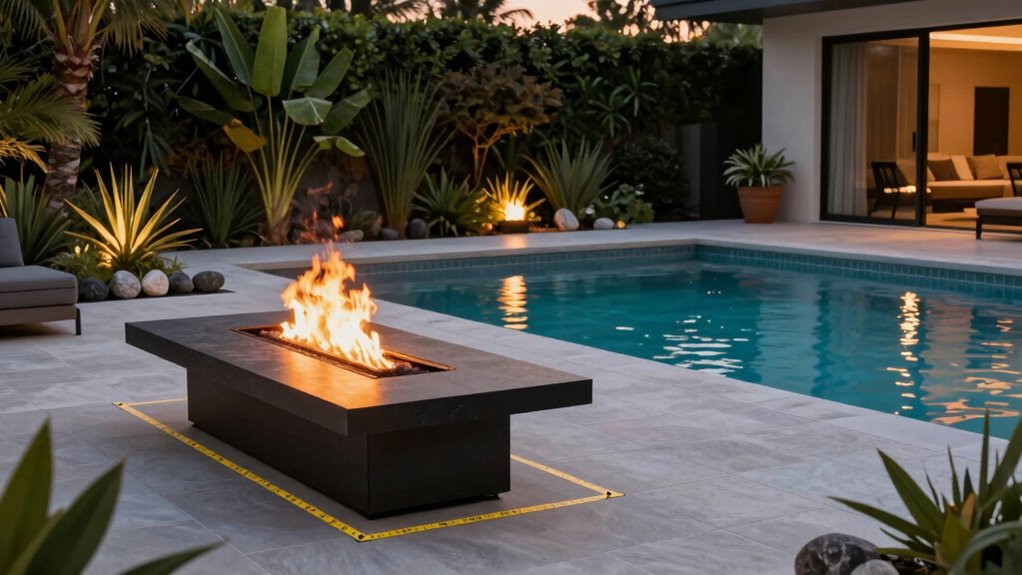
To guarantee safety, you need to measure the distance between your fire pit and pool precisely. Make sure you consider local regulations, which might specify minimum clearance requirements. Accurate measurements and adherence to rules help create a safe, enjoyable outdoor space. Additionally, consulting fire safety guidelines can provide further insights into maintaining a secure environment. Remember that safe distance guidelines are essential to prevent accidents and ensure proper ventilation. Properly assessing outdoor safety measures can help you avoid hazards and enjoy your outdoor area responsibly. Regularly reviewing and adjusting your setup based on home safety tips can further enhance overall security. Paying attention to fire pit placement is crucial for maintaining safety standards.
Measuring Distance Accurately
Accurately measuring the distance between your fire pit table and the pool is essential to guarantee safety and compliance with local regulations. Use a tape measure or a laser distance meter for precision. Start by marking the desired location of your fire pit, considering how it complements your fire pit aesthetics and enhances your pool landscaping. Measure from the fire pit’s edge to the closest point of the pool’s edge, ensuring straight, level lines. Double-check your measurements from multiple angles to confirm accuracy. Keep in mind that any uneven ground or slopes can affect distances, so take measurements at the highest and lowest points. Remember that outdoor safety considerations can be affected by outdoor elements, so ensuring proper clearance is crucial. Additionally, understanding the importance of safe distances helps prevent accidents and creates a more enjoyable outdoor environment. Properly accounting for outdoor environment factors, such as wind and surrounding objects, is also vital for maintaining safe distances. Precise measurements help you create a safe, attractive outdoor space that balances functionality with visual appeal.
Considering Local Regulations
Before installing your fire pit table near a pool, it’s vital to review local regulations to guarantee safety and compliance. Many areas have specific rules regarding the proximity of fire pits to pools, which can affect your fire pit aesthetics and overall poolside furniture arrangement. Regulations may specify minimum distances, safety barriers, or fuel restrictions, so checking with local authorities or homeowner associations is essential. These regulations help prevent accidents and ensure your setup aligns with safety standards. Ignoring them could lead to fines or safety hazards. Measure carefully, considering both legal requirements and your desired aesthetics. Conducting a risk assessment can help identify potential hazards and ensure you maintain a safe environment. By doing so, you create a safe, visually appealing space that enhances your outdoor experience without risking safety or violating regulations. Additionally, understanding fire safety guidelines ensures your outdoor setup remains secure and compliant with best practices.
Factors That Affect Safe Fire Pit Placement Near Pools
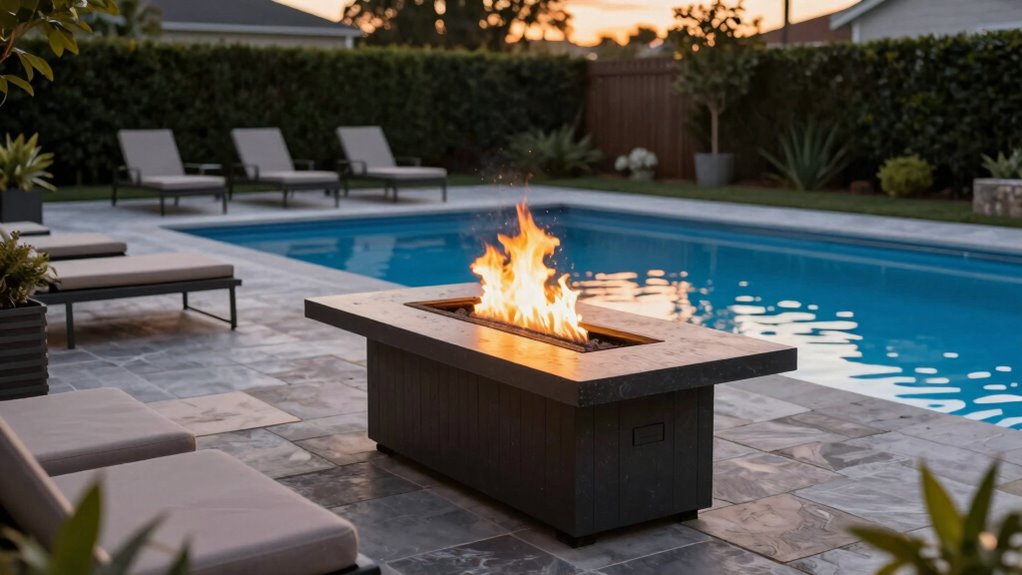
When placing a fire pit near your pool, you need to take into account several factors to guarantee safety. The materials your pool and fire pit are made of can influence how they interact, especially in different weather conditions. Additionally, local fire safety regulations may dictate how close you can position your fire pit, so it’s crucial to stay informed.
Pool Material Compatibility
Considering the materials surrounding your pool is essential before placing a fire pit table nearby. Some pool surfaces, like concrete or stone, can withstand heat better than wooden decks or composite materials, which might be damaged or pose fire risks. If your pool area includes outdoor furniture made of flammable materials, ensure they’re positioned far enough away from the fire pit to prevent heat damage or accidental ignition. Also, be mindful of how pool cleaning chemicals and debris could interact with heat sources, potentially creating unsafe conditions. Always verify that the surface material can handle the heat and sparks from the fire pit. Proper assessment helps prevent accidents and preserves the integrity of your pool area, ensuring safety for everyone enjoying the space.
Wind and Weather Conditions
Wind and weather conditions play a crucial role in determining the safe placement of a fire pit table near your pool. Wind impact can cause flames and embers to drift unpredictably, increasing the risk of sparks igniting nearby materials or causing burns. Strong gusts may also blow hot air and smoke toward swimmers, creating discomfort and hazards. Additionally, weather hazards like rain, snow, or high humidity can affect the fire’s stability and safety. Wet conditions can cause flare-ups or extinguish the fire unexpectedly, while snow and rain increase slippery surfaces around the area. Always check the forecast before lighting your fire pit, and position it where wind is minimal, away from open spaces that could amplify these weather hazards. This reduces the risk of accidents near your pool.
Local Fire Safety Regulations
Local fire safety regulations set essential guidelines for placing fire pit tables near pools to prevent accidents and guarantee safety. These rules often specify minimum distances based on fire pit design, ensuring the fire remains safely contained. Regulations may dictate how close outdoor seating can be placed around the fire pit to reduce the risk of burns or unintended contact. You should check with local authorities or fire departments to understand specific requirements, as they can vary by area. Some regions may also require permits or inspections for certain fire pit types or sizes. Following these regulations helps you create a safe outdoor space where family and friends can enjoy the pool area without worry. Always prioritize compliance to prevent hazards and ensure your outdoor setup remains a safe retreat.
Common Mistakes That Compromise Fire and Water Safety
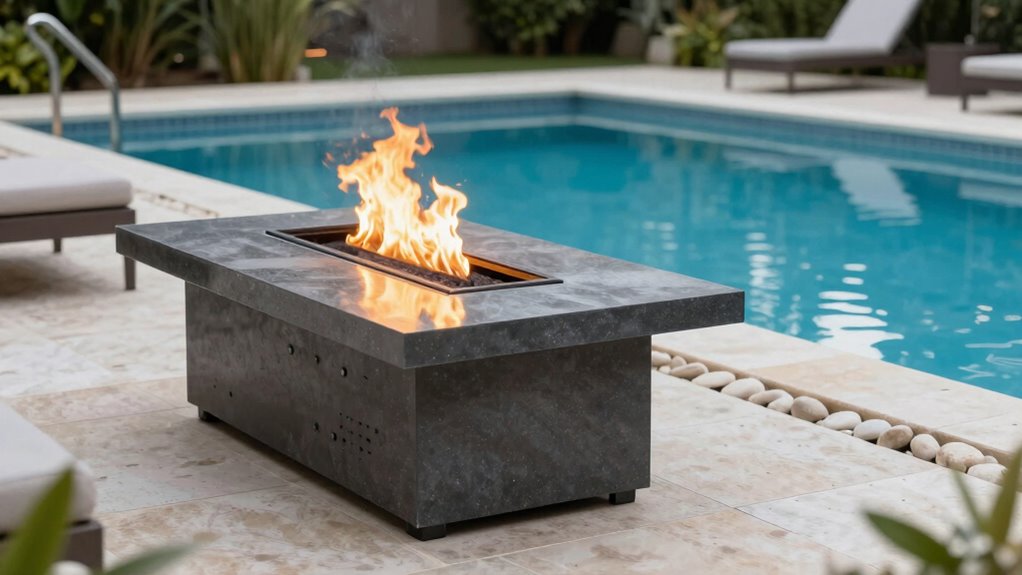
One common mistake that compromises fire and water safety is placing fire pit tables too close to pools or other water features. This oversight can lead to accidents, especially when the fire pit’s aesthetics tempt you to position it for a cozy look. Being too near water increases risks of splashes or slips, which could cause the fire pit to topple or ignite nearby poolside furniture. Additionally, many overlook the importance of clear safety distances, assuming that good looks outweigh safety concerns. Always measure and maintain a safe gap between your fire pit table and the pool area. Proper spacing guarantees safe operation, prevents unintended contact with water, and helps create a balanced outdoor environment that’s both stylish and secure.
Tips for Creating a Safe and Cozy Outdoor Fire Area
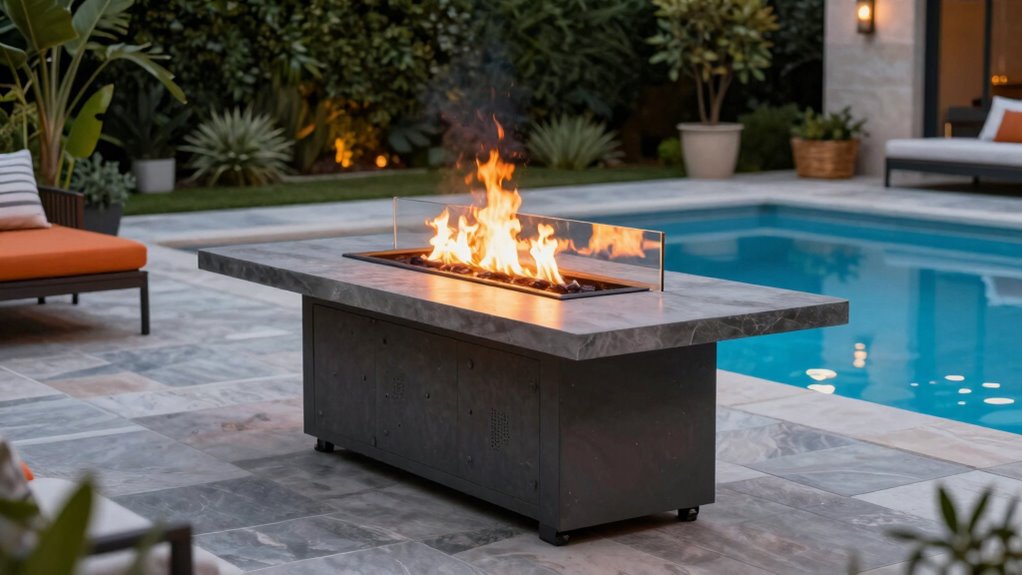
Creating a safe and cozy outdoor fire area starts with thoughtful planning and strategic placement. Focus on balancing fire pit aesthetics with safety to enhance your outdoor ambiance. Position your fire pit away from low-hanging branches, overhead structures, and high-traffic zones. Use landscaping elements like stone or gravel to create clear boundaries and prevent accidental trips. Incorporate comfortable seating that encourages relaxation without crowding the fire area. Consider lighting options that add warmth and ambiance without compromising safety. Here’s a quick guide:
| Safety Tips | Aesthetic Tips |
|---|---|
| Keep a safe distance from structures | Use natural materials for a rustic look |
| Clear debris regularly | Add outdoor rugs and cushions |
| Use a protective screen or cover | Incorporate decorative stones |
These tips will help you craft a fire area that’s both inviting and secure.
Materials and Designs That Enhance Fire Pit Safety Near Pools
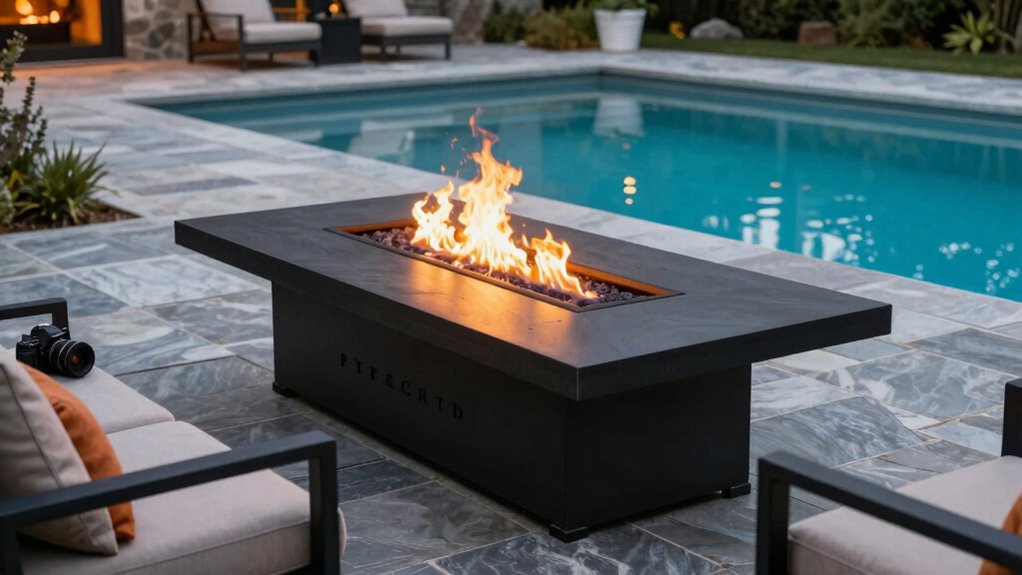
Choosing the right materials and design elements can substantially boost fire pit safety when placed near pools. Using fire resistant materials helps prevent accidents caused by heat or sparks. Safety focused designs also minimize risks and improve overall security. Consider these options:
- Non-combustible surfaces: Use fire resistant materials like stone, concrete, or tile around the fire pit to prevent accidental fires.
- Shielded flames: Incorporate screen guards or glass barriers to contain flames and prevent sparks from escaping.
- Elevated setups: Position fire pits on raised, stable platforms made from fire resistant materials to keep flames away from flammable objects.
- Minimal combustible surroundings: Keep nearby furniture or décor made from flame-resistant or non-combustible materials to avoid ignition risks.
These choices ensure safer enjoyment near your pool area.
How to Adjust Distances When Your Pool or Fire Pit Area Changes

When your pool or fire pit area undergoes changes in size or layout, reevaluating and adjusting the distances between them to maintain safety is vital. You should consider how these modifications impact fire pit aesthetics and pool deck design, ensuring the new arrangement keeps a safe distance. If the fire pit is moved closer to the pool, increase the clearance to prevent heat damage and accidental contact. Conversely, if you expand the pool area or redesign the deck, reassess the placement to avoid overcrowding and ensure proper airflow. Measure the new distances carefully, keeping safety guidelines in mind. Adjustments might involve shifting furniture or landscaping to maintain visual harmony while preserving safety standards. Regular reevaluation ensures your outdoor space remains both beautiful and secure.
Signs You Need to Reassess Your Fire Pit Placement
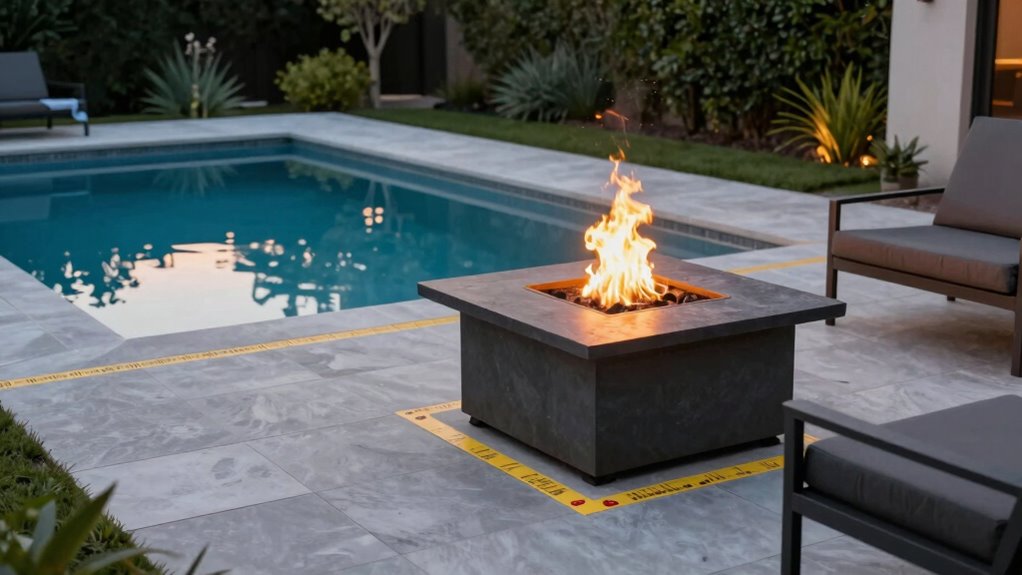
If you notice frequent issues or hazards around your fire pit area, it’s a clear sign you need to reassess its placement. Poor placement can influence fire pit aesthetics and safety, especially near poolside furniture. Consider these signs:
Frequent hazards near your fire pit mean it’s time to rethink its placement for safety and style.
- Fire pit feels too close to furniture or structures, risking accidents.
- Smoke or sparks frequently drift toward your seating area, causing discomfort.
- You notice uneven heat distribution or difficulty maintaining a safe distance.
- Your fire pit placement hampers the overall poolside aesthetics or blocks views.
Reevaluating its position ensures safety and enhances the visual appeal of your outdoor space. Proper placement keeps everyone comfortable, prevents hazards, and maintains a balanced look for your poolside setup.
When to Consult Professionals for Fire Pit Installation Near Pools
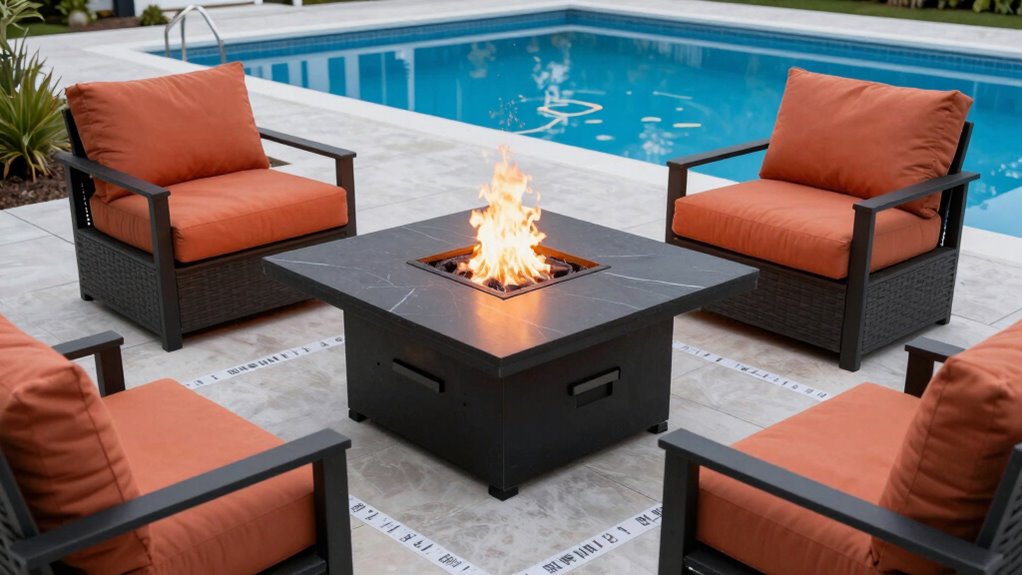
Because fire pit installation near pools involves safety and building code considerations, consulting professionals becomes essential when you’re unsure about proper placement, permits, or structural requirements. If you’re uncertain about the ideal fire pit height to prevent accidents, a professional can help determine the safest setup. They can also confirm your fire pit complies with local regulations, especially around pool lighting and electrical connections. When your planned fire pit is close to the pool, experts can assess the distance needed to reduce fire hazards and improve safety. Additionally, professionals can advise on integrating pool lighting with your fire pit setup for both aesthetic appeal and safety. When in doubt about these elements, it’s best to seek professional guidance to avoid costly mistakes and potential hazards.
Frequently Asked Questions
Are There Specific Fire Pit Models Ideal for Poolside Use?
Yes, there are fire pit models ideal for poolside use. Look for fire pits with a safe fire pit design that minimizes heat transfer and uses durable poolside materials like heat-resistant stone or metal. These models often feature low-profile designs and protective screens, making them safer near water. Always choose a fire pit specifically designed for outdoor use, ensuring it’s stable and weather-resistant for poolside comfort and safety.
How Do Weather Conditions Influence Fire Pit Safety Near Pools?
Weather conditions greatly influence fire pit safety near pools. Climate considerations, like high humidity or rain, can affect how safely you use your fire pit, so always check the forecast. Wind impact is also vital—strong winds can blow sparks or flames toward the pool area, increasing risk. Before lighting your fire pit, assess the weather and avoid using it during gusty conditions to keep everyone safe.
Can Fire Pits Be Safely Used During Pool Parties or Events?
Yes, you can safely use fire pits during pool parties if you follow fire pit safety and poolside fire regulations. Keep the fire pit at least 10-15 feet away from the pool and any flammable objects, and never leave it unattended. Setting up a designated fire zone minimizes risks, guaranteeing everyone enjoys the event securely. Always check local regulations before hosting to ensure compliance and safety.
What Safety Equipment Should Be Nearby When Using a Fire Pit?
You should keep a fire extinguisher nearby when using a fire pit, making sure it’s easily accessible in case of emergencies. Place fire-resistant mats under and around the fire pit to prevent accidental fires from sparks or hot embers. Always ensure the extinguisher is properly maintained and within reach, and the mats are positioned on stable, non-flammable surfaces, creating a safer environment for your poolside gatherings.
How Do Local Homeowners’ Associations Regulate Fire Pit Placement?
Like a cautious captain steering treacherous waters, you must heed your homeowners’ association’s rules. They typically regulate fire pit placement through zoning restrictions, requiring distances from property lines and structures. Some HOAs may also specify outdoor lighting rules for safety and ambiance. Always check your community’s guidelines before installing, ensuring your fire pit remains a safe, compliant feature that enhances your outdoor space without risking violations.
Conclusion
Think of your fire pit and pool as dance partners—you want them to move gracefully without stepping on each other’s toes. By measuring and maintaining the right safety distances, you prevent accidents and keep the rhythm safe and smooth. Just like a choreographer carefully plans each move, you should assess and adjust your setup regularly. When you prioritize safety, your backyard becomes a harmonious space where relaxation and fun flow seamlessly.