To keep your pool area safe and protect ankles, choose slip-resistant materials like textured concrete, rubber tiles, or textured pavers, which provide excellent grip when wet. Durable options with added coatings or finishes can enhance long-term safety while still matching your aesthetic. Prioritize materials that handle weather and water exposure well, and consider your budget and style preferences. Keep exploring further tips to create a safe, stylish, slip-proof pool deck that minimizes accidents.

Get pool and patio gear delivered free — and shop member deals
- Fast, free delivery on millions of items
- Access to Prime Big Deal Days deals on October 6–7
- Prime Video, Amazon Music and more included
Key Takeaways
- Textured concrete and rubber tiles offer high slip resistance, reducing the risk of ankle injuries around pools.
- Durable, slip-resistant materials like composite decking and textured stone withstand weather and chemical exposure over time.
- Incorporating slip-resistant coatings and textured finishes enhances safety without compromising aesthetic appeal.
- Proper installation and regular maintenance, such as sealing and cleaning, ensure long-term slip resistance and ankle safety.
- Brightly colored, textured surfaces improve visibility and add style while providing safer, slip-proof footing.
As an affiliate, we earn on qualifying purchases.
Why Slip Resistance Matters for Your Pool Deck Safety

Slip resistance is crucial for keeping everyone safe around your pool. A slip-resistant surface reduces the risk of accidents, protecting both children and adults from falls that can cause serious injuries. When choosing your pool deck material, understanding how slip resistance relates to pool safety is essential. Material science helps explain why some surfaces grip better when wet, preventing dangerous slips. Properly designed, slip-resistant materials can withstand pool chemicals and weather, maintaining safety over time. This focus on slip resistance isn’t just about comfort; it’s about proactive safety measures. By prioritizing materials that resist slipping, you minimize liability and create a secure environment for all swimmers. Selecting deck surfaces with excellent slip resistance is vital for long-term safety and peace of mind. Considering the impact of weather and chemicals on slip resistance can further extend the longevity and safety of your pool deck. Additionally, advancements in surface technology are making slip-resistant materials more effective and durable. Recognizing the importance of material science in slip resistance can help you choose the best surface for your needs. Ultimately, choosing the right deck surface makes a significant difference in ensuring your pool remains a fun, safe oasis. Incorporating testing standards during material selection can ensure consistent slip resistance performance over time.
Which Non-Slip Materials Are Best for Your Pool Deck? Pros and Cons

When selecting non-slip materials for your pool deck, consider their slip resistance ratings to guarantee safety under wet conditions. You’ll also want to weigh durability and wear over time, so your deck stays attractive and functional. Ultimately, find a material that complements your aesthetic while providing reliable grip and long-lasting performance. To make an informed choice, review battery inverter generator capacities and how they relate to your power needs.
Slip Resistance Ratings
Are you wondering which materials provide the best slip resistance for your pool deck? Slip resistance ratings help you compare safety levels across options. Higher ratings mean better grip and less risk of falls. For example, textured concrete and rubber tiles typically score high, making them ideal around poolside furniture and in areas with pool deck lighting. Keep in mind that some materials may be slip-resistant but less durable, so balance safety with longevity. Considering the material properties can help you select the best option for both safety and durability. Additionally, cultural beliefs and scientific skepticism surrounding many safety claims should be taken into account when making your choice. Proper humidity management around your pool area can also help maintain slip-resistant surfaces and prevent slipperiness caused by moisture. Furthermore, understanding the market for precious metals can be useful if you’re considering investment options to fund your pool project. Being aware of safety regulations and standards can ensure you meet local codes and enhance overall safety. Here’s a quick comparison:
| Material | Slip Resistance Rating | Notes |
|---|---|---|
| Textured Concrete | High | Good for durability |
| Natural Stone | Moderate to High | Looks attractive, can be slick |
| Pavers | Moderate | Easy to replace |
Choose based on your slip resistance needs and aesthetic preferences.
Durability and Wear
Choosing a slip-resistant material is only part of the equation; you also need to contemplate how well it withstands wear and tear over time. Durable materials resist chips, cracks, and fading, maintaining safety and appearance. For example, materials like textured concrete or composite decking handle water circulation well, reducing erosion caused by constant moisture exposure. Good pool deck lighting can also highlight surface imperfections early, helping you spot wear before it worsens. Avoid softer materials that may degrade faster or become slick when wet. Consider how the surface reacts to UV exposure and frequent water contact—both common around pools. Additionally, selecting materials with proven long-term durability can significantly extend the lifespan of your pool deck, ensuring safety and aesthetic appeal over many years. Incorporating UV-resistant coatings can further enhance the longevity of your surface against sun damage. Using weather-resistant materials is crucial for maintaining safety and appearance in outdoor environments. It’s also wise to evaluate the environmental resistance of the material to ensure it can handle local climate conditions. Ultimately, selecting a material with proven longevity and resistance to environmental factors ensures your deck remains safe, functional, and attractive for years to come, even with constant use and harsh environmental conditions.
Aesthetic Compatibility
Selecting a non-slip pool deck material that complements your overall aesthetic is crucial for creating a cohesive and inviting outdoor space. You want materials that blend seamlessly with your existing design, enhancing rather than clashing. Consider color coordination to match your patio furniture, fencing, or landscaping for a unified look. Textured finishes or natural tones can add aesthetic enhancement, giving your pool area a stylish yet functional appeal. Light-colored surfaces reflect heat and create a fresh, airy feel, while darker shades add sophistication. Ultimately, choosing a material that aligns with your aesthetic preferences ensures your pool deck looks attractive without sacrificing safety. Balancing slip resistance with visual harmony makes your outdoor oasis both beautiful and practical. Incorporating DIY tools and safety tips during installation can help ensure a secure and professional finish. Additionally, understanding slip-resistant surface options can guide you toward the best material choice for your space. Considering material durability and how it weathers over time can also influence your selection, ensuring long-term satisfaction with your pool deck. To make an informed decision, it’s helpful to evaluate surface maintenance requirements so your chosen material remains attractive and functional over the years. Keep in mind that choosing a slip-resistant coating can further enhance safety without compromising aesthetics.
How to Choose the Right Slip-Resistant Material for Your Needs

When selecting a slip-resistant material for your pool deck, it’s essential to contemplate the specific conditions your area will face. Consider the current pool decking trends, such as eco-friendly materials that reduce environmental impact. Think about how often the surface will be exposed to water, sun, and foot traffic. If you want a natural look, textured concrete or wood composites might suit your needs, while rubber or certain textured tiles offer excellent slip resistance. Prioritize materials with proven durability and low maintenance. Your choice should also align with safety standards and aesthetic preferences. By understanding your environment and staying informed about trending, eco-friendly options, you’ll find a material that keeps everyone safe without sacrificing style. Additionally, selecting slip-resistant materials that meet safety standards can greatly reduce the risk of accidents.
How to Install and Maintain Your Slip-Resistant Pool Deck
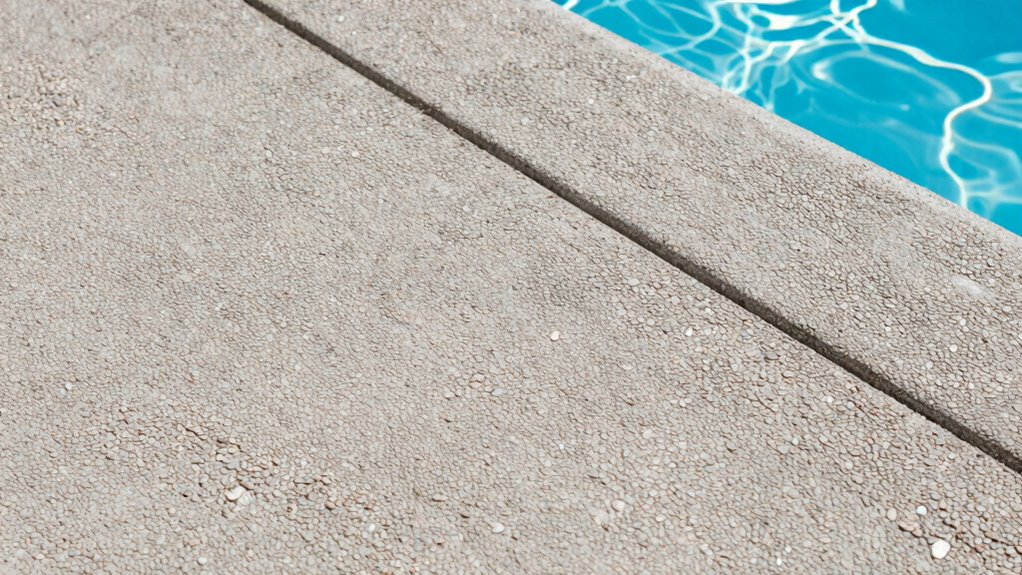
Installing a slip-resistant pool deck requires careful preparation and attention to detail to guarantee safety and longevity. First, ensure your surface is properly sealed and textured for maximum traction. When installing, consider integrating proper pool deck lighting to enhance visibility at night, reducing slips and falls. For maintenance, regular underwater cleaning is essential to remove algae and debris that can make the surface slippery. Keep the deck clean with gentle tools to avoid damaging the slip-resistant finish. Inspect the surface periodically for cracks or wear, and address issues promptly to prevent accidents. Applying non-slip coatings or sealants annually helps maintain traction. Consistent upkeep, combined with thoughtful lighting and cleanliness, keeps your pool deck safe, durable, and inviting for everyone.
How Much Does a Slip-Resistant Pool Deck Cost? Budget Tips and Options
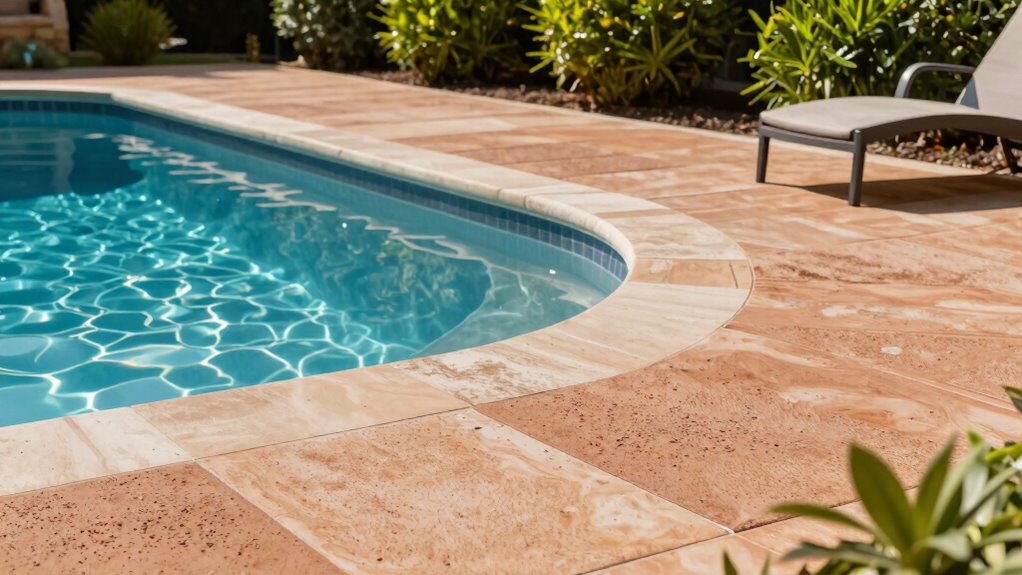
The cost of a slip-resistant pool deck varies widely depending on materials, size, and labor, but understanding your options can help you stay within your budget. When considering cost considerations, it’s crucial to compare materials for durability and slip resistance. Here are four tips to guide your choices:
- Explore budget-friendly options like textured concrete, which offers good slip resistance at a lower cost.
- Compare material comparisons such as composite decking versus natural stone, weighing durability against price.
- Factor in installation costs, as labor can considerably impact the overall budget.
- Plan for long-term savings by choosing durable materials that require less maintenance.
Being aware of these factors helps you balance safety, aesthetics, and budget effectively.
Examples of Stylish and Safe Slip-Resistant Pool Decks
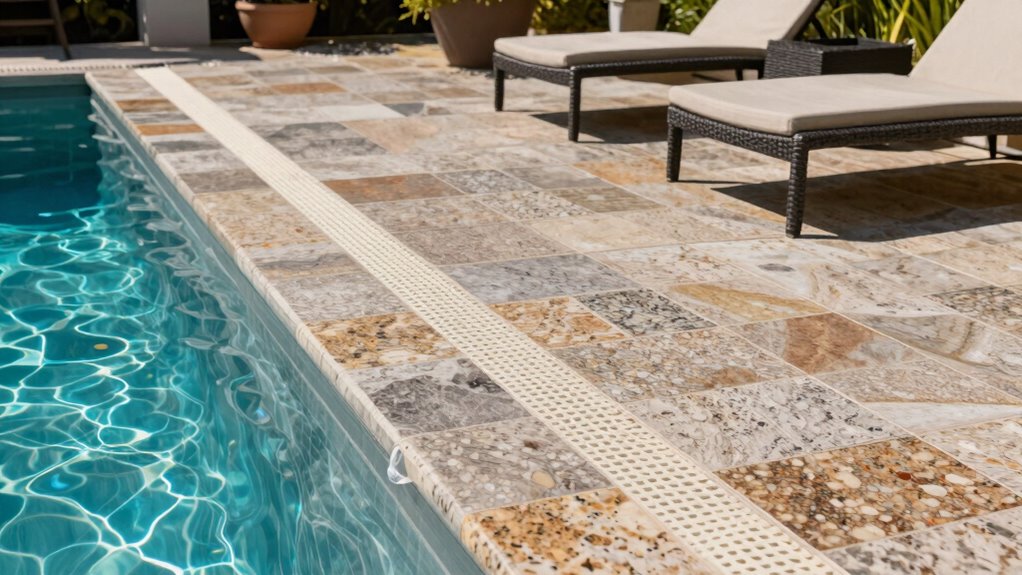
You can choose stylish textured surfaces that add both safety and visual appeal to your pool deck. Bright, colorful non-slip options also offer a fun way to enhance your space while preventing accidents. Exploring these choices helps you create a deck that’s both beautiful and secure.
Stylish Textured Surfaces
A variety of textured surfaces can elevate your pool deck’s style while ensuring safety underfoot. These textured finishes add visual interest and provide slip resistance, making your space both attractive and secure. You can choose from decorative patterns that enhance aesthetics while improving grip. Here are some stylish options:
- Stamped concrete with intricate decorative patterns
- Textured stone or slate tiles with natural, uneven surfaces
- Broom-finished concrete for a subtle, slip-resistant texture
- Exposed aggregate surfaces showcasing colorful stones and textured details
These surfaces combine style and safety, giving your pool deck a sophisticated look without sacrificing slip resistance. By selecting textured finishes with decorative patterns, you create an inviting space that’s both pleasing to the eye and secure for everyone.
Colorful Non-Slip Options
Adding vibrant colors to textured surfaces can enhance both the style and safety of your pool deck. Colored coatings are a fantastic way to achieve this, offering slip-resistant surfaces in bold hues that brighten up your space while reducing accidents. You can choose from a variety of durable, textured coatings in shades like turquoise, coral, or lime green to match your backyard’s vibe. Vibrant tiles are another stylish option, combining eye-catching colors with textured surfaces that prevent slips. These tiles come in a wide range of bright patterns and finishes, allowing you to create a playful or sophisticated look. Both colored coatings and vibrant tiles provide an attractive, non-slip surface that’s as safe as it is stylish, making your pool area more inviting and secure.
Frequently Asked Questions
How Long Do Slip-Resistant Pool Deck Surfaces Typically Last?
Slip-resistant pool deck surfaces usually last between 10 to 15 years, depending on the material choice and maintenance. If you opt for durable options like textured concrete or polymer-based coatings, you can expect better material longevity and durability expectations. Regular cleaning and sealing help extend their lifespan, ensuring your slip-proof surface remains safe and effective for years to come. Proper upkeep is key to maximizing your investment.
Are There Eco-Friendly Slip-Resistant Materials Available?
Did you know that over 70% of homeowners seek eco-friendly options for their outdoor spaces? Yes, there are sustainable materials available for slip-resistant pool decks. You can choose eco-friendly options like recycled rubber, bamboo composite, or textured concrete made with sustainable practices. These materials not only help protect the environment but also provide excellent slip resistance, ensuring your pool area is safe and eco-conscious.
Can Existing Pool Decks Be Retrofitted With Slip-Resistant Coatings?
Yes, you can retrofit your existing pool deck with slip-resistant coatings. Opt for deck resurfacing options that include slip-resistant coatings, which enhance safety without the need for complete removal. These coatings come in various styles and textures, providing durability and improved traction. By choosing the right coating options, you can upgrade your deck, making it safer and more attractive, all while protecting your ankles during those poolside moments.
How Does Climate Affect the Choice of Slip-Resistant Pool Deck Material?
Climate substantially influences your slip-resistant pool deck choices. Did you know that over 60% of slips occur in humid environments? Higher temperature variability can cause certain materials to expand or contract, affecting grip. In hot, humid climates, opt for textured concrete or rubber mats to prevent slips. These materials provide reliable traction regardless of humidity levels, ensuring safety and reducing ankle injuries around your pool.
What Maintenance Routines Help Preserve Slip Resistance Over Time?
You should regularly perform cleaning routines by sweeping and washing your slip-resistant pool deck to remove dirt, algae, and debris that can reduce grip. Additionally, applying a sealant periodically helps preserve slip resistance by maintaining the surface’s texture and preventing wear. Combining consistent cleaning with timely sealant application guarantees your deck remains safe and slip-proof over time, protecting your ankles from potential slips and injuries.
Conclusion
Choosing the right slip-resistant material can reduce accidents by up to 70%, keeping you safe and confident around your pool. With options that blend style and safety, you don’t have to compromise on looks or security. Regular maintenance ensures lasting effectiveness, so your deck stays safe year after year. Remember, investing in a slip-proof surface isn’t just smart—it’s essential for peace of mind and family fun. Embark on safety and enjoy your pool worry-free!
Fall Picks
fall essentials
As an affiliate, we earn on qualifying purchases.