
To prevent entrapment hazards at your pool, guarantee drains are regularly inspected and kept clean of debris, algae, and small objects. Always verify that drain covers are properly installed, fit tightly, and are free of cracks or damage. Use covers that meet safety standards with anti-entrapment features for added protection. Maintaining these components helps keep water flowing safely and reduces risks. Keep learning how proper maintenance makes your pool safer and more enjoyable.
Key Takeaways
- Regularly inspect and clean drain covers to ensure they are secure, undamaged, and free of debris that can cause clogs.
- Install covers that meet safety standards like ASME/ANSI A112.19.8, ensuring proper fit and anti-entrapment features.
- Check for cracks, damage, or looseness frequently, and replace any compromised covers immediately.
- Maintain proper water circulation and avoid debris buildup to reduce clogging and entrapment risks.
- Educate pool users and staff on drain safety protocols and the importance of routine maintenance.

Have you ever wondered how pool drains and covers keep your swimming area safe and clean? It all comes down to proper drain maintenance and cover installation. These elements are essential in preventing entrapment hazards, which can pose serious risks to swimmers, especially children. When drain systems are well maintained, and covers are correctly installed, you greatly reduce the chances of accidents happening beneath the water’s surface.
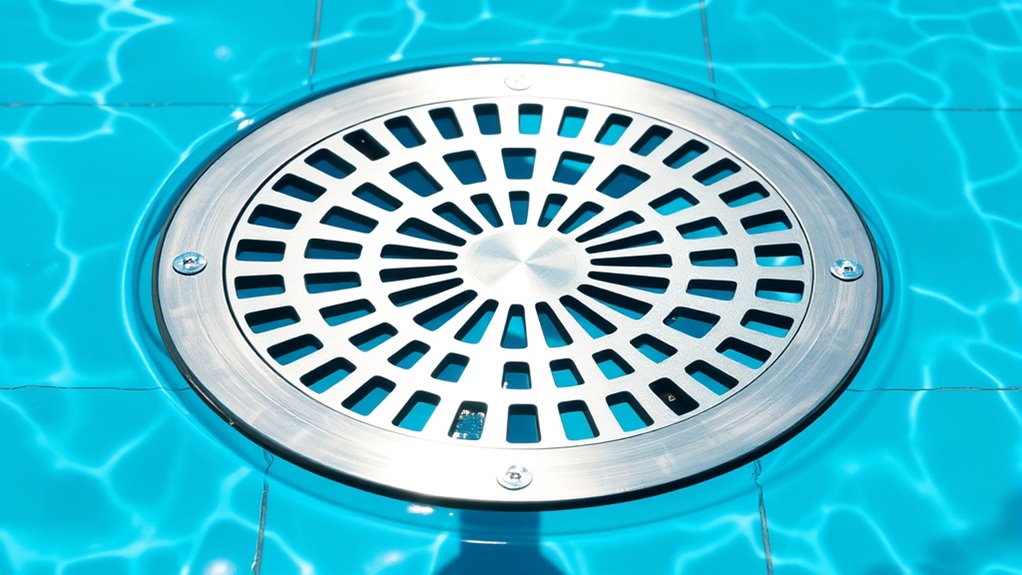
Drain maintenance involves regular inspections and cleaning to guarantee that the drain covers are intact and free of debris. Over time, dirt, algae, or even small objects can clog the drain area, affecting water circulation and creating unsafe conditions. Neglecting drain maintenance can lead to malfunctioning or damaged components, increasing the risk of entrapment. That’s why routine checks are necessary — you should verify that the drain covers are secure, free of cracks, and properly aligned. If you notice any damage, replacing or repairing the covers immediately is essential to uphold safety standards.
Regularly inspect and clean drain covers to ensure safety and proper water flow.
Cover installation plays an equally critical role. When you install a pool cover, it’s not just about aesthetics — it’s about guaranteeing safety and proper water flow. A correctly installed cover should fit tightly over the drain opening, leaving no gaps that could trap a swimmer. Modern covers are designed with anti-entrapment features, such as compliant designs that meet safety standards like ASME/ANSI A112.19.8. Proper cover installation involves securing the cover tightly and regularly checking its condition. If the cover becomes loose or damaged, it’s imperative to replace it promptly to prevent potential entrapment hazards.
You should also understand that not all covers are created equal. Some are designed specifically to prevent entrapment, featuring multiple layers or specialized materials that resist tearing and provide better grip. When choosing a cover, you want one that’s approved by safety standards, fits your pool’s drain size, and is easy to maintain. Additionally, selecting a cover made from safe and durable materials ensures long-lasting protection. Ensuring that covers are correctly installed and regularly inspected is your best line of defense against accidents. Remember, a well-maintained drain system and properly installed covers work together to keep the water flowing smoothly while safeguarding everyone who swims there.
Frequently Asked Questions
How Often Should Pool Drain Covers Be Inspected or Replaced?
You should inspect your pool drain covers at least once a year, following the recommended inspection schedule. Look for cracks, wear, or corrosion, and replace covers that show any damage. Adhering to the replacement guidelines is vital for safety, ensuring covers are secure and functioning properly. Regular inspections help prevent entrapment hazards and maintain safe swimming conditions, so don’t skip this essential maintenance step.
Are There Specific Safety Standards for Pool Drain Covers?
Sure, because safety standards are just suggestions, right? Actually, yes—pool drain covers must meet specific safety standards, including anti-entrapment devices, to guarantee safety compliance. These standards, like those from ANSI/APSP, specify proper design and installation to prevent entrapment hazards. You should always verify that your covers conform to current regulations, because ignoring them isn’t just risky — it’s asking for trouble. Stay compliant, stay safe.
Can DIY Repairs Effectively Address Drain Entrapment Risks?
DIY repairs can’t effectively address drain entrapment risks because safety standards require certified, compliant pool cover materials and covers designed specifically for safety. Attempting DIY repairs might overlook vital safety features and standards, increasing danger. Instead, you should replace damaged covers with approved, compliant pool cover materials and have professionals handle any repair or replacement to guarantee the pool remains safe and entrapment hazards are minimized.
What Signs Indicate a Drain Cover Failure or Damage?
You can tell a drain cover is failing or damaged through visual inspection; look for cracks, corrosion, or warping. Unusual noises when the pump runs may also signal issues. If you notice any of these signs, it’s vital to address them immediately, as damaged covers increase entrapment risks. Regular checks help guarantee your pool remains safe, and prompt repairs prevent potential accidents.
Are There Differences in Drain Safety Between Residential and Public Pools?
Yes, there are differences in drain safety between residential and public pools. Public pools must follow strict pool safety regulations, requiring regular drain maintenance and compliant covers to prevent entrapment hazards. Residential pools may have less rigorous standards, but it’s essential you regularly inspect drain covers for damage and ensure they meet safety guidelines. Proper maintenance and adherence to regulations help keep everyone safe, whether at a home or public facility.
Conclusion
By taking proactive steps to ensure your pool drains and covers are properly maintained, you greatly reduce the risk of entrapment hazards. Remember, a neglected drain isn’t just a small oversight—it can turn your relaxing oasis into a potential danger zone faster than you can say “accident.” Stay vigilant, regularly inspect your equipment, and prioritize safety to keep your pool a fun, safe retreat for everyone. Don’t let a simple oversight turn your paradise into a perilous trap.