When choosing between life jackets and floaties, consider safety, environment, and age. Life jackets are reliable, certified for open water, and provide secure fit and buoyancy, making them ideal for boating or outdoor activities. Floaties can be helpful in shallow pools but are less secure and can deflate or slip off. Ensuring proper fit and supervision is essential with either option. Keep exploring to learn how to select the best swimming aid for your needs.

Get pool and patio gear delivered free — and shop member deals
- Fast, free delivery on millions of items
- Access to Prime Big Deal Days deals on October 6–7
- Prime Video, Amazon Music and more included
Key Takeaways
- Life jackets are certified safety devices providing reliable buoyancy, ideal for open water, while floaties are less secure and better suited for pools.
- Properly fitted life jackets ensure safety and stability; floaties may deflate or slip off, increasing risk.
- Choose a life jacket appropriate for the child’s age and weight; floaties are mainly for older children learning to swim.
- For open water or boating, always use a life jacket; floaties are supplementary aids and do not replace adult supervision.
- Prioritize adult supervision, proper fitting, and understanding safety features over relying solely on floaties or swimming aids.

Are you confused about choosing the right swimming aid for beginners? It’s common to feel overwhelmed with so many options available, especially when trying to prioritize safety and effectiveness. When selecting between life jackets and floaties, understanding key factors like safety considerations and age appropriateness is essential to keep your little swimmer safe and confident in the water.
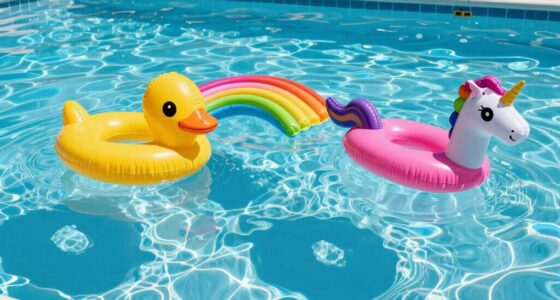
First, safety considerations should be your top priority. A life jacket is designed to provide buoyancy and keep a person’s head above water, often featuring a secure strap and a snug fit that minimizes the risk of slipping off. These jackets are tested and certified for safety, making them ideal for activities like boating or open water swimming. Floaties, on the other hand, are typically inflatable armbands or pool rings that are less secure and may deflate or slip off if not properly fitted. They’re better suited for shallow, controlled environments like a backyard pool or supervised swim lessons. Always remember that floaties are supplementary aids—they shouldn’t replace adult supervision or be relied on exclusively for safety.
Safety always comes first: life jackets are certified and secure, while floaties are less reliable and should be used with supervision.
Another vital aspect is age appropriateness. Life jackets come in various sizes designed to fit different age groups and body types, which helps ensure a proper fit and maximum safety. For young children or beginners, a well-fitting life jacket provides stability and confidence, especially in open water or deep pools. Floaties are generally suitable for older children who are learning to swim but still need some extra support. However, they’re not recommended for very young children or non-swimmers, as the risk of slipping out or deflation increases with age and activity level. When choosing between these aids, always check the manufacturer’s guidelines to confirm age suitability and weight limits.
While floaties can be fun and encourage kids to get comfortable in the water, they shouldn’t be viewed as a substitute for proper swimming lessons or adult supervision. If your goal is to teach a child how to swim or build water confidence, a life jacket, combined with professional instruction, offers a safer, more reliable approach. Additionally, understanding the essential safety features of swimming aids can help you make more informed decisions. Remember, no swimming aid is foolproof—constant supervision, proper fitting equipment, and age-appropriate choices are your best tools for ensuring safety.
children's life jackets for open water
As an affiliate, we earn on qualifying purchases.
As an affiliate, we earn on qualifying purchases.
Frequently Asked Questions
Are Life Jackets Suitable for Young Children?
Yes, life jackets are suitable for young children, but only with adult supervision. Make sure the life jacket fits properly and is Coast Guard-approved. It’s also essential for your child to take swimming lessons to build confidence and skills. Never rely solely on the life jacket; always watch your child closely in the water. Proper supervision combined with appropriate swimming aids guarantees safety and enjoyment during water activities.
Can Floaties Be Reused After Deflation?
Sure, you can reuse floaties after deflation, but don’t bet on their durability or safety. Over time, the material weakens, increasing the risk of tears and leaks. Plus, repeated inflation and deflation might compromise the integrity, making them less reliable for your little swimmer’s safety. So, while it’s tempting to save a few bucks, prioritize durability concerns and material safety—skip the reuse if you want peace of mind.
How Do I Choose the Right Size for My Child?
You should measure your child’s chest, waist, and height to choose the right size for floaties. Proper sizing supports water safety education and encourages swimming skill development. Make sure the floaties fit snugly without being too tight to ensure comfort and safety. Always follow the manufacturer’s sizing chart. Remember, correctly sized floaties help your child gain confidence in the water while reducing risk, making water activities safer and more enjoyable.
Are There Specific Safety Standards for Swimming Aids?
Yes, there are safety standards for swimming aids. You should look for products that meet recognized safety certifications, ensuring they’re tested for durability and secure fitting. Always supervise your child closely while using swimming aids, regardless of standards. Check the material durability to prevent leaks or tears, which can compromise safety. Choosing certified aids and maintaining active supervision helps keep your child safe and confident in the water.
What Are the Signs of a Poorly Fitted Life Jacket?
You’ll know a life jacket fits poorly if it’s too loose or tight, affecting your comfort level and safety. Signs include excessive movement inside the jacket, difficulty breathing, or it rides up when you try to swim. Make sure it’s snug around your chest without restricting movement, and it stays secure. A proper fit supports your safety and confidence, so check for these signs before entering the water.
Conclusion
So, when it comes to safety, don’t just choose any swimming aid—pick the one that truly protects you. Think of your safety gear as your personal guardian in the water, standing guard like a knight defending a fortress. Whether you opt for a life jacket or floaties, remember: your safety is your crown jewel. Make the right choice today, and let your confidence and security soar like an eagle in the open sky.
Evergreen bestsellers Picks
bestsellers
As an affiliate, we earn on qualifying purchases.