To prepare an Emergency Action Plan for pool incidents, you should clearly assign roles, establish communication signals, and guarantee staff and swimmers understand safety procedures through regular training and drills. Familiarize everyone with rescue equipment and emergency contact information, and plan for external support if needed. Regularly review and update your plan to keep it effective. Continuing will help you develop a thorough strategy to protect lives and respond confidently in emergencies.
Key Takeaways
- Develop clear procedures for emergencies, including rescue, first aid, and communication protocols.
- Assign specific roles to staff and ensure everyone understands their responsibilities.
- Conduct regular training sessions and simulated drills to reinforce response readiness.
- Familiarize staff with all rescue equipment and emergency systems at the pool site.
- Review and update the EAP periodically to adapt to environmental or staffing changes.
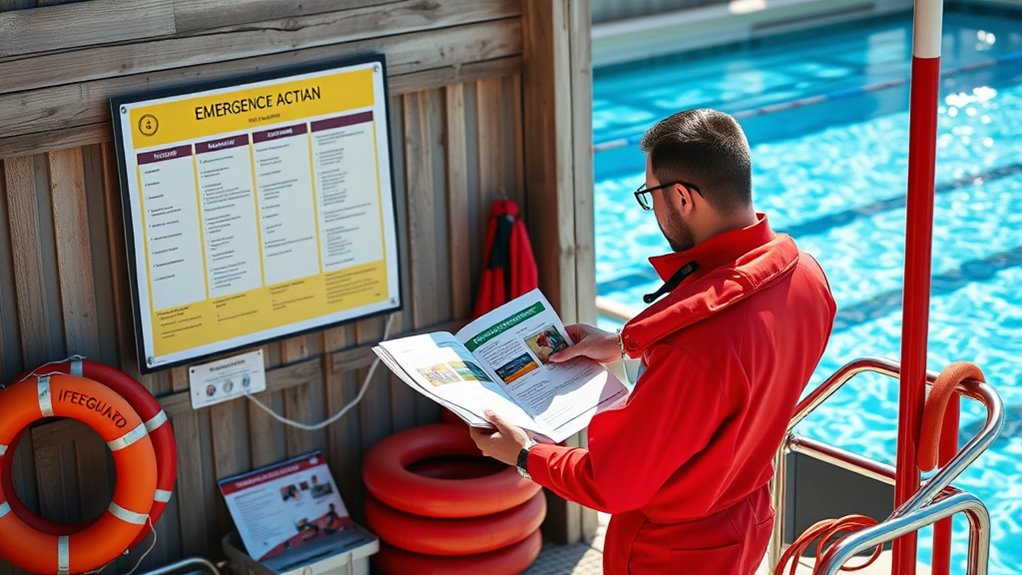
Having a clear Emergency Action Plan (EAP) in place is essential to effectively respond to pool incidents and guarantee everyone’s safety. When you prioritize a solid plan, you ensure that all staff and swimmers understand their roles during emergencies, which can make the difference between a quick rescue and a tragic outcome. The foundation of a successful EAP is detailed preparation, especially in the areas of water safety and rescue procedures. By establishing clear protocols beforehand, you reduce chaos and confusion when a crisis occurs, allowing you to act swiftly and confidently.
Your first step should be training everyone involved in pool safety, including lifeguards, staff, and even regular swimmers, on water safety fundamentals. Understanding how to prevent accidents is just as critical as knowing what to do when they happen. Regular drills reinforce these safety principles and help identify gaps in your response plan. Incorporating rescue procedures into your training ensures that when an incident occurs, you can execute lifesaving techniques efficiently. Proper rescue procedures involve more than just pulling someone out of the water; they include recognizing the signs of distress, approaching the victim safely, and administering appropriate assistance without risking additional injuries or drownings.
Train all staff and swimmers in water safety and rescue techniques through regular drills.
In your plan, specify the roles of each team member during an emergency. For example, designate who will call emergency services, who will perform rescues, and who will handle first aid. Clear communication is essential—use predetermined signals or words to coordinate actions smoothly. Make sure all team members know how to activate the emergency alarm system and where to find rescue equipment like rescue tubes, first aid kits, and Automated External Defibrillators (AEDs). A well-organized response minimizes delays and ensures that help reaches the victim swiftly.
It is also beneficial to familiarize yourself with local supermarket hours and other community resources, which can be helpful when planning for emergencies that may require additional supplies or assistance outside the pool environment.
It’s equally important to review and update your EAP regularly. Pool environments change, new staff come on board, and safety standards evolve. Conduct routine drills that simulate real-life scenarios, practicing rescue procedures under pressure. This prepares everyone to act decisively, reducing the likelihood of panic or mistakes. Remember, an effective emergency response hinges on thorough planning, consistent training, and clear communication. When you have a detailed EAP focused on water safety and rescue procedures, you can respond confidently, protect lives, and maintain a safe swimming environment for all.

Altovexis 4-15ft Telescopic Pool Rescue Hook with Pole Fiberglass Telescoping Ring Emergency Life-Saving Rescue Equipment Pool Safety Hook for Swimming, Boat
- Material: Fiberglass pole with steel wire rope
- Extendable Length: Adjusts from 4 to 15 feet
- Visibility: Bright color for easy spotting
As an affiliate, we earn on qualifying purchases.
As an affiliate, we earn on qualifying purchases.
Frequently Asked Questions
How Often Should the Emergency Plan Be Reviewed and Updated?
You should review and update your Emergency Action Plan at least once a year to make certain it stays current. Incorporate regular emergency drills to test its effectiveness and identify areas for improvement. Establish a plan review schedule, such as every six months, especially after incidents or significant changes to the pool area. Staying proactive helps you respond swiftly and confidently during emergencies, keeping everyone safer.
What Training Is Required for Staff to Execute the Plan Effectively?
Imagine your staff as vigilant guardians, ready to spring into action. They need lifeguard certification and first aid training to execute the plan effectively. This guarantees they can spot emergencies quickly, perform rescues confidently, and provide first aid until help arrives. Regular training refreshers keep their skills sharp, so when a crisis strikes, they respond seamlessly, protecting everyone in the pool area with calm competence.
How Should Communication Be Handled During a Pool Emergency?
During a pool emergency, you should use clear, concise communication, speaking loudly and calmly. Refer to pool signage for specific protocols and verify all staff are familiar with emergency drills to respond quickly. Use a designated emergency whistle or alarm to alert others, and assign roles to team members. Keep communication steady and focused, updating patrons as needed, and always follow your established Emergency Action Plan for effective coordination.
Are There Legal Requirements for Emergency Plans in Pools?
Think safety first, because an ounce of prevention is worth a pound of cure. You must follow legal requirements for emergency plans in pools to guarantee legal compliance and minimize liability considerations. Many jurisdictions mandate specific procedures, emergency contact info, and training for staff. Failing to meet these legal standards can lead to fines, lawsuits, or worse. So, always stay updated on local regulations and implement thorough emergency protocols to protect everyone.
What Equipment Should Be Included in an Emergency Kit?
In your emergency kit, include essential pool safety and first aid equipment like a first aid kit, rescue equipment such as a shepherd’s hook and life preserver, a CPR face shield, and gloves. Also, keep a whistle for signaling, an emergency phone or communication device, and a pool safety rescue throw. Regularly check and replenish supplies to guarantee you’re prepared for any pool incident, prioritizing quick response and safety.
Conclusion
By thoughtfully preparing an emergency action plan, you create a safer environment where everyone can enjoy the pool with confidence. It’s like planting seeds of reassurance, ensuring that help is always nearby when needed. Remember, a well-crafted plan nurtures trust and calmness, turning potential worries into moments of swift, effective response. With your proactive efforts, you’re helping to turn poolside moments into joyful memories, all while gently guiding everyone towards safety.