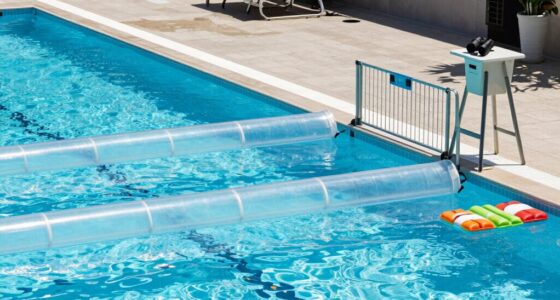
Safety covers for pools include mesh and solid options, each designed to protect your loved ones and your pool. Mesh covers are lightweight, drain water, and keep debris out, making them easier to handle. Solid covers are heavier, block sunlight, and provide maximum protection from debris and accidental falls. Understanding how each type works will help you choose the best fit for your needs—so keep exploring to find out more.
Key Takeaways
- Mesh covers are lightweight, allow water drainage, and prevent debris buildup, making maintenance easier.
- Solid covers are heavy-duty, fully block sunlight and debris, and provide maximum security and algae prevention.
- Mesh covers promote safety by preventing accidental falls while enabling water flow through the cover.
- Solid covers offer superior durability, long-term protection, and are ideal for harsh weather conditions.
- The choice depends on safety needs, climate, maintenance preferences, and budget considerations.
What Are Pool Safety Covers, and Why Do They Matter?

Pool safety covers are sturdy barriers designed to prevent accidents by keeping people and debris out of the water when the pool isn’t in use. They play an essential role in winter preparation, shielding your pool from harsh weather and preventing damage during cold months. Beyond safety, these covers also consider aesthetic considerations, helping your backyard look tidy and attractive even when the pool isn’t in use. By choosing the right cover, you ensure safety for children and pets, reduce maintenance, and protect your investment. Whether you opt for mesh or solid designs, understanding how they contribute to winter prep and how they blend with your outdoor space helps you make an informed decision. Additionally, the contrast ratio of the cover material can influence how well it reflects or absorbs light, impacting overall appearance and effectiveness. Proper installation and maintenance are crucial to maximizing the benefits of your pool safety cover, ensuring it performs as intended year-round. Incorporating durability features can further extend the lifespan and reliability of your cover, providing peace of mind for years to come. Furthermore, selecting a cover with UV resistance can help maintain its color and integrity over time despite exposure to sunlight, and understanding the materials used can help you choose the most suitable option for your climate. Ultimately, pool safety covers offer peace of mind and enhanced pool longevity.
How Do Mesh and Solid Pool Safety Covers Differ in Design and Materials?

Mesh and solid safety covers differ markedly in their design and materials, each offering distinct advantages for protecting your pool. Mesh covers are made from woven polyethylene fibers, making them lightweight, flexible, and resistant to debris accumulation. Their material composition allows water to drain through, reducing pool weight and preventing damage. In contrast, solid safety covers are constructed from durable vinyl or PVC material, providing a tight, impermeable barrier that fully covers the pool surface. The design features of solid covers include reinforced edges and robust anchoring systems, ensuring maximum security. While mesh covers emphasize drainage and ease of maintenance, solid covers focus on complete sealing and protection from debris, sunlight, and contaminants. Proper material selection is essential to ensure the safety and longevity of your pool cover. Additionally, selecting the right type of cover can significantly impact pool safety and maintenance efforts, especially in regions with heavy snowfall or frequent storms. Understanding the material durability of each cover type can help in making an informed choice that best suits your climate and usage needs. For example, climate considerations can influence which cover is more suitable for your specific environment, ensuring optimal protection year-round.
How Do Mesh and Solid Covers Protect Your Pool and Family?

Ever wondered how safety covers keep your pool and family protected during the off-season? These covers act as a barrier, preventing accidental falls and ensuring child safety. They also reduce debris, making maintenance easier and less frequent. Mesh covers allow water to drain through, minimizing ponding and algae growth, while solid covers fully block sunlight, preventing algae buildup. Both types keep children and pets away from the pool when unsupervised. Additionally, choosing the right cover can extend the lifespan of your pool equipment and improve overall safety material durability. Proper installation and regular inspections are essential to maintain their effectiveness and safety standards. Pool safety regulations in the region offer insight into local safety requirements and community practices, highlighting the importance of safety and maintenance in shared spaces. Understanding cover material properties can help you select the most suitable option for your needs.
Which Pool Safety Cover Is More Durable and Safe for Your Needs?

When selecting a safety cover, durability and safety are top priorities to guarantee long-lasting protection for your family and your pool. A durability comparison shows that solid covers often last longer due to their sturdy materials, making them more resistant to wear and tear over time. Mesh covers, while more breathable and easier to handle, may require more frequent replacement. In terms of safety effectiveness, both types provide reliable protection, but solid covers tend to offer a more secure barrier against debris and accidental falls. Additionally, the material strength of a safety cover plays a crucial role in its longevity and safety performance. Understanding the manufacturing quality of different covers can help ensure you select a product that meets safety standards. Moreover, the testing accuracy of the materials used can impact how well the cover performs under various conditions. Recent advancements in material technology have improved the durability and safety features of both mesh and solid covers, helping consumers make more informed choices. The performance testing of these covers often includes simulations of exposure to weather elements, which is vital for assessing real-world durability. Ultimately, your choice depends on your specific needs—if durability is your main concern, a solid cover might be the better option. If ease of use and drainage are priorities, a mesh cover could work well without compromising safety.
How to Choose the Best Mesh or Solid Cover for Your Pool?

Choosing the right pool safety cover depends on understanding your specific needs and priorities. Consider whether you want a mesh or solid cover based on factors like durability, visibility, and maintenance. When selecting, think about ease of cover installation, long-term durability, and overall cost comparison. Mesh covers are typically more affordable and allow water drainage, reducing debris buildup. Solid covers, though generally more expensive, provide better protection from debris and sunlight, which can help prevent algae growth. Keep in mind that installation complexity varies; mesh covers are usually easier to install, while solid covers may require more effort and precise fitting. Focus on your budget and safety goals to make the best choice for your pool. Additionally, understanding material quality can influence the longevity and effectiveness of your chosen cover. Moreover, considering UV resistance can help ensure your cover withstands harsh weather conditions over time. Evaluating the material composition of the cover can also reveal how well it resists wear and tear in different climates.
Frequently Asked Questions
Can Mesh or Solid Covers Prevent Algae Growth Better?
Mesh covers generally prevent algae growth better because they allow water to flow, reducing stagnation that promotes algae. Solid covers block sunlight, which also helps with algae prevention, but their durability can vary. If you want an effective algae prevention method that’s also durable, a solid cover might be better. However, for consistent water circulation and algae control, mesh covers are often the top choice.
Are Mesh Covers Easier to Install Than Solid Covers?
You’ll find mesh covers way easier to install than solid ones, saving you a mountain of time and frustration. Mesh covers are lightweight and flexible, making the installation process smooth and straightforward, even for beginners. Plus, their cover durability means they hold up well over time. With mesh, you avoid the heavy lifting and complicated setup that solid covers demand, so you can enjoy a hassle-free pool winterization.
How Do Covers Affect Pool Chemical Levels During Winter?
During winter, covers help maintain chemical stability and provide insulation to keep your pool balanced. A solid cover traps heat better, reducing chemical fluctuations and preventing debris buildup, which simplifies chemical management. Mesh covers allow more sunlight and air to pass through, possibly leading to more chemical adjustments. Overall, your choice impacts how well your pool stays insulated and chemically stable during colder months.
What Maintenance Is Required for Mesh Versus Solid Covers?
You’ll find that mesh covers require less maintenance—they resist debris buildup and dry quickly, making cleaning easier. Solid covers demand more upkeep, like regular cleaning and winterizing to prevent mold and water pooling. In durability comparison, solid covers tend to last longer but cost considerations are higher upfront. With mesh, you get easier maintenance and lower initial costs, but they might need replacement sooner. Choose based on your maintenance willingness and budget.
Do Covers Impact Pool Access for Cleaning and Maintenance?
Your pool cover substantially impacts access for cleaning and maintenance. Mesh covers allow water drainage and easier access, making pool safety easier to maintain without removing the cover completely. Solid covers require removal for cleaning, which can be more cumbersome but offer better cover durability and enhanced safety. Choose based on your priority: if quick access is key, mesh works better; for maximum safety and durability, a solid cover is preferable.
Conclusion
So, whether you pick a mesh or solid cover, remember it’s all about pretending you’re a secret agent guarding your backyard fortress. Sure, one might keep out debris, and the other keeps the sun’s rays at bay, but really, they’re just your pool’s overprotective bodyguard. Choose wisely, sleep soundly, and enjoy the peace of mind knowing your backyard is safer—until the next poolside dance party. Because, let’s face it, safety never goes out of style.