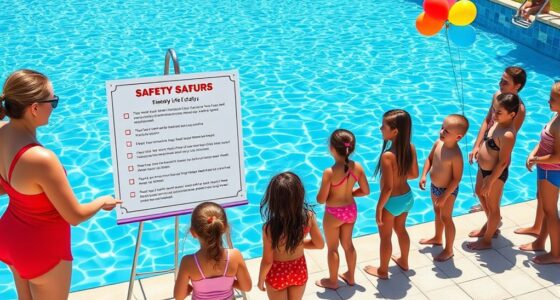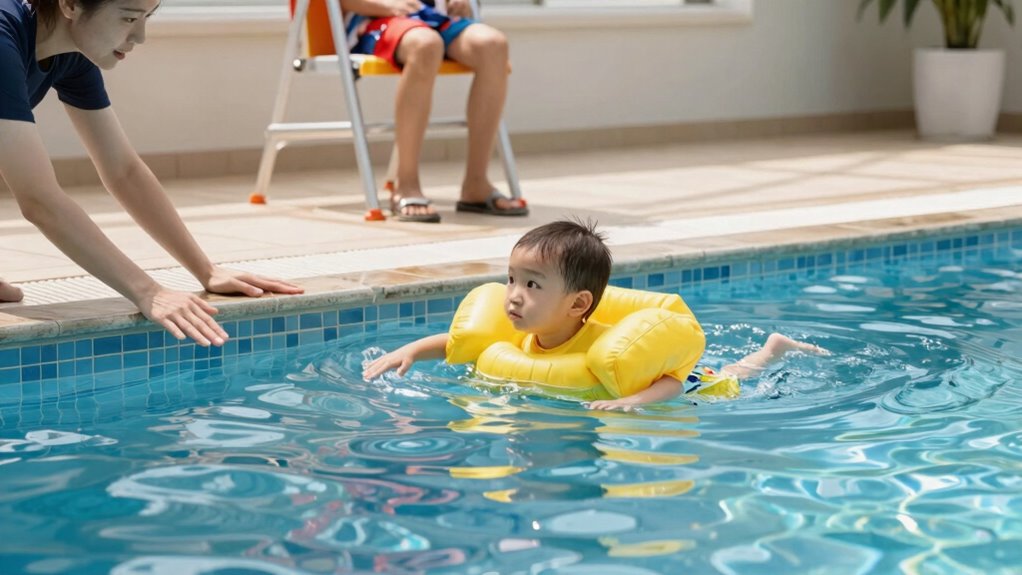

Swim lessons help by teaching your child basic water skills, boosting their confidence, and building muscle memory for safety. However, lessons alone can’t replace your constant supervision or awareness of water conditions. Kids need ongoing practice and reinforcement outside lessons to stay safe and respond effectively in emergencies. Supervision and understanding the environment remain essential, no matter how skilled your child is. Want to know more about balancing lessons and supervision? Keep exploring for helpful tips.

Get pool and patio gear delivered free — and shop member deals
- Fast, free delivery on millions of items
- Access to Prime Big Deal Days deals on October 6–7
- Prime Video, Amazon Music and more included
Key Takeaways
- Swim lessons build foundational water skills but do not replace constant adult supervision around water.
- Ongoing practice reinforces safety skills learned during lessons, ensuring better preparedness in emergencies.
- Supervision is essential at all times, regardless of swimming ability, due to unpredictable water conditions.
- Water safety education from lessons enhances decision-making but must be complemented by vigilant oversight.
- Recognizing water environment risks helps determine when supervision needs to be more vigilant, beyond just skills.

Swim lessons can teach your child valuable skills that boost confidence and improve safety in the water, but they don’t replace the constant supervision needed around pools and lakes. While formal lessons help children learn to float, kick, and perform basic strokes, they are just one part of ensuring water safety. Children may become comfortable with swimming during lessons, but without vigilant supervision, accidents can happen. It’s essential to remember that swim lessons are a foundation, not a guarantee, especially when it comes to keeping your child safe in unpredictable water situations.
One of the main benefits of swim lessons is skill retention. Kids often practice skills repeatedly during lessons, which helps them remember what to do if they find themselves in trouble. Repetition and structured learning support the development of muscle memory, so your child can react quickly and correctly when needed. However, skill retention isn’t automatic; it requires ongoing practice and reinforcement outside of lessons. As your child grows more confident, you should continue to encourage safe water habits and supervised practice, especially in open water or unfamiliar pools. That way, they’re more likely to recall their skills in real-life emergencies. Additionally, emphasizing the importance of water safety education can help children understand potential risks and make better decisions around water. Incorporating ongoing reinforcement of safety rules and skills is crucial for long-term safety. Recognizing that water environments can vary greatly in safety factors further emphasizes the need for constant supervision regardless of a child’s skill level. Moreover, understanding how different water conditions affect safety can help parents and guardians better anticipate potential hazards and respond appropriately.
child water safety floatation devices
As an affiliate, we earn on qualifying purchases.
As an affiliate, we earn on qualifying purchases.
Frequently Asked Questions
What Age Is Best to Start Swim Lessons?
You should start swim lessons around age one or two, as early as your child shows water confidence. Early lessons build comfort in the water and improve pool safety skills. At this age, kids learn basic skills in a safe environment, but supervision still needs to lead at all times. Starting young helps prevent accidents, making your child more confident and safe around water as they grow.
How Do I Choose the Right Swim Instructor?
Ever wondered how to pick the best swim instructor? Focus on someone who emphasizes lifesaving techniques, ensuring your child learns essential safety skills. Look for an instructor who fosters parent-child bonding, making lessons comfortable and encouraging. Are they patient, communicative, and experienced with your child’s age? A great instructor combines safety, fun, and connection—so you can trust your child’s progress and enjoy peace of mind during every swim.
Can Children Learn Safety Skills Without Formal Lessons?
Yes, children can learn water safety skills without formal lessons, but parent supervision is essential. You should actively teach your child about water dangers, safe behaviors, and how to respond in emergencies. Consistent supervision, especially around pools or bodies of water, helps reinforce safety habits. While informal lessons are helpful, structured swim lessons provide thorough training that greatly improves your child’s water safety, making supervision even more effective.
How Often Should Swim Lessons Be Scheduled?
Think of water confidence like planting a garden; regular watering helps it thrive. For children, scheduling swim lessons weekly or bi-weekly keeps skills sharp and boosts confidence. Consistent lessons, combined with active parent involvement, reinforce safety. Skipping sessions may cause skills to fade, like a garden wilting without care. Regularly scheduled lessons guarantee your child gains confidence and competence, making water safety second nature.
What Are Signs My Child Is Ready for Advanced Lessons?
You’ll know your child is ready for advanced lessons when they show increased water confidence and can comfortably float on their own. If they’re enthusiastic to try new skills, can hold their breath underwater, and demonstrate consistent flotation skills, it’s a good sign. Watch for their ability to stay calm in the water and follow instructions, which indicates they’re prepared to progress safely to more challenging lessons.
Conclusion
Remember, swim lessons can turn you into a confident swimmer faster than you can say “lifeguard,” but they’re no substitute for vigilant supervision. Even the most skilled swimmers need a watchful eye nearby—think of supervision as your safety net, stronger than steel. When you combine lessons with constant supervision, you create an unstoppable shield against danger. Together, they’re your best bet to keep everyone safe and make swimming a fun, worry-free adventure.
Fall Picks
fall essentials
As an affiliate, we earn on qualifying purchases.