
To keep your water safe and prevent infections or irritation, you need to actively monitor and maintain proper water chemistry. This involves regularly testing pH levels to keep them within the ideal range of 7.2 to 7.6. Adjust pH gradually using suitable chemicals, ensuring disinfectants work effectively and water stays balanced. Consistent management prevents corrosion, scaling, and microbial growth. For a safer water system, understanding these key practices helps protect health—learn more to stay ahead.
Key Takeaways
- Regularly test and monitor water pH to ensure it stays within the optimal range of 7.2 to 7.6.
- Adjust pH levels gradually using approved chemicals to prevent sudden imbalances that can cause irritation or corrosion.
- Maintain balanced pH to optimize sanitizer effectiveness, ensuring continuous pathogen control and reducing infection risks.
- Proper water chemistry prevents corrosion and scaling, protecting both health and equipment longevity.
- Consistent water chemistry management minimizes irritation to skin, eyes, and respiratory pathways, promoting safe and comfortable water use.
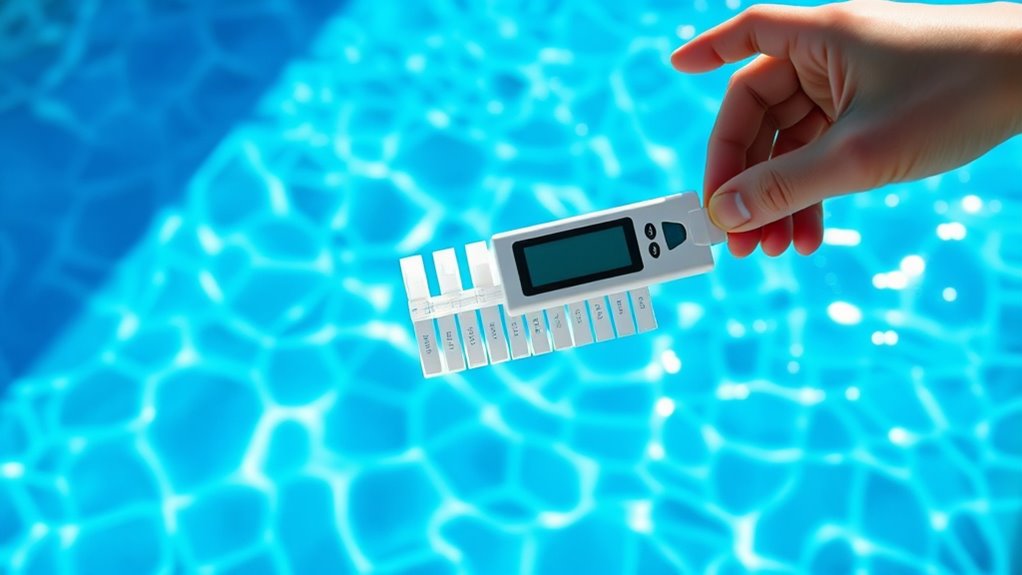
Ensuring water safety begins with understanding its chemistry, as proper chemical balance prevents harmful contaminants and promotes healthy use. One of the key factors in maintaining safe water is managing the pH level. When the pH is too low or too high, it can lead to irritation of the eyes, skin, and respiratory system, while also reducing the effectiveness of sanitizers. You need to regularly test and adjust the pH level to keep it within the ideal range—typically between 7.2 and 7.6 for most water systems. This balance guarantees that disinfectants like chlorine work effectively to eliminate bacteria and viruses without causing irritation or corrosion.
pH level adjustments are critical because they directly influence sanitizer efficacy. When the pH drifts outside the recommended range, sanitizers become less effective, allowing harmful microorganisms to survive and multiply. If the water is too acidic, it can corrode pipes and equipment, releasing metals that may pose additional health risks. Conversely, overly alkaline water can cause scaling and cloudy appearance, which are signs of an imbalanced system. Regular testing and timely adjustments with pH increasers or decreasers help maintain this delicate balance, ensuring that sanitizers perform at their best and that water remains safe and comfortable for users.
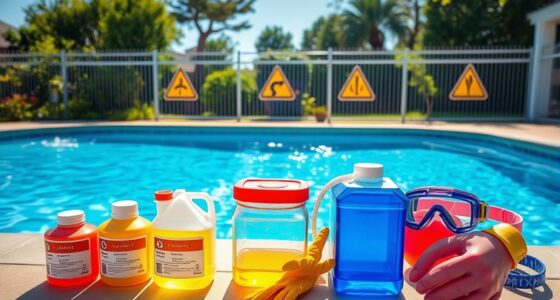
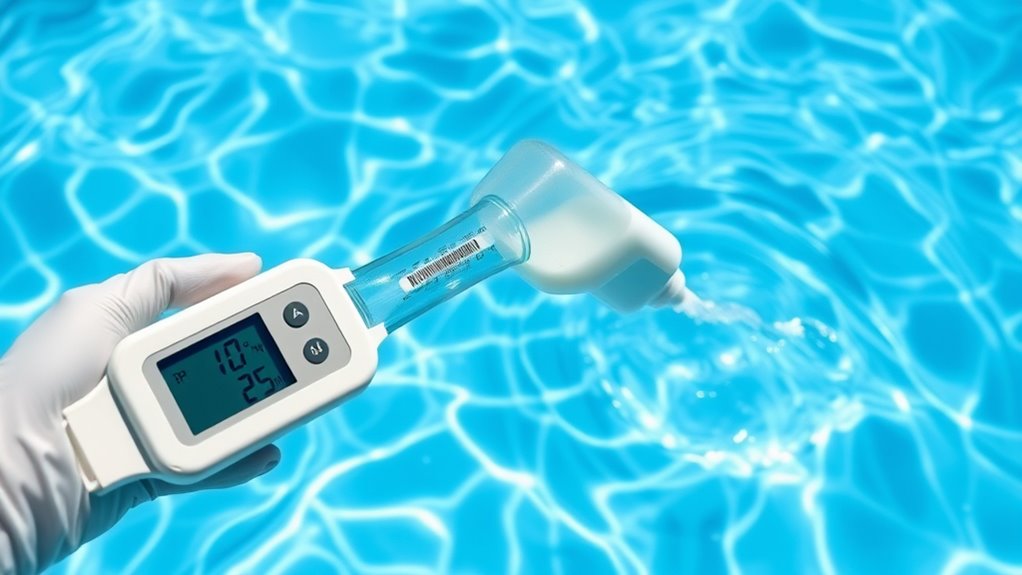
You should also understand that maintaining proper pH levels isn’t a one-time task; it requires consistent monitoring, especially in systems like pools, spas, or water treatment facilities. Using reliable test kits and automatic pH controllers can help you keep the water within the safe range more easily. When adjusting pH levels, always add chemicals gradually, testing the water after each addition until the desired balance is achieved. This approach prevents overshooting the target and creating new issues. Regular water testing and proper chemical adjustments are essential components of effective water chemistry management.
In addition to pH adjustments, focusing on sanitizer efficacy is essential. Chlorine, bromine, or other disinfectants work best when the water is properly balanced. They break down organic contaminants and kill pathogens effectively, reducing the risk of infections and irritation. When the pH is maintained correctly, sanitizer residuals stay stable, providing continuous protection. This stability not only keeps water safe but also extends the lifespan of your sanitation chemicals and reduces long-term costs.
Frequently Asked Questions
How Often Should Water Chemistry Be Tested in Commercial Pools?
You should test your commercial pool’s water chemistry daily. Check chlorine levels to ensure they stay between 1-3 ppm, and verify pH balance remains between 7.2 and 7.8. Regular testing helps you catch imbalances early, preventing infections and irritation. Use a reliable test kit or digital tester, and adjust chemicals as needed. Consistent monitoring maintains your pool safe, clean, and comfortable for all swimmers.
What Are Common Signs of Water Chemistry Imbalance?
You’ll notice signs of water chemistry imbalance through pH fluctuations, which cause cloudy water or eye and skin irritation. Low sanitizer levels can lead to unpleasant odors and increased algae growth, while high sanitizer levels may cause skin dryness and irritation. Keep an eye out for these signs, and regularly test your water to maintain proper pH and sanitizer levels, ensuring a safe and comfortable swimming environment.
Can Natural Water Sources Maintain Safe Water Chemistry Levels?
Natural water sources can sometimes maintain safe water chemistry levels, but it depends on factors like natural filtration and mineral content. You should regularly test the water, as mineral levels can fluctuate and affect safety. While natural filtration can remove some contaminants, it doesn’t guarantee consistent safety. To verify safe water chemistry, consider additional treatment methods, especially if you notice changes in water clarity, odor, or taste.
How Does Water Temperature Affect Chemical Stability?
Did you know that water temperature impacts over 90% of pH fluctuation and chemical degradation? When temperature rises, chemicals become less stable, leading to faster breakdown and unpredictable pH levels. Conversely, cooler water slows these processes, maintaining consistent water chemistry. You need to monitor temperature carefully, as even small changes can markedly affect chemical stability, potentially risking infections or irritation in water systems.
What Are the Risks of Improper Chemical Dosing?
If you dose chemicals improperly, you risk a chemical overdose or pH imbalance, which can cause skin and eye irritation. Too much chemical can create toxic conditions, harming swimmers and damaging equipment. An imbalanced pH can reduce sanitizer effectiveness, leading to bacterial growth and infections. Always measure carefully and follow manufacturer instructions to guarantee safe, balanced water chemistry and prevent health hazards.
Conclusion
By maintaining proper water chemistry, you create a safer environment that prevents infections and skin irritations. Regular testing and adjustments keep your water balanced and healthy. Isn’t it worth taking a few extra steps to protect yourself and others? Remember, small efforts in water care can make a big difference in ensuring safety and peace of mind. Stay vigilant, stay safe—your health depends on it.