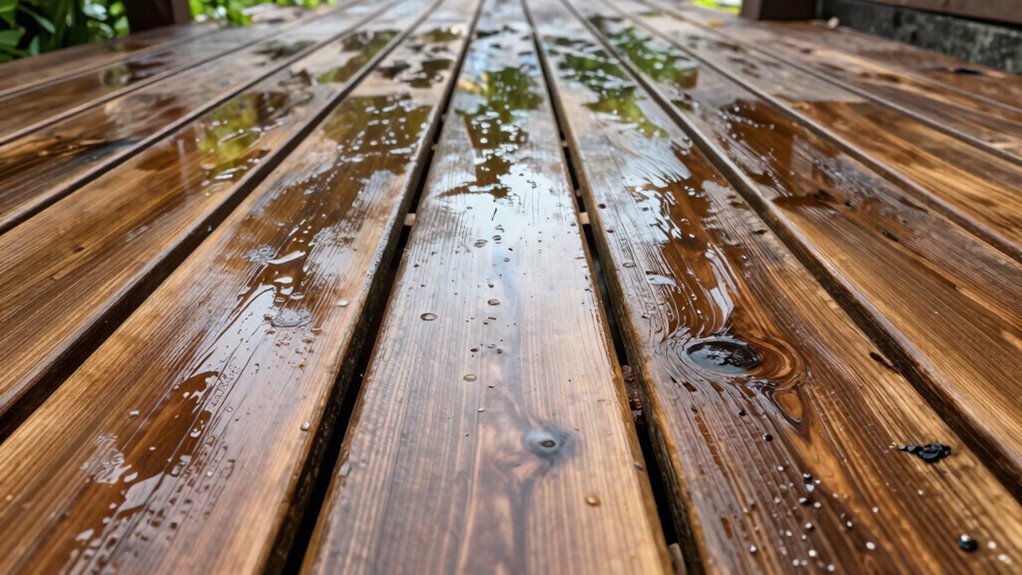

Wet decks stay dangerous longer because water seeps into tiny crevices and porous materials, forming invisible films of moisture that can linger after surface looks dry. This residual dampness isn’t always obvious but remains slippery and unsafe. Cracks, dirt, and mold further trap moisture, making the deck even more hazardous. Environmental factors like humidity and temperature can extend drying times. Keep exploring to discover how different materials and maintenance habits influence these hidden hazards.

Get pool and patio gear delivered free with Prime
- Fast, free delivery on millions of items
- Prime Video, Amazon Music and more included
- Member-only deals all year
Key Takeaways
- Porous decking materials absorb water, increasing moisture retention and prolonging slipperiness even after drying appears complete.
- Invisible film of moisture on textured or uneven surfaces reduces traction and remains for hours.
- Cracks, chips, and debris trap water and debris, creating hidden slip hazards that persist over time.
- Mold, algae, and dirt grow in damp, shaded areas, worsening slipperiness and hiding dangers.
- Environmental factors like humidity and temperature affect drying times, extending the period of slip risk.
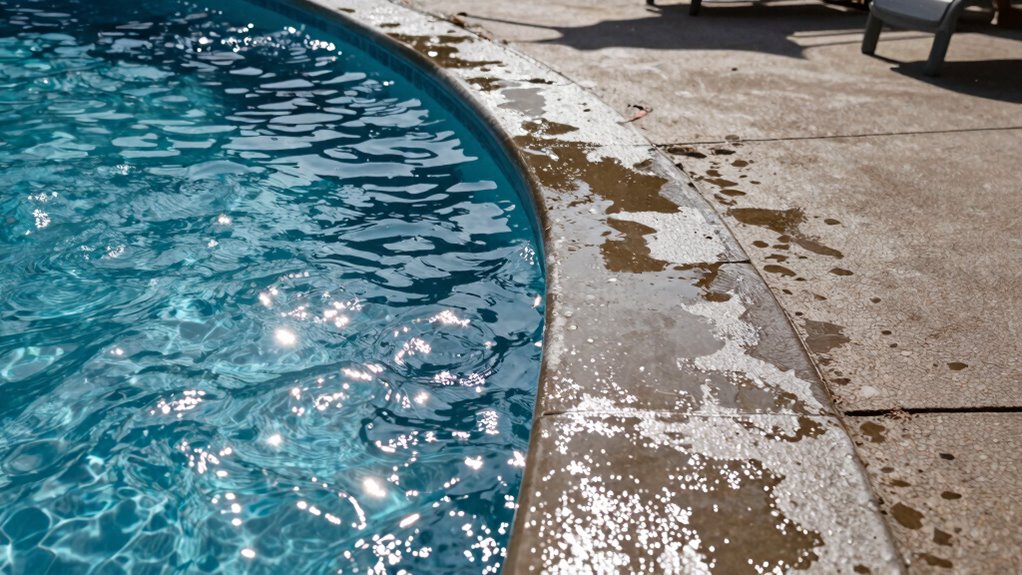
Wet decks remain hazardous for longer than many realize, especially after a rainstorm or spill. The moment the surface gets soaked, it transforms into a zone of potential danger, often more treacherous than it appears. You might think that once the rain stops or the spill is cleaned up, the risk diminishes quickly. However, the reality is that these surfaces stay slippery for extended periods, and the dangers aren’t always obvious. You need to understand that wet decks can harbor hidden hazards that make slipping and falling more likely long after the water has dried.
One reason wet decks remain dangerous longer is the nature of slippery surfaces. Water doesn’t just sit on top of the deck; it seeps into tiny crevices, pores, and textured areas, creating a thin film of moisture that’s difficult to see. This film reduces traction significantly, making it easy to lose your footing. Even if the water seems to have evaporated or been wiped away, a slick residue can linger, especially if the deck material is porous or uneven. This residual moisture can turn a seemingly dry deck into a slip hazard hours after the initial spill or rain. Additionally, porous materials tend to absorb water, prolonging the dampness and slipperiness.
Residual moisture on porous or uneven decks can remain slippery for hours after water dries.
Furthermore, hidden hazards contribute to the prolonged danger. Many decks have cracks, chips, or uneven patches that trap water and debris, creating slick spots that aren’t immediately noticeable. These areas can be especially dangerous because your eyes might not detect the hazards at a quick glance. Dirt, algae, or mold can also grow in damp corners, adding to the risk by making the surface even more slippery and obscuring potential dangers. Over time, these hidden hazards worsen, especially if the deck isn’t regularly maintained or cleaned. Regular inspections and maintenance can help mitigate these risks, but many overlook this crucial step. Recognizing moisture retention and its effects can help in planning better safety measures for deck upkeep. Moreover, understanding the material composition can guide you in choosing safer decking options that dry faster and resist mold growth. Additionally, environmental factors like temperature and humidity can be unpredictable, making it essential to assess the deck’s condition before walking on it.
As an affiliate, we earn on qualifying purchases.
Frequently Asked Questions
How Does Temperature Affect Wet Deck Slipperiness?
Temperature considerably affects wet deck slipperiness because lower temperatures cause water to freeze or create icy patches, increasing slip risks. Warmer temperatures help water evaporate faster, reducing slipperiness. Surface texture also plays a role; rougher textures provide better traction, while smooth surfaces become dangerously slippery when wet. Good air circulation helps dry the deck more quickly, decreasing the time it remains slick and hazardous, especially in cooler conditions.
Can Certain Materials Dry Faster Than Others?
Yes, some materials dry faster than others. In a material comparison, absorbent materials like towels or microfiber cloths typically have quicker drying speeds than dense fabrics or plastics. Porous surfaces allow moisture to evaporate more rapidly, reducing slip hazards. If you’re choosing a material for drying, opt for those with high absorbency and low moisture retention, as they substantially improve drying speed and safety on wet decks.
What Role Do Shadows Play in Drying Times?
Ever wonder if shadows slow down drying? Shadow influence definitely causes a drying delay because shaded areas don’t get direct sunlight, which accelerates evaporation. When parts of a wet deck are in shadow, moisture lingers longer, making those spots stay slippery and dangerous. So, next time you see a shaded patch, remember that it’s likely to stay wet longer, increasing the risk of slips and falls.
How Often Should I Inspect My Deck for Safety?
You should inspect your deck for safety at least once a month, especially after heavy rain or storms. Regular deck maintenance is essential to identify loose boards, protruding nails, or slippery surfaces. Conduct safety inspections to guarantee no mold, rot, or damage that could cause accidents. Staying vigilant helps prevent injuries and prolongs your deck’s lifespan. Always address issues promptly to keep your outdoor space safe and enjoyable.
Are There Specific Treatments to Accelerate Drying?
Think of drying a wet deck like trying to dry a sponge; you need the right tools. Chemical treatments and drying agents can speed up the process, but use them carefully to avoid damage. Apply a commercial deck drying solution or a dehumidifier, and guarantee good airflow. These treatments break down moisture faster, reducing slip hazards and making your deck safe sooner. Always follow product instructions for best results.
Conclusion
So, next time you see a wet deck, don’t let your guard down—think of it as a sneaky villain hiding its true power. It’s not just damp; it’s a silent assassin lurking longer than you expect, ready to turn a simple step into a spectacular fall. Treat every puddle like a trap, because these wet decks are more dangerous than a wild jungle, waiting patiently to catch you off guard when you least suspect it. Stay alert, stay safe!
Halloween Picks
halloween
As an affiliate, we earn on qualifying purchases.