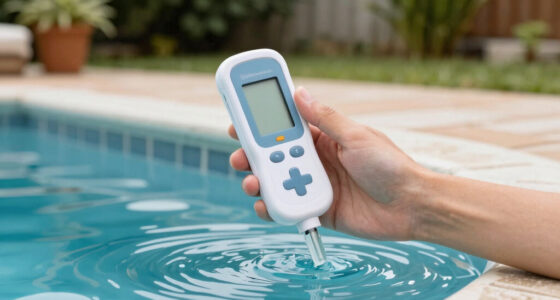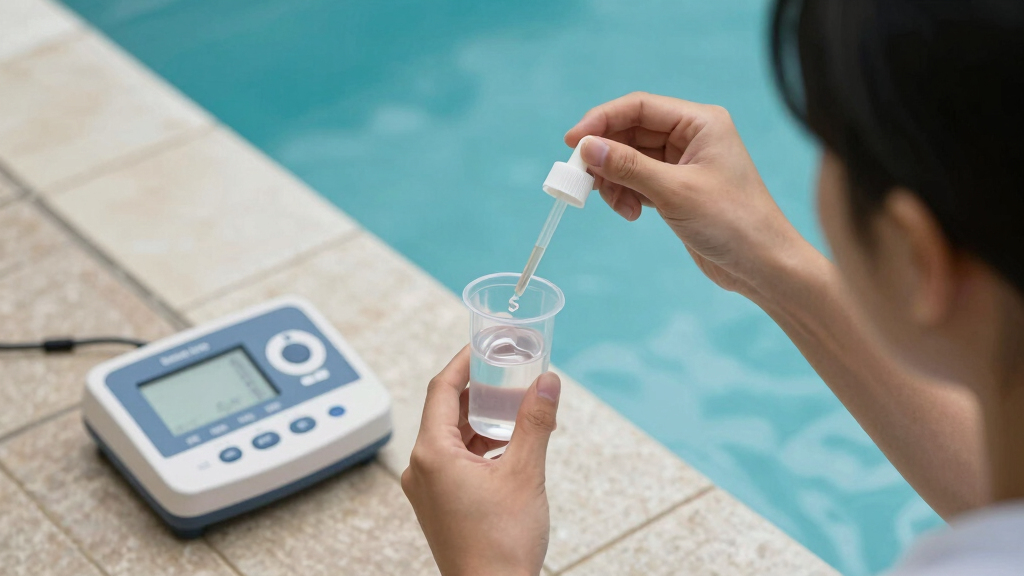

Finding the best pool photometer test kit involves balancing accuracy, ease of use, and value. The Digital Pool Water Tester Photometer stands out as the top overall choice for its comprehensive parameter testing and connectivity features. For those seeking quick, reliable results, the AIPER HydroComm Smart Pool Monitor offers 24/7 monitoring with app control. Meanwhile, the Taylor Pool Water Test Kit remains a favorite for simplicity and affordability. Each option has tradeoffs: some emphasize high tech features, while others prioritize straightforward use. Keep reading for a detailed comparison to help you choose the best fit for your pool needs.
Key Takeaways
- High-tech digital photometers with app connectivity provide the most detailed water analysis but tend to be more expensive.
- Manual test kits like Taylor’s offer simplicity and reliability at a lower cost, ideal for basic pool maintenance.
- Automated monitoring solutions require ongoing setup and may need app management, but deliver continuous data for busy pool owners.
- Parameter range varies significantly; consider which water quality indicators are most critical for your pool type.
- Build quality and calibration features impact long-term accuracy more than initial features alone.




More Details on Our Top Picks
Digital Pool Water Tester Photometer – Accurate Water Analyzer for Pools, Spas & Hot Tubs – Tests 27 Parameters – Bluetooth/WiFi – App for pH, Chlorine, Alkalinity & More
This digital tester stands out for its comprehensive 27-parameter testing, far surpassing the basic capabilities of products like the Taylor Pool Water Test Kit. Its app connectivity via Bluetooth and WiFi enables remote monitoring and data management, making it ideal for those who want detailed insights and automation. Compared to simpler test kits, it demands a learning curve but delivers unparalleled accuracy and convenience. The included reagents and IP68 waterproof design add durability, though the setup and ongoing use require some familiarity with digital devices. This pick makes the most sense for pool owners who want high precision and smart control, willing to invest time in mastering the device.
Pros:- Tests 27 water parameters for detailed analysis
- Bluetooth and WiFi connectivity for remote monitoring
- Includes a full set of reagents and durable waterproof design
Cons:- Requires initial learning to operate the app and device properly
- Higher price point compared to manual test kits
- Relies on smartphone compatibility and app updates
Best for: Tech-oriented homeowners who prioritize precise water analysis and remote management
Not ideal for: Casual pool owners seeking a straightforward, no-fuss testing solution
- Water Parameters Tested:27
- Connectivity:Bluetooth & WiFi
- Waterproof Rating:IP68
- Reagents Included:27 parameters including pH, chlorine, alkalinity
- App Compatibility:iOS & Android
- Measurement Type:Digital photometer
Bottom line: This device is best suited for pool owners who want comprehensive, tech-enabled water testing and are comfortable with digital tools.
486201-K Exact® Pool EZ Photometer Starter Kit | 10 Parameters – F/C/T Chlorine, pH, Alkalinity, Calcium, Cyanuric, Copper, Salt, & Phosphate | 25 Tests Ea. w/o PO4, Cu, NaCl | NSF Certified
Compared with the more advanced digital options, the Exact Pool EZ Photometer offers a reliable, straightforward way to test 10 key parameters with a simple digital readout, eliminating the guesswork of color matching. Its sturdy case and quality controls ensure consistent accuracy, making it a solid choice for homeowners who want dependable results without the complexity of app connectivity. While it doesn’t support Bluetooth or WiFi like the Digital Photometer, it compensates with ease of use and NSF certification, ensuring high standards for safety and reliability. The kit’s 25 tests per parameter provide a good testing volume, though it lacks the additional 17 parameters of the more advanced device. This makes it ideal for those who prefer simple, effective digital testing at a more accessible price point.
Pros:- Reliable digital readout eliminates color matching errors
- Includes 25 tests per parameter for extensive coverage
- NSF certified for high safety and quality standards
Cons:- No Bluetooth or WiFi connectivity, less automation
- Limited to 10 parameters, fewer than high-end models
- Requires manual operation and interpretation of results
Best for: DIY pool owners seeking accurate, easy-to-use digital testing without smart device integration
Not ideal for: Owners desiring comprehensive parameter testing or app-based remote control
- Parameters Tested:10
- Tests per Parameter:25
- Certifications:NSF
- Reagents Included:Reagents for 10 parameters
- Carrying Case:Yes
- Connectivity:None
Bottom line: This kit is ideal for users who want trustworthy digital results with minimal setup and no need for app control.
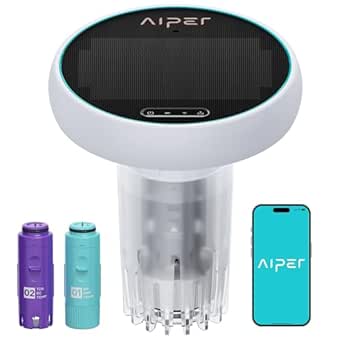
AIPER HydroComm Smart Pool Monitor, 24/7 Automatic Water Testing for Pools, Hot Tubs & Spas, 5-in-1 Accurate Digital Tester, App Control, Customized Optimization Tips, White
This smart monitor offers automatic hourly water testing and detailed trend analysis, making it ideal for pool owners who want to minimize manual testing. Its 5-in-1 sensor combines pH, ORP, TDS, EC, and temperature measures, providing a comprehensive snapshot of water health. Unlike the Eagle Ray Kit, which relies on test strips and manual readings, the HydroComm provides real-time updates via the dedicated app, accessible from anywhere, which is perfect for busy owners or those who prefer remote control. The device’s solar panel and 15-day battery life add convenience, though setup and ongoing calibration require some technical comfort. It’s best for those who want peace of mind through automation and data-driven insights, rather than manual testing routines.
Pros:- Automatic hourly testing for continuous monitoring
- App control with detailed water quality reports
- Solar panel and long battery life reduce maintenance
Cons:- Higher upfront cost compared to traditional kits
- Requires WiFi and smartphone compatibility
- Limited parameters compared to multi-parameter photometers
Best for: Pool owners who prioritize continuous, automated water quality management with remote monitoring
Not ideal for: Owners on a tight budget or seeking solely manual testing options
- Parameters Monitored:pH, ORP, TDS, EC, Temp
- Monitoring Frequency:Hourly
- Connectivity:WiFi
- Battery Life:Up to 15 days
- Power Source:Solar + AC backup
- App Compatibility:iOS & Android
Bottom line: This device is best suited for owners seeking effortless, ongoing water quality oversight with app-based data insights.
Eagle Ray Digital Pool Water Test Kit by AquaDoc with Digital Water Tester and 30 Pool Test Strips for Chlorine, Bromine, Total Hardness, Cyanuric Acid, Alkalinity, and pH
The Eagle Ray kit combines digital readings with traditional test strips, offering a hybrid approach that simplifies water testing for many users. Its digital analyzer provides quick, clear numerical results for key parameters such as chlorine, bromine, hardness, and pH, which makes it easier than color-matching strips alone. Unlike the Taylor Pool Water Test Kit, which relies solely on chemical titration, Eagle Ray’s digital component increases accuracy and ease of tracking historical results, with storage for up to 100 readings. However, it doesn’t support app connectivity or automation, making it less suitable for owners wanting remote control or continuous monitoring. The inclusion of 30 test strips ensures ample testing, but some may prefer a fully digital system for ongoing, automated water management.
Pros:- Digital results for faster, more accurate readings
- Includes 30 test strips for routine testing
- Stores up to 100 results for trend analysis
Cons:- No app or remote connectivity
- Limited to 7 parameters, less comprehensive than full photometers
- Requires manual operation and interpretation
Best for: Pool owners who want reliable digital readings combined with traditional testing for ease and accuracy
Not ideal for: Owners seeking fully automated or app-controlled monitoring solutions
- Parameters Tested:Chlorine, Bromine, Hardness, Cyanuric Acid, Alkalinity, pH
- Results Storage:Up to 100 readings
- Test Strips Included:30
- Connectivity:None
- Measurement Type:Digital & strips
- Parameter Count:7
Bottom line: This kit provides a simple yet accurate hybrid testing solution for owners who value digital results with traditional test strips.
Taylor Pool Water Test Kit, Complete Swimming Pool Water Test Kit, for Chlorine, pH, and Alkaline Levels, Ideal for Pools, Hot Tubs, and Spas, 1-Pack
The Taylor Pool Water Test Kit remains a trusted standard among pool professionals, offering highly accurate, color-coded test strips and drop tests for critical parameters like chlorine, pH, alkalinity, calcium, and cyanuric acid. Its simplicity appeals to owners who prefer manual testing and direct interpretation, making it ideal for those who want to understand their water chemistry without digital devices. While it doesn’t provide the instant digital readouts of Eagle Ray or the automation of AIPER HydroComm, its proven reliability makes it a favorite for meticulous, hands-on owners. The kit’s comprehensive test procedures and detailed instructions ensure precise results, though it involves more time and effort than digital or app-based alternatives. It’s best for traditionalists committed to proven testing methods.
Pros:- Highly accurate, professional-grade results
- Color-coded instructions simplify testing
- Trusted by the American Swimming Coaches Association
Cons:- Manual testing is time-consuming and requires interpretation
- No digital or app integration for remote monitoring
- Requires handling chemicals and visual matching
Best for: Owners who prefer manual, chemical-based testing and value proven accuracy
Not ideal for: Owners seeking digital convenience or automated monitoring
- Parameters Tested:Chlorine, pH, Alkalinity, Calcium, Cyanuric Acid
- Test Type:Drop & colorimetric
- Accuracy Level:Professional
- User Manual:Included
- Certifications:Recommended by ASA
- Number of Tests:Multiple per kit
Bottom line: Ideal for owners who prioritize traditional, reliable testing methods over digital or automated solutions.
Exact 486202 Spa EZ Photometer Starter Kit – Accurate Water Testing Made Easy | Detects Alkalinity, Bromine, Calcium, Chlorine, and pH | USA Quality
The Exact 486202 Spa EZ Photometer Starter Kit stands out for its comprehensive testing of seven critical spa water parameters with lab–quality precision, making it ideal for serious spa owners. Compared to the Digital Pool Water Tester Photometer, which offers Bluetooth connectivity and a wider parameter range, this model prioritizes straightforward, reliable results over digital integration. Its use of patented eXact strips simplifies testing—dip, read, and discard—eliminating the need for complex calibration or app dependence. However, this simplicity can be a drawback for those wanting digital logs or smartphone integration. The kit’s USA origin and NSF certification add confidence in accuracy, but the lack of Bluetooth means less data tracking convenience. This option makes the most sense for users who prefer straightforward, precise testing without digital distractions, especially if they prioritize quality and simplicity over tech features.
Pros:- Lab–quality accuracy for seven key parameters
- Simple dip-and-read eXact strips for quick testing
- US-based manufacturing and NSF certification ensure reliability
- All-in-one kit with everything needed to start testing immediately
Cons:- No Bluetooth or app connectivity limits data tracking options
- Manual operation may be less appealing for users wanting automatic logging
- Limited to spa and hot tub use, less suited for large pool maintenance
Best for: Serious spa owners or hot tub enthusiasts who want accurate, lab-grade results without the need for app connectivity.
Not ideal for: Pool owners or tech-savvy users looking for digital logs and app integration, as this kit doesn’t connect to smartphones or Bluetooth devices.
- Water Parameters Tested:Alkalinity, Bromine, Calcium, Chlorine, pH, Total Chlorine, Combined Chlorine
- Precision:0.01 ppm (mg/L)
- Included Components:Photometer, 25 tests per parameter, carrying case
- Country of Origin:United States
- Certification:NSF certified
- Test Method:Dip strip, read with photometer
Bottom line: This kit is best for spa owners who value precise, straightforward testing over digital data management.

How We Picked
To determine the best pool photometer test kits, I evaluated each product based on accuracy, ease of use, feature set, build quality, and value. I prioritized models that balance precision with user-friendly operation, especially for different levels of pool owners—from DIY enthusiasts to those wanting automated solutions. Products with a broader range of tested parameters and connectivity options ranked higher, as they provide more comprehensive water management. Cost was considered, but not at the expense of core performance. The ranking reflects the overall value for different user needs, highlighting the best overall, most affordable, and most advanced options.Factors to Consider When Choosing Best Pool Photometer Test Kit
Choosing the right pool photometer test kit requires understanding several key factors. Beyond simple accuracy, consider how easy the device is to operate, maintain, and interpret. Compatibility with your pool type and the range of parameters tested can make a big difference in long-term satisfaction. Additionally, your budget and whether you prefer manual or automated testing influence your best choice. Being aware of common pitfalls, like over-reliance on digital devices without proper calibration, can help you avoid costly mistakes. The following sections outline the main considerations to keep in mind.Parameter Range and Testing Capabilities
Not all photometers test the same water quality factors. Some focus solely on chlorine and pH, while others analyze alkalinity, calcium levels, cyanuric acid, and more. Consider which parameters are most relevant for your pool—if you have a saltwater pool, for example, salt level testing is essential. A broader parameter range can reduce the need for multiple devices, but often at a higher cost. Make sure the kit you choose covers your critical water quality indicators to avoid gaps in maintenance.
Ease of Use and Interface
Manual test kits with color matching can be straightforward but sometimes imprecise. Digital photometers with app integration or automated monitoring tend to deliver faster results and clearer data visualization. However, they may require initial setup, calibration, and ongoing maintenance. For casual users or those new to pool care, simplicity often outweighs advanced features. Conversely, experienced owners who want detailed insights might prefer more sophisticated digital options despite the learning curve.
Connectivity and Automation
Some photometers connect via Bluetooth or WiFi, offering real-time data and notifications through smartphone apps. These features are ideal for busy pool owners who want to monitor water quality without manual testing every day. Automated systems can save time but come with higher upfront costs and potential technical issues. It’s important to assess whether the added convenience justifies the investment for your specific pool maintenance routine.
Build Quality and Calibration
Durability and calibration are often overlooked but are critical for maintaining accuracy over time. Cheaper units may require frequent recalibration or replacement, which can add up. Look for devices with sturdy construction and clear calibration procedures, especially if you plan to use them regularly. Investing in higher-quality devices can lead to more consistent results and fewer headaches down the line.
Budget and Long-Term Value
Price varies widely, from basic manual kits to high-end digital systems. Consider your budget but also factor in ongoing costs like replacement test strips or calibration solutions. Sometimes paying more upfront results in better reliability and ease of use, saving money and frustration later. Weigh the initial investment against the value of features like automated alerts and detailed data analysis to find the best long-term fit.
Frequently Asked Questions
How often should I test my pool water with a photometer?
For most residential pools, testing at least once a week is recommended to maintain proper chemical balance. If your pool experiences heavy use, weather fluctuations, or has a saltwater system, more frequent testing—perhaps every few days—may be necessary. Automated systems can reduce the effort required, providing continuous updates without manual tests, but regular checks are still advisable to verify automated readings and catch issues early.
Are digital photometers more accurate than traditional test strips?
Generally, digital photometers tend to offer higher accuracy and consistency compared to color-matching test strips, especially when properly calibrated. They reduce human error and can measure multiple parameters quickly. However, they require proper maintenance and calibration to maintain accuracy over time. Test strips are more affordable and simple but can be less precise and more subjective, especially if lighting conditions or color perception interfere.
Is it worth investing in an automated pool water monitoring system?
Automated systems provide continuous water quality monitoring, saving time and reducing manual testing. They are especially useful for large, busy, or commercial pools where maintaining optimal conditions is critical. However, they come with higher upfront costs and may require technical setup and ongoing calibration. For small or infrequently used pools, manual testing with a reliable photometer might be more cost-effective and sufficient.
Can I rely solely on digital photometers for pool maintenance?
While digital photometers offer high accuracy and convenience, it is wise not to rely solely on them. Regular calibration, proper storage, and occasional cross-checking with traditional methods can help verify readings. Also, understanding the underlying chemistry and performing visual inspections remain important for comprehensive pool care. Combining digital readings with routine manual testing can provide the most reliable results.
What should I look for in a photometer if I have a saltwater pool?
For saltwater pools, ensure the photometer tests for salt levels directly or helps indirectly via other parameters like chlorine or conductivity if applicable. Devices with salt-specific testing capabilities or that integrate with salt level measurement can prevent issues like corrosion or algae growth. Confirm that the device’s parameter range includes salt or related indicators, and verify compatibility with your pool system before purchasing.