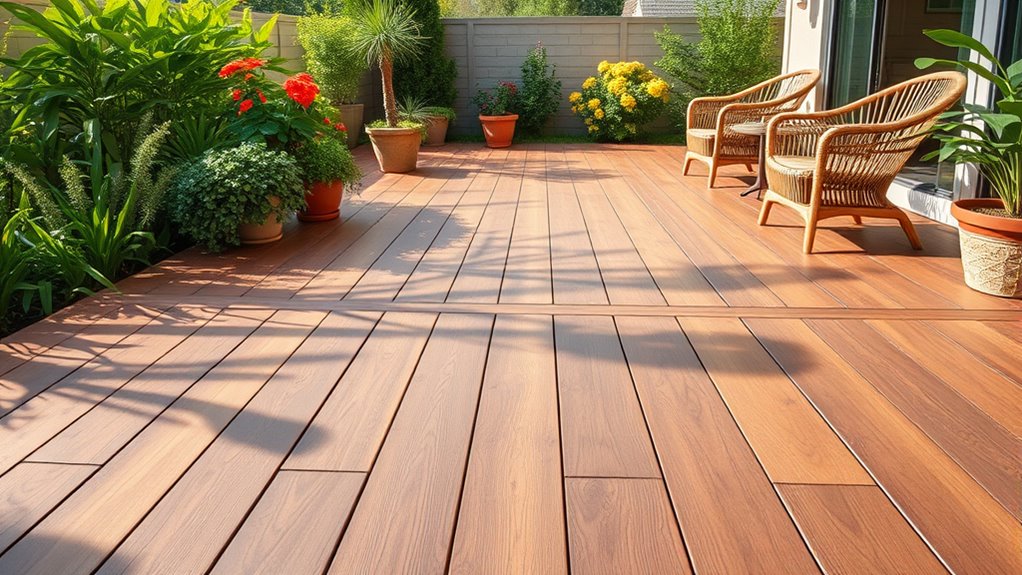

Choosing the right eco friendly decking boards composite requires balancing environmental impact with structural integrity. My top recommendation, the NewTechWood UltraShield Naturale Quick Deck, stands out for its exceptional balance of recycled material content and interlocking ease. For those prioritizing raw material certification, the IDZO FSC-Certified Composite Deck Tiles offer verifiable sourcing, while the Treslam Outdoor Composite Decking Boards provide a robust, long-span solution for larger platforms. The primary tradeoff in this category is between tile-based modularity, which simplifies DIY installation but limits load-bearing capacity, and traditional board lengths, which require professional framing but offer superior structural performance. Continue reading to see how these options compare on sustainability metrics, maintenance needs, and overall value.
Complete the kit



Get pool and patio gear delivered free with Prime
- Fast, free delivery on millions of items
- Prime Video, Amazon Music and more included
- Member-only deals all year
Key Takeaways
- Tile-based systems like NewTechWood offer faster installation but require a perfectly level substructure, whereas long boards like Treslam hide subfloor imperfections better.
- FSC certification, as seen in IDZO products, provides a clearer environmental audit trail than generic ‘recycled content’ claims found on unbranded options.
- Solid composite boards generally resist flexing better than hollow-core alternatives, making them preferable for balconies or areas with high foot traffic.
- Color retention varies widely; lighter teak tones may show dirt faster than darker charcoal or black finishes, impacting long-term maintenance frequency.
- Modular kits with integrated drainage channels significantly reduce the risk of water pooling, a common failure point in basic eco-composite setups.
| 33-Inch Adjustable Composite Deck Platform, Light Brown |  | Best for Uneven Ground | Materials: Wood-plastic composite and steel | Platform size: 84 × 84 cm (33 × 33 in) | Height: 20–26 cm (8–10.2 in) | VIEW ON AMAZON | See Our Full Breakdown |
| NewTechWood UltraShield Naturale Quick Deck Outdoor Composite Deck Tile, Peruvian Teak, 1 ft. x 3 ft. (15 sq. ft. per box) |  | Best for Narrow Concrete Areas | Material: Composite made from recycled plastic and wood | Tile dimensions: 1 ft. × 3 ft. | Coverage per box: 15 sq. ft. | VIEW ON AMAZON | See Our Full Breakdown |
| NewTechWood UltraShield Naturale 1 ft. Composite Deck Tiles, 10-Pack |  | Best for Tool-Free DIY | Material: High-density polyethylene and wood fibers with a protective polymer coating | Tile dimensions: 12 × 12 × 0.88 inches | Coverage: 10 sq. ft. | VIEW ON AMAZON | See Our Full Breakdown |
| Treslam Outdoor Composite Decking Boards, Black, 96 x 5.4 x 0.9 Inches, 9-Piece Set with Installation Kit |  | Best for Board-Style Deck Builds | Material: Wood-plastic composite | Color: Black | Quantity: 9 boards | VIEW ON AMAZON | See Our Full Breakdown |
| IDZO FSC-Certified Composite Deck Tiles, Set of 10, Grey |  | Best for Certified Sourcing | Material: FSC-certified wood-plastic composite | Quantity: 10 tiles | Color: Grey | VIEW ON AMAZON | See Our Full Breakdown |
| Modular Floating Deck Kit, Teak |  | Best for Uneven Ground | Dimensions: 33.07 x 33.07 x 9.84 in | Panel material: Acacia | Frame: Metal | VIEW ON AMAZON | See Our Full Breakdown |
| NewTechWood UltraShield Naturale Composite Deck Tile Slat, Brazilian Ipe, 4-Piece Box |  | Best for Tile Edges and Small Fills | Material: Composite of recycled plastic and wood | Color: Brazilian Ipe | Dimensions: 1/4 ft. x 1 ft. | VIEW ON AMAZON | See Our Full Breakdown |
| NewTechWood UltraShield Naturale Outdoor Composite Deck Tiles, Peruvian Teak, 2 ft. x 1 ft. (20 sq. ft. per box) |  | Best for Covering Concrete | Material: Composite of recycled plastic and wood | Color: Peruvian Teak | Tile dimensions: 2 ft. x 1 ft. | VIEW ON AMAZON | See Our Full Breakdown |
| ShunHong Outdoor Solid Composite Decking Boards, 8 ft, 6-Pack, Teak and Ancient Wood |  | Best for Solid Board Coverage | Material: WPC with recycled wood fibers and HDPE | Quantity: 6 boards | Length: 8 ft | VIEW ON AMAZON | See Our Full Breakdown |
| eco friendly decking boards composite | Color | Material |
|---|---|---|
| 33-Inch Adjustable Composite D | Light brown | — |
| NewTechWood UltraShield Natura | Peruvian Teak | Composite made from recycled plastic and wood |
| NewTechWood UltraShield Natura | Peruvian Teak | High-density polyethylene and wood fibers with a protective polymer coating |
| Treslam Outdoor Composite Deck | Black | Wood-plastic composite |
| IDZO FSC-Certified Composite D | Grey | FSC-certified wood-plastic composite |
| Modular Floating Deck Kit | Teak | — |
| NewTechWood UltraShield Natura | Brazilian Ipe | Composite of recycled plastic and wood |
| NewTechWood UltraShield Natura | Peruvian Teak | Composite of recycled plastic and wood |
| ShunHong Outdoor Solid Composi | Teak and Ancient Wood | WPC with recycled wood fibers and HDPE |
More Details on Our Top Picks
33-Inch Adjustable Composite Deck Platform, Light Brown
This compact platform is the most adaptable pick here for a small outdoor spot where a flat, permanent deck is impractical. Its wood-plastic composite surface is described as waterproof, UV-resistant, and non-slip, while the adjustable steel legs let you level the 33-inch square platform across uneven ground. That makes it more suited to lawns, balconies, or poolside use than the NewTechWood tiles, which are designed to interlock over a prepared surface. The tradeoff is scale: one kit covers only a small area, so expanding it may take additional platforms, and assembly is required. At 44.1 pounds, it is also less convenient to move than individual tiles. I’d choose it for a raised, level spot—not as a quick way to cover a broad patio.
Pros:- Adjustable legs provide 0–6 cm of leveling range for uneven ground.
- Waterproof, non-slip surface suits wet outdoor locations.
- Modular format can fit small or irregular outdoor layouts.
- Composite surface is described as easy to clean and UV-resistant.
Cons:- One kit covers only a 33 × 33-inch area, so larger spaces require additional units.
- Assembly is required rather than simple tile-style snap-together installation.
- Listed weight of 44.1 pounds makes repositioning less convenient than handling separate tiles.
Best for: People creating a compact seating or step area on uneven lawns, balconies, or near a pool who need adjustable height and a non-slip surface.
Not ideal for: Buyers covering a large patio or seeking a tool-free, flat-laid surface; the kit is a single 33-inch platform and requires assembly.
- Materials:Wood-plastic composite and steel
- Platform size:84 × 84 cm (33 × 33 in)
- Height:20–26 cm (8–10.2 in)
- Height adjustment:0–6 cm
- Board thickness:2.5 cm
- Load capacity:500 kg/m²
- Weight:44.1 lbs
- Color:Light brown
Our verdict“Choose this platform for a small, raised outdoor area that needs leveling; pick interlocking tiles instead for broader, lower-profile coverage.”
NewTechWood UltraShield Naturale Quick Deck Outdoor Composite Deck Tile, Peruvian Teak, 1 ft. x 3 ft. (15 sq. ft. per box)
The 1-by-3-foot format gives these tiles a different advantage from NewTechWood’s square 12-inch tiles: longer pieces cover narrow runs with fewer seams, which can suit a balcony or strip beside a doorway. They use recycled plastic and wood, aligning with the eco-focused brief, and snap together for a lower-effort update to a concrete slab. The stated 15-square-foot box coverage helps with planning, while the option to cut tiles with a table saw can help around edges. This is less flexible if you want a mix-and-match system: compatibility is limited to NewTechWood deck tiles, unlike the broader layout options suggested by the IDZO interlocking set. I’d skip it if you need confirmed compatibility with another brand or want a fully specified, square-tile layout.
Pros:- Made from recycled plastic and wood.
- Snap-together installation can simplify covering a concrete slab.
- Rectangular 1 ft. × 3 ft. shape suits narrow runs with fewer seams.
- Can be cut with a table saw for edge fitting.
Cons:- Compatible only with NewTechWood deck tiles.
- Requires a table saw for cutting, so trimming is less convenient than tool-free fitting.
- Residential grade may not suit buyers seeking a commercial-use product.
Best for: Renters or homeowners updating a narrow concrete balcony or patio strip who want recycled-content composite tiles in a longer rectangular format.
Not ideal for: Buyers who need tiles compatible with other brands, or who prefer square pieces for fitting small, complex areas.
- Material:Composite made from recycled plastic and wood
- Tile dimensions:1 ft. × 3 ft.
- Coverage per box:15 sq. ft.
- Color:Peruvian Teak
- Shape:Rectangular
- Grade:Residential
- Compatibility:NewTechWood deck tiles only
Our verdict“Pick this rectangular set for a narrow concrete area where its recycled-content material and longer tile shape fit the layout.”
NewTechWood UltraShield Naturale 1 ft. Composite Deck Tiles, 10-Pack
For a straightforward DIY refresh, these square tiles pair tool-free, four-way interlocking with a raised base that helps water drain beneath the surface. Each box covers 10 square feet, making the area calculation simple, and the HDPE-and-wood-fiber composite includes a protective polymer coating. The product is designed to resist fading, cracking, and bending, which gives it a durability-focused profile compared with the longer NewTechWood Quick Deck tiles. The tradeoff is brand lock-in: these tiles are specified for NewTechWood systems, so they are not a safe choice if you intend to connect them to IDZO or another brand. Their listed 25-pound box weight may also matter when carrying several boxes upstairs. I’d favor them for small, regular spaces where fast installation matters more than cross-brand flexibility.
Pros:- Four-way interlocking installation requires no tools.
- Raised base helps water drain beneath the tiles.
- Protective polymer coating and resistance claims address fading, cracking, and bending.
- Suitable for indoor and outdoor use and can be cleaned with water or household cleaner.
Cons:- Designed to work only with NewTechWood deck tiles.
- Each box covers 10 sq. ft., so larger areas require multiple boxes.
- Listed box weight is 25 pounds, which may make carrying several packages cumbersome.
Best for: DIYers covering a small, fairly regular indoor or outdoor area who want square tiles that interlock without tools and provide drainage beneath them.
Not ideal for: Buyers building a mixed-brand tile layout or covering a large area where repeated 10-square-foot boxes and their listed weight add handling effort.
- Material:High-density polyethylene and wood fibers with a protective polymer coating
- Tile dimensions:12 × 12 × 0.88 inches
- Coverage:10 sq. ft.
- Pieces per box:10
- Weight:25 pounds
- Color:Peruvian Teak
- Installation:Four-way interlocking; no tools required
- Use:Indoor and outdoor
Our verdict“Choose these for a small, tool-free tile project where drainage and a square layout matter more than brand compatibility.”
Treslam Outdoor Composite Decking Boards, Black, 96 x 5.4 x 0.9 Inches, 9-Piece Set with Installation Kit
Unlike the snap-together NewTechWood and IDZO tiles, Treslam supplies full-length 8-foot boards for a more conventional deck appearance. The nine-piece set is made from wood-plastic composite and includes stainless steel clips and screws, so buyers get the stated fastening hardware rather than having to source it separately. Its black, wood-like surface is described as resistant to weather, stains, fading, scratches, and pests, with less upkeep than a wood surface would typically require. The main tradeoff is that boards demand more planning and installation work than interlocking tiles, and the provided details do not state recycled content or an environmental certification. I’d put this behind the recycled-material tile options for eco credentials, but ahead of them for shoppers specifically seeking board-style decking with included hardware.
Pros:- Nine 96-inch boards suit a conventional board-style deck layout.
- Stainless steel clips, screws, and edge clips are included.
- Wood-like texture offers a board appearance rather than a tile grid.
- Designed to resist weathering, stains, fading, scratches, and pests.
Cons:- The supplied product details do not confirm recycled content or an environmental certification.
- Board installation requires more planning and fastening work than interlocking tiles.
- Nine boards may cover only a limited area depending on the deck layout.
Best for: Homeowners replacing or building a small residential deck who want long composite boards, a black finish, and included clips and screws.
Not ideal for: Eco-focused shoppers who require verified recycled content or certification, and DIYers looking for tool-free tile installation.
- Material:Wood-plastic composite
- Color:Black
- Quantity:9 boards
- Board dimensions:96 × 5.4 × 0.9 inches
- Grade:Residential
- Shape:Rectangular
- Included accessories:Stainless steel spiked clips, screws, and edge clips
Our verdict“Choose Treslam for a board-style residential deck with included installation hardware, but favor a recycled-content tile option if documented eco credentials lead your decision.”
IDZO FSC-Certified Composite Deck Tiles, Set of 10, Grey
IDZO has the clearest sourcing claim in this group: the tiles are described as FSC-certified wood-plastic composite, giving eco-minded buyers a specific certification to weigh rather than relying only on a general composite-material description. The tool-free interlocking design and self-draining bottom grid also make the set practical for indoor or outdoor surfaces that need routine water runoff. Compared with NewTechWood’s square tiles, IDZO is described as cuttable with a jigsaw and lists resistance to moisture, splitting, heat, fire, and corrosion. The limitation is fit planning: the full tile dimensions are incomplete, so coverage calculations and edge layouts are harder to confirm from the supplied data. I’d choose IDZO when its certification claim is the priority, but check the complete dimensions before ordering for a tightly measured space.
Pros:- Product data identifies the wood-plastic composite as FSC-certified.
- Interlocking installation requires no tools.
- Self-draining bottom grid supports water runoff and easier upkeep.
- Can be cut with a jigsaw to fit edges or irregular areas.
Cons:- Full tile dimensions are incomplete, making layout and coverage planning uncertain.
- Cutting may be needed to fit some spaces, which adds work and requires a jigsaw.
- The supplied information does not state coverage per set.
Best for: Eco-conscious homeowners who prioritize an FSC-certified composite claim and want tool-free tiles for a small indoor or outdoor project.
Not ideal for: Buyers who need exact coverage calculations before purchase; the full tile dimensions are not provided, and fitting edges may require jigsaw cuts.
- Material:FSC-certified wood-plastic composite
- Quantity:10 tiles
- Color:Grey
- Installation:Interlocking; no tools required
- Maintenance:Low maintenance; self-draining bottom grid
- Item dimensions:11.75 × 11.75 × height not provided
Our verdict“Choose IDZO if an FSC-certified sourcing claim matters most, but verify the complete tile dimensions before planning a precise layout.”
Modular Floating Deck Kit, Teak
This kit stands out for buyers who need a small raised surface that can adapt to uneven ground. Its adjustable metal feet help level the platform, while the raised, hollow-panel design allows airflow below—useful where moisture could collect against a hard surface. Unlike the NewTechWood UltraShield Naturale Outdoor Composite Deck Tiles, which snap together across a concrete slab, this is a freestanding module with a metal frame and scope to expand by adding modules. That flexibility comes with a sizing caveat: the listed dimensions describe one 33.07-inch module, not a complete patio. The product data lists acacia as the panel material, so buyers seeking a confirmed recycled-content composite surface should look to products such as the NewTechWood tiles or ShunHong boards instead. Hollow panels may also feel less solid underfoot than full boards.
Pros:- Adjustable feet help level the platform on uneven ground
- Modular panels can be assembled, disassembled, and expanded
- Raised construction promotes ventilation beneath the surface
- Metal frame supports a wood-look panel design
Cons:- Product data lists acacia rather than a confirmed recycled composite panel material
- Hollow panels may feel less solid than decking boards
- One module covers only the listed single-module dimensions
Best for: Buyers creating a small raised landing or modular platform on uneven ground who value adjustable leveling and airflow underneath.
Not ideal for: Shoppers prioritizing verified recycled composite content, a solid-board feel, or a ready-to-cover large patio from one package.
- Dimensions:33.07 x 33.07 x 9.84 in
- Panel material:Acacia
- Frame:Metal
- Color:Teak
- Construction:Modular, hollow-panel
- Support feet:Adjustable metal feet
- Package quantity:1 module
Our verdict“Choose this freestanding kit for a small, levelable raised platform, but pick a recycled-content tile or board product if composite material credentials are your priority.”
NewTechWood UltraShield Naturale Composite Deck Tile Slat, Brazilian Ipe, 4-Piece Box
This four-piece set is a finishing component, not a standalone decking solution. Its recycled plastic-and-wood composite and snap-together design make it useful for filling narrow gaps or adding compatible trim and fascia around NewTechWood tile layouts. Compared with the larger NewTechWood UltraShield Naturale Outdoor Composite Deck Tiles, it covers only a small area; that limited format is precisely its role, but it rules the slat out as a practical choice for covering a patio by itself. The pieces can be cut with a table saw, giving installers some flexibility around edges, though that still calls for suitable tools and careful measuring. Compatibility is restricted to NewTechWood deck tiles, so it is a poor match for mixed-brand projects. I would add it to a compatible tile plan, not treat it as a general-purpose composite board.
Pros:- Made from recycled plastic and wood
- Pieces snap together for straightforward placement
- Can be cut with a table saw for fitting
- Designed to complement compatible NewTechWood tiles
Cons:- Not intended to cover a full patio or deck
- Compatible only with NewTechWood deck tiles
- Cutting requires a table saw and accurate fitting
Best for: NewTechWood tile owners who need a small quantity of matching composite material for narrow fill areas, trim, or fascia work.
Not ideal for: Buyers covering a full deck or working with other brands, since the four pieces cover a small area and are designed for NewTechWood tile compatibility.
- Material:Composite of recycled plastic and wood
- Color:Brazilian Ipe
- Dimensions:1/4 ft. x 1 ft.
- Quantity:4 pieces
- Shape:Rectangular
- Compatibility:NewTechWood deck tiles only
- Part number:US-QD-300×1-ZX-PARENT
Our verdict“Buy this as a small matching filler or trim component for a NewTechWood tile layout, not as your main decking purchase.”
NewTechWood UltraShield Naturale Outdoor Composite Deck Tiles, Peruvian Teak, 2 ft. x 1 ft. (20 sq. ft. per box)
For a concrete slab that needs a more finished surface, these snap-together tiles offer a direct route to coverage without taking on a full board-and-frame decking project. The recycled plastic-and-wood composite speaks more directly to this roundup’s environmental focus than the Modular Floating Deck Kit, whose listed panel material is acacia. Each box covers 20 square feet, making the scope easier to plan than the four-piece NewTechWood slat set, which is meant for small fills rather than broad coverage. The tiles can be cut with a table saw, useful around boundaries, and the low-maintenance material avoids the routine finishing associated with natural wood. The main limitation is ecosystem lock-in: compatibility is listed for NewTechWood deck tiles only. Buyers should also check their layout and substrate before ordering, since the product information describes tile coverage but does not specify an installation base beyond use over concrete.
Pros:- Made from recycled plastic and wood
- Snap-together format simplifies tile placement
- One box covers 20 square feet
- Tiles can be cut with a table saw for boundary fitting
Cons:- Compatible only with NewTechWood deck tiles
- Table-saw cutting may be needed for edges and obstacles
- Listed as residential grade rather than specified for commercial use
Best for: Homeowners who want to cover a concrete slab with recycled-content composite tiles and can plan around the stated box coverage.
Not ideal for: Buyers seeking standalone boards, a brand-agnostic tile system, or a product with clearly specified installation details for surfaces beyond concrete.
- Material:Composite of recycled plastic and wood
- Color:Peruvian Teak
- Tile dimensions:2 ft. x 1 ft.
- Coverage:20 sq. ft. per box
- Number of items:10
- Shape:Rectangular
- Grade:Residential
- Compatibility:NewTechWood deck tiles only
Our verdict“Pick these tiles for a concrete-slab refresh using recycled-content composite, provided the NewTechWood-only compatibility suits your project.”
ShunHong Outdoor Solid Composite Decking Boards, 8 ft, 6-Pack, Teak and Ancient Wood
Among these four picks, the ShunHong set is the clearest choice for buyers who want full-length composite boards rather than interlocking tiles or a single raised module. Its WPC blend uses recycled wood fibers and HDPE, and the six 8-foot boards provide 21.72 square feet of listed coverage. That makes it a more board-like solution than the NewTechWood UltraShield Naturale tiles, which are designed to snap together over a slab and work within one brand’s tile system. ShunHong also describes the boards as resistant to rot, fading, stains, cracking, and splintering, with cleaning limited to soap and water; those are manufacturer claims, not independent verification. The tradeoff is that installation details are sparse in the supplied product data, and the stated cleaning requirement remains. I would choose it for a board format, not for tool-free tile assembly.
Pros:- WPC material includes recycled wood fibers and HDPE
- Six 8-foot boards provide 21.72 square feet of listed coverage
- Designed to resist rot, fading, stains, cracking, and splintering
- Does not require sanding, staining, or sealing according to the listing
Cons:- Installation method and fastening details are not supplied
- Cleaning still requires soap and water
- Slip-resistance and flame-retardancy statements are manufacturer-provided claims
Best for: Buyers planning a residential decking project who want solid WPC boards made with recycled wood fibers and HDPE instead of snap-together tiles.
Not ideal for: Shoppers who need a clearly specified installation system, tool-free tile coverage, or independently verified slip-resistance and flame-retardancy claims.
- Material:WPC with recycled wood fibers and HDPE
- Quantity:6 boards
- Length:8 ft
- Dimensions:96 x 6 x 1 in
- Item thickness:0.9 in
- Unit count:21.72 sq. ft.
- Color:Teak and Ancient Wood
- Grade:Residential
Our verdict“Choose ShunHong when you want recycled-content WPC in a long-board format, and favor the NewTechWood tiles if snap-together slab coverage matters more.”

How We Picked
I evaluated these nine options based on three core pillars: material sustainability, structural durability, and installation practicality. First, I scrutinized the source of the composite material. Products with explicit FSC certification or transparent recycled content percentages ranked higher than those with vague ‘green’ marketing claims. I looked for evidence of capped composite technology, which protects the core material from moisture and UV damage, extending the lifespan and reducing replacement waste.
Second, I assessed the engineering of the board profiles. Thicker boards with ribbed undersides generally offer better load distribution and resistance to bending compared to thinner, flat-backed tiles. Finally, I considered the user experience during installation. Systems with intuitive interlocking mechanisms or pre-drilled fastener channels scored higher for DIY accessibility, while options requiring specialized tools or professional framing were noted for their respective tradeoffs in labor cost versus structural strength.
| eco friendly decking boards composite | Material |
|---|---|
| 33-Inch Adjustable Composite D | — |
| NewTechWood UltraShield Natura | Composite made from recycled plastic and wood |
| NewTechWood UltraShield Natura | High-density polyethylene and wood fibers with a protective polymer coating |
| Treslam Outdoor Composite Deck | Wood-plastic composite |
| IDZO FSC-Certified Composite D | FSC-certified wood-plastic composite |
| Modular Floating Deck Kit | — |
| NewTechWood UltraShield Natura | Composite of recycled plastic and wood |
| NewTechWood UltraShield Natura | Composite of recycled plastic and wood |
| ShunHong Outdoor Solid Composi | WPC with recycled wood fibers and HDPE |
Factors to Consider When Choosing Eco Friendly Decking Boards Composite
Selecting the right eco friendly composite decking goes beyond just picking a color. You need to align the product type with your specific project constraints and environmental priorities.Understanding Composite Composition: Recycled vs. Virgin
Not all composites are created equal when it comes to environmental impact. Some brands use a high percentage of post-consumer recycled wood fiber and plastic, while others rely heavily on virgin polymers for consistency. When reviewing eco friendly decking boards composite options, look for specific percentages of recycled content rather than general ‘green’ labels. Higher recycled content often correlates with a lower carbon footprint but can sometimes affect color consistency. If sustainability is your primary driver, prioritize brands that publish their material composition reports. Conversely, if you need precise color matching for a large, visible area, a blend with more virgin material might offer better aesthetic uniformity, though at a slightly higher environmental cost.
Tile Systems vs. Traditional Boards: Installation Logistics
The format of the decking dictates the complexity of your project. Interlocking tiles, like those from NewTechWood, are ideal for renters or temporary setups because they require no permanent fastening to the substructure. However, they demand a perfectly flat and stable base. Any slope or unevenness can cause the tiles to rock or separate. Traditional long boards, such as the Treslam or ShunHong options, require a joist system and hidden fasteners. This approach is more labor-intensive and often requires professional help, but it provides a seamless look and handles minor substructure irregularities better. Decide if you value the speed of DIY installation or the structural integrity of a framed deck.
Durability Metrics: Capping and Scratch Resistance
Uncapped composites are prone to staining and fading, which shortens their lifespan and increases waste. Look for capped composite decking, which features a protective polymer shell around the core. This cap resists scratches, stains, and UV degradation. In my analysis, products with a co-extruded cap layer showed significantly better long-term resilience than those with simple surface treatments. While capped boards cost more upfront, they reduce maintenance needs and replacement frequency, making them more sustainable over a 10-15 year horizon. If you have pets or high foot traffic, the added durability of a capped system is a worthwhile investment.
Certification Standards: Verifying Eco Claims
Greenwashing is prevalent in the building materials sector. To verify true eco friendliness, look for third-party certifications like FSC (Forest Stewardship Council) or SCS Global Services. These certifications audit the supply chain to ensure wood fibers are sourced responsibly and recycled materials are legitimately diverted from waste streams. Products without these certifications may use mixed sources that lack traceability. If you are aiming for LEED certification for a larger project or simply want peace of mind, stick to certified options. The IDZO tiles in this roundup stand out here, whereas some generic kits lack transparent sourcing data.
Thermal Performance and Surface Comfort
Composite materials can absorb and retain heat differently depending on their color and density. Darker colors absorb more solar radiation, potentially making the deck surface uncomfortably hot in direct sunlight. Lighter teak or grey tones generally stay cooler but may show dirt more readily. Some advanced composites include thermal-blocking additives or lighter pigments to mitigate heat buildup. If your deck faces south or west, prioritize lighter colors or products specifically marketed with heat-reduction technology. This affects not just comfort but also the longevity of the material, as excessive heat can accelerate polymer degradation over time.
Frequently Asked Questions
Can I install composite decking directly on concrete?
Yes, but it requires a specific substructure. You cannot lay composite boards directly on concrete because they need ventilation to prevent moisture buildup and mold. For tile systems, you can place them on a raised pedestal system or a thin wooden frame over the concrete. For traditional boards, you must build a wooden or composite joist system on top of the concrete using shims to ensure a level surface. Direct contact with concrete can trap water under the boards, leading to premature failure and voiding warranties.
How do I clean and maintain eco friendly composite decking?
Maintenance is minimal compared to wood but not zero. Regularly sweep away debris to prevent mold growth in the grooves. For stains, use a mild soap and water solution with a soft-bristle brush. Avoid pressure washers on high settings, as they can damage the cap layer of composite boards. If the boards are uncapped or older, a specialized composite cleaner can help restore brightness. Most capped composites, like those from NewTechWood, resist staining well, requiring only occasional rinsing with a garden hose.
Are composite decking boards slippery when wet?
Composite decking can be slippery when wet, especially if it has a smooth, capped surface. However, most modern eco friendly decking boards composite options feature textured surfaces or grooved patterns that provide traction. When selecting a product, look for a high Dynamic Coefficient of Friction (DCOF) rating. Tiles with a matte finish or embossed wood grain textures generally offer better grip than glossy, smooth caps. Always test a sample in wet conditions if possible, particularly for pool decks or sloped areas.
What is the expected lifespan of eco friendly composite decking?
High-quality capped composite decking typically lasts 25 to 30 years with proper installation and minimal maintenance. Uncapped composites may last 10 to 15 years before showing significant fading or degradation. Factors influencing lifespan include UV exposure, climate, and the quality of the substructure. Products with strong warranties, such as 25-year fade and stain warranties, indicate manufacturer confidence in durability. Investing in a capped system from a reputable brand usually yields a longer service life, reducing the frequency of replacement and overall environmental impact.
Do I need special tools for installing composite decking tiles?
Most interlocking composite decking tiles require no special tools beyond a rubber mallet and possibly a utility knife for cutting edges. The interlocking clips are designed to snap together by hand. However, if you are installing traditional long boards, you will need a circular saw, drill, and hidden fastener clips. For tiles, the primary tool requirement is ensuring the substructure is perfectly level, which may require a level and shims. The simplicity of tile installation is a major advantage for DIYers, whereas board installation often benefits from professional tools and expertise.
Conclusion
Choosing the best eco friendly decking boards composite depends on your project scope and sustainability priorities. For most homeowners seeking a balance of ease and durability, the NewTechWood UltraShield Naturale Quick Deck is the best overall pick due to its capped protection and user-friendly interlocking system. If you prioritize verifiable environmental sourcing, the IDZO FSC-Certified Composite Deck Tiles offer the best transparency. For those building a permanent, large-scale deck where structural integrity is key, the Treslam Outdoor Composite Decking Boards provide a robust, long-span solution. Beginners should stick with the modular tile options to avoid the complexities of framing, while premium buyers should look for capped systems with extensive warranties to maximize long-term value and minimize maintenance.
As an affiliate, we earn on qualifying purchases.Fall Picks
fall essentials