Choosing the right liquid chlorine pump involves balancing durability, precision, and application-specific features. For heavy-duty industrial needs, the NC FL-540B Chemical Distribution Pump stands out for its robust construction and continuous operation capacity. Meanwhile, the Blue-White BWA1A47T Digital Metering Pump offers advanced dosing control suited for precise chemical treatment. Each of these top picks presents unique tradeoffs: durability versus complexity, or high precision versus limited flow capacity. Here’s what you need to know to make an informed decision in 2026.
Complete the kit

Key Takeaways
- Industrial-grade pumps like the NC FL-540B excel in durability and continuous operation but require clean chemicals.
- Precision dosing pumps, such as the Blue-White BWA1A47T, offer advanced control features at the expense of complexity and potentially higher cost.
- For smaller or residential applications, compact or lower flow rate models can be more practical and easier to install.
- Voltage compatibility varies; some pumps support both 115V and 230V, but often require hardwiring for certain configurations.
- Material compatibility is critical; corrosion-resistant components extend lifespan but may limit chemical types that can be used.


| liquid chlorine pump | Flow Rate | Voltage | Material | Adjustments |
|---|---|---|---|---|
| NC FL-540B Chemical Distributi | 40L/Min | 115V | Fluororubber & PA66 | — |
| Precision Controls Diaphragm M | 63.36 GPD | 115V/230V | — | Stroke & Rate |
| Blue-White BWA1A47T 0.1-100 GP | 0.1-100 GPD | — | — | — |
| Precision Controls Diaphragm M | 31.6 GPD | 115V / 230V (hardwired) | Not specified | Stroke |
| Precision Controls Diaphragm M | 31.6 GPD | 230V (hardwired) | Not specified | Stroke |
More Details on Our Top Picks
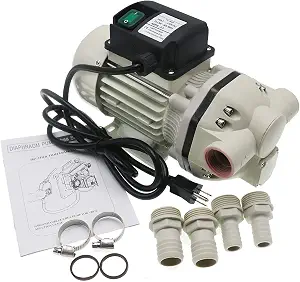
NC FL-540B Chemical Distribution Pump, 115V, 40L/Min, 40PSI, Blue
This industrial-grade pump is built for demanding applications like spray irrigation and chemical transportation. Made from fluororubber and PA66, it offers excellent corrosion resistance and durability. Its ability to operate continuously with heat protection makes it suitable for long-term use. Compared to smaller, more precise models, it sacrifices some dosing finesse but excels in robustness and reliability. However, it requires clean, impurity-free liquids for optimal performance and may be limited to specific chemical types due to its material compatibility. This pump is ideal for industrial settings where durability outweighs fine control.
Pros:- Durable and corrosion-resistant construction
- Continuous operation with heat protection
- Versatile for various industrial liquids
Cons:- Requires impurity-free liquids for optimal function
- Limited chemical compatibility due to materials
Best for: Heavy industrial chemical transfer and continuous operation scenarios
Not ideal for: Small-scale or residential water treatment needing precise dosing
- Voltage:115V
- Flow Rate:40L/Min
- Pressure:40PSI
- Material:Fluororubber & PA66
- Color:Blue
Our verdict“A robust, industrial-grade pump best suited for demanding chemical transfer tasks with high durability needs.”
Precision Controls Diaphragm Metering Chlorine Water Pump – 63.36 GPD, 75 PSI, 115V/230V Compatible
This diaphragm metering pump offers adjustable stroke and rate settings, making it ideal for accurate chlorine dosing in water treatment. Its compatibility with both 115V and 230V power supplies increases versatility, and its flow rate of 63.36 gallons per day suits small to medium applications. While it provides excellent control, there’s limited information about its material durability and long-term performance, which could be a concern in corrosive environments. Installation instructions are sparse, so some users might need additional guidance. This model makes the most sense for projects where dosing precision is paramount.
Pros:- Adjustable stroke and rate for precise dosing
- Compatible with 115V and 230V supplies
- Suitable for chemical water treatment
Cons:- Limited info on durability and materials
- Lacks detailed installation guidance
Best for: Chemical water treatment requiring accurate chlorine dosing
Not ideal for: Heavy industrial applications or high-flow needs
- Flow Rate:63.36 GPD
- Maximum Pressure:75 PSI
- Voltage:115V/230V
- Power:115 Volt Plug
- Adjustments:Stroke & Rate
Our verdict“A flexible, adjustable pump designed for precise chemical dosing where control outweighs flow volume.”
Blue-White BWA1A47T 0.1-100 GPD Digital Metering Pump – Acid & Liquid Chlorine Feeder
This digital metering pump offers high-precision dosing with a variable speed DC motor and remote start/stop features. Its enclosure is rated NEMA 4X (IP66), ensuring durability in washdown environments. The patented tube failure detection adds a layer of reliability, making it suitable for critical chemical applications. However, its complexity might pose challenges for beginners, and power source details are not explicitly clarified. It’s most appropriate for users needing tight control over small to medium flow rates in demanding environments.
Pros:- Precise flow control with variable speed motor
- Durable washdown duty enclosure
- Remote start/stop and failure detection
Cons:- Potential complexity for new users
- Power source details are unclear
Best for: Accurate chemical dosing in washdown or harsh environments
Not ideal for: Large-scale applications with high flow rate demands
- Flow Rate:0.1-100 GPD
- Pressure:up to 40 PSI
- Motor Type:Variable Speed DC
- Enclosure:NEMA 4X (IP66)
- Features:Remote Start/Stop, Tube Failure Detection
Our verdict“A high-precision, reliable pump ideal for critical dosing tasks in challenging environments.”
Precision Controls Diaphragm Metering Chlorine Chemical Water Pump – 31.6 GPD, 150 PSI, 115V
This diaphragm pump delivers a maximum pressure of 150 PSI, making it suitable for high-pressure chlorine dosing needs. Its flow rate is modest at 31.6 gallons per day, fitting applications where high pressure is more critical than volume. The pump includes a 115V plug and can be hardwired for 230V, offering flexibility in installation. Its stroke adjustment allows for custom flow rates, but the limited flow capacity may restrict use in larger systems. For high-pressure, small-volume dosing, this model provides reliable performance, though it requires some wiring setup for different voltages.
Pros:- High pressure capacity of 150 PSI
- Adjustable stroke for flow control
- Includes 115V plug, compatible with 230V when hardwired
Cons:- Limited flow rate for large systems
- Requires installation effort for 230V compatibility
Best for: High-pressure chlorine dosing in small-scale systems
Not ideal for: Large-volume or low-pressure applications
- Flow Rate:31.6 GPD
- Max Pressure:150 PSI
- Voltage:115V / 230V (hardwired)
- Adjustments:Stroke
- Material:Not specified
Our verdict“A specialized pump for high-pressure, small-volume chlorine dosing applications requiring reliable pressure control.”
Precision Controls Diaphragm Metering Chlorine Water Pump – 31.6 GPD, 150 PSI, 230V
This model mirrors the previous high-pressure pump but is designed specifically for 230V operation. It offers the same 31.6 GPD flow rate and 150 PSI pressure but features a hardwired setup for 230V power, with compatibility for 115V when hardwired. Its stroke adjustment provides precise flow control, making it suitable for applications where high-pressure dosing accuracy is required. The need for hardwiring and limited flow rate may restrict its appeal for larger or more variable systems. This pump makes sense where 230V power is available and high-pressure dosing is essential.
Pros:- High-pressure capacity of 150 PSI
- Adjustable stroke for control
- Designed for 230V with hardwired setup
Cons:- Requires hardwiring for 230V
- Limited flow capacity for large systems
Best for: High-pressure chlorine dosing with 230V power supply
Not ideal for: Low-pressure, high-volume applications
- Flow Rate:31.6 GPD
- Maximum Pressure:150 PSI
- Voltage:230V (hardwired)
- Adjustments:Stroke
- Material:Not specified
Our verdict“A dependable choice for high-pressure, small-volume dosing in 230V environments.”

How We Picked
Our selection process focused on key factors that matter for liquid chlorine pumping: durability, chemical compatibility, dosing precision, ease of installation, and overall value. We compared product specifications, reviews, and application suitability, prioritizing pumps that balance high performance with practical features. Each model was evaluated for its role—whether industrial, chemical dosing, or residential—helping to identify the best options for different buyer needs.
| liquid chlorine pump | Material | Adjustments |
|---|---|---|
| NC FL-540B Chemical Distributi | Fluororubber & PA66 | — |
| Precision Controls Diaphragm M | — | Stroke & Rate |
| Blue-White BWA1A47T 0.1-100 GP | — | — |
| Precision Controls Diaphragm M | Not specified | Stroke |
| Precision Controls Diaphragm M | Not specified | Stroke |
Factors to Consider When Choosing Liquid Chlorine Pumps
Selecting the ideal liquid chlorine pump depends on your specific needs—whether you require industrial durability, precise dosing, or high-pressure operation. Understanding the different roles these pumps play helps narrow down options based on flow rate, chemical compatibility, control features, and installation requirements. Here, I break down what to consider before making your choice.
Industrial vs. Precision Dosing
If your primary goal is to transfer large volumes of chlorinated liquids reliably over long periods, an industrial-grade pump like the NC FL-540B offers durability and continuous operation. Conversely, for applications needing precise chemical dosing—such as water treatment or sanitation—models like the Blue-White BWA1A47T provide detailed control and reliability, though they may be more complex to set up.
Flow Rate and Pressure Needs
Evaluate your system’s flow rate and pressure requirements carefully. Pumps like the 31.6 GPD models suit small-scale or high-pressure needs but might be inadequate for large systems. High-pressure pumps offer up to 150 PSI, ideal for specific dosing applications, but their limited flow rate restricts throughput. Balance your volume needs with pressure demands to choose the best fit.
Material Compatibility and Durability
Materials like fluororubber and PA66 increase corrosion resistance, extending pump life when handling aggressive chemicals like chlorine. Be mindful of whether your chemicals are impurity-free, as some pumps require very clean liquids to prevent damage or clogging. Durability factors also influence long-term costs and maintenance frequency.
Power and Installation
Voltage compatibility varies; some pumps support both 115V and 230V, but often require hardwiring for certain setups. Consider your available power sources and installation complexity—plug-and-play models are easier for quick setup, whereas hardwired systems may need professional installation but offer more flexibility.
Frequently Asked Questions
What is the main difference between industrial and dosing pumps?
Industrial pumps like the NC FL-540B are designed for high durability, continuous operation, and handling large volumes of liquids, making them suitable for demanding applications. Dosing pumps, such as the Blue-White BWA1A47T, focus on precise flow control and chemical dosing accuracy, often with advanced features like remote control and failure detection. Your choice depends on whether volume capacity or dosing precision is your priority.
How important is chemical compatibility when choosing a liquid chlorine pump?
Chemical compatibility is vital because chlorine and related chemicals can be highly corrosive. Pumps made from materials like fluororubber and PA66 resist corrosion better, extending their lifespan. Using the wrong materials can lead to leaks, failures, or costly replacements, so matching your chemicals with pump materials is a key consideration.
Can I use these pumps for residential water treatment?
Yes, some of these pumps, especially smaller or more precise models like the Blue-White BWA1A47T, are suitable for residential or small-scale water treatment systems. However, industrial-grade pumps like the NC FL-540B are overkill for such applications—they are larger, more complex, and designed for continuous industrial use rather than household needs.
Do I need special installation for these pumps?
Installation requirements vary. Plug-and-play models with standard 115V plugs are straightforward, but pumps supporting 230V often require hardwiring, which might need professional electrical work. Ensuring proper mounting, plumbing connections, and power supply compatibility is essential for safe and effective operation.
What should I consider about flow rate and pressure?
Matching your system’s flow rate and pressure needs is critical. Pumps with higher PSI ratings are better for high-pressure dosing but may have lower flow rates. Conversely, pumps with higher flow capacities may not support high pressures. Clarify your process requirements to select a pump that balances both for optimal performance.
Conclusion
For heavy industrial applications requiring reliable, continuous operation, the NC FL-540B is the best fit. Water treatment facilities needing precise chemical dosing should consider the Blue-White BWA1A47T or the high-pressure diaphragm models. Home or small-scale users with moderate needs may prefer compact, plug-and-play options. Ultimately, your choice should align with your application’s flow rate, chemical compatibility, and installation constraints.