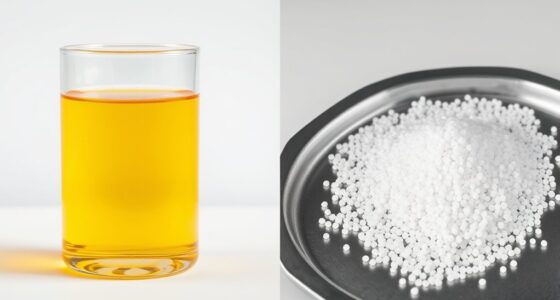
Cyanuric acid is essential for outdoor pools because it stabilizes your chlorine, preventing it from breaking down quickly in sunlight. By maintaining proper levels—typically between 30-50 ppm—you help keep your water clear, safe, and hygienic. Too little cyanuric acid can cause chlorine to dissipate faster, while too much can reduce its effectiveness. To make certain your pool stays balanced, you’ll want to learn more about proper testing and adjustments.
Key Takeaways
- Cyanuric acid stabilizes chlorine, preventing its rapid breakdown from sunlight in outdoor pools.
- Maintaining cyanuric acid levels between 30-50 ppm ensures optimal chlorine efficiency.
- Regular testing of cyanuric acid helps keep water chemistry balanced and safe.
- Excessive cyanuric acid can hinder chlorine’s disinfecting ability, requiring careful management.
- Proper cyanuric acid levels prolong chlorine’s effectiveness and reduce the need for frequent chemical adjustments.
Cyanuric acid is a chemical compound commonly used in swimming pools to stabilize chlorine and prevent it from breaking down quickly under sunlight. When you’re managing an outdoor pool, maintaining the right pool chemical balance is essential, and cyanuric acid plays a crucial role in achieving that. Without it, sunlight rapidly depletes your free chlorine levels, leaving your pool vulnerable to bacteria, algae, and other contaminants. By adding cyanuric acid, you ensure that your chlorine remains effective longer, which helps keep your pool water safe, clear, and hygienic.
Balancing pool chemicals properly is vital for outdoor pool safety, and cyanuric acid is a key piece of the puzzle. Too little, and your chlorine will dissipate quickly, forcing you to add chemicals more frequently and risking unsafe water conditions. Too much, and it can interfere with chlorine’s ability to disinfect, creating a false sense of security. The ideal cyanuric acid level for outdoor pools typically falls between 30 and 50 parts per million (ppm). Keeping it within this range helps maximize chlorine’s efficiency without compromising water quality or safety.
You should regularly test your pool water to monitor cyanuric acid levels along with other essential chemicals like pH, alkalinity, and chlorine. Proper testing and adjustment ensure your outdoor pool remains balanced, reducing the risk of algae growth, bacteria, and other health hazards. When adding cyanuric acid, follow manufacturer instructions carefully, as over-application can lead to high levels that impede chlorine’s disinfecting power. If you notice your cyanuric acid levels creeping higher, you might need to partially drain and refill your pool to lower the concentration, especially during the swimming season. Maintaining proper water chemistry balance helps prolong the effectiveness of your disinfectants and keeps your pool safe for swimmers.
Frequently Asked Questions
How Does Cyanuric Acid Affect Chlorine Effectiveness?
Cyanuric acid improves chlorine stability in your outdoor pool by protecting it from UV damage, which can quickly break down chlorine. When you add cyanuric acid, it creates a shield that enhances UV protection, allowing your chlorine to last longer and work more effectively. This means you won’t need to add chlorine as often, keeping your pool cleaner and safer while reducing chemical costs.
What Is the Ideal Cyanuric Acid Level for Pools?
You should aim for a cyanuric acid level between 30 and 50 ppm to maintain proper chemical balance and guarantee pool safety. Staying within this range helps protect chlorine from UV degradation, keeps your water sanitized, and prevents issues like algae growth. Regularly testing and adjusting cyanuric acid levels ensures your pool remains safe, clean, and inviting, balancing the chemicals effectively for a healthy swimming environment.
Can Cyanuric Acid Be Overused or Cause Problems?
Yes, overusing cyanuric acid can cause problems. Overuse risks chemical imbalance by raising cyanuric acid levels too high, which can reduce chlorine’s effectiveness and lead to algae growth or cloudy water. To avoid these issues, you should regularly test your pool water and keep cyanuric acid within the recommended range. Proper balance guarantees your pool stays clean, safe, and properly sanitized without over-reliance on stabilizers.
How Often Should Cyanuric Acid Be Tested or Added?
You should test your cyanuric acid levels weekly during pool maintenance to keep your chemical balancing on point. Add cyanuric acid only when levels drop below 30 ppm—don’t be that person who overdoes it, turning your pool into a chemistry experiment. Regular testing guarantees your chlorine stays stable, preventing algae or cloudy water. Keep a close eye, and your pool will stay sparkling without turning into a science project.
Does Cyanuric Acid Impact Pool Water Clarity or Smell?
Cyanuric acid impacts your pool’s aesthetics by helping maintain clear water, but too much can cause cloudiness or dullness. It also influences the chemical balance, as excessive levels may reduce chlorine’s effectiveness, leading to unpleasant smells and algae growth. To keep your pool looking and smelling fresh, monitor cyanuric acid levels regularly and maintain proper chemical balance, preventing issues that compromise water clarity and overall pool enjoyment.
Conclusion
Now, imagine your pool shimmering under the sun, its crystal-clear waters inviting you in. With cyanuric acid stabilizing your chlorine, the water stays invigorating and inviting, even on the hottest days. You can relax knowing that your pool stays protected from harsh UV rays, keeping the chlorine effective longer. So, add cyanuric acid wisely, and let your outdoor oasis remain a sparkling retreat where every swim feels like a revitalizing escape.