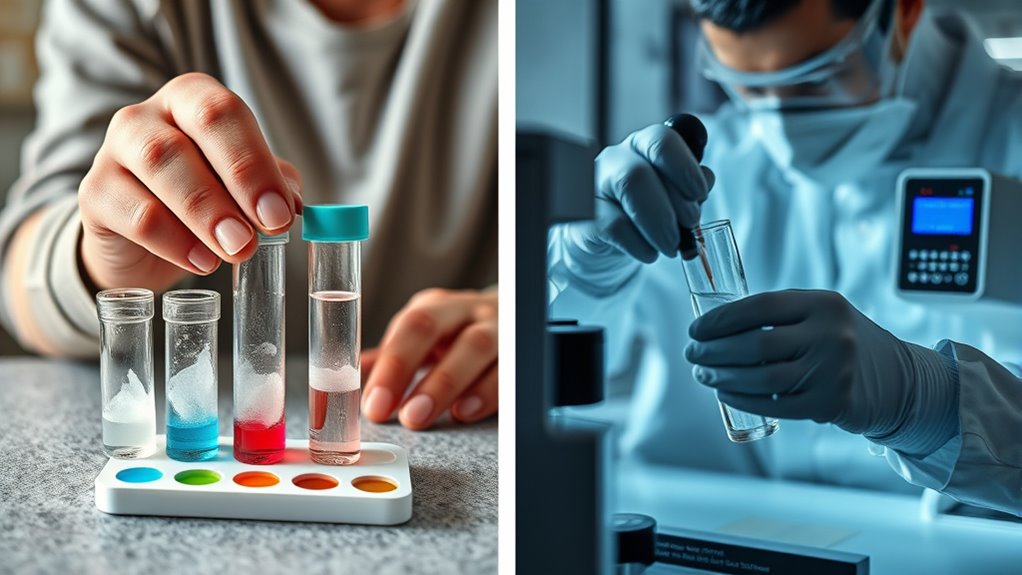

If your water seems fine and you just want quick checks, DIY kits can be enough for basic monitoring. However, when you suspect serious contamination like bacteria, heavy metals, or pesticides, it’s best to call in professionals. They use advanced methods to give accurate results and reliable safety assessments. Knowing when to upgrade your testing can protect your health. Keep exploring to learn more about choosing the right water testing approach.
Key Takeaways
- Use DIY tests for quick, routine checks when water quality concerns are minimal or suspected contaminants are unlikely.
- Rely on professional testing for comprehensive analysis, especially if serious pollutants like heavy metals or bacteria are suspected.
- Choose DIY kits for immediate insights, but opt for professional analysis to confirm safety and detect trace contaminants accurately.
- Consider professional testing when recent water changes or well water are involved, ensuring reliable detection beyond DIY capabilities.
- When in doubt about water safety or results are ambiguous, consulting a professional lab is the safest course of action.
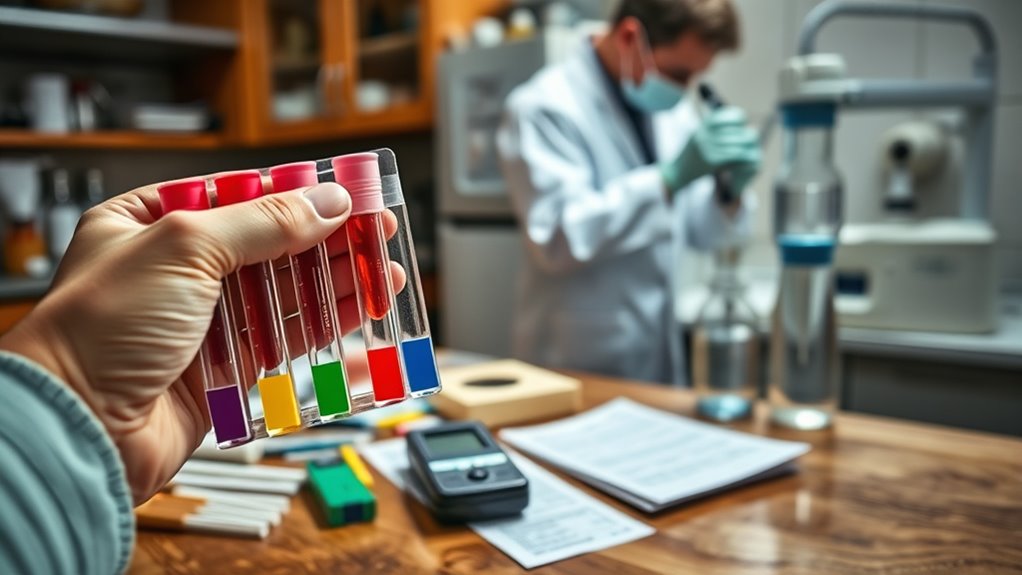
When it comes to guaranteeing your water is safe to use, deciding between DIY testing kits and professional water analysis can be challenging. You want to accurately detect contamination, but you also need to take into account your budget and the reliability of the results. DIY water testing kits are readily available and offer a cost-effective way to get a general idea of your water quality. They typically include strips or small sample containers that allow you to test for common contaminants like bacteria, nitrates, chlorine, or pH levels. If your goal is to perform routine checks or monitor specific parameters over time, these kits can be convenient and affordable. They provide quick results and can be used on your own schedule, making them appealing for homeowners who want immediate insights without extra expenses.
DIY water testing kits offer quick, affordable insights for routine water quality monitoring.
However, the main limitation of DIY kits lies in their ability to detect contamination accurately. While they are useful for initial screening, they often lack the precision necessary to identify certain contaminants or to quantify their levels precisely. If you suspect serious contamination—such as the presence of heavy metals, pesticides, or bacteria beyond safe limits—relying solely on DIY tests might not give you the complete picture. In such cases, false negatives or ambiguous results could delay necessary action or lead to a false sense of security. That’s where professional water analysis becomes invaluable. Certified laboratories use advanced techniques and equipment to detect even trace amounts of harmful substances, ensuring contamination detection is thorough and reliable.
Cost effectiveness is another factor to take into account. DIY testing is typically less expensive upfront, often costing just a few dollars per test, which makes it attractive for routine checks or small-scale monitoring. But if you need extensive testing that covers a broad spectrum of potential contaminants, professional analysis can be more cost-effective in the long run. It reduces the risk of missing dangerous pollutants, which could lead to costly health issues or extensive water treatment later. Additionally, professional testing results usually come with expert interpretation, helping you understand what the numbers mean and what actions are necessary.
Furthermore, understanding your water testing options in the context of reliable testing methods can help you make informed decisions about water safety. Ultimately, if your water source is generally clean and you just want a quick check, DIY kits may suffice. But if you’re dealing with well water, have experienced recent changes, or want peace of mind, investing in professional analysis is a smarter move. It ensures contamination detection is accurate and thorough, providing you with the confidence that your water is safe. While DIY tests are a good starting point, knowing when to call in the pros can save you time, money, and potential health risks down the line.
Frequently Asked Questions
How Often Should I Test My Water Quality?
You should test your water quality at least once a year to guarantee your water filtration system works effectively. If you notice changes in taste, odor, or color, test more frequently. Regular testing helps maintain testing accuracy and keeps you aware of any contaminants. Consider professional testing if your tests reveal issues or if you’re unsure about your results. Staying proactive ensures safe, clean water for your household.
Can DIY Tests Detect All Contaminants?
DIY tests can’t detect all contaminants because their test accuracy varies and they often have a limited contaminant scope. While they can identify common issues like chlorine or bacteria, they might miss more complex or less common contaminants like heavy metals or pesticides. For exhaustive water quality analysis, especially if you suspect serious contamination, it’s best to consult professional testing services that provide detailed, accurate results across a wider range of pollutants.
What Are the Costs of Professional Water Testing?
The cost of professional water testing varies, typically ranging from $100 to $600 depending on the number of contaminants tested and lab complexity. While it might seem expensive, professional testing offers better testing accuracy and thorough results. A cost comparison shows that investing in professional services ensures you get precise data, helping you make informed decisions about your water quality and necessary treatment options, which DIY tests can’t always provide.
How Long Does Professional Testing Take?
Professional water testing typically takes between 24 to 72 hours, depending on the lab’s workload and the specific tests ordered. You can expect quick results because labs prioritize testing accuracy and use advanced techniques to guarantee reliable data. Laboratory turnaround times are essential for timely decisions about your water quality. So, if you need fast, accurate results, professional testing is the way to go, especially when health concerns are involved.
Are There Any Health Risks With DIY Testing?
Yes, there are health risks with DIY testing, mainly because you might not detect harmful contaminants, leading to false negatives. This gives you a false sense of safety, potentially exposing you to waterborne illnesses. Without proper procedures, you could also mishandle samples or chemicals, increasing health risks. To guarantee accurate results and safety, it’s often better to call in professionals for thorough water testing.
Conclusion
Think of water testing like steering a vast ocean. If your water quality concerns are minor, a DIY kit is like sailing with a map—you can get a good sense of the waters ahead. But when things get stormy or uncertain, calling in the pros is like bringing in a seasoned captain to steer safely. Trust your instincts and the situation—sometimes, it’s best to let experts guide you through the rough waters for peace of mind.