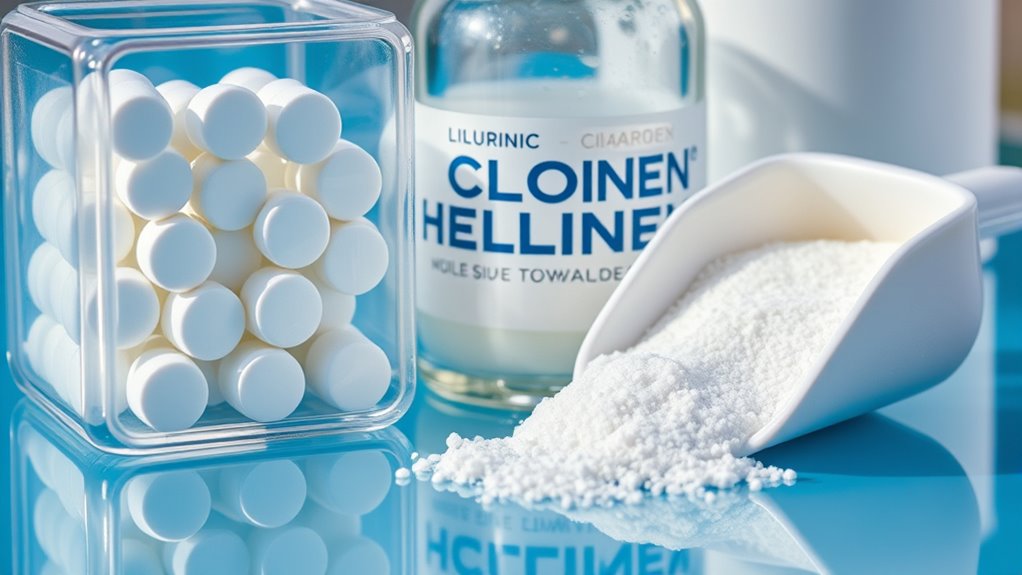

To maintain proper chlorine levels, you should regularly test your pool water and keep it between 1 and 3 ppm. Use tablets in floating dispensers or skimmers for steady release, liquid chlorine for quick boosts, and granules for regular maintenance or shock treatments. Proper handling and storage prevent chemical issues and guarantee safety. Keeping these levels balanced helps keep your water clean and clear; more details can help you optimize your pool care approach.
Key Takeaways
- Regularly test chlorine levels to keep them between 1-3 ppm for safe swimming conditions.
- Use pool tablets in dispensers or skimmer baskets for steady, slow-release chlorine.
- Add liquid chlorine quickly to raise levels, especially after heavy use or hot weather.
- Store all chlorine products in a cool, dry place away from children and sunlight.
- Adjust chlorine dosage based on test results to prevent unsafe levels and maintain water balance.
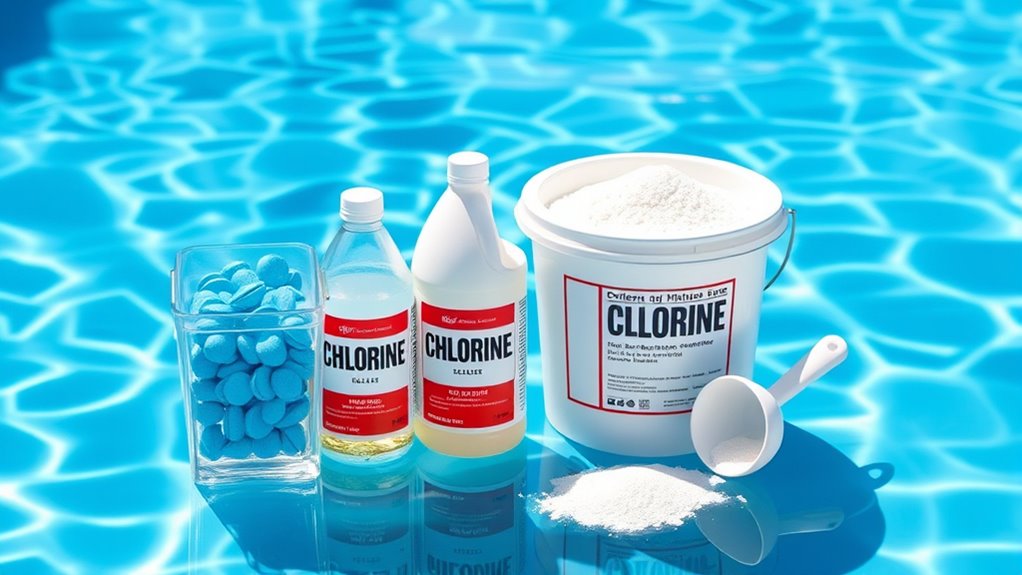
Maintaining proper chlorine levels is vital for keeping your swimming pool safe and clean. When your pool has the right amount of chlorine, it effectively kills bacteria, viruses, and algae, guaranteeing a safe swimming environment for everyone. Proper chemical balancing isn’t just about adding chemicals; it’s about maintaining the correct levels to prevent issues like cloudy water, foul odors, or skin irritation. If your chlorine levels are too low, harmful microorganisms can thrive, threatening pool safety. Conversely, too much chlorine can cause skin and eye irritation and damage pool equipment. Striking the right balance is key to a healthy, inviting pool.
Proper chlorine levels ensure a safe, clean, and inviting swimming pool for everyone.
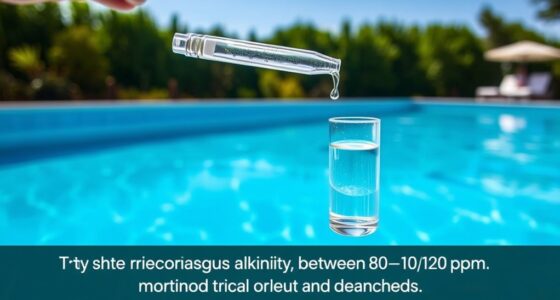
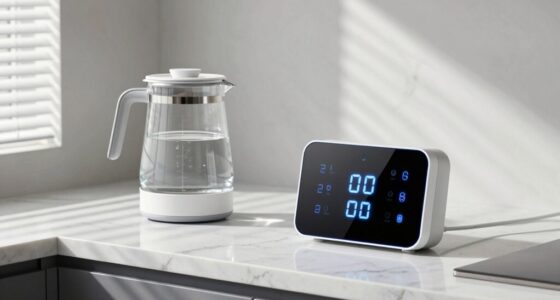
To achieve this balance, you need to understand the different forms of chlorine available—tablets, liquid, and granules—and how to use them properly. Pool tablets are popular because they dissolve slowly, providing a steady release of chlorine over time. You typically place these tablets in a floating dispenser or skimmer basket, which allows for consistent chemical distribution. This method helps maintain stable chlorine levels, reducing the need for frequent testing. However, you should regularly check your pool’s chlorine levels with a reliable test kit to guarantee they stay within the recommended range, generally between 1 and 3 ppm (parts per million). Overdosing can lead to excessive chemical levels, which might upset the pool’s chemical balance and cause problems like scaling or corrosion. Additionally, integrating automation can help monitor and adjust chlorine levels more precisely.
Liquid chlorine offers a quick and straightforward way to boost chlorine levels when your pool needs a rapid increase. It’s easy to measure and pour directly into the water, making it ideal for quick adjustments. Since liquid chlorine evaporates faster, you’ll need to add it more frequently than tablets or granules, especially after heavy use or heavy rain. Granules are versatile and work well for both regular maintenance and shock treatments. They dissolve quickly in water, allowing you to quickly raise chlorine levels or sanitize the pool after heavy use or contamination. Just be sure to follow the manufacturer’s instructions carefully to avoid over-application, which can upset your pool’s chemical balance.
Regardless of the form you choose, consistent testing and adjustment are vital. Pool safety depends heavily on maintaining proper chlorine levels, and chemical balancing is an ongoing task. Use test strips or a digital testing kit regularly, especially during hot weather or after heavy use, to guarantee your chlorine levels stay within the safe range. Proper storage of chemicals is also important—they should be kept in a cool, dry place away from direct sunlight and out of reach of children. By understanding how to use tablets, liquid, and granules effectively, you’ll keep your pool safe, clean, and inviting all season long.
Frequently Asked Questions
How Often Should I Test My Pool’s Chlorine Levels?
You should test your pool’s chlorine levels at least 2-3 times a week to guarantee proper chlorine balancing. Testing frequency depends on pool usage, weather, and recent chemical treatments. Regular testing helps you catch any imbalances early, preventing algae growth and bacteria buildup. Use a reliable test kit or strips, and adjust your chlorine levels as needed to keep your pool safe and clean.
Can I Use Multiple Chlorine Types Simultaneously?
Think of your pool’s chlorine as a team working together. Yes, you can use multiple chlorine types simultaneously, but only if they’re compatible. Chlorine compatibility is essential because chemical interactions can cause cloudiness or reduce effectiveness. To avoid problems, follow manufacturer guidelines and avoid mixing different forms directly. For example, don’t combine tablets with liquid chlorine without proper dispersal—otherwise, you risk disrupting your pool’s chemistry.
What Are Signs of Over-Chlorination?
If you notice your pool causing itchy eyes, skin irritation, or a strong chlorine smell, you’re likely experiencing chlorine overdose, indicating a chemical imbalance. Too much chlorine can lead to cloudy water and algae growth. Test your water and reduce chlorine levels promptly with dilution or shock treatment. Keeping balanced chlorine levels prevents chemical imbalances, ensuring safe, clean, and comfortable swimming conditions.
How Do Weather Changes Affect Chlorine Levels?
Weather changes, especially seasonal temperature fluctuations and humidity impact, directly affect your chlorine levels. Warmer weather can cause chlorine to dissipate faster, requiring you to add more frequently. Higher humidity may increase chlorine loss through evaporation. Conversely, cooler temperatures slow down chlorine breakdown. Keep an eye on your pool regularly, adjusting chlorine levels accordingly to maintain proper sanitation despite these weather variations.
Is It Safe to Swim Immediately After Adding Chlorine?
Sure, you can swim safely after chlorine application, but caution counts. Chlorine clears and disinfects, creating a safe swimming space, but wait until levels stabilize. Rapid chlorine addition can cause skin and eye irritation, so always test your pool’s chlorine levels and wait until they reach the recommended range. Pool safety depends on proper chlorine application, patience, and preparation, ensuring you enjoy your swim safely and smoothly after every chlorination.
Conclusion
Keeping your chlorine levels just right is key to a healthy, sparkling pool. Whether you prefer tablets, liquid, or granules, stay consistent and follow the instructions closely. Regular testing helps you catch issues before they become big problems. Remember, a stitch in time saves nine—don’t let small problems snowball into costly repairs. With a little effort, you’ll enjoy a safe, inviting pool all season long. Jump in and keep those levels in check!