To prevent scale and softness, you should regularly check your water’s calcium hardness levels, keeping them between 200-400 ppm. Use proper water balancing by adjusting pH and alkalinity, and consider adding sequestrants or scale inhibitors for extra protection. Diluting high-calcium water with fresh water is also effective. Staying proactive with these steps helps maintain water clarity and protects your equipment, so if you want to learn more, keep exploring reliable methods and tips.
Key Takeaways
- Regularly test water calcium levels and keep them within 200-400 ppm.
- Use sequestrants or scale inhibitors to prevent calcium carbonate buildup.
- Balance pH and alkalinity to minimize calcium precipitation and softness.
- Dilute high-calcium water with fresh water to reduce excess calcium.
- Add calcium chloride when calcium levels are too low to maintain mineral balance.

Managing calcium hardness is indispensable for maintaining a healthy and balanced pool or spa. When you keep an eye on your water mineral balance, you help guarantee that your water remains clear, safe, and comfortable for swimmers. Calcium hardness refers to the concentration of dissolved calcium in your water, and maintaining it within the ideal range prevents two common issues: scale buildup and water softness. Proper management of calcium levels directly influences the overall quality of your water and the longevity of your equipment.
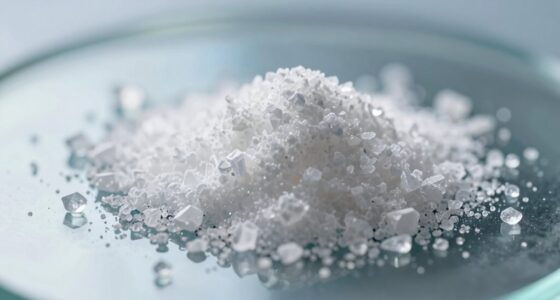
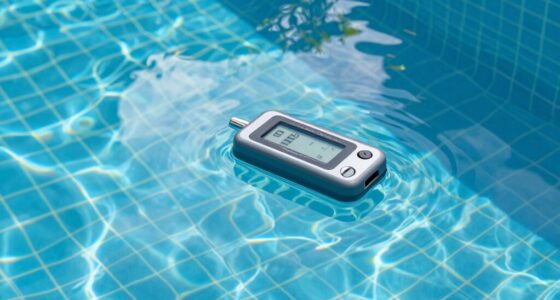
If calcium levels are too high, you risk scaling, which is the formation of deposits on pool surfaces, pipes, and equipment. These mineral deposits can clog filters, reduce water flow, and cause damage over time. Scaling also diminishes water clarity and can increase maintenance costs. To prevent this, you need to monitor calcium hardness regularly and adjust as needed. Using water testing kits, you can identify when calcium levels are creeping above the recommended range, typically between 200 and 400 ppm (parts per million) depending on your pool type. If levels are too high, you can dilute the water with fresh water or use a sequestrant designed to bind calcium and inhibit scale formation.
On the other hand, if calcium levels are too low, your water becomes soft and can lead to corrosion issues. Soft water is aggressive and may damage pool surfaces, liners, and metal components, causing pitting and deterioration. To counteract this, you can add calcium chloride to increase calcium hardness and restore the balance. Maintaining proper calcium levels also contributes to overall water mineral balance, which is crucial for effective sanitization and chemical stability.
Scaling prevention is a key aspect of managing calcium hardness, but it also involves controlling other factors like pH and alkalinity. When these are properly balanced, calcium is less likely to precipitate out of solution. Regular testing and adjustments are essential to prevent problems before they escalate. Additionally, using a scale inhibitor or sequestering agent can offer extra protection by keeping calcium in solution, even if your water chemistry fluctuates.
Frequently Asked Questions
How Often Should Calcium Hardness Levels Be Tested?
You should test your calcium hardness levels at least once a month through water testing to guarantee proper chemical balancing. Regular testing helps you catch any changes early, preventing scale buildup or softness issues. If you notice fluctuating levels or after chemical treatments, consider more frequent testing. Maintaining consistent calcium hardness levels helps keep your water balanced, prolongs equipment life, and keeps your pool or spa in ideal condition.
What Are the Signs of Calcium Hardness Imbalance?
You’ll notice your water feels like a stubborn guest, with signs of calcium saturation causing scale buildup on your fixtures or cloudy, soft water that feels slippery. If your equipment’s working harder or you see white deposits, it’s a clear sign of calcium hardness imbalance. Soft water may lack minerals, while excessive calcium makes water hard, affecting your system’s efficiency. Keep an eye out for these clues to maintain balanced water softness.
Can Adjusting Calcium Hardness Affect Other Water Parameters?
Adjusting calcium hardness impacts water chemistry and can influence other parameters like pH and alkalinity. When you increase calcium levels, it may lead to scale buildup, making scale prevention more challenging. Conversely, lowering calcium can soften water but might cause corrosion issues. Always monitor your water chemistry carefully when making adjustments to guarantee you maintain balanced water conditions, preventing both scale formation and water softness problems.
Are There Eco-Friendly Methods to Control Calcium Buildup?
Yes, there are eco-friendly solutions to control calcium buildup. You can use natural filtration methods like biofilters or mineral clarifiers that reduce scale without chemicals. Regularly maintaining your system and adding natural substances like vinegar or baking soda can help dissolve calcium deposits safely. These methods are sustainable, non-toxic, and effective, allowing you to manage calcium hardness while protecting the environment.
What Is the Ideal Calcium Hardness Level for Different Pools?
Did you know that the ideal calcium hardness level varies for different pools? For most residential pools, aim for 200-400 ppm. You should regularly perform calcium measurement to keep water balancing in check, preventing scale buildup or softness. For saltwater pools, stay closer to 300-400 ppm, while indoor pools benefit from slightly lower levels. Consistently monitoring guarantees your pool stays balanced and crystal clear.
Conclusion
By actively managing calcium hardness, you prevent scale buildup and keep your water balanced. Don’t let calcium levels turn your plumbing into a fortress of mineral deposits or leave your water feeling like a puddle of softness. Stay vigilant, test regularly, and adjust as needed—your system’s health depends on it. With proper care, you can turn a potential nightmare into a well-oiled, crystal-clear masterpiece that runs smoother than the fastest river.