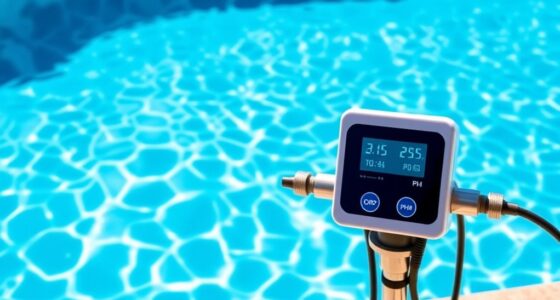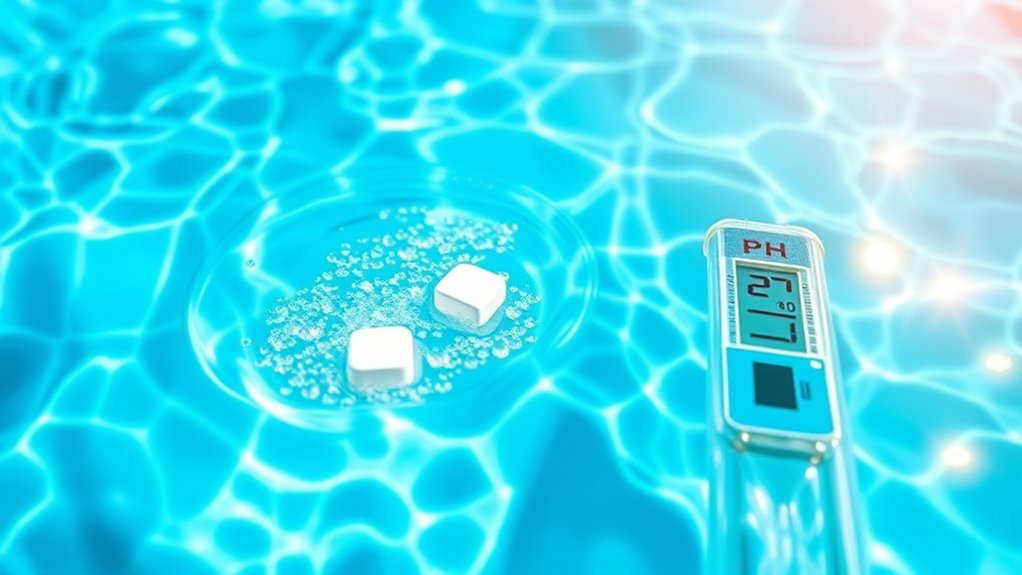

To maximize chlorine’s effectiveness, you need to keep the pH level between 7.2 and 7.8, where chlorine is most active as hypochlorous acid. If pH is too high or low, chlorine becomes less effective or forms chloramines, which can cause odors and irritations. Regularly test and adjust your pH with the right chemicals to guarantee your sanitizer works efficiently. Keep exploring to learn how maintaining ideal pH levels keeps your water safe and clear.
Key Takeaways
- Maintaining pH between 7.2 and 7.8 ensures chlorine is primarily as hypochlorous acid, maximizing its disinfectant power.
- pH levels above 7.8 shift chlorine to hypochlorite ions, reducing sanitizer effectiveness.
- Regular pH testing and adjustments prevent chloramine formation and enhance chlorine stability.
- Correct pH levels prolong chlorine residual lifespan, reducing overall chemical costs.
- Proper pH control minimizes odors, eye irritation, and equipment corrosion, ensuring safer water sanitation.
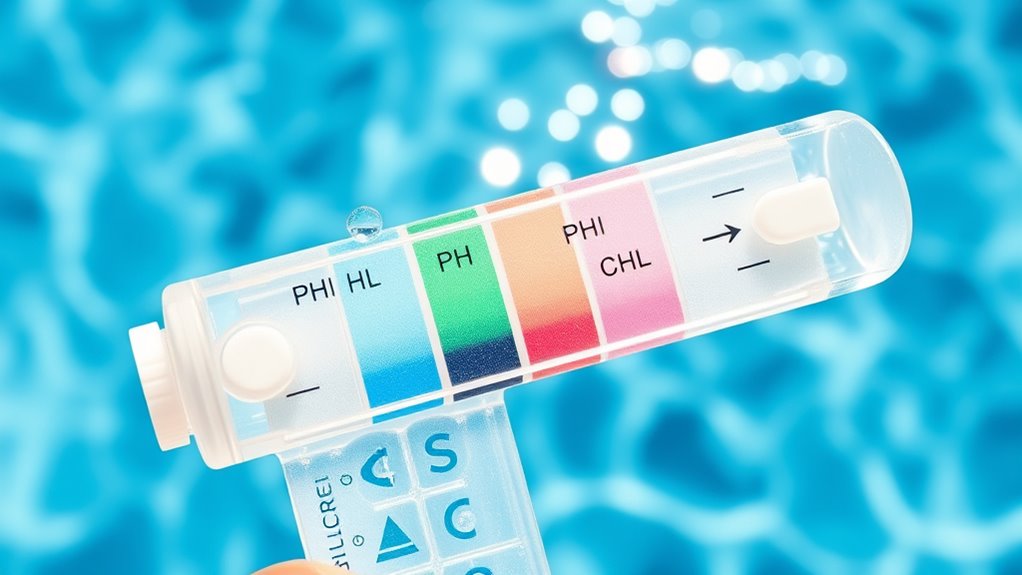
Have you ever wondered how the pH level of your water affects the effectiveness of chlorine? Understanding this relationship is key to maintaining a safe and clean environment, whether you’re managing a pool, spa, or water treatment system. The pH level influences chlorine’s ability to sanitize effectively because it directly impacts chlorine stability. When the pH is too high or too low, chlorine doesn’t work as efficiently, and you may need to make pH adjustments to maximize its sanitizing power.
Understanding how pH impacts chlorine effectiveness is essential for maintaining a safe, clean water environment.
Chlorine stability is most favorable within a specific pH range, typically between 7.2 and 7.8. At these levels, chlorine exists mainly as hypochlorous acid (HOCl), which is the most potent sanitizer. If the pH rises above 7.8, the chlorine shifts toward forming more hypochlorite ions (OCl-), which are less effective at killing bacteria and viruses. Conversely, if the pH drops below 7.2, chlorine can become too aggressive, leading to rapid degradation and the formation of chloramines, which reduce disinfectant effectiveness and can cause unpleasant odors and eye irritation.
To maximize sanitizer efficiency, you need to perform regular pH adjustments. This involves adding pH increasers or decreasers as necessary to keep the water within the ideal range. When pH levels drift upward, adding a pH reducer like muriatic acid or sodium bisulfate can restore balance. If the pH drops too low, a pH booster such as sodium carbonate (soda ash) can bring it back into the effective zone. Proper pH adjustment not only enhances chlorine stability but also reduces chloramine formation, which is influenced by chlorine’s chemical form and helps ensure your sanitizer works at peak performance and prolonging the lifespan of your chlorine residual.
Maintaining the correct pH level isn’t just about chlorine stability; it also helps prevent corrosion of equipment and surfaces, and it improves water clarity and comfort. It’s important to test your water regularly using reliable test kits or digital testers, adjusting pH as needed before adding chlorine. When you keep the pH balanced, you’re ensuring that your chlorine remains active longer and provides effective disinfection, saving you time, money, and effort in the long run.
Frequently Asked Questions
How Does Temperature Affect Ph and Chlorine Effectiveness?
Temperature impact greatly influences pH and chlorine effectiveness. When the water warms up, chlorine becomes more active, boosting sanitizer efficiency initially. However, higher temperatures can also cause chlorine to degrade faster, reducing its long-term effectiveness. Conversely, cooler water stabilizes chlorine but may slow sanitization processes. You should monitor temperature closely, adjusting your pH levels as needed to guarantee ideal sanitizer efficiency and maintain safe, clean water.
Can Ph Levels Fluctuate During the Day Without Intervention?
Yes, pH levels can fluctuate during the day without intervention, affecting chlorination stability. These pH fluctuations result from factors like sunlight, temperature changes, and organic matter, which can alter water chemistry. As pH shifts, chlorine becomes less effective, reducing sanitizer efficiency. Regular monitoring helps you maintain ideal pH levels, ensuring consistent chlorination stability and safe, clean water.
What Are Signs of Improper Ph and Chlorine Balance?
If your pool’s pH and chlorine levels are improperly balanced, you’ll notice issues like cloudy water, strong chemical odors, or skin and eye irritation. You might also see algae growth or persistent bacteria despite chlorinating. Regular pool maintenance helps maintain the proper chemical balance, preventing these problems. Keep testing your water frequently, and adjust pH and chlorine levels as needed to make certain of a safe, clean swimming environment.
How Often Should Ph and Chlorine Levels Be Tested?
Think of your pool like a garden that needs regular watering and care. You should test your pH and chlorine levels at least twice a week as part of your maintenance schedule. For high-traffic pools or during hot weather, testing might need to be more frequent—up to three or four times weekly. Consistent testing guarantees your pool stays balanced, safe, and inviting, just like a well-tended garden.
Are There Natural Methods to Adjust Ph Levels Safely?
You can try natural balancing methods for DIY pH adjustment, like adding baking soda to raise pH or vinegar to lower it. These options are safe if used carefully and in small amounts, allowing you to regulate pH levels without harsh chemicals. Always test your water afterward to ensure the pH stays within the ideal range. Natural balancing offers a simple, eco-friendly way to maintain a healthy swimming environment.
Conclusion
By mastering the dance between pH and chlorine, you become the conductor of a well-tuned orchestra, ensuring your sanitizer plays its best tune. Keep the pH balanced, and chlorine will shine brightly, disinfecting effectively. Think of it as fine-tuning your instrument—when everything aligns, cleanliness and safety harmonize perfectly. With this knowledge, you’re in control, turning the complex relationship into a simple, powerful tool for a healthier environment.