
pH drift in your pool signals an imbalance in water chemistry that needs attention. It often occurs when pH levels move outside the ideal range of 7.2 to 7.6, indicating issues like excess alkalinity, bicarbonates, or recent chemical changes. This imbalance can cause cloudy water, reduce chlorine effectiveness, or damage equipment and skin. Addressing pH drift early helps maintain clarity and safety—continue to explore what your pool’s pH fluctuations are trying to tell you.

Get pool and patio gear delivered free with Prime
- Fast, free delivery on millions of items
- Prime Video, Amazon Music and more included
- Member-only deals all year
Key Takeaways
- pH drift indicates an imbalance in your pool’s water chemistry, signaling issues with alkalinity or dissolved solids.
- Sudden pH increases suggest excess basic substances or poor water circulation.
- Sudden pH decreases point to overuse of acids, rainwater, or chemical overcorrection.
- Continuous pH fluctuations can lead to cloudy water, algae growth, or equipment damage.
- Regular testing and timely chemical adjustments help maintain stable pH levels and pool health.
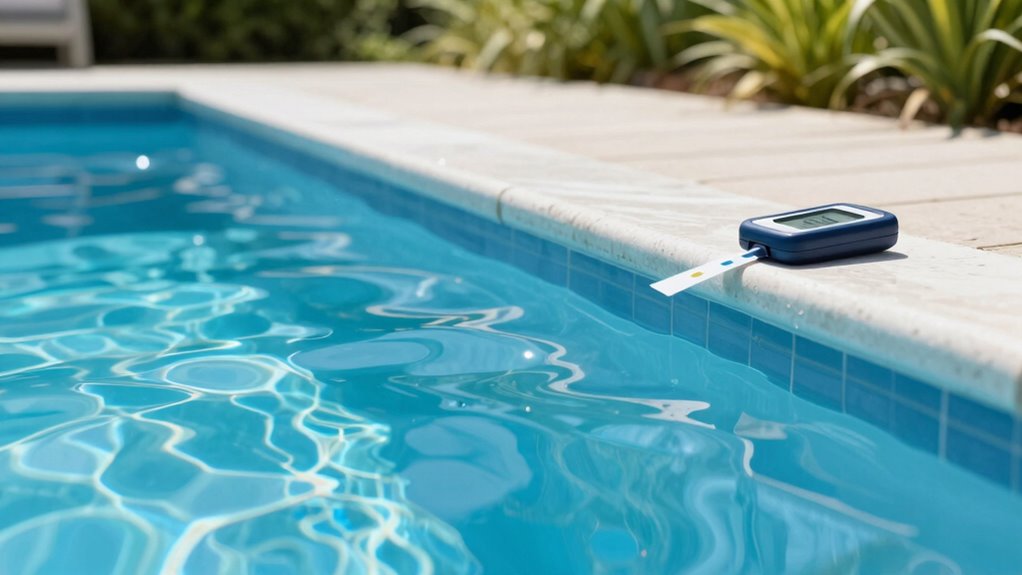
Understanding why your pool’s pH levels tend to shift is essential for maintaining clean, balanced water. pH drift is a common issue that signals your water chemistry isn’t quite right, and paying attention to these changes helps you keep your pool inviting and safe. When pH rises or falls unexpectedly, it’s a sign that your chemical balance needs adjustment. A proper pH level, typically between 7.2 and 7.6, is crucial for water clarity and overall pool health. When pH drifts outside this range, it can cause problems that affect both your water’s appearance and safety.
If your pH increases, your water may become more alkaline. This shift often indicates that your water has accumulated excess basic substances, such as total alkalinity or bicarbonates. An elevated pH can make the water look cloudy or dull, reducing water clarity. It also hampers the effectiveness of chlorine, meaning your sanitizer isn’t working as well as it should to kill bacteria and algae. As a result, you might notice more algae growth or cloudiness, which makes your pool look less appealing and can pose health risks. On the other hand, if your pH drops too low, your water becomes more acidic. This can happen after adding certain chemicals or due to natural factors like rain or heavy usage. Low pH can cause the water to become cloudy and corrosive, damaging pool surfaces, equipment, and even your skin and eyes. When the water is too acidic, chlorine becomes less effective, and you may notice a musty or metallic smell.
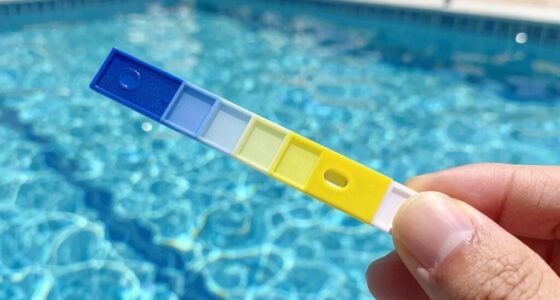
Monitoring pH drift gives you clues about the overall chemical balance of your pool. A sudden change in pH levels often points to other issues, such as improper alkalinity, high levels of dissolved solids, or recent chemical additions. These shifts can also influence water clarity—cloudy water often signals pH imbalance or other chemical inconsistencies. Regular testing of your water chemistry and adjusting your chemicals accordingly can help prevent these issues from escalating. Unexpected pH shifts could also be caused by natural factors like rainfall or heavy pool usage, which introduce new elements into your water. To maintain clarity and safety, you should regularly test your water and adjust your chemicals accordingly. If you see pH levels creeping upward, adding a pH reducer like muriatic acid can bring it back to the ideal range. Conversely, if it drops, a pH increaser such as sodium carbonate helps restore balance. Consistent testing and timely adjustments prevent pH drift from escalating into more serious problems, keeping your water clear, safe, and inviting.
Understanding chemical balance is key to preventing issues like pH drift and maintaining a healthy swimming environment. By understanding what pH drift is telling you about your water’s chemical balance, you can take proactive steps to keep your pool in perfect condition.
As an affiliate, we earn on qualifying purchases.
Frequently Asked Questions
How Often Should I Test My Pool’s pH Level?
You should test your pool’s pH level at least 2 to 3 times a week during regular Pool maintenance. If you notice pH drift, test more frequently to keep water chemistry balanced. Regular testing helps prevent issues like cloudy water or algae growth, ensuring your pool stays inviting and safe. Consistent monitoring allows you to make quick adjustments, maintaining ideal water chemistry and prolonging your pool’s lifespan.
Can pH Drift Affect My Pool’s Sanitizer Effectiveness?
Yes, pH drift can affect your pool’s sanitizer effectiveness. When your water’s pH becomes unbalanced, it creates a chemical imbalance that reduces how well the sanitizer works. This can lead to cloudy water and decreased water clarity. If you notice pH levels drifting, it’s essential to rectify it promptly. Maintaining proper pH helps guarantee your sanitizer remains effective, keeping your pool clean, clear, and safe for swimming.
What Causes Sudden pH Changes in My Pool?
Did you know that sudden pH changes can occur in your pool within just a few hours? These fluctuations are often caused by imbalances in pool chemistry, such as adding too much shock or algaecide, or heavy rain introducing extra acids or bases. Maintaining proper water balance is essential to prevent pH drift. Regular testing helps you catch these changes early, ensuring your sanitizer stays effective and your water remains comfortable and safe.
How Does pH Drift Impact Pool Equipment Longevity?
pH drift can negatively impact your pool equipment longevity by causing corrosion or scaling, which damages pumps, filters, and heaters. Fluctuating pH levels disrupt pool chemistry, leading to increased wear and tear. Regular equipment maintenance and monitoring pH levels help prevent these issues, ensuring your pool’s components stay in good shape longer. Keeping pH stable is essential for protecting your investment and maintaining a healthy, balanced pool environment.
Are There Safe Ways to Correct pH Drift Quickly?
Yes, there are safe ways to correct pH drift quickly. You should first test your water chemistry to determine the exact pH level. Then, add pH increasers or decreasers like sodium carbonate or muriatic acid gradually, following the product instructions. This helps restore the chemical balance without harming your pool or equipment. Always re-test your water afterward to confirm proper pH levels and maintain healthy water chemistry.
Conclusion
Think of your pool’s pH drift as a whisper from the depths, telling you it’s time to listen and adjust. When the pH rises or falls, it’s like a message in a bottle—guiding you to keep your water balanced and inviting. Ignoring these signals is like sailing blind through cloudy waters. Stay attentive to the pH’s story, and your pool will be a crystal-clear mirror reflecting perfect harmony beneath the surface.
Halloween Picks
halloween
As an affiliate, we earn on qualifying purchases.