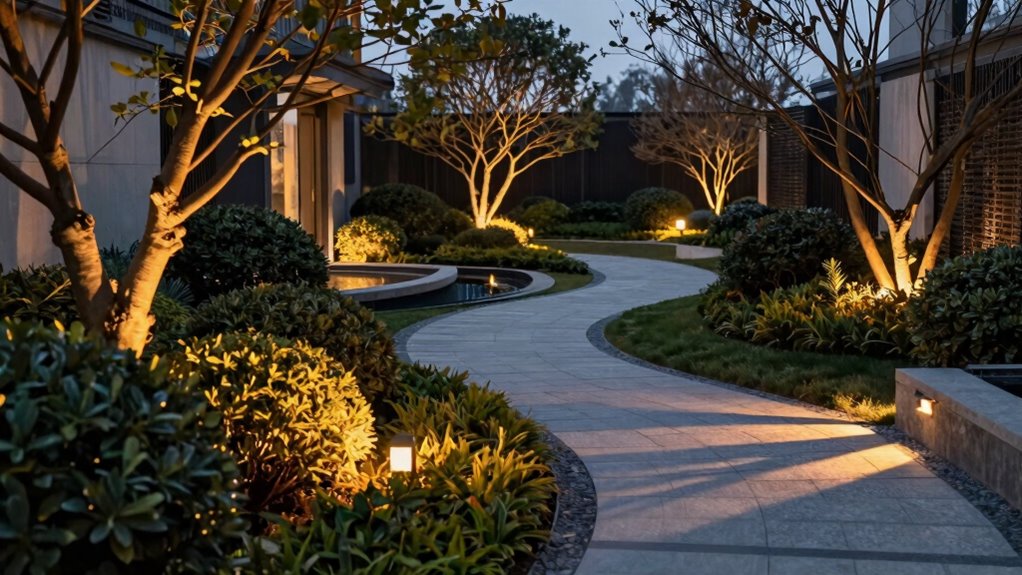

Smart landscape lighting works best when you replace harsh floodlights with layered lighting that combines different sources like pathway, accent, and overhead lights. This approach creates a natural, inviting atmosphere, highlights key features, and improves safety without the glare. By using adjustable and programmable controls, you can customize your outdoor space for any occasion while reducing energy waste. Explore more to discover how thoughtful lighting design can transform your outdoor area into a stunning, functional environment.

Get pool and patio gear delivered free with Prime
- Fast, free delivery on millions of items
- Prime Video, Amazon Music and more included
- Member-only deals all year
Key Takeaways
- Layered lighting creates a balanced, natural ambiance, reducing the need for overpowering floodlights.
- Using multiple light sources enhances safety and highlights landscape features without excessive brightness.
- Smart controls allow precise adjustment of different layers, replacing the uniformity of floodlighting.
- Combining accent, pathway, and overhead lights improves depth and visual interest efficiently.
- Replacing floodlights with layered lighting reduces energy consumption and minimizes light pollution.
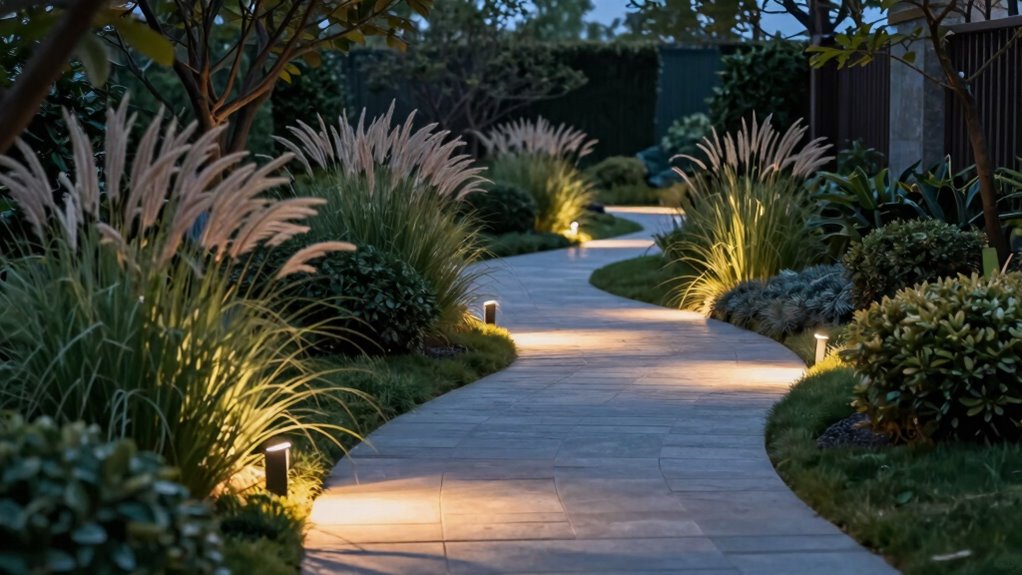
Have you ever wondered how to effortlessly enhance your outdoor space while boosting security and energy efficiency? Smart landscape lighting offers a perfect solution, especially when you move away from flooding your yard with harsh light. Instead, layering different types of lighting creates a more natural, inviting atmosphere that highlights your garden aesthetics without wasting energy. When you layer lighting thoughtfully, you can emphasize pathways, trees, and architectural features, making your outdoor space feel more welcoming and visually appealing. This approach also minimizes light pollution and reduces unnecessary energy consumption, helping your home become more energy efficient.
Using layers instead of flooding involves combining various light sources at different levels and intensities. For example, you might install soft, low-level pathway lights along your walkways, accent lights to highlight specific plants or sculptures, and overhead fixtures that illuminate larger areas only when needed. This strategy allows you to control the ambiance and security without over-illuminating your yard. It’s about striking a balance that provides enough light for safety while keeping the environment comfortable and visually pleasing. When you layer your lighting, you avoid the harsh glare that comes with floodlights, which can diminish the beauty of your landscape and make your outdoor space less inviting.
Smart lighting systems make this layered approach easier and more efficient. With programmable controls and motion sensors, you can automate your lighting to activate only when necessary. This not only enhances security by illuminating potential trouble spots but also conserves energy. You can schedule lights to turn on at dusk and off at dawn or adjust brightness levels based on activity. These smart features ensure you’re not wasting electricity on unnecessary lighting, making your outdoor setup more sustainable and cost-effective. Additionally, integrating energy-efficient technology into your lighting plan further supports your goal of reducing environmental impact.
Furthermore, layered lighting enhances your garden aesthetics by creating depth and dimension. Instead of a flat, uniformly lit yard, you craft a dynamic landscape that draws the eye and highlights key features. This method also allows you to experiment with different styles, colors, and intensities to suit seasonal changes or special occasions. Ultimately, replacing floodlights with a carefully planned layering of lights transforms your outdoor area into a harmonious space that’s both beautiful and energy-smart. It’s a simple yet powerful way to upgrade your landscape, ensuring safety, efficiency, and visual appeal go hand in hand.
As an affiliate, we earn on qualifying purchases.
Frequently Asked Questions
How Do Layered Lights Impact Outdoor Security?
Layered lights greatly boost your outdoor security, creating an extensive security enhancement. By strategically placing lights at different heights and intensities, you eliminate dark spots where intruders could hide. This layered approach not only improves safety but also enhances the aesthetic appeal of your landscape. You’ll find your outdoor space looks inviting and well-maintained while simultaneously deterring unwanted visitors, making your home both secure and visually appealing.
What Are the Best Fixtures for Layered Landscape Lighting?
You should choose a variety of fixtures to create layered landscape lighting, like spotlights, path lights, and wall washers. These fixtures deliver an ambient glow and highlight different features of your landscape. Using a fixture variety helps you avoid flooding the area with light, creating a balanced and inviting atmosphere. Focus on versatile options that can be directed and dimmed, ensuring your layered lighting enhances security and aesthetic appeal effectively.
How Can I Control Multiple Lighting Layers Easily?
Think of controlling your lighting layers as conducting a symphony—you need the right tools. Use remote control for seamless adjustments, and experiment with color mixing to create dynamic scenes. With smart lighting systems, you can easily switch between layers, dim or brighten fixtures, and set moods without leaving your seat. This effortless control transforms your landscape into a vibrant canvas, all at your fingertips.
What Is the Ideal Placement for Layered Lighting?
You should place layered lighting strategically to enhance your garden aesthetics and maximize energy efficiency. Use soft, ambient lights along pathways and around plant beds for depth, while accent lights highlight focal points like trees or sculptures. Avoid flooding the area with light; instead, aim for balanced layers that create visual interest without wasting energy. Proper placement guarantees your garden looks beautiful at night and conserves power, giving you a stunning yet efficient landscape.
How Often Should Landscape Lighting Be Maintained?
You should maintain your landscape lighting at least twice a year to keep your garden aesthetics looking their best and guarantee energy efficiency. Regularly check for burnt-out bulbs, clean fixtures, and adjust angles to highlight features effectively. Proper maintenance prevents over-illumination, saves energy, and preserves the overall ambiance, helping your layered lighting design shine beautifully day and night while supporting your garden’s health and visual appeal.
Conclusion
By layering your landscape lighting thoughtfully, you create a symphony of illumination that guides the eye and enhances your outdoor space. Instead of flooding your yard with harsh light, imagine it as a delicate dance—each layer plays its part, highlighting features without overshadowing others. When you replace flooding with strategic layers, your landscape transforms into a masterpiece that’s both functional and enchanting, turning your outdoor area into a scene straight out of a fairy tale.
Halloween Picks
halloween
As an affiliate, we earn on qualifying purchases.