Even if your chlorine levels look fine, other water chemistry issues can prevent it from disinfecting properly. Factors like high pH, alkalinity, and calcium hardness can make chlorine less stable and less effective. Environmental factors like sunlight, heat, and organic contaminants also cause chlorine to break down quickly. So, maintaining balanced water chemistry is essential for chlorine’s effectiveness. Keep exploring to discover how proper water care can keep your pool safe and clear.

Get pool and patio gear delivered free — and shop member deals
- Fast, free delivery on millions of items
- Access to Prime Big Deal Days deals on October 6–7
- Prime Video, Amazon Music and more included
Key Takeaways
- Imbalanced pH, alkalinity, or calcium hardness can reduce chlorine’s disinfecting effectiveness despite normal test readings.
- High stabilizer levels lock chlorine in place, preventing it from effectively sanitizing the water.
- Environmental factors like sunlight and high temperatures degrade chlorine quickly, regardless of initial levels.
- Organic contaminants in water can cause chlorine to break down faster, diminishing its disinfectant power.
- Test kits measure only free chlorine, not overall disinfectant capacity or the presence of other chemical imbalances.
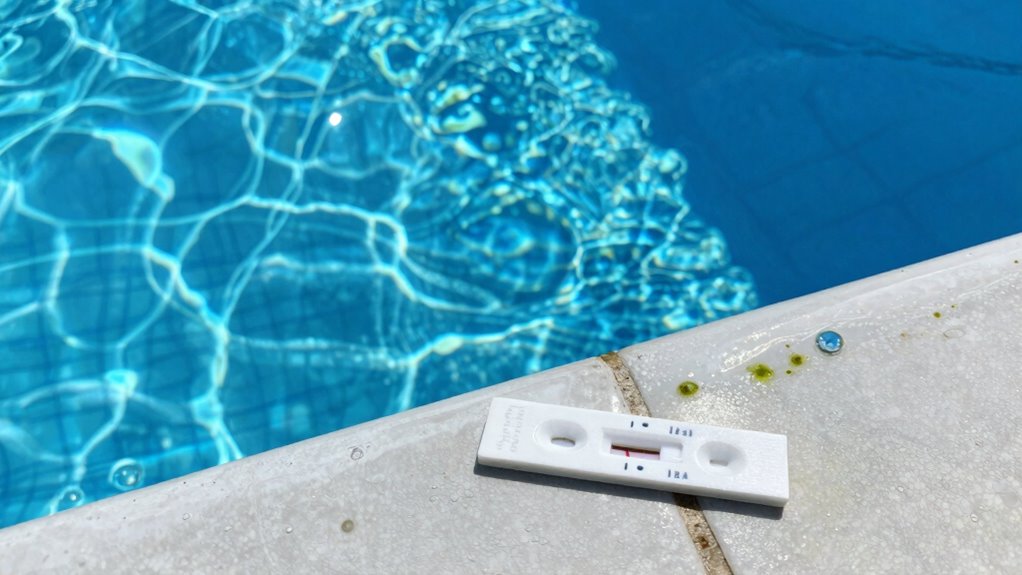
Even when your pool’s chlorine levels appear to be within the recommended range, the water can still turn cloudy or develop bacteria. That’s because maintaining a proper pool chemical balance goes beyond just checking the chlorine number. If your water isn’t balanced, chlorine can become less effective, and its ability to disinfect diminishes. When the pH, alkalinity, and calcium hardness aren’t in the right range, it creates an environment where chlorine can’t do its job properly. For example, if your pH is too high, chlorine becomes less stable, reducing its disinfecting power and allowing bacteria or algae to thrive despite the chlorine reading seeming fine.
Proper chemical balance ensures chlorine remains effective, preventing cloudy water and bacterial growth.
Chlorine stability is crucial for keeping your pool water clear and safe. Even if you add enough chlorine, unstable chlorine can break down quickly or fail to evenly distribute through the water. Factors like sunlight, temperature, and organic contaminants can cause chlorine to dissipate faster than expected. Sunlight, in particular, can rapidly degrade chlorine through UV exposure, making it seem like your levels are adequate when, in reality, the chlorine isn’t remaining active long enough to disinfect effectively. Similarly, high temperatures can accelerate chlorine loss, especially if your pool isn’t properly covered or shaded. Monitoring water chemistry regularly helps ensure your chlorine remains effective under changing conditions.
Another common mistake is relying solely on the chlorine test reading. Pool test kits measure the free chlorine level, but if your water’s chemistry isn’t balanced, that reading won’t tell the full story. For example, if your stabilizer (cyanuric acid) level is too high, it can lock chlorine in place and prevent it from working properly, even if the test shows a safe chlorine level. Conversely, low stabilizer levels mean chlorine breaks down quickly in sunlight, leaving your water unprotected. Maintaining chemical balance is essential because it directly influences chlorine’s effectiveness and longevity. Additionally, understanding how chlorine demand interacts with your pool’s specific conditions can help prevent unexpected failures. Regularly testing and adjusting your water parameters ensures your chlorine can do its job effectively over time.
To prevent chlorine failure, you need to keep a close eye on the overall chemical balance. Regularly test pH, alkalinity, calcium hardness, and stabilizer levels, and adjust them as needed. Ensuring your pool’s chemical balance is optimal helps maintain chlorine stability, so it can do its job consistently. When your pool’s chemistry is in check, the chlorine you add will stay active longer, providing reliable disinfection and clear water. This proactive approach keeps your pool safe, healthy, and inviting—regardless of what the chlorine test might initially say.
As an affiliate, we earn on qualifying purchases.
Frequently Asked Questions
Can Chlorine Levels Be Accurate but Still Ineffective?
Yes, chlorine levels can seem accurate but still be ineffective because chemical reactions in your water can prevent it from disinfecting properly. If contaminants or organic matter consume chlorine, water clarity might look fine, yet pathogens can survive. So, even with proper chlorine readings, it’s essential to monitor water clarity and consider additional testing, because chemical reactions might be undermining your chlorine’s ability to keep your water safe.
How Does pH Affect Chlorine’s Sanitizing Power?
Back in the day, folks thought pH levels didn’t matter much—think again. When your pool’s pH is too high or too low, it disrupts chlorine stability and weakens its sanitizing power. A pH imbalance causes chlorine to become less effective, preventing it from killing bacteria and algae properly. Keep your pH balanced between 7.2 and 7.6, so chlorine works its best and keeps your water clean.
Is Chlorine Equally Effective Against All Types of Bacteria?
Chlorine isn’t equally effective against all bacteria because some develop resistance, especially within bacterial biofilms. These biofilms protect bacteria from chlorine’s sanitizing power, making them harder to eliminate. Resistance varies based on bacteria type and biofilm maturity. To improve effectiveness, you need to break down biofilms with proper cleaning and adjust chlorine levels, ensuring the sanitizer reaches and kills resistant bacteria effectively.
Do Water Temperature Changes Impact Chlorine’s Performance?
Imagine your pool’s water as a lively dance floor; as temperature fluctuations happen, the chlorine’s effectiveness can stumble. Warmer water speeds up chemical reactions, causing chlorine to break down faster, while cooler water slows the process. This shifts water chemistry, making chlorine less reliable despite correct test readings. So, you’ll notice that temperature changes can impact chlorine’s performance, requiring you to adjust your sanitation approach accordingly.
Can Contaminants Block Chlorine’s Disinfectant Action?
Contaminants can definitely block chlorine’s disinfectant action by causing contaminant interference. They often react chemically with chlorine, forming compounds that reduce its availability to target bacteria and viruses. These chemical reactions can diminish chlorine’s effectiveness even if the chlorine level appears adequate. So, if you notice persistent water issues, it’s essential to check for contaminants that might be interfering with chlorine’s disinfectant properties, not just rely on the chlorine reading alone.
Conclusion
So, even when your chlorine levels seem perfect, don’t assume your water’s completely safe. Think of it like checking the weather—just because the forecast looks clear doesn’t mean a sudden storm isn’t brewing. Regular testing, proper balancing, and understanding other factors like pH and contaminants are essential. Stay vigilant, keep testing, and remember, maintaining water quality is a delicate dance—like walking a tightrope—where one small misstep can lead to problems.
Fall Picks
fall essentials
As an affiliate, we earn on qualifying purchases.