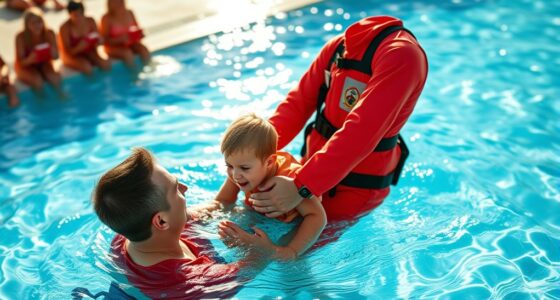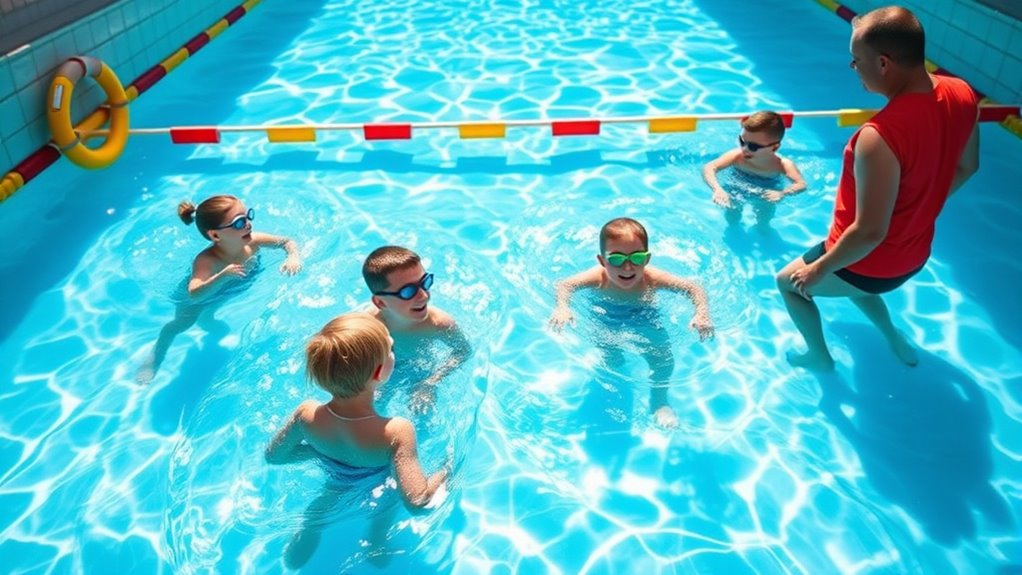

To teach pool rules and establish safe behaviors, you should emphasize gentle reminders about no running, diving only in deep areas, and staying within designated zones. Encourage swimmers to listen to the lifeguard’s instructions and avoid roughhousing or pushing others. By setting clear expectations and modeling responsible habits, you help prevent accidents and create a safer environment. Keep exploring how consistent rules and positive reinforcement can make everyone’s swimming experience safer and more enjoyable.
Key Takeaways
- Clearly communicate pool rules to all swimmers before entry and emphasize their importance.
- Enforce no running, diving in shallow areas, or roughhousing to prevent accidents.
- Designate specific swimming zones and ensure swimmers stay within them.
- Promote the use of safe behaviors, such as no pushing or swimming alone.
- Encourage cooperation with lifeguards and immediate reporting of unsafe behaviors.
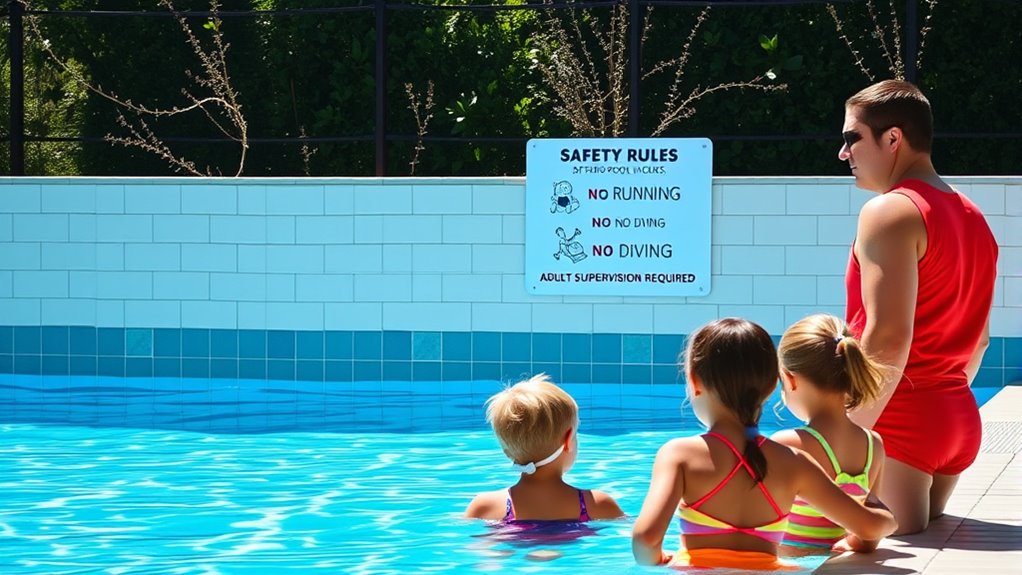
Swimming in a pool is fun, but it comes with important rules you need to guarantee everyone’s safety and enjoyment. One of the most critical aspects of pool safety is understanding the role of the lifeguard and how they keep everyone safe. Lifeguards have the responsibility of monitoring the pool area constantly, watching for any signs of trouble. They are trained to recognize potential hazards quickly and act decisively. When you see a lifeguard, remember they’re there to protect everyone, so follow their instructions promptly. If an emergency arises, knowing the emergency procedures can make all the difference. These procedures include alerting the lifeguard immediately, removing yourself from the water if you’re in danger, and waiting for professional assistance. It’s essential to understand that the lifeguard’s primary responsibility is to prevent accidents, but they can’t do it alone. Your cooperation and adherence to the pool rules help create a safe environment for all swimmers.
To support the lifeguard’s efforts, you should familiarize yourself with basic emergency procedures. In the event of a drowning or injury, stay calm and alert the lifeguard without panicking. They are trained to handle such situations efficiently, but your clear communication is vital. If you witness someone struggling, avoid jumping in without warning the lifeguard unless it’s an immediate life-threatening situation. Instead, alert the lifeguard so they can respond appropriately. If the lifeguard initiates emergency protocols, follow their guidance carefully. This might include clearing the pool, assisting in rescue efforts, or providing first aid if you’re trained. Knowing how to respond calmly helps prevent additional injuries and allows emergency services to act swiftly. Additionally, understanding the importance of proper water safety practices can significantly reduce risks and promote a safer swimming environment.
Apart from understanding emergency procedures, respecting the rules that support the lifeguard’s responsibilities is crucial. These rules include no running on the pool deck, no diving in shallow areas, and no roughhousing or pushing others into the water. Such behaviors can distract lifeguards and increase the risk of accidents. Also, always stay within designated swimming areas and avoid swimming alone, especially in unsupervised pools. Your adherence to these rules not only keeps you safe but also ensures the lifeguard can focus on their primary role—protecting everyone. By being attentive, following instructions, and respecting the pool environment, you contribute to a safer, more enjoyable experience for everyone involved. Remember, pool safety is a shared responsibility, and understanding the roles of the lifeguard and emergency procedures is a key part of that.
Frequently Asked Questions
How Do I Teach Young Children to Understand Pool Safety Rules?
You can teach young children pool safety rules effectively by using visual aids like colorful signs and pictures to grab their attention. Incorporate role-playing activities so they can practice safe behaviors in a fun, engaging way. Keep instructions simple and repeat key points often. By making learning interactive and visual, children are more likely to understand and remember pool safety practices, ensuring a safer swimming environment for everyone.
What Are Effective Ways to Enforce Pool Rules Consistently?
Think of enforcing pool rules like tending a garden—you need consistent care. Use visual cues like signs or colored zones to remind swimmers of safety expectations. Pair this with positive reinforcement, praising good behavior to encourage compliance. Stay firm yet friendly, addressing rule-breaking immediately. By combining visual cues and positive reinforcement, you create a safe environment where swimmers naturally follow rules, like flowers blooming under consistent care.
How Can I Encourage Responsible Swimming Behavior Among Teenagers?
You can encourage responsible swimming among teenagers by leveraging peer influence and consistent rule reinforcement. Promote positive peer pressure by encouraging responsible swimmers to set examples. Reinforce rules through engaging activities and clear communication, highlighting safety benefits. Offer rewards for responsible behavior and involve teens in rule-setting, making them feel accountable. This approach fosters a culture of safety where teens naturally follow rules, understanding that their peers value responsible swimming.
What Should I Do if a Swimmer Repeatedly Breaks Pool Rules?
If a swimmer repeatedly breaks pool rules, you should implement discipline strategies that focus on safety reinforcement. First, calmly remind them of the rules and explain why they’re important. If the behavior continues, speak privately to address the issue, emphasizing safety. Consistently enforce consequences, like temporary removal from the pool, to reinforce responsible swimming. This approach helps maintain a safe environment and encourages swimmers to follow rules.
How Can I Adapt Pool Rules for Swimmers With Disabilities?
To adapt pool rules for swimmers with disabilities, you should incorporate adaptive strategies and accessibility modifications. You might use visual cues or tactile signals for those with hearing impairments and guarantee ramps or lifts are available for wheelchair users. Communicate rules clearly and patiently, adjusting your approach to meet individual needs. By doing so, you create a safe, inclusive environment that encourages participation while maintaining safety for all swimmers.
Conclusion
By following pool rules, by practicing safety, and by respecting others, you create a safer, more enjoyable environment for everyone. Remember, staying alert, adhering to guidelines, and acting responsibly are your best tools for preventing accidents. When you commit to these habits, you help protect yourself, your friends, and your community. So, stay vigilant, stay courteous, and stay safe—because a responsible swimmer makes the pool a safer place for all.