
To keep your hot tub safe and inviting, start by testing the water weekly using test strips or liquid kits to check pH, alkalinity, and sanitizer levels. Adjust chemicals as needed to keep pH between 7.2 and 7.8 and make certain proper sanitizer levels. Shock the water after heavy use or if it looks cloudy or smells off. Regular cleaning of filters and thorough sanitizer checks are key—continued care guarantees your hot tub stays crystal clear and healthy.
Key Takeaways
- Test water weekly for pH (7.2-7.8), alkalinity, and sanitizer levels using test strips or liquid kits.
- Adjust chemical levels with pH increaser/decreaser and alkalinity adjusters to maintain proper balance.
- Perform shock treatments regularly, especially after heavy use or if water appears dull or has odors.
- Clean filters and remove debris weekly, then run the filtration system for 8-12 hours to circulate water.
- Re-test water after adjustments and cleaning to ensure optimal chemical balance and water quality.
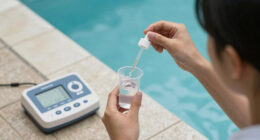
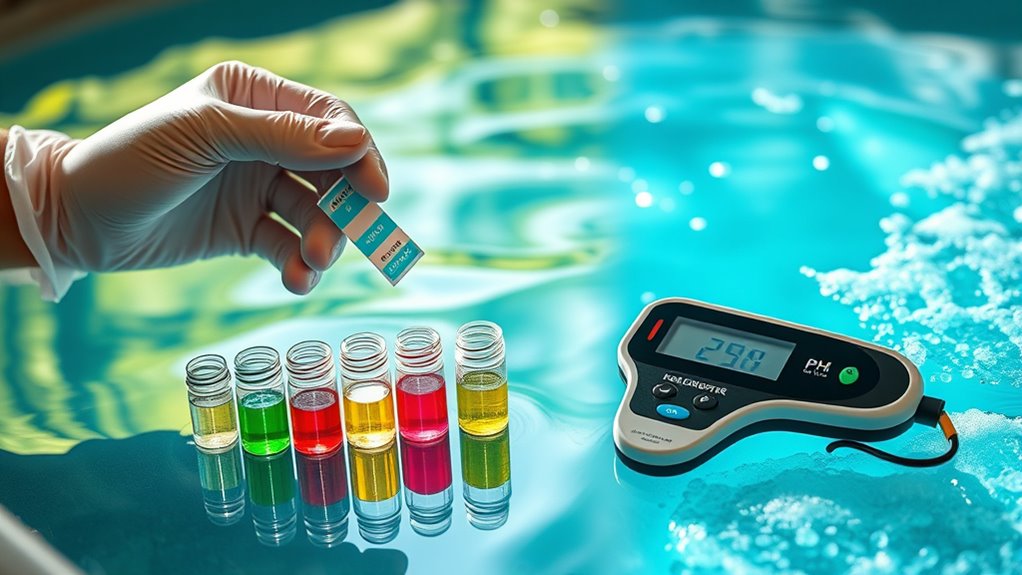
Maintaining a clean and safe hot tub requires a consistent weekly routine. One of the most important aspects of this routine is ensuring your water’s chemical balance and water sanitation are properly maintained. When you keep these in check, you create a healthy environment that’s enjoyable and safe for everyone. Start by testing your water’s chemical levels using test strips or a liquid test kit. Focus on pH, alkalinity, and sanitizer levels—these are essential for preventing bacteria growth and keeping your water clear. Ideally, your pH should stay between 7.2 and 7.8; if it’s outside this range, it can cause problems like skin irritation or corrosion of your hot tub components. Alkalinity acts as a buffer for pH, so maintaining it within the correct range helps keep your water stable. Once you’ve tested, adjust the chemical levels as needed, adding pH increaser or decreaser and alkalinity adjusters to bring everything into balance.
Keeping your hot tub water balanced and sanitized ensures a safe, clear, and enjoyable experience every time.
Water sanitation is equally important for safety. Chlorine or bromine are common sanitizers, and maintaining their levels ensures bacteria and algae don’t thrive. Check the sanitizer levels after testing, and add the appropriate amount of sanitizer if it’s below the recommended range. Regular shocking is another essential step, especially after heavy use or if water looks dull or smells off. Shocking involves adding a large dose of oxidizer to eliminate organic contaminants and refresh the sanitizer’s effectiveness. This process not only improves water clarity but also enhances overall water sanitation, making your hot tub safer to use.
In addition, advanced robotics technology is increasingly being integrated into hot tub maintenance tools, which can automate testing and chemical adjustments for added convenience. Cleaning your hot tub before performing tests and chemical adjustments is also key. Remove any debris, wipe down the shell, and clean filters to prevent contaminants from affecting your water quality. Proper filtration helps maintain water clarity and reduces the load on your sanitizer. After cleaning, run your filter for at least 8 to 12 hours to circulate fresh water and ensure chemicals are evenly distributed. Once you’ve balanced the water chemistry and sanitized it thoroughly, it’s a good idea to double-check your levels to confirm everything is within the ideal ranges. This routine, when done weekly, prevents buildup of harmful bacteria, reduces the risk of cloudy water, and extends the life of your hot tub equipment.
In short, dedicating time each week to test, adjust, shock, and clean your hot tub keeps the water safe, clear, and inviting. Consistency is your best tool for maintaining a healthy hot tub environment, ensuring that every soak is both relaxing and safe.
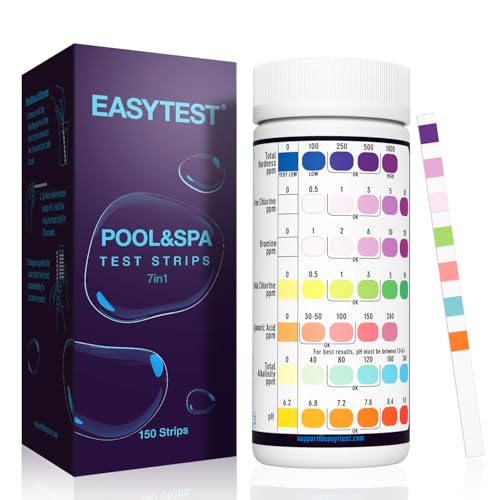
EASYTEST 7-Way Pool Test Strips, 150 Strips Water Test for Hot tub and Spa
- 150 Test Strips Included: Enough for frequent water testing
- Quick and Accurate Results: Soak for 1 second, read in 15 seconds
- 7-in-1 Water Testing: Measures Bromine, pH, Chlorine, and more
As an affiliate, we earn on qualifying purchases.
As an affiliate, we earn on qualifying purchases.
Frequently Asked Questions
How Often Should I Replace My Hot Tub Filters?
You should substitute your hot tub filters every 1 to 2 years, depending on their filter lifespan and usage. Regularly check for signs of wear, such as reduced water flow or visible dirt, which indicate it’s time for a replacement. Maintaining proper replacement frequency ensures your hot tub stays clean and functions efficiently. Don’t forget to clean filters monthly to extend their life and keep your hot tub in top shape.
What Are the Signs of Chemical Imbalance in My Hot Tub?
You’ll notice signs of chemical imbalance through pH fluctuation and cloudy water. If your pH levels keep changing unexpectedly, it indicates your chemicals aren’t balanced. Cloudy water is another warning sign, suggesting improper sanitizer levels or buildup of contaminants. Regular testing helps catch these issues early, so you can adjust chemicals accordingly to keep your hot tub safe, clean, and inviting.
Can I Use Household Cleaning Products on My Hot Tub?
You shouldn’t use household cleaning products on your hot tub because they can harm the spa’s surfaces and upset the water chemistry. Many household cleaners contain chemicals that aren’t spa-safe and can cause foam, cloudiness, or corrosion. For your spa safety, always use products specifically designed for hot tubs. This guarantees your hot tub stays clean, safe, and enjoyable without risking damage or health issues.
How Do I Prevent Algae Growth in My Hot Tub?
To prevent algae growth in your hot tub, you need consistent hot tub maintenance. Keep your water balanced by testing pH and sanitizer levels regularly, ensuring they’re within recommended ranges. Use algaecide as a preventive measure, especially during warm weather or if your hot tub isn’t used frequently. Shower before use to reduce contaminants, and maintain proper filtration. These steps help keep algae prevention effective and your hot tub clean and inviting.
What’s the Best Way to Store Hot Tub Chemicals Safely?
Think of storing hot tub chemicals like keeping delicate ingredients in a recipe safe. You should always use a sturdily labeled, airtight container for chemical storage, and keep it in a cool, dry place away from children and pets. Follow safety measures like wearing gloves and goggles when handling chemicals, and never mix different substances. Proper storage prevents accidents and keeps your hot tub chemicals effective and safe to use.
Conclusion
Keeping your hot tub clean is like tending to a garden—you need regular attention to keep it vibrant and inviting. I once neglected my hot tub for a week, and it took days to restore its sparkle. Consistent shocking, testing, and balancing are your tools to prevent algae and bacteria from taking over. Just like a healthy garden flourishes with care, your hot tub stays inviting and safe when you stick to your weekly routine.