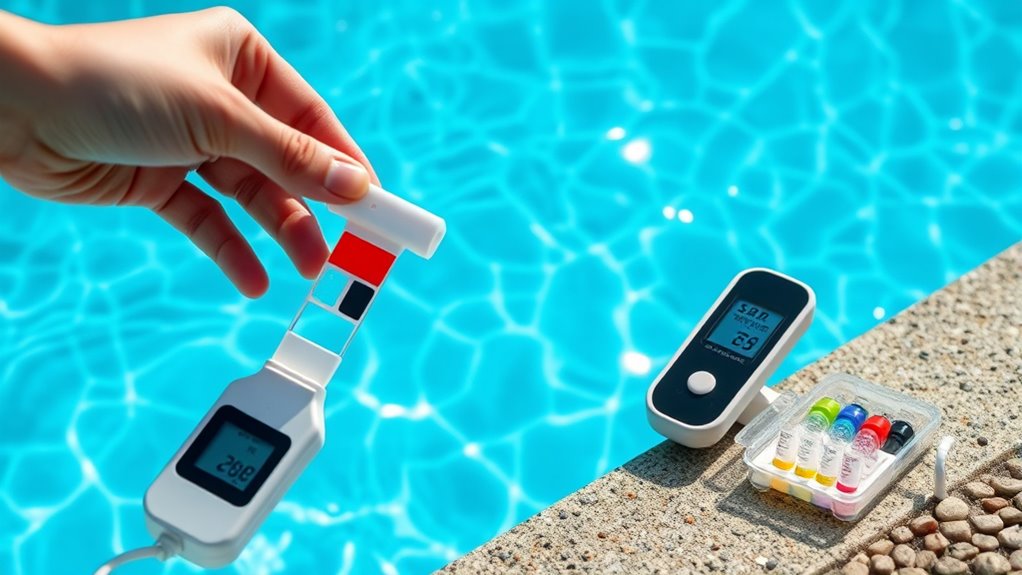

To keep your pool safe and inviting, regularly test the water using kits, strips, or digital tools. Strips are quick and easy to use, while kits offer more precise measurements for pH and chlorine levels. Digital testers provide instant, accurate results—perfect for larger pools. Consistent testing helps you maintain balanced water, prevent problems, and enjoy a crystal-clear pool. Keep going to discover which tools suit your needs best and guarantee your water stays perfect.
Key Takeaways
- Test water weekly using strips, kits, or digital tools to ensure safe, balanced pool conditions.
- Choose test strips for quick, affordable checks; use kits or digital testers for more precise measurements.
- Digital testers provide instant, accurate pH and chlorine readings, ideal for detailed monitoring.
- Proper interpretation of results guides necessary pH adjustments and chlorine level maintenance.
- Consistent testing with the appropriate tool helps prevent water quality issues and extends equipment lifespan.
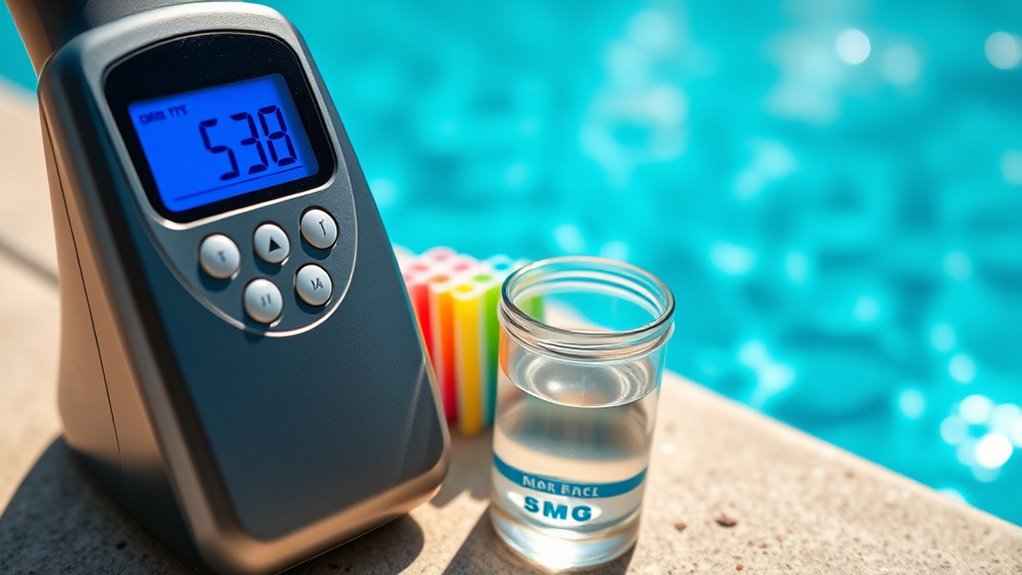
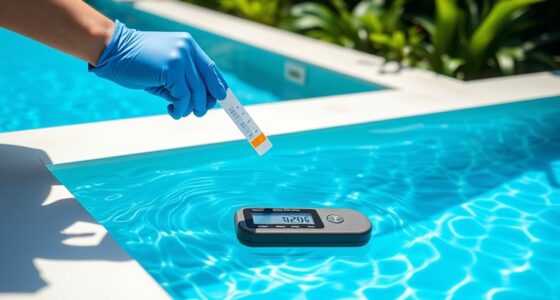
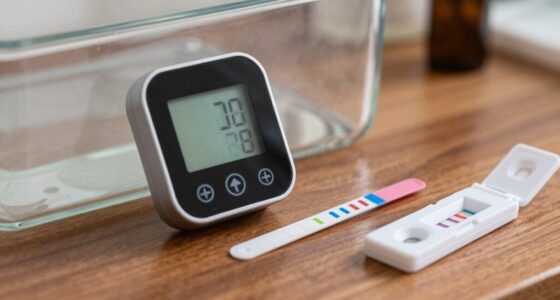
Have you ever wondered if your pool water is safe and properly balanced? Maintaining the right water quality is indispensable for both your health and the longevity of your pool. The first step in this process involves testing your water regularly, which helps you determine if your pH levels need adjustment or if chlorine levels are adequate. When you test your pool water, you’re fundamentally checking if the pH adjustment is necessary to prevent skin irritation, cloudy water, or equipment damage. Proper pH levels typically range between 7.2 and 7.6, ensuring the chlorine works efficiently and your water feels comfortable. If the pH is too high, chlorine becomes less effective, and algae or bacteria can thrive. Conversely, if it’s too low, it can cause skin irritation and corrosion of pool equipment. Regular testing helps you catch these issues early and make the necessary pH adjustment before they escalate. Additionally, understanding the contrast ratio of your testing tools can help ensure accurate readings and reliable results. Chlorine levels are equally critical. Chlorine acts as a disinfectant, killing bacteria and algae that can make your pool unsafe. If chlorine levels are too low, you risk bacterial growth and cloudy water; if they’re too high, you might experience skin and eye irritation, and the water may smell strongly of chlorine. Testing makes it easy to maintain the right chlorine balance, which is crucial for safe swimming. Whether you opt for test strips, kits, or digital testers, the goal remains the same: to keep chlorine levels around 1 to 3 parts per million (ppm). This range is proven to be effective against pathogens without causing discomfort. When it comes to testing methods, different tools offer varying degrees of convenience and accuracy. Test strips are quick, affordable, and simple to use—just dip and compare against a color chart. Pool water test kits typically involve adding drops of reagent to a water sample, providing more precise readings for pH and chlorine levels. Digital testers, on the other hand, offer instant, highly precise results at the push of a button. They’re especially useful if you want to avoid the guesswork or have a larger pool to maintain. Whichever method you choose, consistency is key. Regular testing—at least once a week—lets you stay ahead of potential issues, ensuring your pool stays crystal clear, safe, and inviting for every swim.
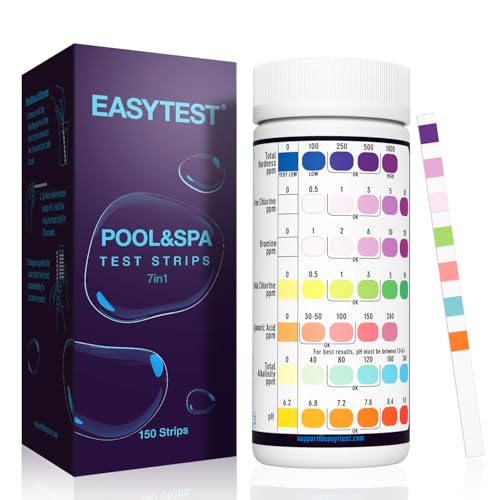
EASYTEST 7-Way Pool Test Strips, 150 Strips Water Chemical Testing for Hot tub and Spa, Accurate Test Bromine, Total Alkalinity, pH, Free Chlorine, Total Hardness, Cyanuric Acid, and Total Chlorine
- 150 Test Strips Included: Enough for frequent water testing
- Quick and Accurate Results: Soak for 1 second, read in 15 seconds
- 7-in-1 Water Testing: Measures Bromine, pH, Chlorine, and more
As an affiliate, we earn on qualifying purchases.
As an affiliate, we earn on qualifying purchases.
Frequently Asked Questions
How Often Should I Test My Pool Water During Peak Season?
During peak season, you should test your pool water at least 2-3 times a week to maintain proper water chemistry. Regular testing helps you catch imbalances early, ensuring safe and clean swimming conditions. Use reliable testing kits or digital tools for accurate results. Consistent pool maintenance keeps your water clear, balanced, and enjoyable, preventing issues like algae growth or corrosion. Stay vigilant to enjoy your pool all season long.
Are Digital Testers More Accurate Than Traditional Test Strips?
Digital testers are like having a precision instrument in your hand, often offering better digital accuracy than traditional test strips. They cut through the murkiness of guesswork, providing quick, reliable results. Plus, their user convenience makes testing feel effortless—just dip and read, no messy chemicals. While some strips can be accurate, digital tools generally give you more consistent, precise readings, helping you maintain perfect water balance with less hassle.
Can Testing Kits Detect All Harmful Bacteria in Pool Water?
Testing kits can’t detect all harmful bacteria in pool water because bacteria detection requires specific, advanced testing methods. While some kits offer good test accuracy for common contaminants like chlorine and pH levels, they often fall short in identifying every bacteria type. To guarantee your pool is safe, consider combining regular testing with professional lab analysis for thorough bacteria detection, especially if you suspect contamination or notice health issues.
What’s the Best Way to Store Pool Water Testing Supplies?
You should store your pool water testing supplies in a cool, dry place away from direct sunlight to guarantee storage safety. Keep your kits, strips, and digital tools organized in a dedicated container or shelf, preventing damage and mix-ups. Check expiration dates regularly and keep everything sealed tightly after use. Proper supply organization helps maintain the accuracy of your tests and prolongs the lifespan of your testing equipment.
How Do I Interpret Complex Results From Digital Testing Devices?
Think of your digital device as a compass guiding you through water’s secrets. To interpret complex results, first make certain your device is calibrated correctly—like setting a true north. Then, compare the readings to recommended water parameters. If results seem unclear, consult the device’s manual or a professional. Calibration and clear result interpretation help you keep your pool safe and sparkling, like a lighthouse guiding your way.
Conclusion
Now that you know your options, testing your pool water is simple and essential for a sparkling, safe swim. Whether you choose traditional test kits, strips, or digital tools, staying on top of your water chemistry prevents algae and bacteria from turning your oasis into a soggy mess. Remember, even in this modern age, a good old-fashioned test strip can be as reliable as a trusty steed, ensuring your pool remains pristine all season long.