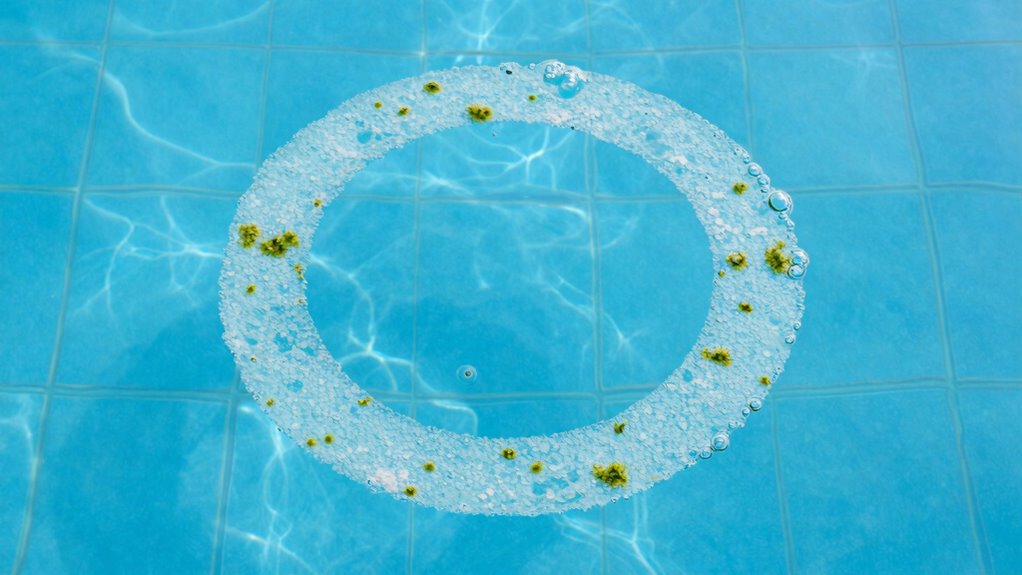

Your pool waterline gives you quick clues about your water’s health. A clean, smooth line indicates good water chemistry and proper maintenance. Dark, cloudy, or stained areas suggest imbalances, mineral buildup, or algae growth. If you see reddish or greenish stains, metal levels may be off. Buildups and discoloration warn you to check chemicals, filtration, or address biological issues. Keep an eye on your waterline, and you’ll catch problems early—if you keep exploring, you’ll learn even more.
Key Takeaways
- A clean waterline indicates balanced water chemistry and proper maintenance; stains or discoloration suggest issues needing attention.
- Dark, cloudy, or stained waterlines may signal pH imbalance, mineral buildup, or biological growth.
- Metal stains (reddish or greenish marks) often point to metal oxidation or mineral deposits.
- Slimy or greasy films can indicate algae growth or bacterial contamination.
- Regular monitoring and cleaning help prevent waterline issues and maintain a healthy, inviting pool environment.
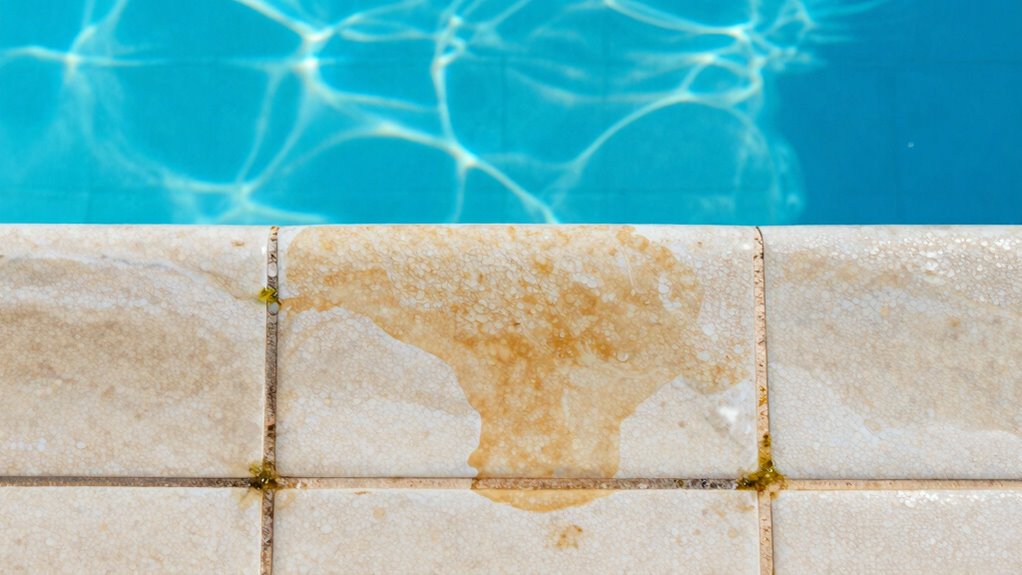
Maintaining clear waterline signs in your pool is essential for ensuring safety and proper maintenance. The waterline acts as a visual indicator, revealing much about your pool’s overall health. When you observe the waterline, you’re getting a quick glimpse into the state of your pool’s water chemistry and whether your pool maintenance routines are effective. If the line looks unusual — whether it’s dirty, stained, or discolored — it’s a sign you need to pay closer attention to what’s happening beneath the surface.
A clean waterline indicates balanced water chemistry and good pool maintenance.
A clean and consistent waterline suggests your pool’s water chemistry is balanced. When pH levels, alkalinity, and sanitizer levels are properly maintained, the water stays clear and the waterline remains neat. Conversely, if you notice a dark, cloudy, or stained waterline, it’s a sign that your water chemistry might be off. Imbalanced pH can lead to mineral deposits or algae buildup, which cling to the tile or liner at the waterline. This buildup not only looks unsightly but can also cause long-term damage if left untreated. Regular testing and adjusting your pool’s chemicals are *vital* parts of pool maintenance to prevent these issues.
If you see a white or chalky film along the waterline, it often indicates calcium or mineral deposits. This can happen if your water is hard or if the water chemistry isn’t properly balanced. High calcium levels can lead to scaling, which complicates pool maintenance by clogging filters and damaging equipment. On the other hand, a slimy or greasy film may suggest algae growth or bacteria, which demands immediate action. You’ll need to brush the pool walls and waterline thoroughly and increase sanitizer levels to combat this issue. Maintaining the correct water chemistry helps prevent mineral buildup and keeps your water safe and inviting. Ensuring proper water chemistry balance is essential for avoiding these common problems.
Stains or discolorations at the waterline can also reveal issues with metals like iron or copper, which can oxidize and leave reddish or greenish marks. These stains often indicate that your water chemistry is out of balance, or that your filtration system isn’t working efficiently. Regular pool maintenance, including water testing and cleaning, helps keep these stains in check. Additionally, understanding the importance of biodiversity in your pool environment can help prevent biological growth that contributes to waterline issues. Remember, a well-maintained pool with properly balanced water chemistry will have a pristine waterline, making it easier to spot actual problems when they occur.
Ultimately, your waterline is more than just a visual feature; it’s a mirror reflecting the health of your pool’s water chemistry. Paying attention to it allows you to address issues early, ensuring your pool remains safe, clean, and enjoyable. Keeping water chemistry balanced is crucial for preventing many of these common waterline problems.

Poolmaster 22260 5-Way Swimming Pool or Spa Water Chemistry Test Kit with Case, Essential Collection
- Water Chemistry Testing: Tests Chlorine, Bromine, pH, Acid Demand, Alkalinity
- Clear-View Test Block: Includes round test block with color chips
- Solution Set: Contains 1oz solutions of #1-#3, 0.5oz of #4-#5
As an affiliate, we earn on qualifying purchases.
As an affiliate, we earn on qualifying purchases.
Frequently Asked Questions
How Often Should I Check My Pool Waterline for Signs?
You should check your pool waterline weekly during regular pool maintenance, especially in peak swimming season. Regular waterline inspection helps you spot issues like algae buildup, discoloration, or scaling early. Keeping an eye on this area guarantees your pool stays clean and balanced. By maintaining a consistent schedule, you catch problems early and prevent costly repairs, making your pool safer and more inviting for every swim.
Can Waterline Discoloration Indicate a Chemical Imbalance?
Ah, the days of yore when waterlines told tales! Discoloration often signals a chemical imbalance, causing chemical reactions that stain your pool’s surface. If you notice a change in hue, it may be time for stain removal and to check your chemical levels. Proper balancing prevents corrosion and staining, keeping your waterline pristine. Address these issues promptly to enjoy clear, inviting water and prolong your pool’s lifespan.
What Tools Are Best for Cleaning the Waterline?
For cleaning waterline stains, you should use a soft-bristled brush or a sponge specifically designed for pool cleaning. A pumice stone works well for tougher stains without scratching the surface. Avoid harsh chemicals that might damage your pool surface or cause further discoloration. Regularly scrubbing the waterline helps prevent buildup, keeping your pool looking clean and inviting. Always choose gentle, non-abrasive tools to protect your pool’s finish.
Does Waterline Staining Affect Pool Water Quality?
Waterline staining doesn’t directly affect your pool water quality, but it can hide algae or bacteria, impacting water safety. Regular maintenance tips include cleaning the waterline to prevent buildup and guarantee clear, safe water. Stains might not harm water chemistry, but they signal the need for better upkeep. Keep your pool safe by routinely inspecting and cleaning the waterline, maintaining proper chemical balance, and addressing stains promptly.
When Should I Seek Professional Help for Waterline Issues?
You should seek professional help for waterline issues when simple pool maintenance and adjusting water chemistry don’t resolve staining or buildup. If you notice persistent discoloration, algae, or scale that won’t come off, it’s time to call in experts. Proper water chemistry balance is essential, and professionals can help diagnose underlying problems, ensuring your pool stays clean, safe, and inviting. Don’t delay if DIY efforts aren’t fixing the issue.
Conclusion
Your pool waterline is like a weather vane, pointing you toward hidden issues beneath the surface. By paying attention to its signs, you can catch problems early and keep your pool sparkling and inviting. Don’t ignore these signals—they’re your pool’s way of whispering secrets. With a little care, you’ll maintain your oasis as a revitalizing escape, standing tall and proud like a lighthouse guiding you safely through any trouble.