
After a heavy pool weekend, focus on rehydrating with plenty of water, electrolyte drinks, or coconut water to replace lost minerals. Eat balanced meals with carbs, protein, and healthy fats to replenish energy and repair muscles. Prioritize rest and aim for 7-9 hours of quality sleep to promote healing. Incorporate gentle stretching, cold packs, or light activity to ease soreness and improve circulation. For more tips on speeding up your recovery, keep going to discover effective strategies.
Key Takeaways
- Prioritize hydration by drinking water and electrolyte drinks to replenish minerals and prevent dehydration.
- Consume balanced meals with carbs, protein, and healthy fats to restore energy and support tissue repair.
- Get adequate sleep (7-9 hours) to promote muscle recovery and hormone regulation.
- Use gentle stretching, foam rolling, or cold therapy to reduce muscle tension and inflammation.
- Engage in light activity like walking or yoga to improve circulation without overexertion.
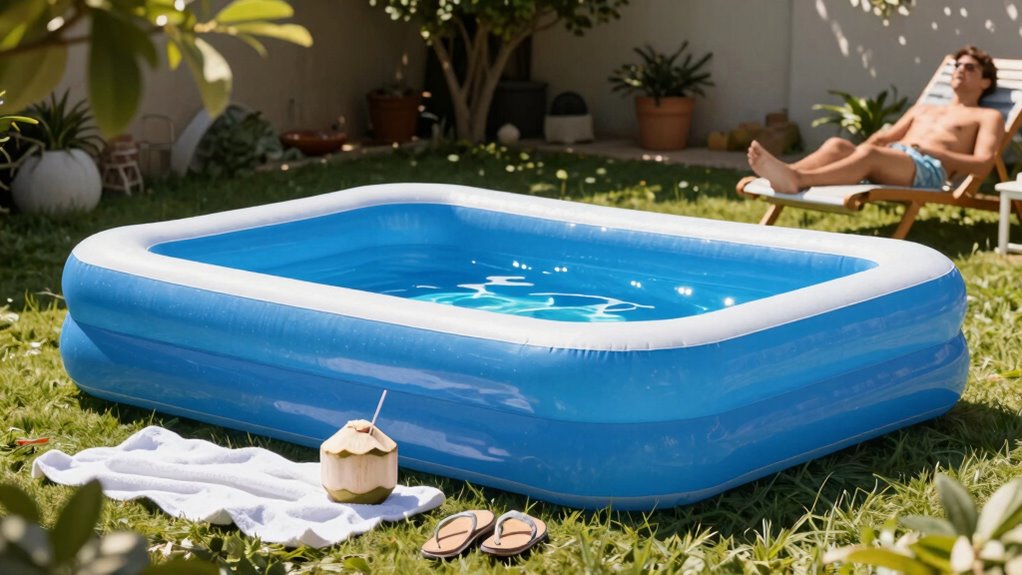
After a heavy-use pool weekend, your body can feel drained, dehydrated, and sore. It’s common to wake up with muscle fatigue, dry skin, and a general sense of exhaustion. The good news is that you can speed up your recovery by focusing on effective hydration strategies and nutrient replenishment. Rehydrating properly is essential because prolonged swimming and water activities cause fluid loss through sweat, even if you don’t notice it. To start, drink plenty of water throughout the day, but consider adding electrolyte drinks or coconut water to restore lost minerals like sodium, potassium, and magnesium. These electrolytes help your muscles recover more efficiently and prevent cramps or dehydration.
Rehydrate with water, electrolytes, and coconut water to replenish minerals and support muscle recovery after swimming.
In addition to fluids, replenishing nutrients is essential. Your body uses stored glycogen for energy during extended swimming sessions, and these reserves can get depleted quickly. Eating a balanced meal rich in complex carbohydrates, such as whole grains, fruits, and vegetables, helps restore glycogen levels. Protein is also critical because it supports muscle repair and reduces soreness. Incorporate lean meats, eggs, dairy, or plant-based proteins like beans and lentils into your meals. Healthy fats, such as those found in nuts, seeds, and avocados, also contribute to inflammation reduction and overall recovery. Incorporating proper rest and sleep** further enhances your body’s ability to recover, as this is when most muscle repair and hormone regulation happen. Ensuring adequate sleep encourages the body’s natural muscle recovery processes, boosting overall healing. Additionally, paying attention to hydration strategies can significantly impact your recovery speed, as staying properly hydrated helps your body flush out toxins and supports cellular repair. Proper hydration also plays a vital role in maintaining overall cellular health**, which is essential for efficient recovery.
Furthermore, maintaining good nutrition habits during recovery can help your body rebuild faster and more efficiently, preventing setbacks in your progress. Don’t forget that your body needs time to rest and repair. Prioritize sleep, aiming for at least 7-9 hours, as this is when most muscle repair and hormone regulation happen. If muscles feel tight or sore, gentle stretching or foam rolling can help release tension and improve circulation. Taking cold showers or applying ice packs to sore areas can further reduce inflammation, speeding up recovery.
Active recovery, such as light walking or yoga, can keep your blood flowing without overexerting your muscles. It’s also important to listen to your body—if you notice persistent pain or fatigue, give yourself extra rest days. Staying consistent with hydration and nutrient intake while allowing your body sufficient rest creates a cycle of recovery that minimizes downtime and gets you back to feeling your best faster. Remember, recovery isn’t just about bouncing back quickly; it’s about providing your body with the right tools and time to rebuild stronger than before.
electrolyte drinks for hydration
As an affiliate, we earn on qualifying purchases.
As an affiliate, we earn on qualifying purchases.
Frequently Asked Questions
Can Swimming Cause Long-Term Joint Damage?
Swimming generally doesn’t cause long-term joint damage if you practice good technique and avoid overexertion. However, frequent or intense swimming can lead to joint inflammation and muscle stiffness, especially if you have pre-existing conditions or poor form. To protect your joints, make sure proper warm-up, use correct strokes, and listen to your body. Moderation and proper technique help prevent long-term issues, keeping your joints healthy over time.
What Foods Accelerate Recovery After Pool Activity?
You might wonder if certain foods speed up recovery after pool activities, and research suggests they do. Hydrating fruits like watermelon and oranges replenish lost fluids, while anti-inflammatory foods such as berries, turmeric, and leafy greens reduce muscle soreness and inflammation. Incorporating these into your diet helps your body recover faster, easing fatigue and restoring energy, so you can get back to your routine feeling refreshed and ready.
Is It Safe to Use Alcohol to Relax Muscles?
Using alcohol for relaxation isn’t safe for muscle recovery. While alcohol might seem to ease stress, it actually impairs your muscles’ healing process and dehydrates your body. Relying on alcohol for relaxation can prolong soreness and slow recovery. Instead, focus on proper hydration, nutritious foods, and gentle stretching. These methods support muscle recovery naturally and safely. Avoid alcohol if you want quicker, healthier recovery after heavy activity.
How Does Sleep Quality Affect Recovery?
Did you know that quality sleep boosts recovery by up to 50%? Your sleep hygiene directly impacts how well you recover, especially after intense pool weekends. Poor sleep can hinder muscle repair and leave you feeling sluggish. Prioritize consistent sleep routines, limit screen time before bed, and create a relaxing environment. Better dream quality guarantees you wake up refreshed, helping your body heal faster and bounce back stronger.
Are There Specific Stretches to Prevent Soreness?
Yes, specific stretches can help prevent soreness. Incorporate dynamic stretching before activities to warm up muscles, improving flexibility and circulation. Afterward, focus on muscle relaxation through gentle static stretches, targeting areas like your hamstrings, calves, and shoulders. This approach reduces tension and promotes recovery, helping you feel less sore and more prepared for future pool sessions. Consistent stretching keeps muscles limber and supports faster recovery.
Conclusion
Think of your body as a delicate garden after a busy weekend—each flower, or muscle, needs gentle tending. Hydrate like a rushing stream, nourish your roots with wholesome foods, and let your rest be the soft rain that soothes and revitalizes. With patience and care, you’ll see your strength bloom back, brighter than ever. Soon, you’ll be swimming smoothly through your days again, your energy shining like sunlight on calm waters.