
To perform DIY sand filter maintenance, start by turning off your pump and relieving pressure with the air relief valve. Remove the filter lid or multiport valve and carefully take out the old sand—use a bucket or small shovel. Rinse the tank, then pour in fresh #20 silica sand to the recommended level. Afterward, backwash thoroughly, rinse the filter, and return it to normal operation. Continuing with these steps will help keep your water crystal clear and your filter running smoothly.
Key Takeaways
- Turn off the pump, relieve pressure, and disconnect the multiport valve before removing old sand.
- Use a bucket or shovel to remove old sand in sections, then inspect and rinse the filter tank.
- Pour new #20 silica sand evenly, filling to the recommended level without overfilling.
- Reassemble the filter and perform a thorough backwash for 2-3 minutes until water runs clear.
- Rinse the filter for 1-2 minutes, then return the valve to normal operation to ensure optimal performance.
Maintaining your sand filter is vital for keeping your pool clean and clear, and the good news is that it’s a straightforward process you can do yourself. Regular maintenance ensures your filter performs at its best, preventing issues like cloudy water or reduced circulation. When you notice your pool isn’t filtering properly, it’s time to troubleshoot your filter before considering a sand replacement. Filter troubleshooting involves checking for common problems such as sand clogging, channeling, or buildup of debris that can impede water flow. If you see a significant drop in flow rate or your pool water remains cloudy despite backwashing, it might be a sign that your sand needs replacing.
Regular filter troubleshooting prevents cloudy water and ensures your pool stays crystal clear.
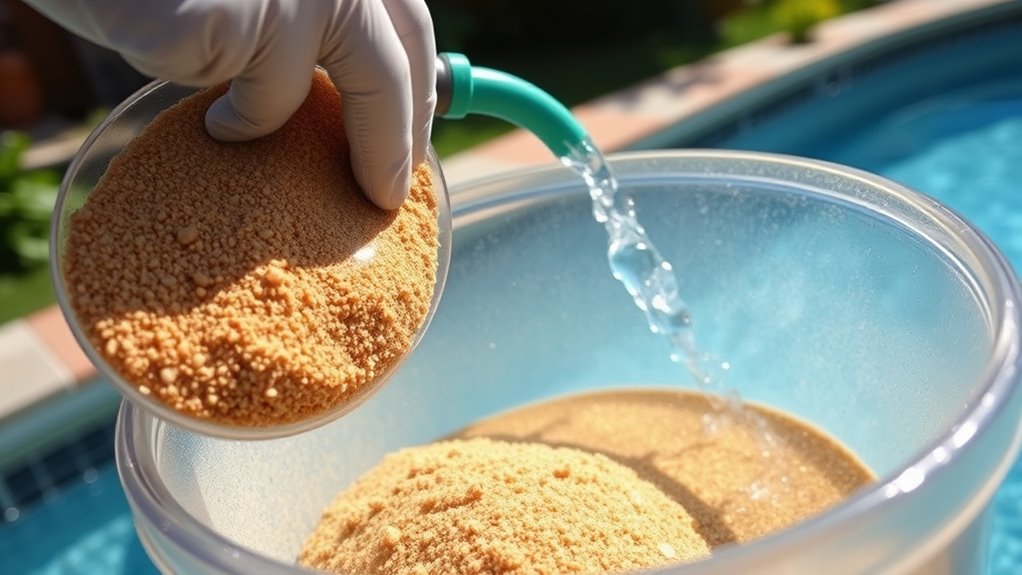
Changing the sand in your filter isn’t complicated, but it does require some preparation and attention to detail. First, turn off your pool pump and relieve pressure by opening the air relief valve on top of the filter. Next, disconnect the multiport valve or lid, and carefully remove the old sand. To make this easier, you can use a bucket or a small shovel to scoop out the sand in manageable sections. Once the old sand is out, inspect the filter tank for any damage or debris that may have accumulated inside. Rinse the tank thoroughly to remove dirt or leftover particles.
When it’s time for sand replacement techniques, it’s vital to use the right type of sand—specifically, #20 silica sand, which is ideal for pool filters. Pour the new sand evenly into the tank, filling it to the recommended level as specified by your filter’s manufacturer. Be careful not to add too much or too little sand, as this can affect the filter’s efficiency. After filling, replace the filter’s lid or multiport valve, secure all connections, and ensure everything is tight.
Once the new sand is in place, it’s important to backwash your filter thoroughly to remove any residual dirt or dust from the new sand. Turn on the pump and set the multiport valve to the backwash position. Run the filter for about 2-3 minutes until the water runs clear. Following backwashing, you’ll need to rinse the filter by switching the valve to rinse mode and running the pump for a minute or two. Finally, set the filter back to the filter position and resume regular operation. Regularly performing filter troubleshooting and sand replacement techniques ensures your pool remains crystal clear and your filter functions efficiently. Additionally, understanding the importance of filter media can help you maintain optimal water quality over time.
Frequently Asked Questions
How Often Should I Replace the Sand in My Filter?
You should replace the sand in your filter every 3 to 5 years, depending on how often you backwash and the sand grain size. Regular backwashing helps extend the filter’s lifespan, but over time, the sand becomes less effective at trapping debris. Keep an eye on water clarity; if it declines despite maintenance, it’s time to change the sand to guarantee your filter works efficiently.
Can I Use Regular Household Sand Instead of Pool Filter Sand?
Imagine a sunny afternoon, and you’re about to change your pool filter sand. You might wonder if household sand works as a substitute. While it’s tempting, using regular household sand isn’t recommended for pool filter replacement because it may contain impurities and uneven grain sizes, reducing filtration efficiency. Stick with pool-grade filter sand for ideal clarity and cleanliness, ensuring your pool stays crystal clear all season.
What Are Signs That My Sand Filter Needs Backwashing?
You’ll notice your sand filter needs backwashing when the pressure gauge shows a rise of 8-10 psi above the normal operating level. Additionally, if your water becomes cloudy or murky despite filtering, it’s a clear sign. These indicators mean debris has accumulated, restricting flow. Regularly check your pressure gauge and water clarity to guarantee your filter functions efficiently, preventing potential damage and maintaining clean, clear pool water.
How Do I Dispose of the Old Filter Sand Safely?
You should never toss old filter sand in regular trash—it’s considered hazardous waste. Instead, follow proper disposal methods by checking local regulations or contacting waste management authorities. You can often recycle the sand if it’s clean, or take it to designated hazardous waste facilities. Always wear gloves and masks during disposal to protect yourself, and make certain the sand is stored safely until proper removal.
Is It Necessary to Turn off the Pump During Backwashing?
Yes, you should turn off the pump during backwashing to guarantee safe pump operation and prevent damage. Always follow safety precautions by shutting down the pump before starting the backwash process. This prevents water pressure issues, reduces risk of injury, and keeps your equipment functioning correctly. Turning off the pump also helps you control the backwashing process more effectively, ensuring your filter cleans properly without risking damage to the system.
Conclusion
Maintaining your DIY sand filter is like tending to a delicate garden; it requires care and attention to keep everything flowing smoothly. By regularly changing the sand and backwashing, you guarantee your pool stays crystal clear and inviting. Don’t let neglect turn your filter into a clogged, unproductive mess. With a little effort, you’ll keep your pool sparkling and invigorating, just like a cool breeze on a hot day. Keep up the maintenance, and enjoy worry-free swimming all season long.