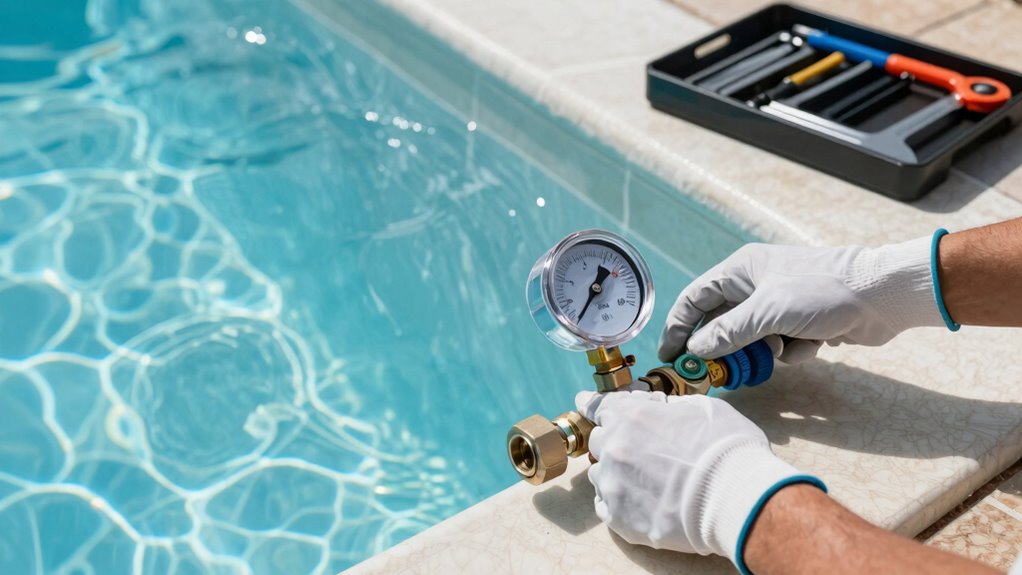

To troubleshoot air in your pool lines without guessing, start by inspecting all fittings, connections, and equipment for leaks or looseness, tightening or replacing damaged parts as needed. Check the skimmer, return jets, and pump basket for blockages and cracks. Make certain all seals are tight and intact. Run your system after repairs to observe for bubbles or fluctuating water levels. For detailed steps, continue exploring proven methods to restore proper system performance.

Get pool and patio gear delivered free with Prime
- Fast, free delivery on millions of items
- Prime Video, Amazon Music and more included
- Member-only deals all year
Key Takeaways
- Perform a thorough visual inspection of all fittings, seals, and equipment for leaks or damage.
- Check and tighten all connections, lids, and fittings to ensure airtight seals.
- Inspect the pump basket, skimmer, and return fittings for obstructions or cracks.
- Use a systematic approach to identify and repair leaks before restarting the system.
- Run the pump and observe for persistent bubbles or water level changes to confirm issues are resolved.
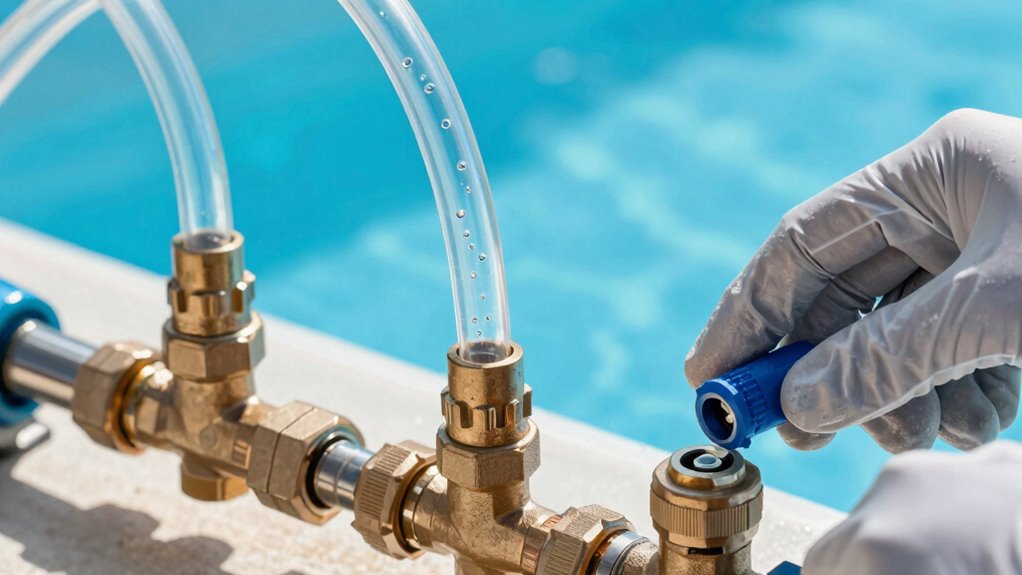
If you notice air bubbles or fluctuating water levels in your pool, it’s a sign there’s air trapped in the lines. This problem often stems from issues with your pool equipment, especially if water leaks are present. Air in the lines can reduce water flow, impair filtration, and cause your pool to function inefficiently. To troubleshoot effectively, start by inspecting all your pool equipment thoroughly. Check the pump, filter, and valve connections for any signs of water leaks or loose fittings. Leaks not only waste water but also introduce air into the system, so tightening fittings or replacing damaged parts can often resolve the issue.
Next, verify that the pump lid and multiport valve are sealed properly. A loose or cracked lid creates a pathway for air to enter the system, leading to bubbles and fluctuating water levels. If the lid or valve has cracks or damage, replacing them can restore a proper seal. While inspecting, listen for any unusual sounds coming from the pump—such as whining or coughing—which could indicate air being drawn into the system through a leak. Ensuring all system components are airtight is vital because even tiny leaks can cause significant air intrusion.
Ensure the pump lid and multiport valve are sealed tightly to prevent air leaks and maintain proper water flow.
Another common source of air in pool lines involves the skimmer and return fittings. Check the skimmer basket and the area around the return jets for cracks, loose fittings, or debris blocking the flow. Debris can cause cavitation, pulling air into the lines, so cleaning these areas regularly helps maintain a tight seal. Additionally, examine the pump’s strainer basket for debris that might restrict water flow, forcing the system to draw in air. Clearing out any obstructions ensures smooth operation and reduces chances of air getting trapped.
If water leaks are detected anywhere in your pool equipment, address them immediately. Repair or replace damaged components to prevent air from seeping into the system. After tightening fittings and replacing damaged parts, run the pump and observe the water levels and bubbles. If air persists, consider bleeding the lines by opening the air relief valve (if your pool has one) to release trapped air. Performing regular system inspections is essential because it helps identify potential issues early, saving time and preventing further damage. Regular maintenance of pool equipment and prompt repairs of water leaks are key to eliminating air in the lines. Troubleshooting without guessing involves a systematic inspection and fixing of all potential entry points for air, including checking for proper seals, leading to a well-functioning, bubble-free pool.
As an affiliate, we earn on qualifying purchases.
Frequently Asked Questions
Can Air in Pool Lines Cause Long-Term Damage to the Pump?
Yes, air in your pool lines can cause long-term damage to the pump if not addressed. It disrupts proper pump operation, leading to increased wear and tear. Regular pump maintenance and ensuring proper line sealing prevent air from entering the system. If you notice air, fix leaks promptly and check seals to avoid prolonged issues that could compromise your pump’s health and efficiency over time.
How Often Should I Check for Air in My Pool Lines?
You should check for air in your pool lines weekly, especially if you notice poor water circulation efficiency or cloudy water. Regular inspections help maintain proper pool chemical balance and prevent issues caused by inadequate water flow. Look for inconsistent pump noises or pressure drops, which can indicate trapped air. Addressing air early keeps your pool running smoothly, extends equipment lifespan, and guarantees safe, clean swimming conditions.
What Tools Are Needed for Professional Pool Line Troubleshooting?
You’ll need essential tools like pool line connectors to secure connections and prevent leaks, and air pressure gauges to accurately measure the pressure inside your lines. Coincidentally, these tools work together to identify issues quickly—connectors ensure a tight seal, while gauges reveal if air pressure drops, signaling a leak. Using these tools, you can troubleshoot professionally, maintaining ideal flow and preventing future problems without guesswork.
Is There a Way to Prevent Air From Entering the Lines Regularly?
Yes, you can prevent air intrusion through regular line maintenance. Check for leaks or loose fittings that allow air in, and repair them promptly. Maintain proper water levels to avoid suction issues, and keep the pump basket and skimmer clean for peak operation. Installing a one-way valve or air relief valve can also help release trapped air, reducing the chances of air entering the lines during routine use.
Can a Faulty Check Valve Cause Air in the Pool Lines?
Think of a check valve like a one-way gatekeeper for your pool’s plumbing. A check valve malfunction can definitely cause air intrusion, letting air slip into the lines. When it fails, it can’t prevent backflow, which draws air into the system. So, if you’re noticing bubbles or loss of suction, a faulty check valve might be the culprit. Inspect and replace it to restore proper flow and eliminate air intrusion.
Conclusion
Now that you know how to pinpoint and fix air in your pool lines, you’ll enjoy clear, bubble-free water all season long. Why guess when you can troubleshoot confidently? With these simple steps, you’re equipped to keep your pool running smoothly without unnecessary frustration. Regular maintenance and careful inspection will save you time and money in the long run. Ready to plunge into a hassle-free swimming experience? Your perfect pool days are just a few fixes away!
Halloween Picks
halloween
As an affiliate, we earn on qualifying purchases.