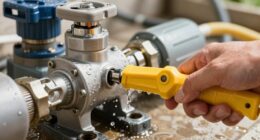
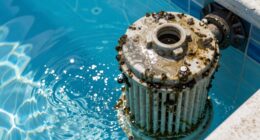
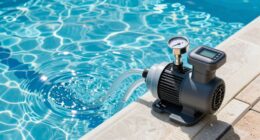
To guarantee your jets and pumps perform at their best, regularly inspect for leaks, corrosion, and worn parts, and keep all components clean. Use vibration analysis to spot imbalances early and check fluid levels and seals to prevent failures. Applying protective coatings and monitoring for rust help prevent damage over time. Staying on top of maintenance extends equipment lifespan and boosts efficiency. Keep these steps in mind, and you’ll discover more ways to optimize your system’s performance.
Key Takeaways
- Conduct regular inspections to detect early signs of corrosion, leaks, and mechanical wear in jets and pumps.
- Perform vibration analysis to identify imbalances, misalignments, or bearing issues promptly.
- Maintain proper sealing, replace worn seals, and ensure fluid quality to prevent operational failures.
- Clean equipment routinely to prevent debris buildup, corrosion, and clogging of nozzles and filters.
- Keep detailed maintenance records to track issues, plan preventive actions, and extend equipment lifespan.
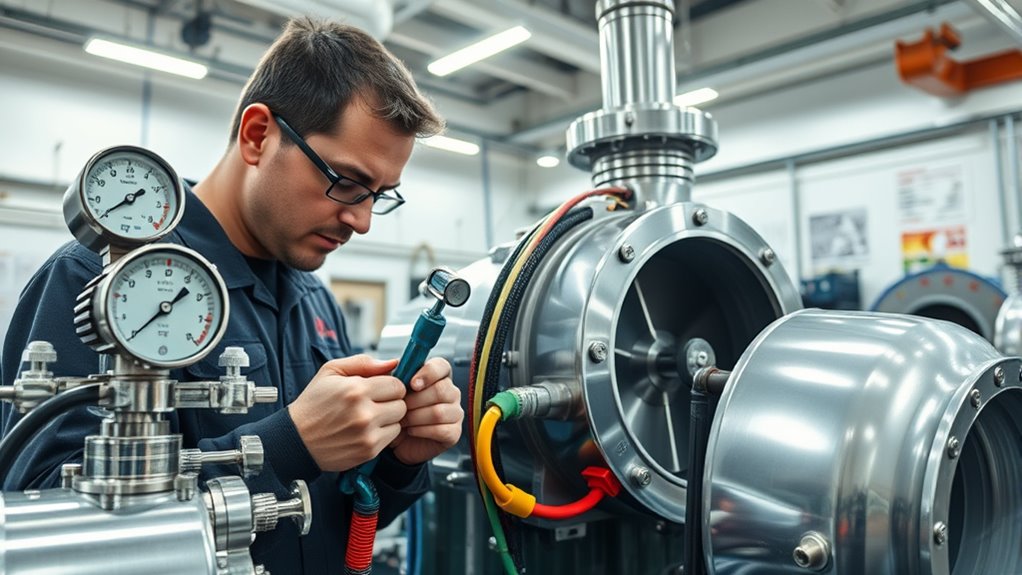
Regular inspection and maintenance are essential to keep jets and pumps operating efficiently and prevent costly breakdowns. When you routinely check your equipment, you reduce the risk of corrosion that can compromise performance over time. Corrosion prevention is a critical step because moisture, chemicals, and environmental factors can cause metal deterioration, leading to leaks, reduced flow, or complete failure. By inspecting regularly, you can identify early signs of corrosion, such as rust or pitting, and address them before they escalate. Applying protective coatings, using corrosion-resistant materials, and ensuring proper sealing are effective measures you can take to safeguard your pumps and jets against corrosion.
Regular inspections help prevent corrosion and extend the lifespan of your jets and pumps.
Vibration analysis is another crucial aspect of maintaining your pumps and jets. Unusual vibrations often signal underlying issues like imbalanced impellers, misaligned shafts, or bearing wear. When you perform vibration analysis routinely, you can detect these problems early, often before they cause major damage. This proactive approach helps you schedule repairs at convenient times, avoiding unexpected shutdowns that could disrupt operations. To perform vibration analysis effectively, use specialized sensors and monitoring equipment that provide real-time data. Pay close attention to shifts in vibration patterns, as these often indicate developing faults. Addressing these issues promptly not only prolongs the lifespan of your equipment but also maintains peak performance.
In addition to corrosion prevention and vibration analysis, routine inspections should include checking for leaks, worn seals, and loose fittings. Leaks can lead to pressure drops and reduced efficiency, while worn seals might allow air or contaminants to enter the system, impairing operation. Tightening fittings and replacing worn parts as needed keep your system running smoothly. Lubrication is equally essential; ensuring that bearings and moving components are properly lubricated reduces friction and wear, which can further contribute to abnormal vibrations or corrosion. Additionally, monitoring the shelf life of fluids such as hydraulic oils and coolants ensures optimal operation and prevents system failures.
Furthermore, maintaining a clean system is indispensable. Debris and dirt can accelerate corrosion and clog nozzles or filters, hampering flow. Regular cleaning and flushing help keep your jets and pumps in top shape. Documenting your inspection findings and maintenance activities is also beneficial. Keeping detailed records allows you to track recurring issues and plan preventive measures more effectively.
Frequently Asked Questions
How Often Should I Replace Jet or Pump Components?
You should replace jet or pump components based on their component lifespan and recommended replacement intervals. Typically, check your manufacturer’s guidelines, but generally, inspect parts every 6 to 12 months. If you notice signs of wear, corrosion, or decreased performance, replace components sooner. Regular maintenance prolongs equipment life, ensures safety, and maintains ideal performance, so don’t delay replacements when needed to avoid costly repairs or failures.
Can I Inspect Jets and Pumps Without Specialized Tools?
You can absolutely do a DIY inspection of your jets and pumps with just your eyes—no fancy tools needed! A simple visual assessment is powerful enough to catch major issues like cracks, blockages, or leaks. Think of it as giving your equipment a health check-up. Just look closely, clean out debris, and make sure everything appears in good shape. If anything looks off, that’s your cue to seek professional help.
What Are Signs of Imminent Pump Failure?
You can spot imminent pump failure by paying attention to unusual vibration analysis results and thermal imaging signs. Excessive vibrations often indicate bearing issues or misalignment, while hot spots seen in thermal imaging suggest overheating components or friction. If you notice these signs, it’s vital to inspect the pump promptly and perform maintenance to prevent breakdowns. Regular monitoring helps catch issues early, saving time and costly repairs later.
How Do Environmental Factors Affect Jet and Pump Longevity?
Think of your jet and pump as resilient ships steering turbulent waters. Environmental factors like water temperature and corrosion prevention play crucial roles in their voyage. High water temperatures can accelerate wear, while neglecting corrosion prevention leads to rust and breakdown. Protect your equipment by monitoring water conditions and applying proper corrosion prevention measures. These steps help extend their lifespan, ensuring smooth sailing and reliable performance through every season.
Are There Eco-Friendly Maintenance Options Available?
You can choose eco-friendly maintenance options like biodegradable lubricants to reduce environmental impact and extend equipment life. Switching to solar-powered pumps minimizes energy consumption and greenhouse gas emissions. Regularly inspecting your jets and pumps for leaks and wear, combined with these sustainable solutions, helps guarantee peak performance while protecting the environment. Embracing biodegradable lubricants and solar-powered pumps is a smart move toward greener, more sustainable maintenance practices.
Conclusion
Regularly inspecting and maintaining your jets and pumps keeps them running smoothly and saves you money in the long run. Imagine a small hotel neglecting maintenance, only to face costly breakdowns during peak season. By catching issues early—like worn seals or clogged filters—you prevent surprises and ensure guest satisfaction. Stay proactive, perform routine checks, and your equipment will perform reliably, giving you peace of mind and a steady flow of satisfied customers.