TL;DR

Get pool and patio gear delivered free with Prime
- Fast, free delivery on millions of items
- Prime Video, Amazon Music and more included
- Member-only deals all year
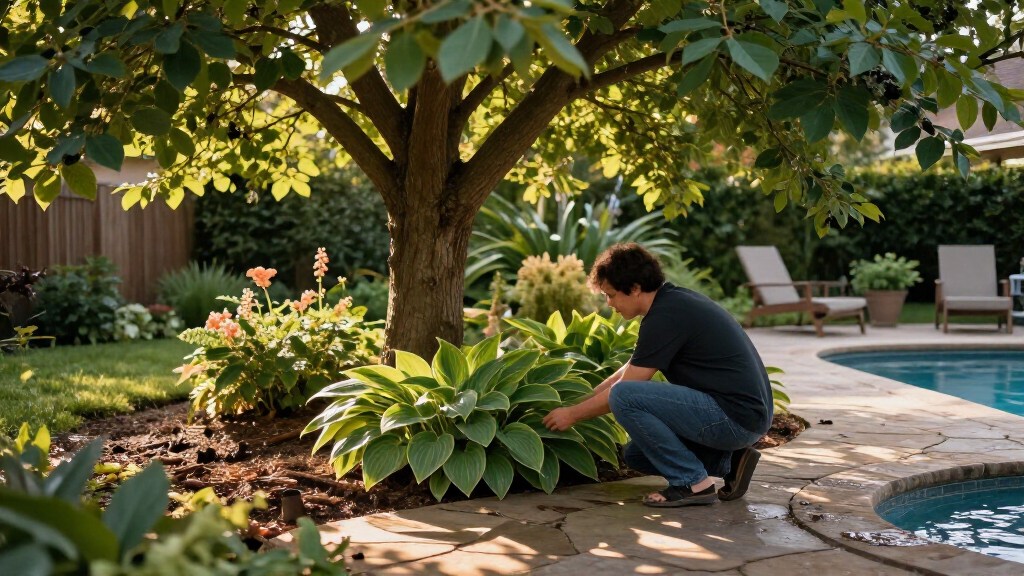
Grow Organic’s guide outlines plant choices reported to tolerate juglone near black walnut trees, including coral bells, bee balm and common witch hazel. It cautions that tolerance is not immunity: shade, root competition, soil moisture and drainage can also determine whether plants thrive.
Grow Organic’s guide to planting near black walnut trees names several plants reported to tolerate juglone, including coral bells, bee balm and common witch hazel, while warning that gardeners must also account for shade, water competition, soil and drainage. The advice matters because plant decline near a walnut is not necessarily caused by juglone alone, and tolerance reports do not guarantee success at a particular site.
The guide says black walnut (Juglans nigra) produces juglone, a natural compound found in leaves, hulls, buds and roots, or in related forms. Juglone can interfere with the growth of sensitive plants. But the tree’s canopy and extensive roots can also reduce available light and water, creating conditions that stress nearby plantings independently of the compound.
Among perennials, the guide lists coral bells (Heuchera species) for partial shade and moist, well-drained soil; bee balm (Monarda didyma) for sun or partial shade and moist soil; and common witch hazel (Hamamelis virginiana) for sun or partial shade and well-drained soil. It advises checking the needs of the particular species and cultivar, rather than treating a plant list as a guarantee.
The report recommends mapping the tree’s canopy and root zone before planting. Citing Wisconsin Extension, it says a mature walnut may affect plantings 50 to 80 feet away; this is an estimate, not a fixed boundary, and roots can extend beyond the branches. The guide also advises trying small groups first and recording how they fare over several seasons.
Choosing Plants for Walnut Shade
For gardeners, the main practical point is to diagnose the site before replacing plants. A plant struggling under a black walnut may be dealing with juglone, but it may instead lack water, light or suitable drainage. Those conditions often overlap, so attributing every yellow leaf or stunted stem to walnut toxicity can lead to the wrong planting decision.
The guide’s approach favors small, monitored trials over broad claims that a species is “walnut-proof.” It also counsels against cutting large roots to make room for a garden bed, because root damage can harm the tree. Where a planting would require significant root cutting, choosing another location may be the safer option.
As an affiliate, we earn on qualifying purchases.
How Juglone Shapes Planting
Black walnut is valued for shade, nuts and wildlife habitat, but some plants are sensitive to juglone. The guide says English walnut and butternut also produce juglone, while plant responses vary. It identifies tomatoes, potatoes, eggplants and peppers as commonly reported sensitive crops; beans, corn, carrots, beets, onions and squash are among vegetables commonly reported as tolerant. These are reported patterns, not guarantees for every variety or garden.
Site conditions can persist beyond the area directly beneath the branches. Raised beds do not guarantee separation because walnut roots may grow into them from below. The report says containers filled with clean potting mix offer better separation, provided walnut debris is kept out. Removing a walnut also does not necessarily end the issue immediately: affected soil and old roots may continue to influence the area for some time.
“Tolerance does not mean immunity.”
— Grow Organic guide
Limits of Tolerance Lists
The guide says many juglone-tolerance reports are based on observations rather than controlled trials. It does not establish that every listed plant will succeed in every location, nor does it provide a fixed safe distance from a walnut. Actual results depend on tree size, roots, light, moisture, soil and the specific plant species or cultivar.
Symptoms such as wilting, yellowing or decline are not proof of juglone exposure. The report notes that disease and herbicide injury can look similar, alongside drought and root competition. It recommends seeking help from a local Extension office for unusual symptoms before removing an established border. The supplied material does not include independent testing or a publication date for the guide.
Test the Site Over Time
Gardeners can start by assessing canopy cover, root spread, soil moisture and drainage, then choose plants whose ordinary growing requirements match those conditions. The guide recommends checking species and cultivar details through plant references such as NC State’s plant guide, and trialing small plantings over multiple seasons.
Keep fresh walnut hulls and other debris out of sensitive beds, and avoid cutting large roots to accommodate new planting space. If symptoms persist, seek a local Extension office’s assessment rather than assuming juglone is responsible. The report sets out no formal follow-up or new research; its practical recommendation is to monitor results and adjust plant choices to the site.
Key Questions
Which perennials does the guide list near black walnut trees?
It lists coral bells, bee balm and common witch hazel as plants reported to tolerate juglone. Match each plant to its light and moisture requirements, since the list is not a guarantee.
How far from a black walnut can plants be affected?
Citing Wisconsin Extension, the guide gives an estimate of 50 to 80 feet for possible effects around a mature tree. It is not a fixed safety boundary, and roots may extend beyond the canopy.
Does juglone explain every plant that wilts near a walnut?
No. Shade, drought, root competition, drainage problems, disease or herbicide injury may also cause plant decline. The guide advises checking site conditions and seeking local Extension advice about unusual symptoms.
Will a raised bed keep walnut roots away?
Not necessarily. Roots can grow into a raised bed from below. The guide says containers with clean potting mix offer better separation, as long as walnut debris is kept out.
Source: rss
Fall Picks
fall essentials
As an affiliate, we earn on qualifying purchases.