
Building a pool on a sloped yard involves careful use of retaining walls and terracing. You’ll need to design terraces that create level areas for the pool and deck, while retaining walls hold back soil and prevent erosion. Proper drainage and sturdy supports are key for stability and safety. Using materials like concrete or stone can enhance both function and appearance. If you want to know more about managing slopes effectively, keep exploring your options.
Key Takeaways
- Use retaining walls to manage soil stability and create level areas for the pool and surrounding deck.
- Incorporate terracing to reduce excavation needs and facilitate access across different yard elevations.
- Design multi-level decks that follow the natural slope, ensuring safety and material durability.
- Plan proper drainage behind retaining walls to prevent soil erosion and structural issues.
- Integrate structural supports and safety features like non-slip surfaces for stability and aesthetic appeal.
Constructing a pool on a sloped yard can be challenging, but with proper planning and design, it’s entirely achievable. One of the first considerations is how your deck design will integrate with the terrain. You’ll want a deck that not only provides a functional space to relax and entertain but also adapts smoothly to the varying elevation levels. To do this, you might consider a multi-level deck that follows the natural slope, creating distinct zones for lounging, dining, and pool access. This approach enhances visual appeal and makes the shift between levels seamless. When planning your deck, think about materials that can handle the terrain’s movement and make certain safety, like non-slip surfaces and sturdy supports.
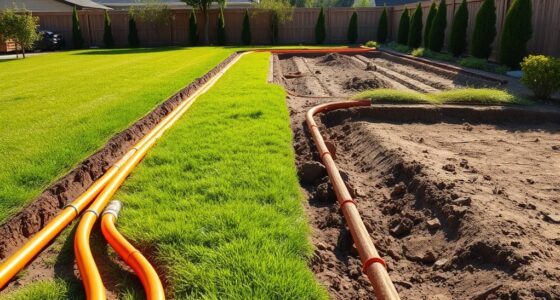
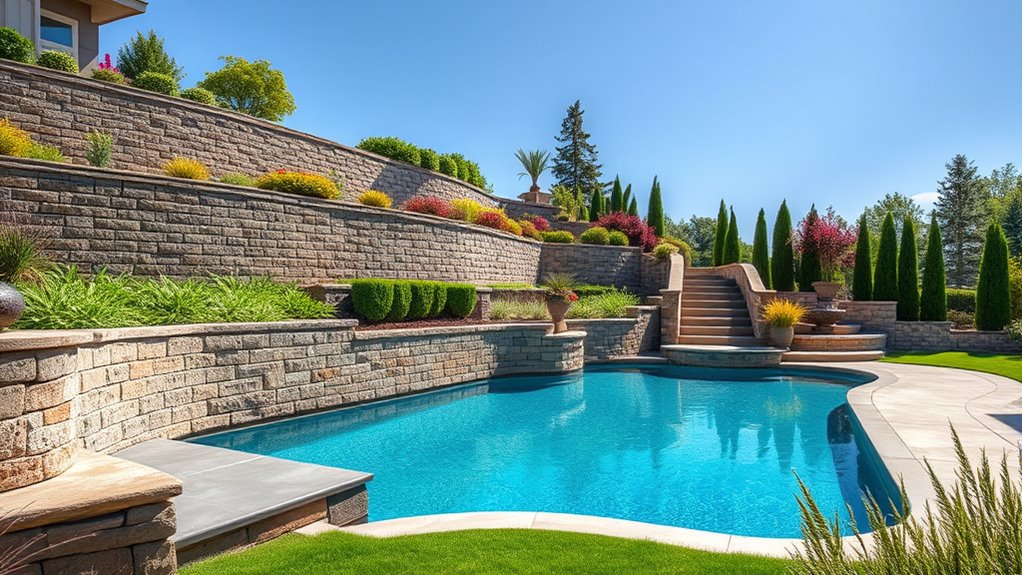
Excavation challenges are a significant factor when building on a sloped yard. Digging for the pool must be precise, as uneven terrain can cause instability or increased costs if not managed correctly. You’ll need to excavate carefully, possibly employing retaining walls to hold back soil and prevent shifting. These walls not only address excavation challenges but also serve as structural elements that define your landscape. Designing them correctly guarantees your pool remains stable over time and prevents future erosion issues. Retaining walls can be constructed from various materials—concrete, natural stone, or timber—each offering different aesthetic and functional benefits. Proper drainage behind these walls is vital to avoid water buildup and pressure that could compromise their integrity. Additionally, incorporating drainage solutions during construction can prolong the lifespan of your landscape features.
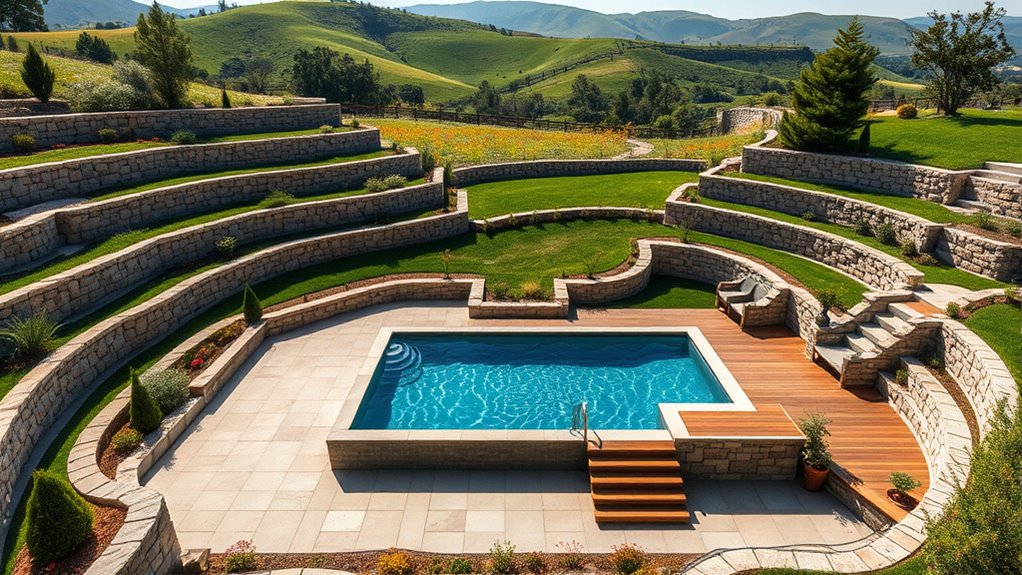
Terracing your yard is another effective strategy to manage elevation changes. By creating level terraces, you can establish flat areas for your pool, deck, and garden features. This approach minimizes the need for extensive excavation and simplifies construction logistics. Terracing also improves accessibility, making it easier to move around your yard and enjoy different zones comfortably. When designing terraces, consider how they will interact with your existing landscape and how to incorporate features like steps or pathways for smooth transitions. Incorporating retaining walls into these terraces helps reinforce the structure and provides visual interest.
Frequently Asked Questions
What Are the Cost Differences for Various Retaining Wall Materials?
You’ll find that retaining wall material costs vary widely. Concrete blocks are affordable, offering good durability and multiple aesthetic options, while natural stone can be pricier but provides a timeless look. Timber is budget-friendly but less durable long-term. The choice impacts your overall budget; consider durability and aesthetic options to balance costs effectively. For lasting value, investing in quality materials like concrete or stone may save you money on repairs later.
How Long Does It Typically Take to Complete the Project?
Think of building your pool like planting a garden; it takes time to nurture and prepare. Typically, a construction timeline for a pool on a sloped yard, including site preparation and building, ranges from 8 to 12 weeks. Factors like weather, the complexity of retaining walls, and the design can prolong this. Stay patient—proper planning guarantees your backyard oasis is safe, beautiful, and long-lasting.
Are There Specific Permits Required for Building on a Slope?
Yes, you need specific permits for building on a slope. You’ll go through the permitting process, which involves submitting plans that meet zoning regulations and local building codes. Check with your city or county office to understand the requirements, including retaining wall permits if applicable. Failing to obtain proper permits can cause delays or fines, so it’s essential to start this process early to ensure your project complies with all regulations.
How Do I Maintain the Terraced Landscape Over Time?
Did you know that properly maintained terraced landscapes can reduce erosion by up to 90%? To keep yours in top shape, regularly inspect for signs of landscape erosion and address any issues promptly. Plant stabilization is key—choose deep-rooted plants that hold soil firmly. Mulch your terraces to prevent runoff and weeds, and consider reinforcing retaining walls when needed. Consistent care guarantees your terraced yard stays beautiful and stable over time.
Can I Add Features Like Waterfalls or Lighting to the Pool?
Yes, you can definitely add features like waterfalls and lighting to your pool. Incorporate pool lighting to enhance ambiance at night, and waterfall features to create a stunning focal point and soothing sound. Make sure your design integrates these elements seamlessly, and consult with professionals for proper installation. With thoughtful planning, these features will elevate your pool area, making it more inviting and visually impressive.
Conclusion
Now that you’re familiar with the essentials of building a pool on a sloped yard, one question remains: will your design withstand the test of time and nature’s surprises? As you plan your terraced landscape and retaining walls, remember that every choice shapes not just your backyard’s look, but its future stability. The next step is vital—are you ready to turn your vision into a resilient, breathtaking reality that keeps guests guessing what’s coming next?