
When constructing your pool, you start with excavation, where heavy machinery digs according to your design, making sure utilities are avoided. Next, the structural framework is built—reinforced with rebar for gunite or a prepared base for vinyl and fiberglass shells. Once the structure is in place, plumbers and electricians set up circulation and lighting systems. Finally, finishes like plaster are applied, and the pool is filled. If you continue exploring, you’ll discover more about each step to create your perfect pool.
Key Takeaways
- Mark and measure the site accurately to outline the pool dimensions before excavation begins.
- Use heavy machinery to excavate according to design specifications, avoiding underground utilities.
- Install the structural framework, such as rebar for gunite pools or setting the shell for fiberglass pools.
- Prepare the interior surface with plaster or other finishes after structural completion and curing.
- Fill the pool with water once the plaster has cured, then install and balance the filtration system.

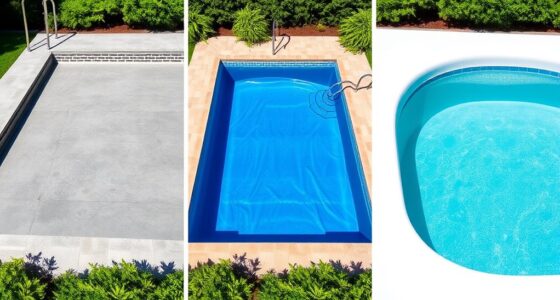
Building a pool involves a series of carefully planned steps that turn your backyard vision into reality. One of the first major decisions you’ll face is the pool design. This step is essential because it shapes the entire construction process and influences how your backyard will look and function. When planning your pool design, consider factors like size, shape, depth, and features such as steps, benches, or waterfalls. Your choices should complement your outdoor space and meet your lifestyle needs. Once you’ve settled on a design, the next critical step is material selection. The materials you choose will impact the pool’s durability, appearance, and maintenance requirements. Common options include gunite, vinyl, and fiberglass. Gunite, a type of sprayed concrete, offers flexibility in design and is highly durable, making it popular for custom shapes and finishes. Vinyl liners are more affordable upfront and easier to install but may require replacement every 7-15 years. Fiberglass pools come prefabricated and are quick to install, with smooth surfaces that resist algae and reduce maintenance. Your choice should align with your budget, aesthetic preferences, and long-term maintenance considerations.
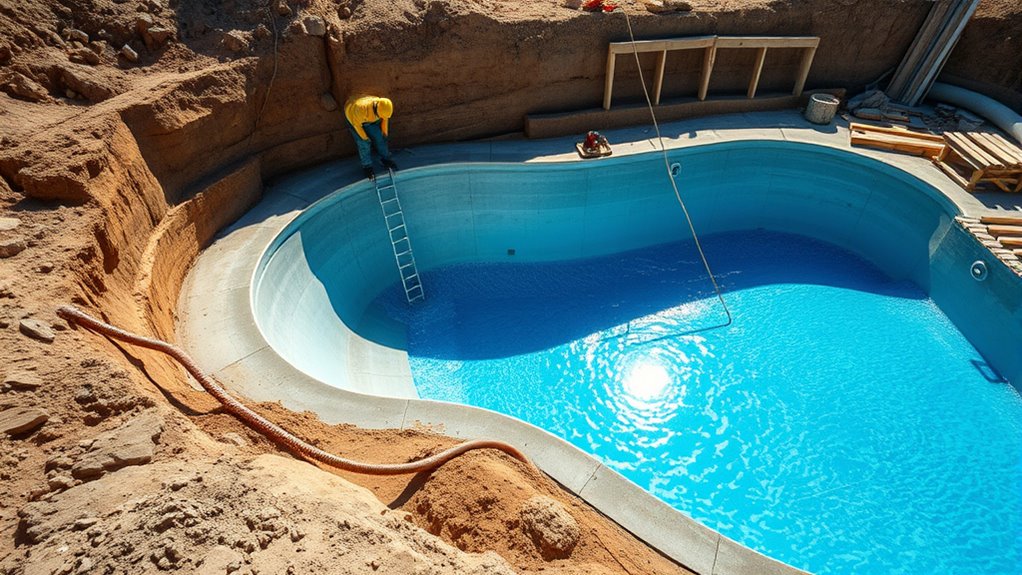
Once the design and materials are decided, the actual excavation begins. A professional crew will mark out the pool’s dimensions on your yard, ensuring precise placement. They’ll then use heavy machinery to dig the hole according to the specifications of your design. During excavation, it’s essential to be involved in verifying the measurements and ensuring the site is clear of underground utilities or obstructions. After excavation, the process moves to the pool’s structural framework. For gunite pools, this involves installing rebar reinforcement to prepare for the sprayed concrete. If you’re opting for a vinyl liner or fiberglass, the excavation will be prepared accordingly—installing a smooth, level base for the liner or setting the fiberglass shell. Once the structure is in place, plumbing and electrical systems are installed to ensure proper circulation, filtration, and lighting. This stage requires precision to prevent future issues like leaks or performance problems.
The final phases include shotcrete or gunite application if needed, followed by the finishing touches such as tile, coping, and the plaster interior. The plaster acts as the waterproof surface and final aesthetic layer, providing a smooth, attractive pool interior. This step is essential because it seals the structure and impacts the overall look and feel of your pool. After the plaster cures, your pool is filled with water, and the filtration system is balanced to ensure clean, clear water. Understanding the entire process from initial design to the finishing touches helps you stay informed and confident as your backyard transforms into a personal oasis.
Frequently Asked Questions
How Long Does Each Stage of Pool Construction Typically Take?
The pool design and material selection influence each construction stage’s duration. Excavation usually takes 1-2 days, while forming and steel reinforcement span around 3-5 days. Gunite or shotcrete application needs 1-2 days, and plaster finishing takes about 1-3 days. Overall, expect the entire process to take 2-3 weeks, depending on complexity and weather conditions, so plan accordingly for a smooth build.
What Are the Most Common Challenges Faced During Excavation?
Ever wonder what surprises you might face during excavation? Common challenges include excavation errors, which can cause delays and increased costs, and issues with soil stability that threaten the project’s safety. You might encounter unexpected underground obstructions or unstable ground that requires additional reinforcement. To avoid setbacks, guarantee thorough site assessments and secure proper permits. Planning ahead helps you navigate these challenges smoothly and keeps your pool project on track.
How Do Weather Conditions Impact the Construction Timeline?
Weather conditions can considerably impact your pool construction timeline. Weather delays, such as heavy rain or storms, may halt work temporarily, pushing back your project’s schedule. Seasonal considerations also matter; extreme cold or heat can affect curing times and material application. To minimize delays, plan your project during favorable weather windows and stay in close contact with your contractor to adjust timelines as needed.
What Safety Precautions Are Necessary During Construction?
Think of construction safety as your shield against unforeseen storms. You must prioritize pool safety by wearing protective gear, securing the work area, and following protocols. Be alert for construction hazards like slips, trips, and electrical risks. Keep everyone informed, and guarantee proper signage is in place. These precautions help prevent accidents, protect workers, and keep the project on track, turning your pool build into a safe, smooth journey from start to finish.
How Is the Quality of Plaster Ensured After Application?
You guarantee plaster quality by monitoring its application closely, focusing on proper finishing techniques that promote durability. You check that the plaster is applied evenly and free of cracks or air pockets, which can compromise its longevity. After application, you inspect the surface for a smooth, consistent finish, ensuring it meets industry standards. Regular curing and proper sealing also help maintain plaster durability, extending your pool’s lifespan and beauty.
Conclusion
Now that you understand the entire pool construction process—from excavation to plaster—you’re practically a pro. Every step, like the heartbeat of your future oasis, brings your dream pool closer to reality. With patience and attention, you’ll see it transform from a blueprint into a stunning, sparkling paradise that’ll outshine even the most dazzling vacation spots. So, stay excited—you’re on the cusp of creating something truly extraordinary that’ll wow for years to come!