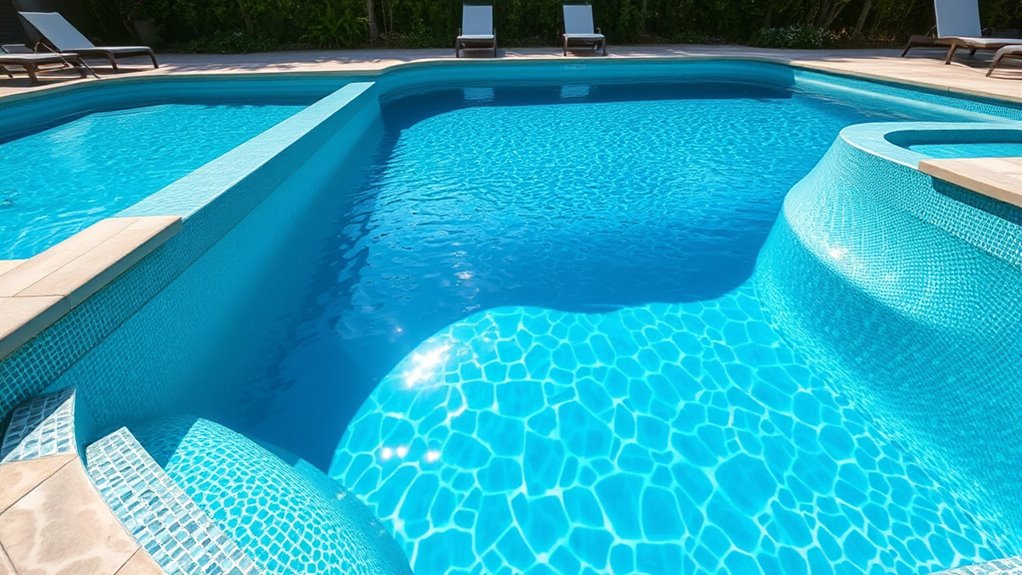

When deciding on pool depth and designing a deep end, consider the primary users and activities. A shallow end of 3 to 4 feet is perfect for lessons and casual fun, while a deep end of 8 to 12 feet suits advanced swimming and diving, with at least 9 to 10 feet for safety. Use clear signage, safety features, and gradual slopes to create a safe environment. Keep exploring to learn how these design choices can make your pool safer and more enjoyable.
Key Takeaways
- Determine primary pool activities to set appropriate shallow and deep-end depths.
- Ensure the shallow end is 3-4 feet for beginner safety and instruction.
- Plan the deep end with at least 8-12 feet, including a safe diving minimum of 9-10 feet.
- Incorporate safety features like signage, ladders, and gradual slopes to prevent accidents.
- Consider pool type and usage to align depth design with safety standards and user needs.
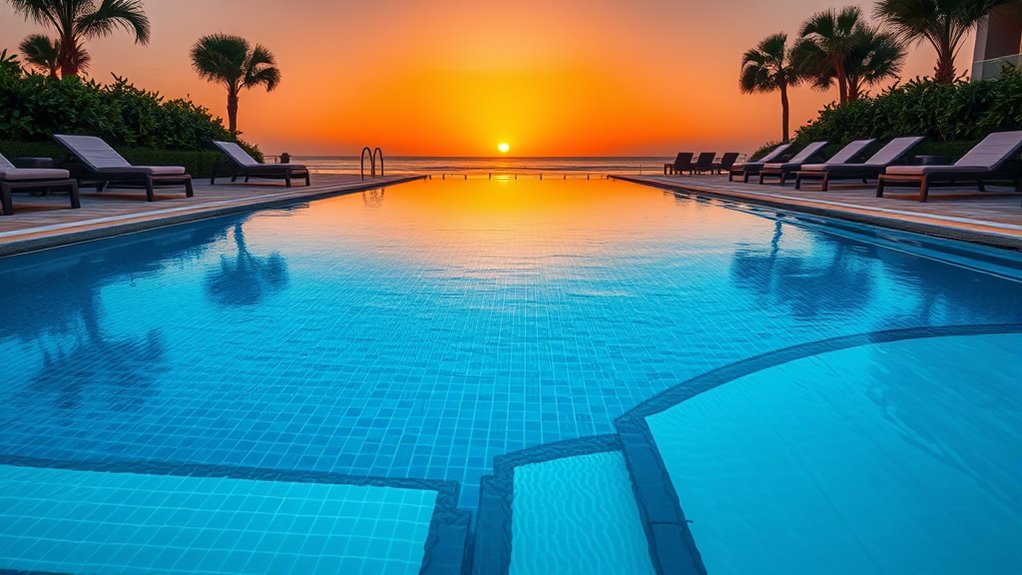
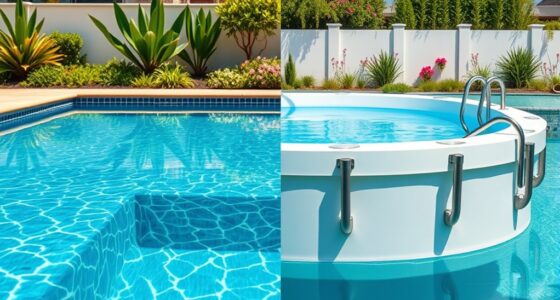
When designing a swimming pool, choosing the right depth and deep-end layout is essential for safety and functionality. Your decisions here influence how people use the pool, how safe they are, and how well it accommodates different activities. For instance, if you plan to offer swimming lessons, you’ll want a shallow end that’s easy for beginners to stand in and feel comfortable. A depth of about 3 to 4 feet works well for teaching new swimmers, providing enough space to practice without feeling overwhelmed. Making sure the shallow area is clearly marked and easily accessible helps promote pool safety and makes lessons more effective.
Beyond the shallow end, the deep end should cater to more advanced swimmers and recreational activities like diving or water sports. Typically, a depth of 8 to 12 feet is suitable for diving, but it’s vital to adhere to safety standards—dive into a depth that’s at least 9 or 10 feet to prevent accidents. When planning the deep end, consider the overall layout carefully. A gradual slope from shallow to deep allows swimmers to move seamlessly and reduces the risk of sudden drops, which can be dangerous if not clearly marked.
Your choice of pool depth and layout also impacts the pool’s safety features. For example, installing proper signage indicating the depth at various points can prevent accidents. If your pool has a deep end, consider adding safety features like ladders, handrails, and non-slip surfaces around the edges. These elements help swimmers enter and exit safely, especially for children and less confident swimmers. Remember, the depth should support your primary activities—whether it’s casual lounging, lap swimming, or competitive training—without compromising safety.
Another factor to keep in mind is the type of pool you’re designing. Residential pools often have a more flexible depth plan, while public pools or swim clubs require stricter adherence to safety standards and regulations. If you intend to run swimming lessons, the shallow end should be prominent and easy to access, and the deep end should be well marked and safe for more advanced practice. Proper depth planning minimizes risks and creates a welcoming environment for all skill levels.
In addition, understanding security considerations related to pool safety, such as fencing, alarms, and surveillance, can help prevent unauthorized access and enhance overall safety for users. Ultimately, balancing safety, functionality, and your intended use will guide your decision on pool depth and deep-end design. When you prioritize these elements, you create a space that’s enjoyable, safe, and suitable for everyone. This thoughtful planning guarantees your pool becomes a place where safety and fun go hand in hand.
Frequently Asked Questions
How Does Pool Depth Affect Energy Costs?
A deeper pool increases energy consumption because it requires more water heating to maintain a comfortable temperature, leading to higher energy costs. The larger volume of water in a deep end demands more heating, which raises overall energy use. Additionally, the increased depth can impact circulation efficiency, making it harder to keep the entire pool evenly heated, further boosting water heating expenses and energy consumption.
What Safety Features Are Recommended for Deep Ends?
Like a Swiss Army knife in a Jumanji game, your deep end safety features are essential. You should install clear signage indicating water depth, guarantee proper lighting, and add safety ropes or float lines. Lifeguard requirements include maintaining a vigilant watch and having rescue equipment nearby. These measures help prevent accidents and ensure swimmers’ safety, especially in the deep end where risks are higher.
Can Pool Depth Influence Water Circulation Efficiency?
Yes, pool depth can influence water circulation efficiency. When you adjust the depth, it impacts water flow and circulation patterns, helping or hindering the movement of water throughout the pool. Deeper areas may create zones with slower circulation, leading to potential stagnation. To optimize water flow, you should design varying depths thoughtfully and include proper circulation equipment, ensuring even distribution of chemicals and temperature across the entire pool.
Are There Specific Codes for Deep-End Construction?
Think of deep-end construction codes as the blueprint for a safe diving board. Yes, there are specific pool depth regulations and deep end construction codes you must follow. These codes guarantee proper safety and structural integrity, often specifying minimum depths for diving areas. For example, local building codes or the ASTM standards set guidelines you should verify before designing your pool’s deep end, ensuring it’s both compliant and safe.
How Does Pool Depth Impact Maintenance Requirements?
Your pool depth directly impacts maintenance needs, especially related to water chemistry. Deeper pools may require more frequent balancing of pH and chlorine levels due to increased water volume and potential algae growth. Additionally, you’ll need suitable pool cover options to reduce debris and evaporation, which become more challenging in deeper pools. Proper depth management ensures easier maintenance, keeps water quality ideal, and extends equipment lifespan, saving you time and costs.
Conclusion
Choosing the right pool depth and deep-end design is like planting a seed—you need the right foundation to grow something beautiful. I once saw a backyard pool where the deep end was too shallow for diving, and kids kept hitting the bottom. It reminded me that thoughtful planning prevents future problems. When you design with purpose, you create a space that’s safe, enjoyable, and built to last—turning your pool into a true backyard oasis.