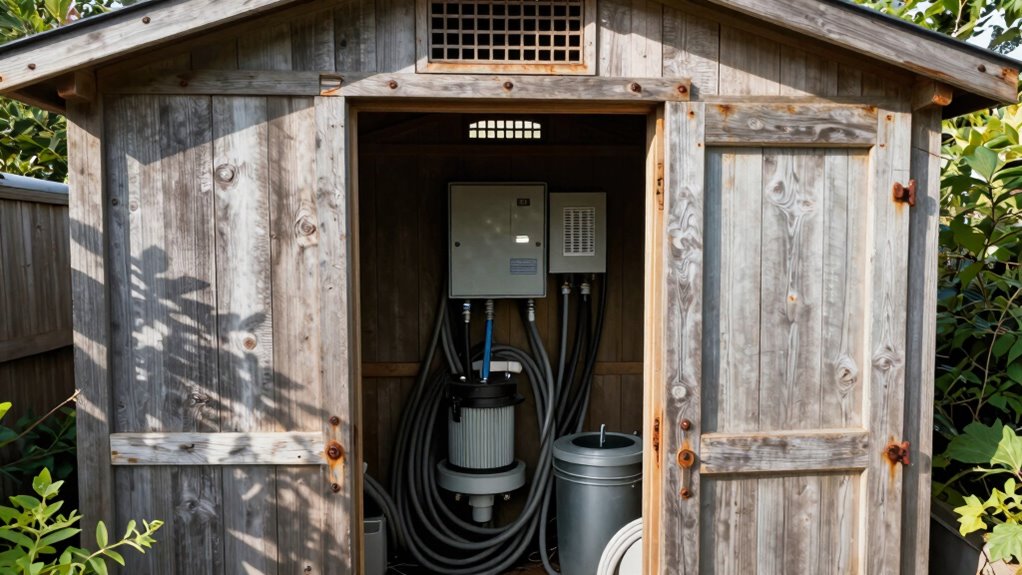

To keep your pool equipment shed working safely and efficiently, you must treat ventilation seriously. Proper airflow prevents moisture buildup, rust, mold, and chemical fumes from accumulating, which can damage equipment and pose health hazards. Without good ventilation, you risk costly repairs and unsafe conditions. Ensuring proper airflow is vital for chemical safety and long-term maintenance. If you want to understand how to optimize your shed’s ventilation effectively, there’s more valuable information ahead.

Get pool and patio gear delivered free — and shop member deals
- Fast, free delivery on millions of items
- Access to Prime Big Deal Days deals on October 6–7
- Prime Video, Amazon Music and more included
Key Takeaways
- Proper ventilation prevents moisture buildup, reducing rust, mold, and equipment damage.
- Adequate airflow disperses hazardous chemical fumes, ensuring safety and chemical longevity.
- Ventilation controls humidity levels, protecting electrical components from corrosion and deterioration.
- Well-ventilated sheds minimize gas accumulation, decreasing explosion and health risks.
- Prioritizing ventilation extends equipment lifespan and maintains a safe, efficient storage environment.
Have you ever wondered where to store your pool equipment so it stays safe and organized? The answer lies in choosing the right pool equipment shed, but it’s not just about the structure itself. Proper ventilation plays a vital role in maintaining the condition of your gear and ensuring safety. When you neglect ventilation, you risk problems like corrosion, mold, and even hazardous chemical buildup, especially if you’re storing chemicals.
Chemical storage within your shed demands careful attention. Storing pool chemicals improperly can lead to dangerous reactions, especially if fumes accumulate or if they come into contact with moisture. A well-ventilated shed helps prevent this by allowing fumes to escape and reducing the risk of chemical degradation. It’s essential to keep chemicals in a designated area with good airflow, away from direct sunlight and moisture, to preserve their effectiveness and prevent accidents. Proper chemical storage isn’t just about safety; it also extends the lifespan of your chemicals and makes your maintenance tasks easier and safer. Ensuring your shed has adequate airflow can make a significant difference in chemical safety and longevity.
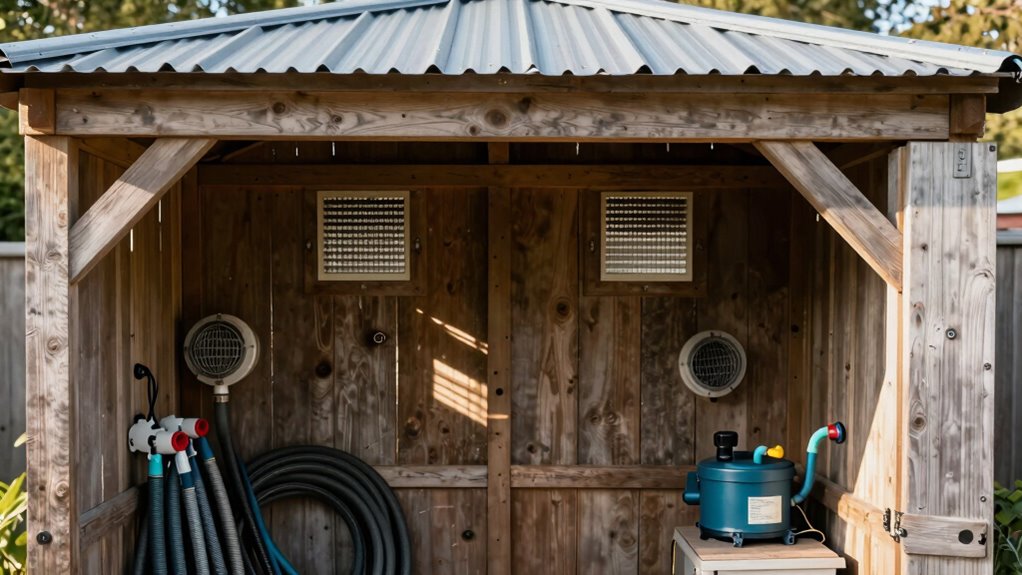
Moisture control is another essential aspect of effective ventilation. Excess moisture inside your shed can cause rust on tools, corrosion of pumps, and mold growth on stored items. Without proper airflow, humidity levels can rise quickly, especially in humid climates. Ventilation keeps the air moving, helping to dry out excess moisture and maintain a stable environment. You can achieve this by installing vents, louvered doors, or even small exhaust fans. These features continuously exchange stale, humid air with fresh outside air, creating a healthier environment for your equipment. Additionally, proper airflow can help prevent the buildup of dangerous gases that may be released from chemicals or equipment during use. Creating an environment that promotes air circulation is crucial for preventing long-term damage and health hazards.
Additionally, proper ventilation helps prevent the buildup of hazardous gases, which can be dangerous to both your health and the longevity of your equipment. Ignoring ventilation can lead to costly repairs and replacements. Rusted metal parts, damaged electrical components, and moldy surfaces all stem from poor moisture control and inadequate airflow. When you treat ventilation as a priority, you’re not only protecting your equipment but also ensuring your shed remains a safe, clean space. Proper ventilation also helps dissipate any chemical fumes, reducing health risks and preventing the buildup of dangerous gases. Regular maintenance of your shed’s ventilation system can further enhance safety and efficiency.
In short, a well-ventilated pool equipment shed is essential for safe chemical storage and moisture control. It’s a simple step that yields significant benefits—saving you money, extending your equipment’s life, and keeping your family safe. Don’t overlook the importance of good airflow when setting up your shed. Your equipment, chemicals, and health depend on it. Prioritize ventilation, and your pool maintenance will be smoother, safer, and more efficient.
pool equipment shed ventilation fan
As an affiliate, we earn on qualifying purchases.
As an affiliate, we earn on qualifying purchases.
Frequently Asked Questions
How Often Should Ventilation Systems Be Inspected and Maintained?
You should inspect and maintain your ventilation system at least twice a year to guarantee ideal air quality and compliance with ventilation standards. Regular checks help prevent buildup of moisture and mold, which can damage equipment and compromise air quality. Keep an eye on filters, fans, and vents, and perform maintenance promptly. Properly maintained ventilation systems keep your pool equipment shed safe, efficient, and up to code.
What Are the Signs of Poor Ventilation in Pool Equipment Sheds?
You’ll notice poor ventilation in your pool equipment shed when the air quality declines, often smelling musty or stale. Moisture buildup is another clear sign, leading to condensation and potential rust or mold. If you see water pooling or notice persistent humidity, it indicates ventilation isn’t enough. Regularly check for these signs, as they can compromise equipment and safety, emphasizing the need for proper airflow and maintenance.
Can Natural Ventilation Be Sufficient for These Sheds?
Imagine a pool shed with large vents and open doors, allowing natural airflow to circulate freely. In some cases, natural ventilation can be sufficient if the ventilation design ensures consistent airflow and controls humidity. However, you should monitor conditions carefully because natural airflow’s effectiveness depends on factors like weather and shed placement. For reliable results, supplement with mechanical ventilation if needed, especially during peak use or extreme weather.
What Ventilation Options Are Most Cost-Effective?
The most cost-effective ventilation options for your shed focus on airflow optimization without high expenses. Using passive vents or adjustable louvers allows natural airflow, reducing energy costs and improving ventilation. Installing exhaust fans with timers can boost airflow when needed, cutting down on unnecessary energy use. Prioritize sealing leaks and positioning vents strategically to maximize airflow, ensuring efficient ventilation that supports equipment health and helps with cost reduction.
How Does Ventilation Impact the Lifespan of Equipment?
Proper ventilation greatly extends your equipment’s lifespan by controlling humidity and optimizing airflow. When you maintain humidity control, you prevent moisture buildup that can cause rust and corrosion. By optimizing airflow, you guarantee heat and humidity are effectively vented out, reducing stress on your equipment. This proactive approach minimizes breakdowns, saves maintenance costs, and keeps your pool equipment running smoothly longer. Proper ventilation truly protects your investment.
Conclusion
Think of your pool equipment shed as a tiny fortress—without proper ventilation, it’s vulnerable to the relentless siege of moisture and corrosion. Just as a fortress needs sturdy walls and open gates to stand strong, your shed needs good airflow to protect its essential machinery. When you prioritize ventilation, you’re not just preserving equipment; you’re building a resilient shield that keeps your pool thriving. Treat it like a fortress, and it’ll serve you well for years to come.
Halloween Picks
halloween
As an affiliate, we earn on qualifying purchases.