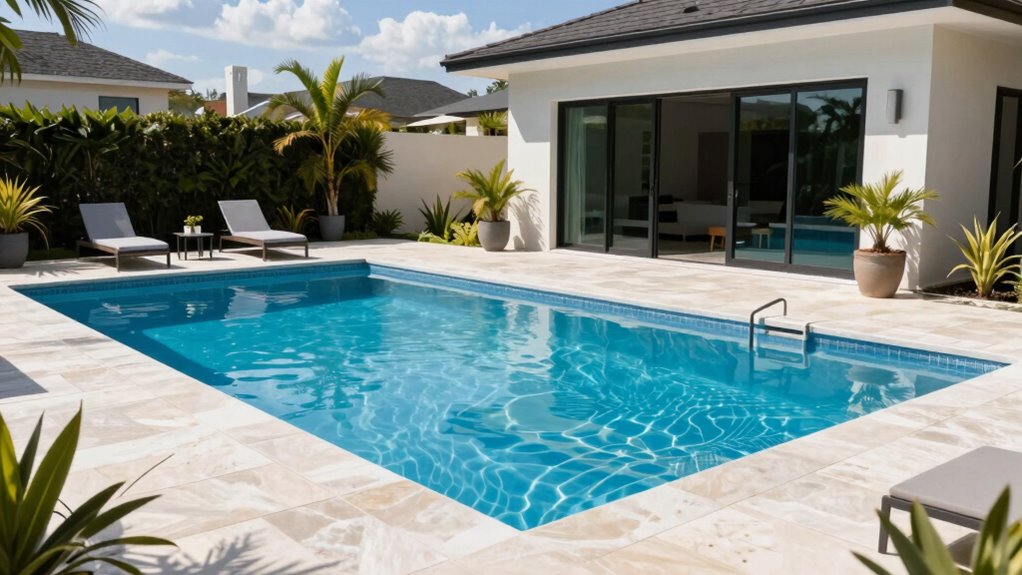

To prevent costly redos, start by asking how your pool will fit into your landscape and whether it’s a centerpiece or subtle addition. Consider safety features like fences, barriers, and lighting early on. Think about maintenance needs, equipment placement, and eco-friendly options. Verify local laws, permits, and setback requirements before construction. Planning ahead on these questions helps you avoid surprises, saving time and money. Continue exploring to discover how thorough planning ensures your backyard dreams come true without unexpected issues.

Get pool and patio gear delivered free with Prime
- Fast, free delivery on millions of items
- Prime Video, Amazon Music and more included
- Member-only deals all year
Key Takeaways
- Clarify landscape integration, shape, size, and placement to prevent costly modifications later.
- Identify safety features such as fencing, barriers, and anti-slip surfaces early in planning.
- Consider maintenance needs, equipment access, and eco-friendly options to avoid future upgrades.
- Verify local zoning laws, setbacks, and permit requirements to ensure compliance from the start.
- Develop a comprehensive plan addressing functionality, safety, regulations, and long-term use to minimize redesigns.

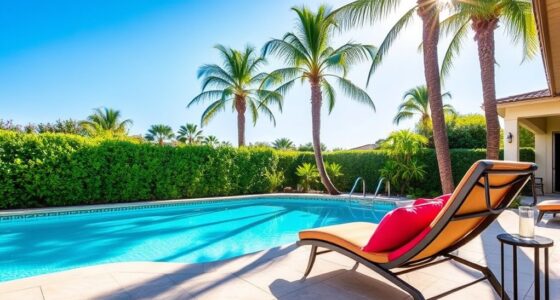
Are you ready to immerse yourself in the essential questions you need to ask before planning your new pool? Getting these questions right from the start can save you from costly redesigns and delays later on. First, consider how your pool will fit into your overall landscape design. Visualize how it will complement your yard, house, and existing features. Will it be the centerpiece, or a more subtle addition? Think about how the shape, size, and placement will influence your outdoor space. Proper landscape design ensures your pool blends seamlessly with your environment, avoiding awkward corners or cramped areas that might require expensive modifications down the line.
Consider how your pool fits into your landscape for seamless, long-lasting design.
Next, safety features should be a top priority. Ask yourself what safety measures are necessary for your household and neighborhood. Will you install a fence or barrier around the pool? Are there anti-slip surfaces to prevent accidents? Consider pool covers for added safety and energy efficiency. Planning for these features early allows you to integrate them into your design rather than trying to retrofit later, which can be costly. Ensure there’s adequate lighting for nighttime visibility, and think about accessibility features if you have young children or elderly family members. Addressing safety upfront not only protects your loved ones but also helps you avoid legal liabilities and potential insurance issues.
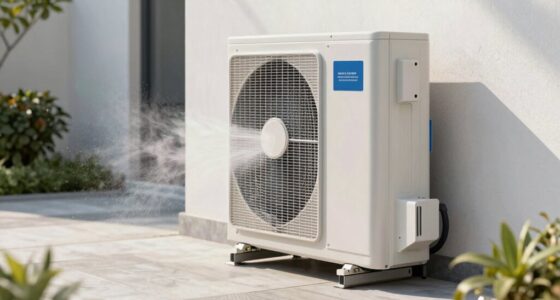
Beyond safety, think about functionality and maintenance. Will you need a heating system, or a pool cover to manage debris? How accessible will the equipment be for regular servicing? These questions influence the placement of equipment and the overall layout. Also, consider the practicality of your design—will you have enough space for lounging, entertaining, or additional features like a hot tub or waterfall? Getting these questions answered early helps you create a plan that’s both beautiful and functional, preventing the need for expensive modifications later. Additionally, understanding the importance of biodiversity in your landscape can help you design a more sustainable and eco-friendly backyard. Incorporating native plants and eco-friendly features can also reduce long-term maintenance costs and impact.
Finally, don’t forget about local regulations and permits. Ask whether your planned pool complies with zoning laws, setback requirements, and other legal restrictions. Ignoring these questions can lead to fines or the need to alter your design significantly. Consulting with professionals who understand regulatory considerations during the planning stage ensures you’re covered from the start, saving both time and money. Being aware of cloud server solutions and digital planning tools can also streamline the process and improve communication with contractors. Incorporating environmentally friendly features can further enhance the sustainability of your pool and landscape. Additionally, exploring options for energy-efficient equipment can help reduce long-term operational costs and environmental impact.
In essence, asking the right questions about landscape design, safety features, functionality, and regulations before breaking ground empowers you to build a pool that’s exactly right for your needs. It’s an investment in peace of mind and long-term enjoyment, helping you avoid costly redos and ensuring your backyard becomes the oasis you envision.
As an affiliate, we earn on qualifying purchases.
Frequently Asked Questions
How Long Does Pool Construction Typically Take From Start to Finish?
Pool construction usually takes about 8 to 12 weeks, depending on size and complexity. During this time, you’ll want to plan for water chemistry setup and pool heating installation to make certain a comfortable swimming experience. Keep in mind, delays can happen if you don’t address these early. Staying involved in the process helps prevent costly redos and guarantees your pool is built to your expectations, with proper water chemistry and heating systems in place.
What Are the Ongoing Maintenance Costs for a New Pool?
You’ll likely spend around $500 to $1,500 annually on ongoing maintenance costs for your new pool. This includes regular pool chemical adjustments to keep the water safe and balanced, as well as water filtration system upkeep to guarantee clarity and prevent algae. Routine tasks like skimming debris and checking equipment also add to costs. Proper maintenance helps prevent costly repairs and keeps your pool inviting all season long.
Are There Any Local Regulations or Permits Required for Pool Installation?
Think of local regulations and permits like the rules at a busy intersection—you need to follow them to avoid accidents. For pool installation, you’ll likely need permits to meet safety and zoning standards. Check with your local building authority to confirm permit requirements and regulations before starting construction. Skipping this step can lead to fines or having to redo work, costing you more in the long run.
How Can I Ensure the Pool Design Complements My Backyard Landscape?
To guarantee your pool design complements your backyard landscape, focus on landscape integration and thoughtful plant selection. Choose plants that enhance the pool area’s aesthetic without overwhelming it, considering height, color, and texture. Incorporate natural elements like rocks or greenery that blend seamlessly with your existing landscape. This approach creates a cohesive look, making your backyard feel more inviting, harmonious, and tailored to your personal style.
What Safety Features Should I Consider During Pool Planning?
Did you know that proper safety features reduce pool accidents by up to 83%? When planning your pool, prioritize safety by including strong pool lighting for visibility at night and an efficient water filtration system to maintain clean, clear water. Consider installing a safety cover or fence, and make sure your pool has easily accessible emergency equipment. These features keep everyone safe while enjoying your backyard oasis.
Conclusion
By asking the right questions upfront, you’re laying a solid foundation for your pool project—like drawing a detailed map before setting out on a journey. Skipping these steps is like sailing without a compass, risking costly detours and frustrations. Take the time now to plan carefully; it’s the compass that keeps your project on course and prevents expensive redos. With clarity and foresight, you’ll turn your backyard into a serene oasis, not a cautionary tale.
Halloween Picks
halloween
As an affiliate, we earn on qualifying purchases.