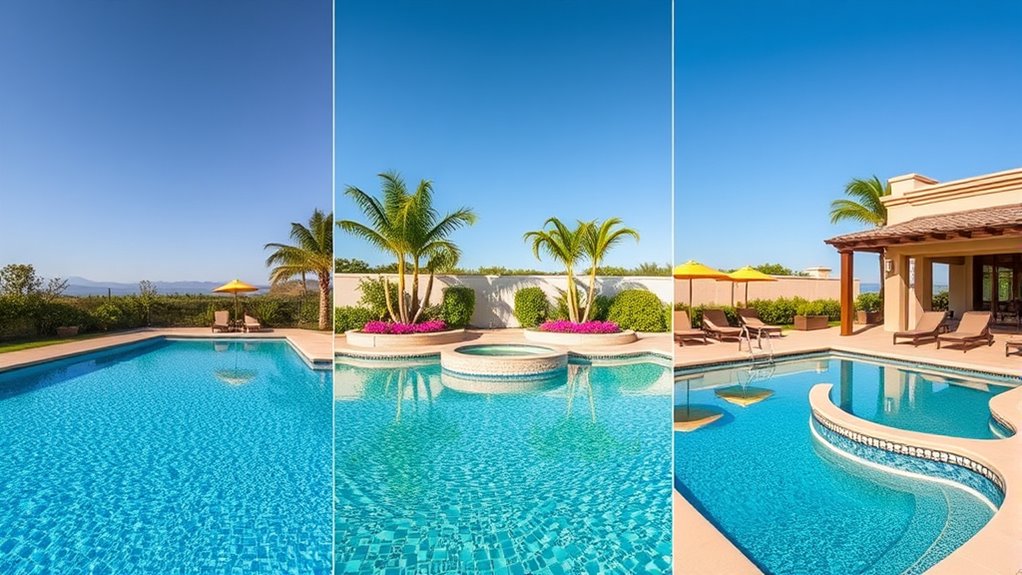

Choosing the right pool shape depends on your style, safety needs, and how much maintenance you’re willing to handle. Rectangular pools offer a sleek look and easy upkeep, while freeform designs blend naturally with landscaping but might require extra cleaning. Custom shapes give you unique options but need careful planning for safety and function. To find the perfect fit for your backyard, consider how you’ll use the space—more tips are just ahead.
Key Takeaways
- Consider your aesthetic preference: sleek and modern for rectangular, natural and organic for freeform, personalized for custom shapes.
- Evaluate maintenance needs: straight-edged pools are easier to clean, while freeform and custom pools may require more upkeep.
- Prioritize safety features: rectangular pools offer clear sightlines and uniform depths, whereas irregular shapes may need extra safety measures.
- Match the shape to your intended use: lap swimming favors rectangular, leisure and relaxation benefit from freeform or custom designs.
- Assess space and landscaping: freeform and custom pools blend seamlessly into natural surroundings, while rectangular pools suit structured yards.
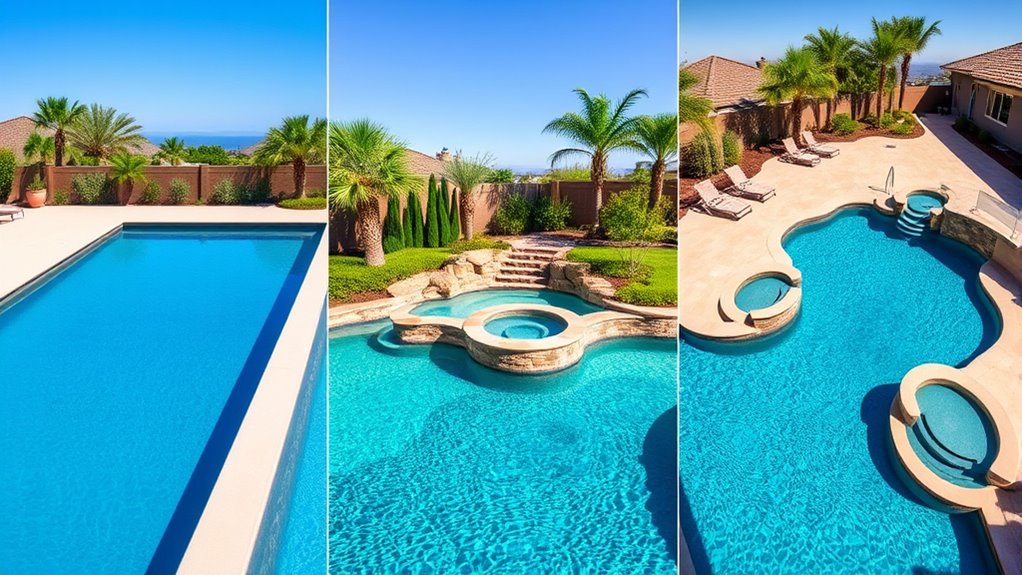
Choosing the right pool shape is an important step in creating your ideal backyard oasis, and it all starts with understanding how different designs complement your space and lifestyle. Your choice impacts not only the aesthetic appeal but also practical aspects like pool maintenance and safety considerations. For example, a rectangular pool offers a sleek, classic look, making it easier to maintain and clean because its straight lines simplify skimming and filtering. Its shape minimizes corners and nooks, reducing areas where debris can settle, which streamlines pool maintenance. Additionally, rectangular pools often come with built-in safety advantages, such as clear sightlines for supervision, especially if placed in a backyard with children or pets. The uniform shape also allows for consistent depth zones, making it easier to monitor and manage safety.
On the other hand, freeform pools provide a natural, organic feel that blends seamlessly into landscaped surroundings. They’re perfect if you want a more relaxed, resort-like vibe. However, their irregular shapes can pose challenges for pool maintenance. The curved edges and multiple corners can trap leaves and debris, increasing the time and effort needed for cleaning. When considering safety, freeform pools may require extra attention. The varied depths and nooks can create hidden spots that are harder to supervise, especially for young children or inexperienced swimmers. You might need to install additional safety features, such as fencing or alarms, to ensure a secure environment.
Custom-shaped pools give you the flexibility to design a unique structure that fits your specific space and needs. Whether you want a narrow lap pool, a shallow lounging area, or an integrated spa, custom shapes can optimize your backyard’s layout. But keep in mind, these personalized designs might complicate pool maintenance. Complex contours and unusual angles can make cleaning and equipment placement more challenging, requiring more planning and effort. Safety considerations are also key; irregular shapes and varying depths can create hazards if not carefully designed. You’ll want to incorporate features like non-slip surfaces, clear signage, and well-planned lighting to enhance safety.
Furthermore, understanding basic cookie usage and privacy management can help you maintain a secure and comfortable environment for your backyard retreat, especially if you plan to install security cameras or smart features. Ultimately, choosing your pool shape involves balancing visual appeal, ease of maintenance, and safety. While a rectangular pool offers simplicity and efficiency, freeform and custom designs allow for more creativity but demand extra planning for upkeep and safety. Think about how you’ll use your pool daily, how much time you’re willing to dedicate to maintenance, and the safety features you need. By understanding these factors upfront, you’ll make a confident choice that turns your backyard into a beautiful, functional retreat.
Frequently Asked Questions
How Does Pool Shape Impact Maintenance Requirements?
Your pool shape affects maintenance requirements like pool cleaning and algae growth control. Rectangular pools are easier to clean with straight edges, making skimming and brushing straightforward. Freeform and custom pools often have more nooks and crannies, which can trap debris and promote algae growth, increasing cleaning time. Choosing a simple shape can help you keep up with regular maintenance, reducing the effort needed to keep your pool pristine.
Can I Modify My Pool Shape After Installation?
They say “you can’t teach an old dog new tricks,” but you can definitely modify your pool shape after installation. While it’s complex, shape customization possibilities exist through renovations or expansions. Your pool’s design options can be altered, especially if you’re flexible and work with experienced professionals. Keep in mind, it may involve significant work and costs, but reshaping your pool can breathe new life into your backyard oasis.
Which Pool Shape Is Best for Small Yards?
For small yards, a rectangular pool works best because it maximizes space and fits neatly into garden landscaping. Its sleek shape creates a more open feel and allows for easier placement of pool accessories like lounge chairs or umbrellas. Plus, a simple design minimizes visual clutter. You’ll find it easier to maintain, and it complements a compact yard, making your outdoor space more functional and inviting without overwhelming your garden.
How Does Pool Shape Influence Energy Efficiency?
Your pool’s shape directly impacts energy efficiency through shape optimization and energy conservation. Rectangular pools typically minimize surface area, reducing heat loss and pump workload. Freeform pools, with their curves, may increase energy use due to more complex circulation needs. Choosing a shape that aligns with your yard and uses efficient design principles helps conserve energy, lowering long-term costs and environmental impact.
Are Custom Pool Shapes More Expensive Than Standard Ones?
Custom pool shapes are generally more expensive than standard ones due to increased cost considerations like design flexibility and specialized construction. You’ll pay more for personalized features, unique layouts, and custom materials. However, if you prioritize a pool that perfectly fits your space and style, the extra investment can be worth it. Keep in mind that these costs can vary based on complexity and materials used, so plan your budget accordingly.
Conclusion
Choosing the right pool shape is like finding your perfect dance partner—you want someone who moves with you effortlessly. I once helped a homeowner pick a freeform pool that perfectly fit their backyard, transforming their space into a personal oasis. Remember, the right shape reflects your lifestyle and dreams; it’s the foundation for countless memories. Trust your instincts, and you’ll find a pool that feels just right—because when it fits, the magic begins.