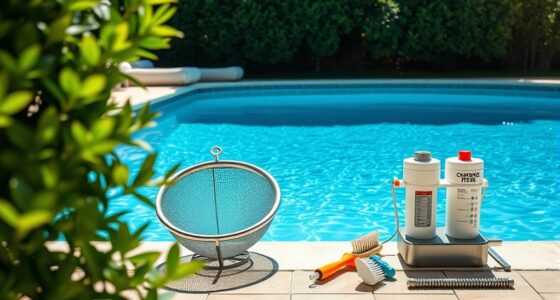
To clean pool tiles and coping of scale and grime, start by inspecting for buildup and use a soft brush to scrub affected areas. Apply specialized cleaners with acids or chelating agents, and for tough deposits, carefully mix muriatic acid and water. Rinse thoroughly with water afterward. Regularly maintaining and promptly treating problem spots helps prevent long-term damage. Keep going, and you’ll discover more effective tips to keep your pool area pristine.
Key Takeaways
- Use a soft-bristled brush and specialized cleaners to scrub tiles and coping, targeting visible grime and scale buildup.
- For tough deposits, mix muriatic acid and water (1:10 ratio) and apply carefully with protective gear.
- Rinse thoroughly with clean water after chemical cleaning to remove residues and prevent further buildup.
- Use pumice stones gently on mineral deposits and scale to avoid scratching tile surfaces.
- Establish regular cleaning routines with both chemical and physical methods to prevent extensive grime and scale accumulation.

Keeping your pool tiles and coping clean is vital for maintaining both the appearance and function of your pool area. Regular pool tile maintenance prevents the buildup of scale, grime, and algae, which can make your pool look dull and even cause long-term damage. When it comes to cleaning your pool tiles and coping, understanding effective coping cleaning techniques is essential. These techniques help you remove stubborn deposits and keep the surface smooth and attractive.
Regular cleaning of pool tiles and coping maintains their beauty and prevents damage.
Start by evaluating the condition of your tiles and coping. If you notice a white, chalky film or dark patches, it’s likely scale or algae forming. For routine maintenance, you can use a gentle brush and a specialized tile cleaner. Use a soft-bristled brush to scrub the tiles and coping, focusing on grout lines and corners where grime tends to accumulate. Applying a commercial tile and coping cleaner that’s suitable for your pool surface can make this process easier. These cleaners often contain acids or chelating agents that break down mineral deposits without damaging the surface.
For tougher scale and grime, you might need to take additional steps. Mix a solution of muriatic acid and water in a ratio recommended by the manufacturer—generally one part acid to ten parts water—and carefully apply it to the affected areas. Always wear gloves and eye protection when working with acids. Use a plastic or nylon brush to gently scrub the tiles and coping, allowing the solution to loosen the deposits. Rinse thoroughly with a high-pressure hose afterward to remove any residual acid and debris. Avoid using metal brushes or abrasive pads, as they can scratch or damage your tiles and coping.
In addition to chemical cleaning, regular physical maintenance helps prevent buildup. Rinsing the tiles and coping with clean water after each pool use can substantially reduce grime accumulation. For mineral deposits and scale, consider using a pumice stone designed for pool surfaces. Gently rub the stone against the affected areas, being careful not to apply too much pressure, which could scratch the surface. Understanding the mechanics of pinball machines can provide insights into how to better maintain and troubleshoot your pool’s hardware if any equipment issues arise.
Consistency is key. Establishing a weekly cleaning routine ensures your pool tiles and coping stay free of grime and scale. Keep a close eye on problem areas and treat them promptly to prevent buildup from becoming a bigger challenge. With proper pool tile maintenance and effective coping cleaning techniques, you’ll preserve the beauty and longevity of your pool area, making it inviting and safe for everyone to enjoy.
Frequently Asked Questions
How Often Should I Clean My Pool Tiles and Coping?
You should clean your pool tiles and coping at least once every 1-2 months to keep them in top shape. Regular tile cleaning is essential for proper pool maintenance, preventing scale buildup and grime. If you notice more dirt or algae, increase the frequency. Consistent cleaning helps maintain water clarity and prevents costly repairs. Make it a routine to enjoy a clean, inviting pool all season long.
Are There Eco-Friendly Cleaning Options for Pool Tiles?
Did you know that over 60% of pool owners prefer eco-friendly cleaning options? You can use natural cleaners like vinegar or baking soda, which are effective and safe for the environment. Biodegradable solutions, such as eco-friendly tile cleaners, break down naturally and don’t harm your pool or the surrounding landscape. These options keep your pool sparkling while reducing chemical impact, making them a smart choice for eco-conscious pool maintenance.
Can I Use Bleach to Remove Scale From Pool Surfaces?
Using bleach to remove scale from pool surfaces isn’t recommended because of bleach safety concerns and potential damage to your pool’s finish. Instead, consider alternative cleaners like specially formulated scale removers or natural options such as vinegar or baking soda. These alternatives are safer for your pool, environmentally friendly, and effective at breaking down mineral buildup without harming your pool or risking health issues.
What Tools Are Best for Scrubbing Stubborn Grime?
You should use abrasive scrubbers like a stiff-bristled brush or a scrub pad to tackle stubborn grime effectively. Chemical cleaners, such as diluted muriatic acid or specialized tile cleaners, can also help break down stubborn dirt. Always wear gloves and goggles for safety. Combine these tools with firm scrubbing to loosen and remove the grime, then rinse thoroughly with water to reveal clean, shiny pool tiles and coping.
How Do I Prevent Future Build-Up on Pool Tiles?
To prevent future build-up on your pool tiles, you should maintain regular tile maintenance and apply surface protection treatments. Use a pool-safe tile cleaner weekly to prevent grime and scale. Installing a pool cover when not in use reduces debris and chemical imbalance, which can cause build-up. Keep your water chemistry balanced and scrub tiles gently but consistently, ensuring a clean surface and preserving the integrity of your tile surface protection.
Conclusion
Once you’ve mastered cleaning your pool tiles and coping, you’ll enjoy sparkling results all season long. Imagine Lisa, who struggled with stubborn scale buildup, finally transforming her pool’s appearance after a thorough scrub. With the right tools and techniques, you can achieve the same gleaming, inviting look. Regular maintenance prevents grime from taking hold, making your pool a beautiful, revitalizing oasis. Start today, and watch your pool sparkle like never before!