
Mistakes like using flow rates that are too high or too low, neglecting to adjust valves properly, and backwashing too often or not enough can ruin your water clarity. Over-aggressive cleaning can disturb the filter media, while insufficient backwashing allows dirt and algae to build up. Poor timing, incorrect valve settings, and rushing the process worsen cloudiness and reduce filtration. To keep your water crystal clear, avoiding these errors is essential—exploring more can help you perfect your approach.
Key Takeaways
- Setting flow rates too high or too low can disturb filter media and prevent proper debris removal.
- Neglecting to monitor and adjust backwash cycle duration can lead to incomplete cleaning or excessive media loss.
- Failing to use proper valve settings and flow control causes uneven backwashing and cloudiness.
- Over-backwashing can disrupt filter media, releasing trapped dirt back into the water.
- Under-backwashing allows debris buildup and algae growth, reducing water clarity and system efficiency.
Why Proper Backwashing Is Essential for Clear Pool Water

Have you ever wondered why your pool water isn’t as clear as it should be? Proper backwashing is vital because it keeps your filter functioning at its best, preventing debris buildup that clouds your water. When you backwash correctly, you remove trapped dirt and algae from the filter media, maintaining effective filter maintenance. It also helps prevent clogged filters, which can reduce water flow and efficiency. This process also helps preserve the filter media’s effectiveness, ensuring your system continues to operate efficiently. Regular backwashing also contributes to water chemistry balance, which is essential for clear, healthy water. It guarantees water flows freely, reducing strain on your pump and improving circulation. Additionally, a clean filter helps maintain the right chemical balance, preventing algae growth and cloudy water. Checking your cabling connections and ensuring proper installation can also prevent system malfunctions that affect water clarity. Neglecting proper backwashing can lead to dirty water, increased chemical use, and even equipment damage. So, consistent backwashing isn’t just about keeping water clear—it’s about supporting your entire pool system and ensuring crystal-clear, inviting water every time.
How to Know When It’s Time to Backwash Your Pool
You’ll know it’s time to backwash your pool when you notice the filter pressure gauge reading higher than usual. If the water starts looking cloudy or less clear, that’s another sign it’s overdue for cleaning. Keeping an eye on these indicators helps maintain ideal water quality and filter performance. Additionally, monitoring the contrast ratio can help ensure your filtration system is functioning effectively to produce sharp, clear water. Regularly inspecting the filter media conditions can further optimize your pool’s clarity and overall health. Be aware that improper backwashing procedures can also reduce filter efficiency over time, so proper technique is essential. Properly maintaining filtration cycles is crucial for preventing buildup and ensuring consistent water clarity.
Filter Pressure Rise
Monitoring your filter pressure is essential for maintaining a clean and healthy pool. When your filter pressure rises considerably above the normal operating range, it indicates your filter is becoming clogged and needs backwashing. Typically, a pressure increase of 8-10 psi suggests it’s time to backwash. Keep an eye on the filter pressure gauge regularly, especially during heavy use or after storms, to prevent over-accumulation of debris. Ignoring rising pressure can lead to poor water flow, reduced filtration efficiency, and potential damage to your pump. Properly timing backwashing based on filter pressure helps maintain ideal water clarity and extends your filter’s lifespan. Regularly inspecting filter components ensures your system remains efficient and prevents costly repairs. Additionally, understanding filter pressure rise can help you optimize maintenance schedules and avoid unnecessary backwashes. Being proactive about filter pressure management can significantly improve your pool’s overall health and reduce operational costs. Recognizing the importance of proper backwashing techniques can further enhance your pool maintenance routine.
Water Clarity Changes
Noticing a change in your pool’s water clarity is one of the clearest signs it’s time to backwash. If your water looks cloudy or murky despite proper chemical balance, debris and dirt may be clogging the filter. When clarity diminishes, your filter struggles to trap particles, which can lead to algae growth if left unchecked. Regular backwashing restores clarity and improves algae prevention. Keep an eye on water color and transparency—if you notice a visible haze or dullness, it’s time to backwash. Maintaining proper chemical balance helps prevent algae and keeps your water clear longer, but when clarity drops despite these efforts, backwashing is essential to restore ideal filtration and prevent further water quality issues. Using an online tool to detect passive voice can also help improve your overall writing clarity. Additionally, understanding how filter pressure indicates when backwashing is needed can optimize your pool maintenance routine. Proper filter cleaning routines are vital for maintaining water clarity and ensuring your pool remains inviting.
Common Backwashing Mistakes That Ruin Water Clarity

One of the most common mistakes that can ruin water clarity during backwashing is neglecting to properly set the flow rate. If the flow is too high, it can disturb the filter media, causing debris and algae growth to resuspend in the water. Conversely, a flow that’s too low may not effectively flush out contaminants, leading to chemical imbalance and reduced filtration efficiency. Failing to monitor and adjust flow rates can also allow algae to thrive, further clouding the water. Proper flow guarantees that debris is removed without disturbing the delicate balance of chemicals. Additionally, understanding the importance of water chemistry helps ensure optimal backwashing performance and clarity. Regularly inspecting your filter media can prevent buildup that impairs water quality over time. Maintaining the correct backwash cycle duration is also crucial to avoid over- or under-cleaning the filter.
How to Set Valves and Use Techniques to Prevent Cloudiness
To prevent cloudiness during backwashing, you need to correctly set your valves and apply effective technique adjustments. Start by ensuring your valve settings direct water flow properly, allowing for thorough cleaning without disturbing settled debris. Adjust the valves slowly and carefully to avoid sudden pressure changes that can stir up sediment. Use consistent techniques, like maintaining steady water flow and timing the backwash duration accurately. Proper valve positioning ensures contaminants are flushed out efficiently, reducing the risk of cloudiness. Regularly check that all valves are secure and functioning correctly. Additionally, understanding the importance of water flow control can help optimize your backwashing process. Being attentive to system pressure can also prevent disruptions that lead to cloudiness. Making these technique adjustments and setting the valves properly helps keep your water clear, prevents cloudiness, and prolongs your filter’s effectiveness.
Signs You’re Backwashing Too Much or Not Enough
If you backwash too often, your pool’s water may become cloudy or the filter might seem overly dirty. On the other hand, not backwashing enough can cause debris to build up, leading to poor water quality and filter damage. Recognizing these signs helps you find the right balance and keep your pool clean and healthy.
Overbackwashing Indicators
How can you tell if you’re backwashing your pool too often or not enough? One sign is noticeable chemical buildup, which indicates you haven’t backwashed enough, allowing contaminants to accumulate. Conversely, if your water becomes overly clear and your filter runs excessively long, you might be overbackwashing. Overbackwashing can also cause debris accumulation in the pool, as you may be disrupting the filter’s ability to trap dirt effectively. If you see the water clarity decline despite frequent backwashing, it’s a sign you’re doing it too often. Additionally, increased water and energy bills point to unnecessary backwashing. Striking a balance is key; monitor your pool’s clarity and your filter’s pressure to avoid the pitfalls of overbackwashing.
Underbackwashing Signs
When your pool’s backwashing routine isn’t properly balanced, signs of underbackwashing can quickly become apparent. You might notice cloudy water that doesn’t clear despite running the filter, indicating debris buildup inside the filter media. Poor filter maintenance can cause particles to remain in the water, reducing clarity and potentially affecting chemical balancing. If you see algae or algae stains, it’s a sign you haven’t backwashed enough, allowing contaminants to accumulate. Additionally, increased pressure on your filter gauge suggests it’s clogged and needs attention. Failing to backwash properly hampers filtration efficiency and complicates chemical balancing, leading to murky water and potential algae growth. Recognizing these signs early helps ensure your pool remains clean, clear, and well-maintained.
Extra Tips for Maintaining Sparkling, Clear Pool Water
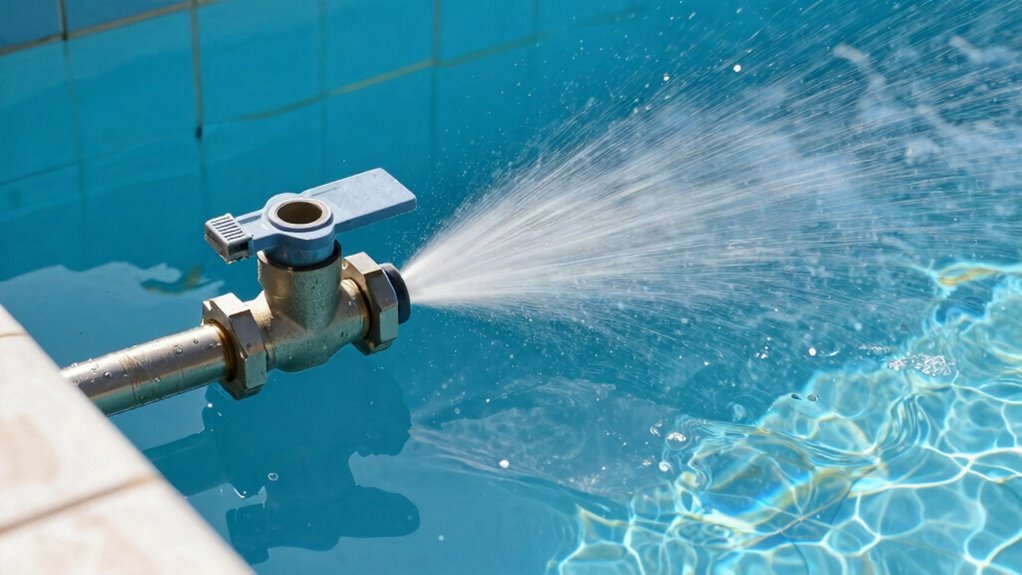
Maintaining sparkling, clear pool water requires more than just regular backwashing; it also involves paying attention to chemical balance and proper filtration. Keeping the pool chemical balance optimized prevents cloudiness and algae growth. Make sure to test and adjust pH, alkalinity, and sanitizer levels weekly. Additionally, skimmer maintenance is vital; clean out debris regularly to ensure unobstructed water flow. Here are some extra tips to help you maintain clarity:
- Regularly check and balance your pool’s chemicals to prevent cloudiness.
- Clean your skimmer basket and ensure it’s free of debris for efficient filtration.
- Run your filter system long enough daily to thoroughly circulate and clean the water.
These simple steps can keep your water sparkling and inviting.
Frequently Asked Questions
Can Using the Wrong Type of Filter Damage My Pool Equipment?
Using the wrong type of filter can definitely damage your pool equipment. If the filter isn’t compatible with your system, it can cause increased strain, leading to wear and tear, which affects equipment durability. Always check filter compatibility before installing or replacing filters. Properly matched filters guarantee smooth operation, reduce the risk of damage, and extend your pool equipment’s lifespan, saving you money and hassle in the long run.
How Does Temperature Affect Backwashing Frequency?
You might think temperature doesn’t matter, but it actually affects your backwashing frequency. When water’s cold, your filter works harder due to reduced temperature regulation, decreasing filter efficiency. As a result, you should backwash more often in cooler weather to prevent clogging. Conversely, in warmer conditions, less frequent backwashing is needed. Monitoring temperature helps you balance filter maintenance, keeping your water clear and your equipment running smoothly.
What Are Alternative Methods to Backwashing for Cleaning Filters?
You can consider filter cleaning alternatives like chemical cleaning, brushing, or using a filter vacuum to maintain water clarity. Regular maintenance tips include inspecting the filter regularly, removing debris manually, and applying filter cleaners as needed. These methods help reduce reliance on backwashing, extend filter lifespan, and improve water quality. Always follow manufacturer instructions for cleaning products and techniques to guarantee effective, safe maintenance without damaging your filter system.
Does Water Chemistry Influence Backwashing Effectiveness?
You might think water chemistry doesn’t affect backwashing, but it’s vital for ideal backwashing efficiency. If your water has high levels of minerals or contaminants, it can hinder the process, leaving dirt behind. Regularly testing and balancing your water chemistry guarantees your backwashing is effective, preventing buildup and maintaining clear water. So, don’t overlook water chemistry—proper balance boosts backwashing efficiency and keeps your system running smoothly.
How Often Should I Replace My Pool’s Sand or Cartridge Filter?
You should replace your pool’s sand filter every 5 to 7 years and your cartridge filter every 2 to 3 years, depending on usage and water quality. Keep an eye on the filter’s lifespan and follow a regular backwash schedule to maintain peak clarity. Proper maintenance prevents buildup and ensures your filtration system works efficiently, saving you money and keeping your pool water crystal clear.
Conclusion
By avoiding common backwashing mistakes and staying attentive to your pool’s needs, you can enjoy crystal-clear water all season. Some worry it’s complicated or time-consuming, but with a little practice, it becomes second nature. Regular maintenance doesn’t have to be a hassle—just follow the right steps, and your pool will stay inviting and pristine. Trust me, once you get the hang of it, maintaining clarity becomes effortless and rewarding.