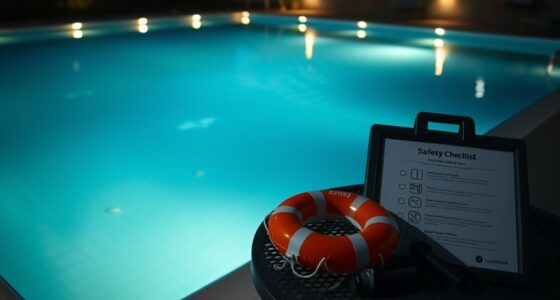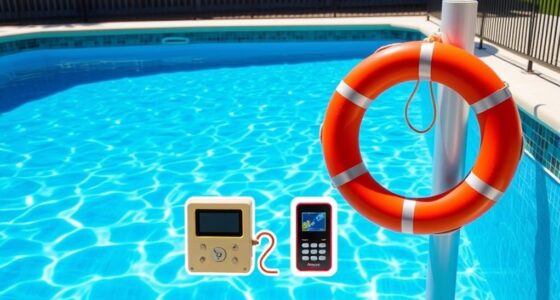
When choosing between mesh and solid safety covers, it’s important to look beyond debris control. Mesh covers are lightweight and easy to install but may require more frequent cleaning and maintenance. Solid covers offer maximum safety, blocking sunlight and algae, but are heavier and more effort to handle. Your decision depends on safety needs, upkeep preferences, and how much effort you’re willing to invest. If you keep exploring, you’ll discover even more helpful details to make a confident choice.

Get pool and patio gear delivered free — and shop member deals
- Fast, free delivery on millions of items
- Access to Prime Big Deal Days deals on October 6–7
- Prime Video, Amazon Music and more included
Key Takeaways
- Safety standards and certification are critical, with solid covers often providing a more secure barrier against accidents.
- Durability and weight impact installation, with solid covers being heavier and more labor-intensive to install and remove.
- Maintenance needs vary; mesh covers require frequent cleaning, while solid covers mainly need initial installation effort.
- Water management differs; mesh allows water flow, reducing rainwater accumulation, whereas solid covers may need drainage systems.
- The level of debris prevention and algae control is higher with solid covers, influencing safety and pool hygiene.
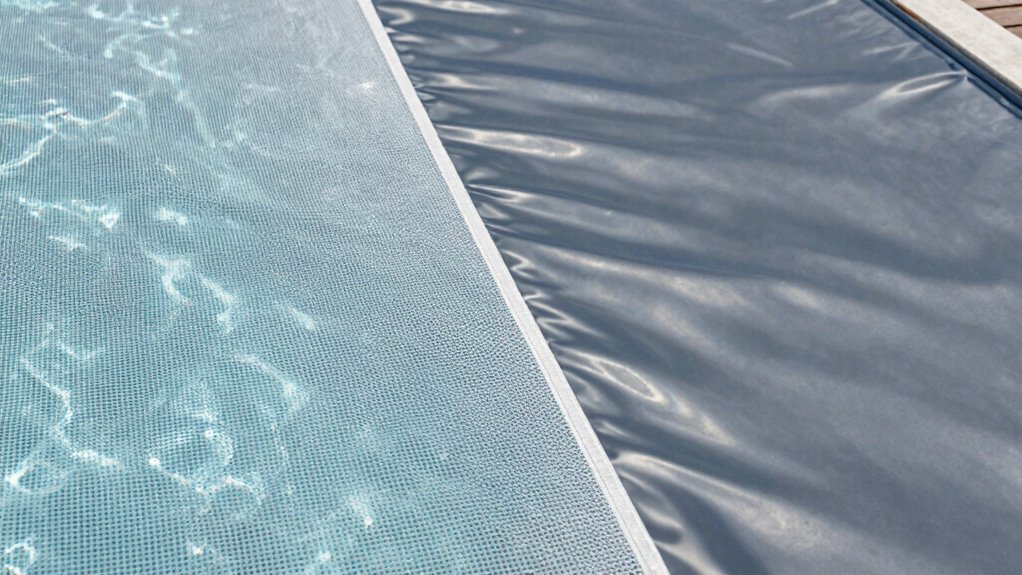
When choosing a safety cover for your pool, understanding the differences between mesh and solid options is essential for making an informed decision. Both types serve the primary purpose of preventing accidents and keeping debris out, but they vary in functionality, durability, and maintenance needs. Recognizing these differences helps you select the right cover that aligns with your pool maintenance routines and complies with safety regulations.
Mesh covers are designed with a porous material that allows water to pass through while catching leaves, twigs, and other debris. This feature simplifies pool maintenance because you don’t need to pump or remove excess water after heavy rains. The water that filters through can often be safely returned to the pool, reducing the need for extra filtering or draining. In terms of safety regulations, mesh covers are typically compliant and provide a sturdy barrier, but it’s crucial to ensure the specific product meets local safety standards. They tend to be lighter and easier to install, which can be a significant advantage if you handle pool upkeep yourself. However, mesh covers might require more frequent cleaning to prevent small debris from accumulating on the surface, and they may not block out smaller particles or fine dirt as effectively as solid covers. Material permeability is a key factor influencing their debris and water flow capabilities. Additionally, mesh covers are generally more cost-effective initially, but ongoing maintenance can add to the total cost over time. It’s also worth noting that mesh covers can be less effective in preventing tiny particles from passing through, especially during windy or stormy conditions.
Mesh covers allow water to pass through, making maintenance easier but may need more frequent cleaning.
Solid safety covers, on the other hand, are made of waterproof material that completely seals off the pool from above. They prevent debris from entering the water and eliminate the need for frequent cleaning of the cover surface. Because they block sunlight and moisture, solid covers can also help inhibit algae growth, making pool maintenance easier in the long run. When it comes to safety regulations, solid covers often meet or exceed safety standards, especially since they create a more secure barrier that minimizes the risk of accidental drownings. They tend to be heavier and require more effort to install and remove, but many pool owners find this trade-off worthwhile for the added protection and reduced ongoing maintenance. Keep in mind that solid covers may require a pump or drainage system to manage rainwater accumulation, adding a step to your pool upkeep routine. A proper understanding of rainwater management is essential to ensure your solid cover remains effective and safe.
Ultimately, your choice depends on your specific safety concerns, local safety regulations, and how much effort you’re willing to invest in pool maintenance. Mesh covers are ideal if you prefer a lighter, easier-to-handle option with minimal ongoing upkeep. Solid covers are better if you prioritize maximum debris prevention, algae control, and enhanced safety. Both types can meet safety standards, but verifying the certification of your chosen cover ensures you’re making a compliant, reliable investment that keeps your pool safe and well-maintained year-round.
As an affiliate, we earn on qualifying purchases.
Frequently Asked Questions
Which Cover Lasts Longer Under Harsh Weather Conditions?
A solid safety cover typically lasts longer under harsh weather conditions because of its superior material durability and weather resistance. You’ll find that solid covers withstand snow, ice, and heavy rain better than mesh covers, which can tear or degrade faster in extreme weather. By choosing a solid cover, you guarantee better protection and longevity, especially if your area experiences severe weather regularly.
Are Mesh Covers More Environmentally Friendly Than Solid Covers?
Are mesh covers more environmentally friendly than solid covers? They can be, especially if made from biodegradable materials, which reduce long-term environmental impact. Mesh covers often use fewer resources during manufacturing and allow water to pass through, minimizing runoff and pollution. Plus, their design may reduce the need for frequent replacements, making them a more sustainable choice overall. So, when considering environmental impact, mesh covers with eco-friendly materials are a smart option.
How Do Installation Costs Compare Between Mesh and Solid Covers?
You’ll find that installation costs for mesh covers are generally lower due to their lighter material and easier handling, making setup quicker and more cost-efficient. Solid covers tend to be more durable, which can justify higher initial costs, but they may require more labor and time during installation. Overall, if you prioritize material durability and cost efficiency, mesh covers tend to offer a more budget-friendly installation option.
Can Either Cover Be Used for Above-Ground Pools?
Yes, both mesh and solid safety covers can be used for above-ground pools. Mesh covers are lightweight and allow water to pass through, maintaining pool aesthetics and reducing pool debris. Solid covers block sunlight and debris completely, offering better protection but may affect pool appearance. Your choice impacts user convenience—mesh covers are easier to remove, while solid covers require more effort but provide enhanced safety and cleanliness.
Do Mesh Covers Require More Maintenance Than Solid Covers?
Mesh covers generally require more maintenance than solid covers because leaf accumulation can be more noticeable through the mesh material. You’ll need to clean your mesh cover more frequently to keep debris from accumulating and to prevent potential damage. Solid covers make cleaning easier since leaves and debris stay on top, reducing cleaning frequency. Overall, if you prefer less maintenance, a solid cover might be the better choice for your above-ground pool.
Conclusion
When choosing between mesh and solid safety covers, remember it’s not just about debris—it’s about peace of mind. Think of it as a shield for your loved ones, a guardian that stands firm against accidents. So, weigh your options carefully, considering your pool’s needs and safety priorities. After all, isn’t your family’s safety worth the extra effort? In the end, the right cover isn’t just a choice—it’s your pool’s silent protector, always ready to guard what matters most.
Fall Picks
fall essentials
As an affiliate, we earn on qualifying purchases.