To make night swimming safer without overlighting your yard, use targeted, low-impact lighting like underwater LEDs and motion-activated pathway lights to illuminate key areas. Keep safety equipment nearby and guarantee everyone knows emergency signals. Regularly inspect safety features like fences and alarms. Focus on balancing visibility with subtlety to maintain the yard’s ambiance while preventing accidents. By combining mindful lighting and safety practices, you can enjoy night swimming safely—more helpful tips await if you keep exploring.

Get pool and patio gear delivered free — and shop member deals
- Fast, free delivery on millions of items
- Access to Prime Big Deal Days deals on October 6–7
- Prime Video, Amazon Music and more included
Key Takeaways
- Use strategic, low-intensity underwater lighting to enhance pool visibility without illuminating the entire yard.
- Install motion-activated pathway lights to guide safe navigation without excessive brightness.
- Keep safety equipment and emergency contacts nearby and well-maintained for quick response.
- Incorporate eco-friendly, downward-facing lights to minimize light pollution and protect local wildlife.
- Regularly inspect safety features like fences, alarms, and covers to prevent accidents during night swimming.
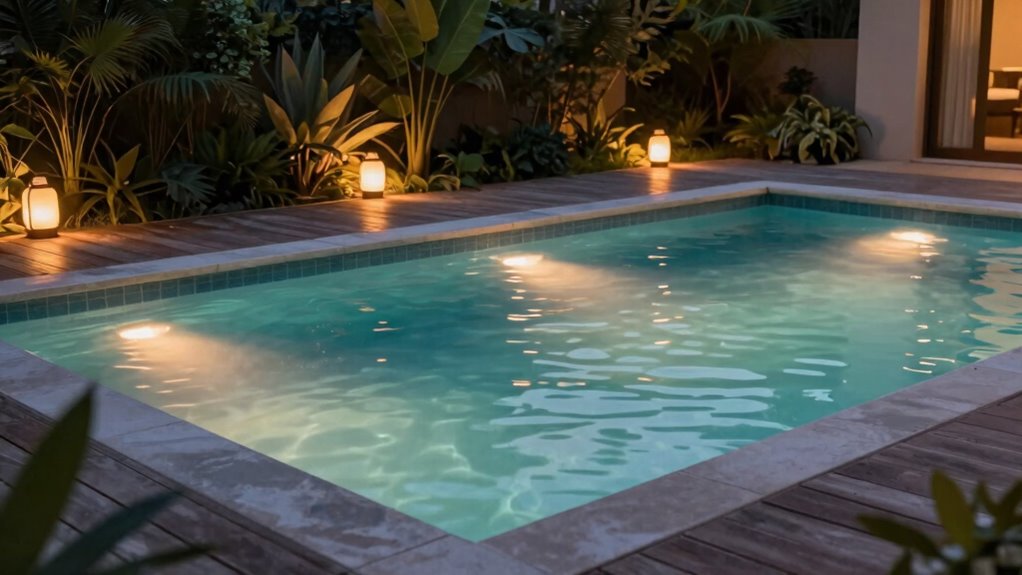
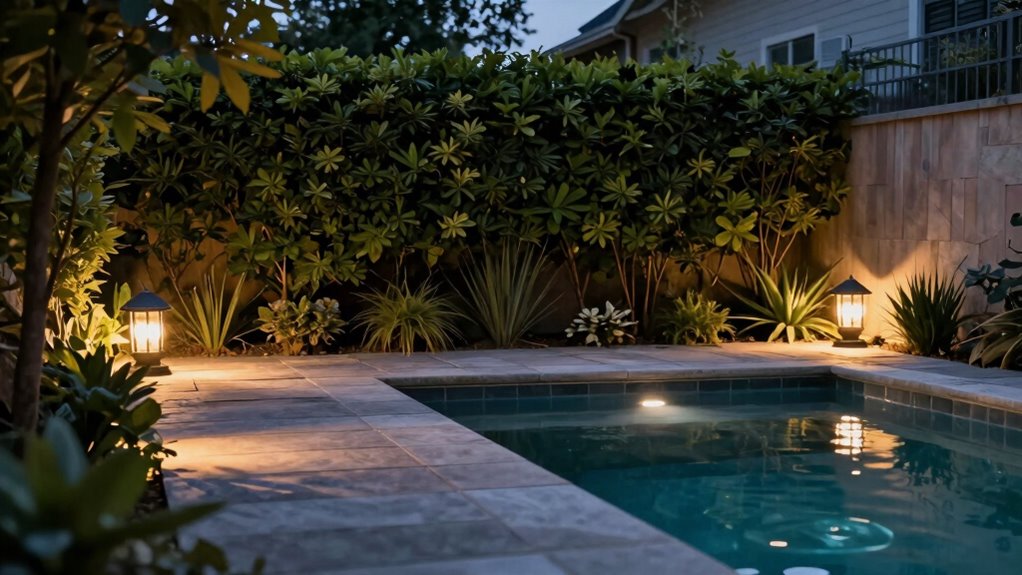
Swimming at night can be a fun and invigorating experience, but it also comes with increased risks. When you decide to take a dip after dark, safety becomes your top priority. One effective way to enhance safety without overlighting your yard is to use strategic underwater lighting. Instead of flooding the entire area with bright, harsh lights, you can install subtle, well-placed underwater lights that illuminate the pool’s edges and bottom. These lights improve visibility, helping you see the pool’s depth and any obstacles, while minimizing light spillage into the yard. This approach guarantees you can enjoy your swim without disturbing the tranquility of your outdoor space or attracting unwanted attention from neighbors or wildlife.
Strategic underwater lighting enhances safety by illuminating pool edges and bottom without disrupting outdoor tranquility.
In addition to underwater lighting, you should focus on emergency preparedness. Keep safety equipment nearby, such as a life ring, reaching pole, and a first aid kit. Familiarize yourself with basic rescue techniques and ensure everyone around the pool knows how to respond in an emergency. Having a charged phone within reach is also critical, so you can quickly call for help if needed. If you swim with others, establish a clear system of signals or calls to alert each other of trouble. Regularly inspecting your pool’s safety features, like pool covers, fences, and alarms, helps prevent accidents in the first place. Taking these precautions makes a significant difference in reducing risks during night swims.
To further improve safety, consider installing motion-activated or solar-powered pathway lights around your yard. They provide enough illumination to navigate safely without creating overly bright conditions that could disrupt the ambiance or disturb neighbors. These lights help you see where you’re going when entering or leaving the pool area, and they add an extra layer of safety during late-night visits. Remember, the goal isn’t to light up every corner but to strike a balance between visibility and subtlety. Additionally, understanding biodiversity and how outdoor lighting can impact local wildlife is important to minimize environmental disturbance. Using eco-friendly lighting options can help reduce light pollution and protect nocturnal animals. Selecting outdoor lighting with low-impact designs can further support environmental conservation while maintaining safety. Installing these lights thoughtfully can also help you adhere to local regulations, ensuring your outdoor lighting setup is compliant and responsible. Being aware of the potential effects of outdoor lighting on local wildlife encourages you to choose options that mitigate environmental impact.
Finally, make sure you’re aware of local regulations regarding nighttime swimming and outdoor lighting. Following these guidelines helps you avoid violations and ensures your safety measures are compliant with local laws. By combining strategic underwater lighting, thorough emergency preparedness, and subtle yard lighting, you can enjoy night swimming while keeping risks low. Staying alert and prepared turns what could be a dangerous activity into a safe, enjoyable experience.
As an affiliate, we earn on qualifying purchases.
Frequently Asked Questions
What Safety Equipment Should I Keep Nearby During Night Swimming?
You should keep safety equipment like a life ring, reaching pole, and a waterproof flashlight nearby during night swimming. Make sure your pool lighting is sufficient for visibility, and always have emergency preparedness items like a first aid kit close at hand. These tools help you respond quickly if someone struggles, ensuring safety without relying heavily on yard lighting. Staying prepared keeps everyone safer and more confident while enjoying nighttime swims.
How Can I Prevent Insects From Bothering Swimmers at Night?
To prevent insects from bothering swimmers at night, you should set up insect traps around your yard to catch pests before they reach the pool. Additionally, light citronella candles near the swimming area, as their scent helps repel insects naturally. Keep the area clean, remove standing water, and consider using fans to create a breeze, which also discourages insects from coming close. These steps keep your night swim enjoyable and pest-free.
Are There Specific Plants That Improve Nighttime Visibility?
Think of moonlit plants and glow-in-the-dark foliage as nature’s lanterns, casting subtle shadows in your yard. Incorporate these luminous plants, like certain succulents or specialized garden species, to enhance nighttime visibility without harsh lights. Their gentle glow creates a dreamy ambiance, guiding your steps safely around the pool area. By choosing moonlit plants, you turn your yard into a natural, enchanting haven that’s both beautiful and practical for night swimming.
How Do I Ensure Pool Chemicals Are Balanced for Nighttime Use?
You should regularly test your pool’s pH and chlorine levels before night swimming. Keep the pH balanced between 7.2 and 7.6 to prevent irritation and equipment damage. Make sure chlorine levels are around 1-3 ppm to maintain sanitation. Use a reliable test kit, adjust chemicals accordingly, and retest to confirm balance. Properly balanced chemicals keep your pool safe and inviting for nighttime enjoyment.
What Are the Best Methods to Monitor Swimmers Remotely?
You should install remote monitoring systems with cameras and sensors that track water temperature and swimmer activity. Use waterproof devices connected to your smartphone or computer for real-time updates. Make certain emergency preparedness by setting alerts for unusual activity or water temperature drops. Regularly check these systems before swimming, so you can quickly respond to safety concerns. This way, you keep an eye on swimmers without needing to be physically present, enhancing safety effortlessly.
Conclusion
By implementing strategic lighting and safety measures, you can enjoy night swimming without compromising your yard’s ambiance. A recent study shows that properly lit pools reduce drowning risks by up to 80%. Remember, safety doesn’t mean overlighting—use subtle, targeted lights and keep emergency equipment nearby. With these tips, you’ll create a safe, inviting environment for nighttime dips, allowing you to relax and have fun while staying protected.
Fall Picks
fall essentials
As an affiliate, we earn on qualifying purchases.