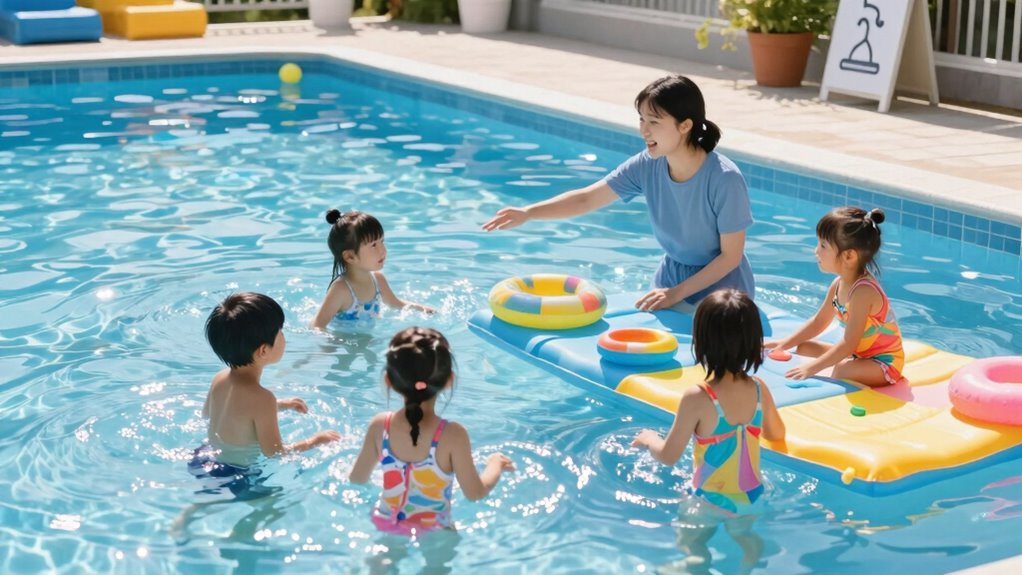

To teach pool rules without making swimming scary, use simple language and positive reinforcement to create a safe, confident environment. Explain the rules clearly with visual cues, like signs or symbols, and model proper techniques through demonstrations. Incorporate fun activities that emphasize safety skills, like games or floating exercises, to make learning enjoyable. Keep instructions short and patient, gradually introducing new rules. If you keep these tips in mind, you’ll find more ways to foster a positive water experience.
Key Takeaways
- Use simple language and positive reinforcement to introduce rules in a friendly, non-intimidating way.
- Incorporate visual cues and symbols to make rules easy to remember and less overwhelming.
- Model proper techniques through demonstrations to build confidence and understanding naturally.
- Introduce rules gradually, focusing on safety as a fun part of swimming, not restrictions.
- Combine safety instructions with enjoyable activities and games to promote a relaxed, positive environment.
Teaching pool rules effectively begins with clear communication and setting expectations from the start. When you focus on water safety, you help create a safe environment where everyone feels comfortable and confident. It’s important to explain why rules matter, especially to children or new swimmers, so they understand that these guidelines are about keeping everyone safe, not about punishment. Use simple language and positive reinforcement to set the tone. For example, instead of saying, “Don’t run,” you might say, “Walking around the pool helps prevent slips and keeps everyone safe.” This approach encourages cooperation and reduces fear.
Clear communication and positive reasons foster safe, confident swimmers and promote cooperation around the pool.
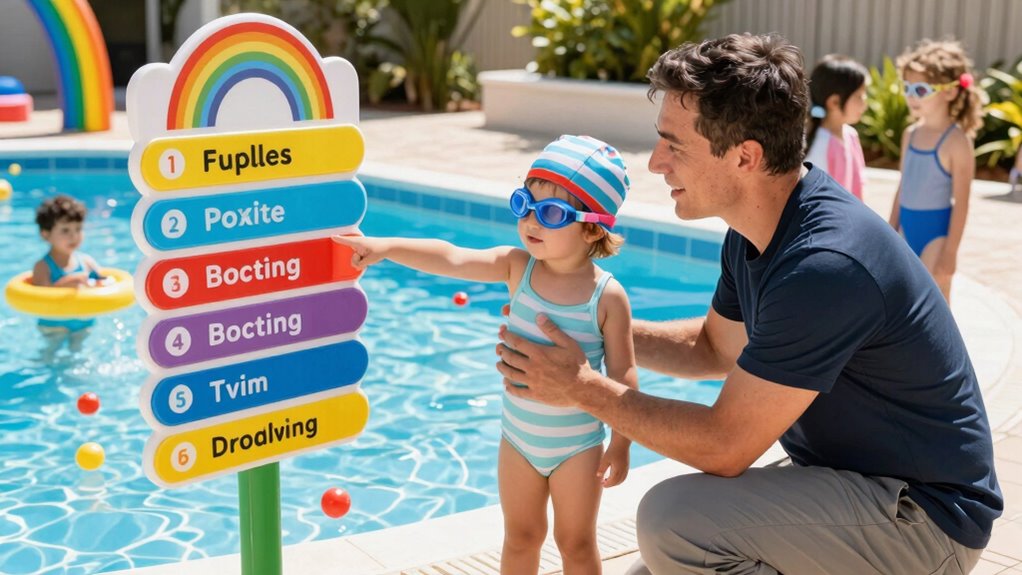
Rule enforcement is key, but it doesn’t have to feel strict or intimidating. Consistency is essential. When you consistently reinforce the rules, children learn what to expect and understand that safety measures are a priority. Make sure rules are easy to remember, maybe even visual, like signs or symbols, so everyone can reference them easily. When a rule is broken, address it calmly and promptly, explaining the reason behind it. This helps to build trust and understanding rather than creating anxiety or resistance. Incorporating visual cues can significantly improve rule retention and compliance. Additionally, understanding water safety principles allows you to tailor your instructions to be more effective and comprehensive.
To teach pool rules without making swimming feel scary, balance safety instructions with fun activities. Incorporate games that emphasize water safety skills, such as floating exercises or simple rescue practices. When kids see that safety is part of the fun, they’re more likely to internalize the rules naturally. Use positive language and praise good behavior to boost confidence. For example, if a swimmer follows a rule correctly, acknowledge their effort with a smile or encouraging words. This boosts their sense of achievement and reduces fear of making mistakes. Reinforcing positive safety habits helps children view safety as a normal and enjoyable part of swimming.
Another effective technique is to demonstrate the rules yourself. Show proper swimming and safety techniques rather than just telling kids what to do. When they see you model safe behavior, they’re more inclined to follow suit. Keep instructions short and engaging, and avoid overwhelming beginners with too many rules at once. Instead, introduce them gradually as they become more comfortable in the water. Remember, patience is key. When you approach water safety and rule enforcement with kindness and clarity, you foster a positive attitude towards swimming. This makes learning the rules less intimidating and helps children develop a lifelong respect for water safety. Recognizing that biodiversity and conservation principles can also be integrated into water safety education encourages a broader understanding of environmental stewardship. Ultimately, your goal is to create an environment where everyone understands the importance of rules while feeling safe, supported, and enthusiastic to enjoy swimming.
As an affiliate, we earn on qualifying purchases.
Frequently Asked Questions
How Can I Make Pool Rules Fun for Kids?
You can make pool rules fun by turning them into games like “Pool Safety Treasure Hunt” or relay races. Incorporate pool games that emphasize safety, like “Red Light, Green Light” in the water. Share safety stories involving characters they love to make lessons memorable. Keep a lively, positive tone, praise their efforts, and celebrate small wins. This approach keeps kids engaged, enthusiastic to learn, and makes swimming feel exciting rather than scary.
What if a Child Refuses to Follow Pool Rules?
If a child refuses to follow pool rules, you should use gentle reinforcement techniques and give age-appropriate instructions. Calmly explain why the rules are important, and praise them when they follow the rules correctly. If they resist, offer small rewards or positive reinforcement to encourage compliance. Consistency is key; stay patient and firm, and remind them that following rules keeps everyone safe and makes swimming more fun for all.
How Do I Enforce Pool Rules Consistently?
You can enforce pool rules consistently by establishing clear expectations and sticking to them. Some might worry about appearing harsh, but consistent discipline shows you’re serious and fair. Use positive reinforcement for good behavior and calmly correct lapses. Keep your tone steady and fair, ensuring kids understand that rules are for everyone’s safety. By applying the same standards every time, you foster trust and help kids feel secure in the pool environment.
Are There Visual Aids to Teach Pool Safety?
Yes, you can use visual aids like pool signage to clearly display safety rules, making them easy to understand at a glance. Incorporate safety demonstrations to show proper techniques and behaviors, which reinforce learning. These visual tools make pool safety engaging and accessible, especially for visual learners. Regularly update and position signage around the pool area, and lead safety demonstrations to build confidence and promote a safe swimming environment.
How Early Can Children Start Learning Pool Rules?
You can start teaching children pool rules as early as age three, following age-appropriate guidelines that focus on simple safety concepts. Always guarantee parental supervision during lessons, making rules clear and fun to understand. Keep lessons short and engaging, gradually introducing more complex rules as they grow. Reinforce safety through positive reinforcement, and remember, consistent supervision and clear communication help kids learn and follow pool rules confidently and safely.
Conclusion
By making pool rules fun and approachable, you’ll turn swimming from a scary monster into a friendly dolphin. Use simple language, positive reinforcement, and patience to build confidence. Remember, your calm guidance can transform fear into joy faster than a speedboat zips across water. Keep it light, keep it encouraging, and soon your little swimmer will be gliding through the pool with the ease of an otter splashing in the sun. Plunge in with confidence—you’ve got this!