Pool gates often fail more than you realize because environmental factors like sun, rain, and wind cause gradual wear on hinges and latches. Poor installation and lack of regular maintenance can lead to misaligned or stiff components, increasing safety risks. Over time, small issues can develop into major problems if not addressed. By staying on top of inspections and repairs, you can prevent most failures—if you want to know exactly how, keep going.

Get pool and patio gear delivered free — and shop member deals
- Fast, free delivery on millions of items
- Access to Prime Big Deal Days deals on October 6–7
- Prime Video, Amazon Music and more included
Key Takeaways
- Environmental exposure accelerates wear on hinges, latches, and other components, leading to unexpected failures.
- Poor installation or misalignment increases strain, causing hinges and latches to weaken prematurely.
- Lack of routine maintenance allows rust, stiffness, and damage to go unnoticed, reducing safety effectiveness.
- Worn or damaged safety features, like self-closing hinges and child-proof latches, can fail without regular checks.
- External factors such as weather and environmental conditions hasten component deterioration beyond owners’ expectations.
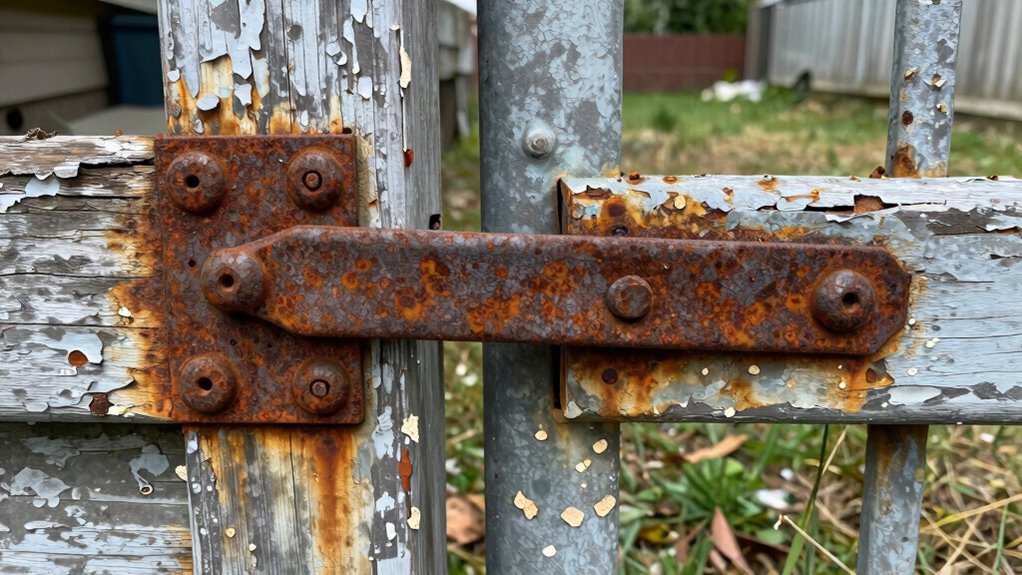
Many pool gate owners assume their safety barriers are foolproof, but in reality, these gates often fail sooner than expected. Child safety is the primary reason these gates are installed in the first place, yet neglecting proper gate maintenance can compromise their effectiveness. Over time, environmental factors like sun, rain, and wind take a toll on your gate’s components, causing hinges, latches, and latching mechanisms to wear out or become misaligned. If you don’t regularly inspect and maintain your gate, small issues can turn into major safety risks, especially if a child manages to find a way to open it.
Regular maintenance of pool gates is essential to prevent wear and ensure child safety.
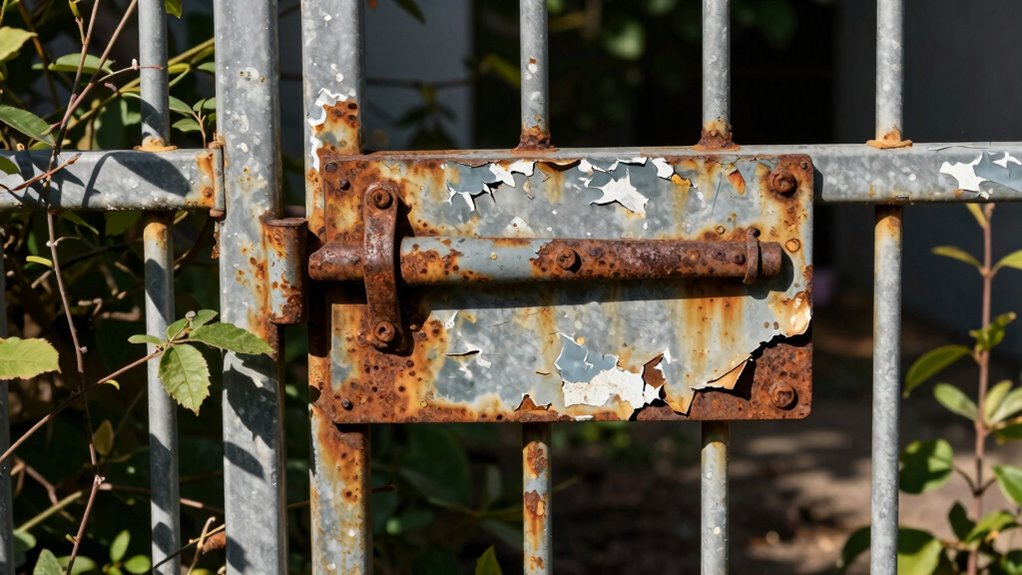
Gate maintenance isn’t just about a quick visual check; it requires a routine, detailed assessment of all moving parts. Hinges can become stiff or rusted, making the gate harder to open or close properly. Latches might loosen or break, and if they don’t secure tightly, the gate might not latch correctly, creating a dangerous gap. Small adjustments, lubrication, or replacing worn parts are simple steps that go a long way in ensuring the gate functions as intended. If you ignore these maintenance tasks, you risk the gate failing at a critical moment, potentially leading to a tragic accident.
Another common oversight is assuming that the gate’s design alone will keep children safe. But even the best-designed gates need ongoing care to maintain their integrity. Many owners forget that safety features like self-closing hinges and child-proof latches require regular testing and upkeep. For example, a latch might seem secure initially but could weaken over time, especially if it’s exposed to harsh weather. When that happens, a child could open the gate, bypassing your safety measures. It’s essential to routinely test your gate’s functionality and make necessary repairs or adjustments immediately. Recognizing the importance of routine inspections can help prevent these issues before they become hazards.
Moreover, improper gate installation can be a culprit in premature failure. Even if you’re confident about your setup, it’s worth double-checking that the gate is level, properly anchored, and aligned. Poor installation can cause strain on hinges and latches, accelerating their wear. Remember, child safety depends on a gate that performs flawlessly, so you should consider periodic professional inspections to catch issues early. Neglecting gate maintenance not only diminishes safety but also leads to expensive repairs down the line. Regular biodiversity assessments of your safety measures can help identify vulnerabilities before they become hazards. Additionally, understanding the environmental impact on your gate’s materials can guide better maintenance practices to extend its lifespan. Protecting your gate from weather-related damage can significantly reduce the risk of failure. Keep your gate in top shape, test it regularly, and don’t wait for failure to address problems. Your vigilance can make all the difference in protecting loved ones from preventable accidents.
As an affiliate, we earn on qualifying purchases.
Frequently Asked Questions
Can Environmental Factors Cause Pool Gate Failure?
Environmental factors can definitely cause pool gate failure. You might notice environmental wear from sun, rain, and temperature changes weakening the gate over time. Wildlife interference can also be a problem, as animals may try to climb or push against the gate, causing damage or misalignment. Regular inspections help catch these issues early, ensuring your pool gate remains secure and functional despite environmental challenges.
How Often Should Pool Gates Be Inspected for Safety?
You should inspect your pool gate at least once a month for safety. Regular pool gate maintenance guarantees it functions correctly and reduces failure risks. Conduct safety inspections more frequently if you notice any issues, such as loose hinges or damaged latches. Consistent maintenance and prompt checks help prevent accidents, keeping your pool area safe. Remember, staying diligent with safety inspection frequency is essential for effective pool gate safety.
Are There Specific Brands More Prone to Failure?
Some brands are like fragile glass—more prone to failure due to lower reliability. You might find that cheaper or lesser-known pool gate brands often lack durability, making them more susceptible to breaking or malfunctioning. Always check brand reliability and warranty coverage before installation. Investing in reputable brands guarantees better quality and peace of mind, reducing the chances of failure and costly repairs down the line.
What Is the Average Lifespan of a Pool Gate?
The average lifespan of a pool gate is around 5 to 10 years, depending on pool gate materials and installation standards. Well-maintained gates made from durable materials like vinyl or aluminum tend to last longer. Proper installation guarantees the gate functions correctly and reduces failure risks. Regular inspections and timely repairs can extend your gate’s lifespan, helping you avoid safety issues and costly replacements.
Do DIY Repairs Affect the Gate’s Safety Compliance?
DIY repairs can jeopardize your pool gate’s safety compliance because DIY hazards often lead to improper fixes. If you don’t follow safety regulations, your gate might not meet local standards, increasing risks. Poorly executed repairs can weaken the gate’s structure, making it less effective at preventing unauthorized access. To stay compliant and safe, it’s best to hire professionals who understand safety regulations and can guarantee your pool gate remains secure and compliant.
Conclusion
So, don’t wait until it’s too late to check your pool gate. Regular maintenance and quick fixes can keep it functioning properly and prevent accidents. Remember, a gate that looks fine on the surface might have hidden issues lurking beneath. Stay ahead of the game and don’t let small problems turn into big ones. After all, an ounce of prevention is worth a pound of cure—better safe than sorry when it comes to pool safety.
Fall Picks
fall essentials
As an affiliate, we earn on qualifying purchases.